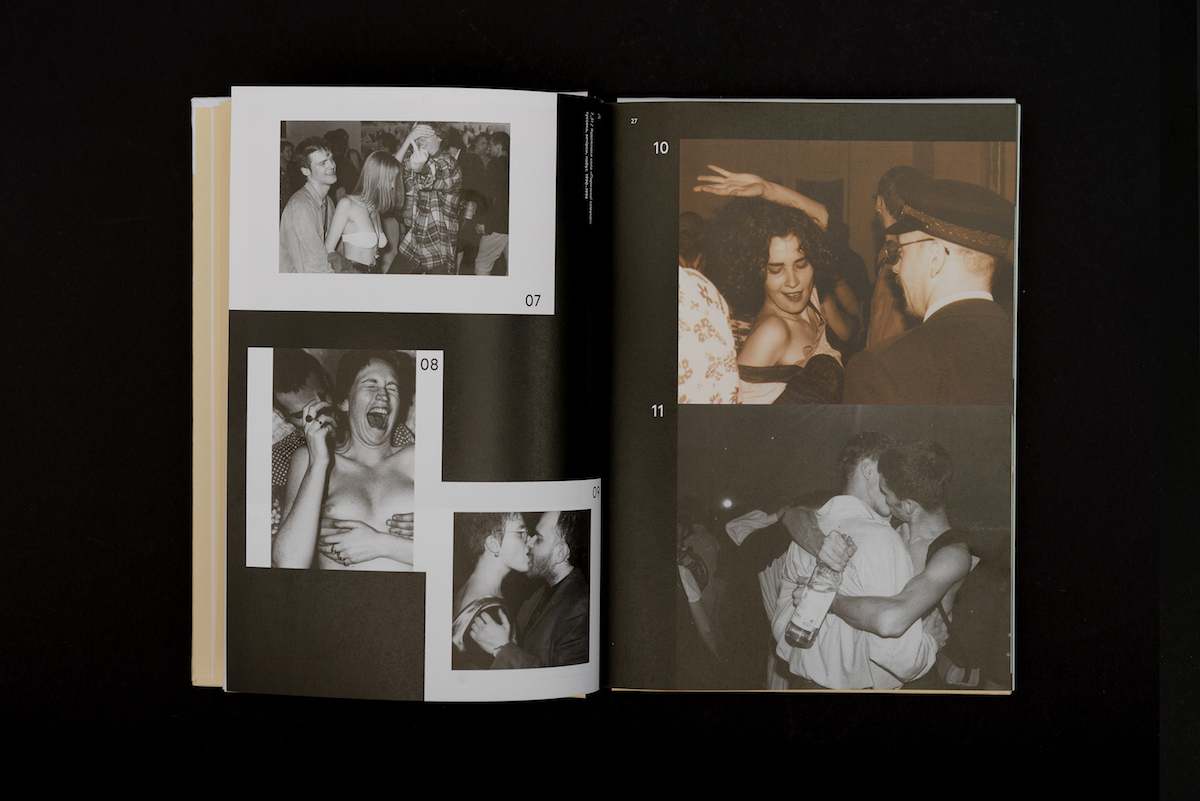
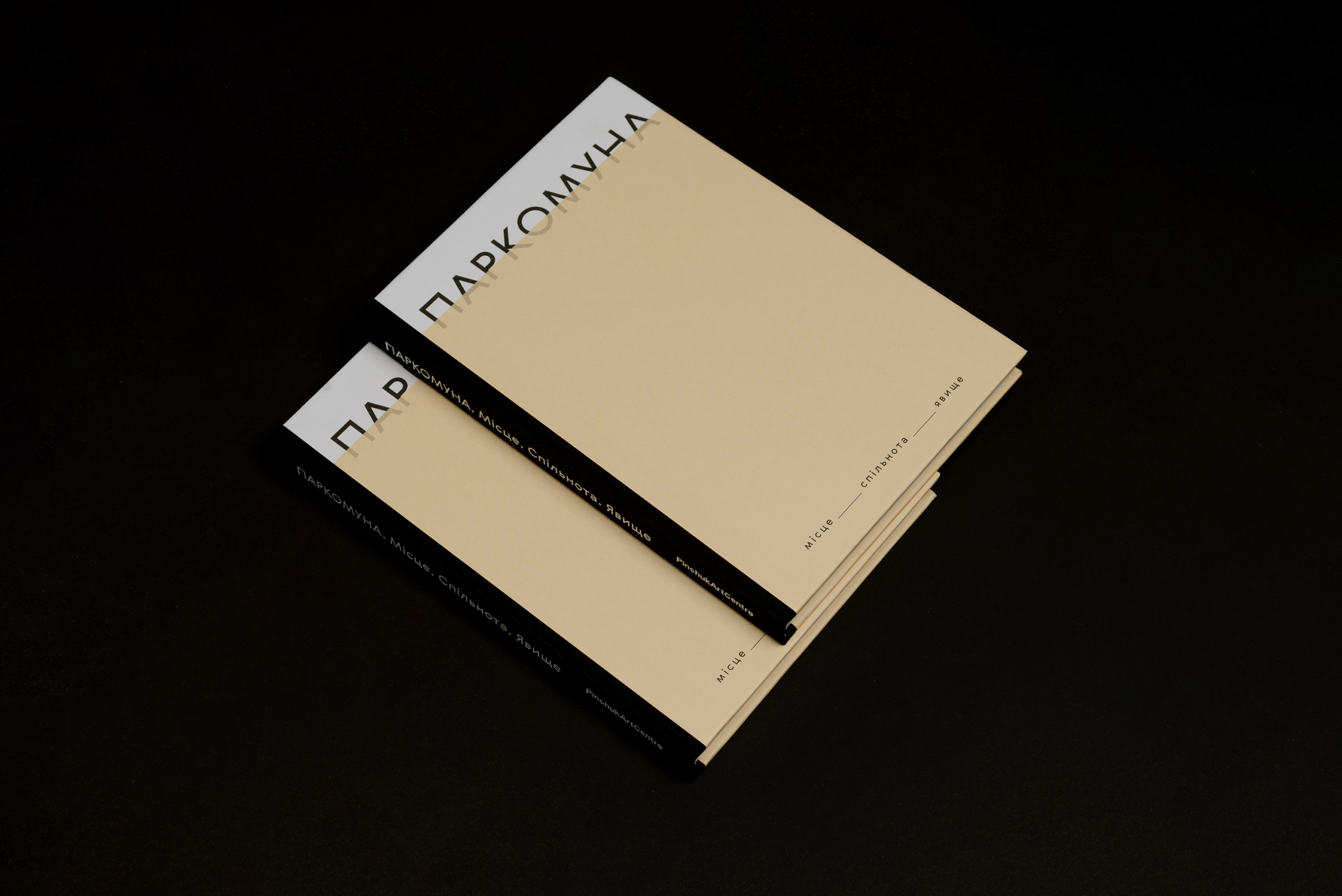
A large-scale study of the activities of the Kyiv art squat on the former Paris Commune Street, conducted by the Research Platform of PinchukArtCentre.
“Parkomuna” is a collection of articles consisting of the sections “Critical View,” “Archival Materials,” and “History/Context,” concluding with “Appendices.” The book includes archival materials revealing the prehistory of the squat’s creation, as well as articles analyzing the exhibition activities of its participants. Researchers consider “Parkomuna” as a phenomenon and highlight its history in the context of the late 1980s – early 1990s.
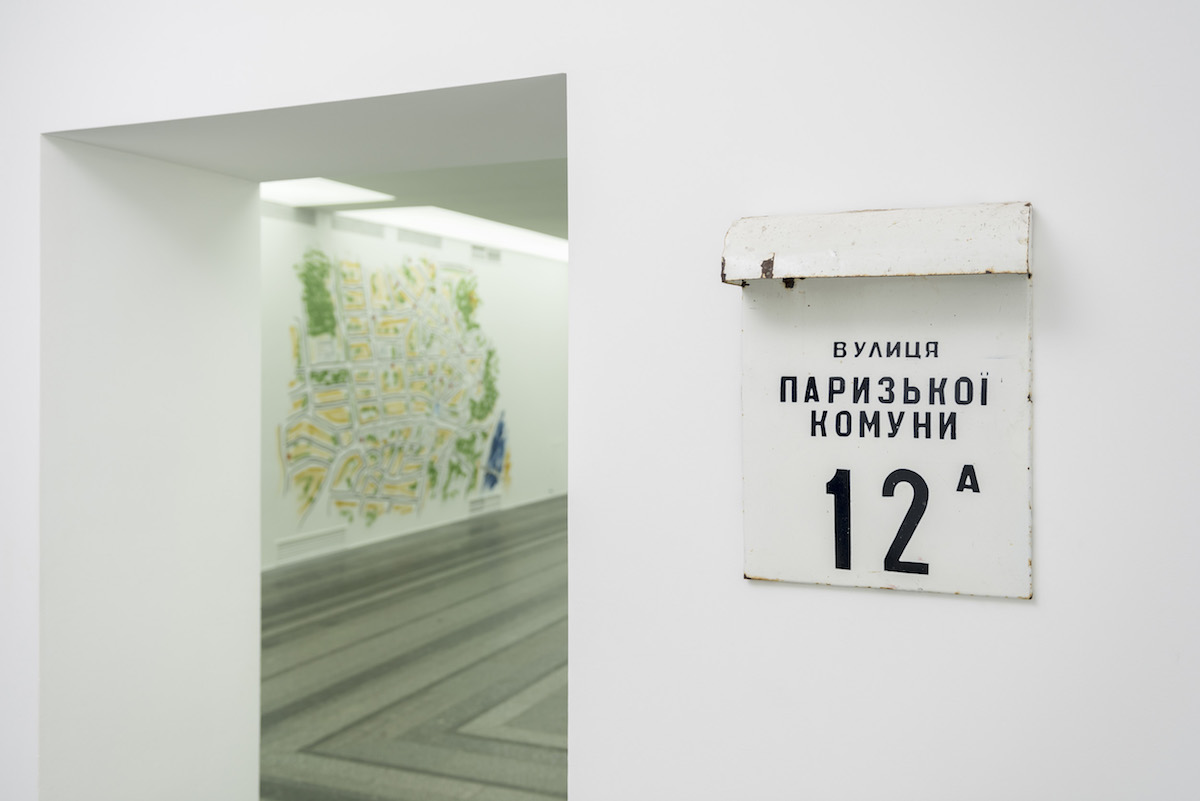
The publication, dedicated to an important phenomenon of Ukrainian culture in the early 1990s, was the result of the work of the art center’s Research Platform team in collaboration with Oleksandr Solovyov, Taras Shulha, Kostyantyn Doroshenko, designer Aliona Solomadina, and several artists from “Parkomuna.” The book also became a continuation of the eponymous exhibition curated by Tetiana Kochubinska and Kseniia Malykh, which took place at PinchukArtCentre in 2016–2017.
The authors of the book agreed to help understand why it is important not only to visit exhibitions dedicated to Ukrainian artists but also to be interested in the history of the formation of contemporary art in Ukraine.

Tania, why was it important for you and the art center’s Research Platform to create not only an exhibition but also a book?
First of all, I would differentiate the preparation of the book and the exhibition, although in this case these are interconnected processes. If you compare the works presented at the exhibition with the reproductions in the book, it turns out that only some of them coincide. One of the artists said after the exhibition opening that we managed to convey the spirit of the time and reveal the phenomenon itself, even without having the most important works in the exposition.
I consider the exhibition as a narrative, and in this case, it is quite complementary rather than critical. It is a story about a certain phenomenon, subjective, of course, like any exhibition statement. But it was the preparation of the exhibition that allowed us to identify myths associated with “Parkomuna.” For example, the idea of it as underground, protest, or opposition to the system.
By that time, the system no longer existed. The protest was a demand of the time and youth: everyone involved in “Parkomuna” was about 30 years old then. They were just forming during the collapse of the USSR, a complete break from the former system, the destruction of borders, and the euphoric feeling of freedom — all of this was demanded by the time.
The exhibition has its time limits, and the book is what remains. We started creating the book after the exhibition. This gave us time to reflect on both the exhibition itself and the phenomenon under study. If the exhibition is a story, then the book is a more critical reflection on the phenomenon and the era.
Why do you think the materials of the book “Parkomuna. Place. Community. Phenomenon” are important for Ukrainian culture and history in general?
First of all, I would like to note that we are not an academic institution, but we certainly rely on archival materials and documents, as the creation of the book was preceded by two years of research.
I think this book is primarily important for Ukrainian art history. For me, it is an attempt to record and describe a certain phenomenon. After all, until now, we have largely relied only on oral histories and memoirs. In my opinion, by 2018, separate books should have already appeared not only about “Parkomuna” but also about other artistic phenomena. Only a thorough understanding of individual artistic phenomena can help create a general picture of art in Ukraine — not dividing it by individual cities but trying to form a holistic idea to later reflect on how Ukrainian art relates to global processes.

What difficulties did you encounter while working on the exhibition and the book?
The history of “Parkomuna,” like many other legendary scenes, is based on myths, rumors, gossip, and conjectures. At the stage of collecting factual material, this was both fascinating and complicated attempts to build at least a somewhat coherent narrative. The main difficulty was not to take anyone’s version at face value but to develop our own based on research — documents, testimonies, and, most importantly, the artworks themselves.
What should a beginner researcher of Ukrainian art pay attention to when visiting contemporary Ukrainian art exhibitions?
First of all, you need to read the texts at the exhibition if they exist. After all, they contain part of the information without which it is impossible to correctly perceive the exhibition or a particular work. Pay attention to the medium the artist chose for their work and try to understand why exactly that one. It is also useful to imagine the work outside the context of a specific exhibition, space, or political situation — this helps to trace the artist’s train of thought. In general, you need to look carefully. A lot.

In your opinion, how did the artists of the mentioned squat influence art in Ukraine?
The question of influence is quite complex because to answer it, one needs to fully understand and study all the processes. Undoubtedly, “Parkomuna” was a bright, though short, period in Ukrainian art. While working on the book, we discovered new names of artists and new practices. The circle was constantly expanding. But even this does not give me grounds to speak about the influence of “Parkomuna” artists on the cultural environment of Kyiv and Ukraine.
This phenomenon existed until 1993–1994. The generation of “Parkomuna” became a turning point. In the 1990s, a completely new stage began: the art market gradually structured and formed, rules of interaction between gallerists, curators, and artists were defined. Therefore, I would say that the next generations were influenced not so much by “Parkomuna” itself as by the myth about it and the era in which it developed.
Can “Parkomuna” as a phenomenon be counted among important creative communities of the Soviet and post-Soviet space?
Definitely. In my opinion, “Parkomuna” should be considered in the context of the late Soviet and post-Soviet space alongside other phenomena, such as Furmannyi Lane in Moscow, where, by the way, Ukrainian artists also lived. I would not use the phrase “creative union” because it is rather a community consisting of individual personalities, whereas a creative union implies something like an artistic association.

What is the phenomenon of “Parkomuna” for Ukrainian culture?
“Parkomuna” became a precedent for its time because the artists voluntarily combined artistic and everyday practices, essentially relying on the principles of anarchist solidarity, without any official or ideological basis. It was a collective gesture to defend the right to live by one’s own rules — without the intellectual fig leaf with which a Soviet representative of the creative profession secretly caused disorder in the studio provided by the Artists’ Union. Times changed, and the squat artists were among the first to dare to implement the scenario of a bohemian, uncontrolled by imposed social norms creative life on the ruins of the Soviet order.
Is “Parkomuna” a separate, independent phenomenon or a consequence of the influence of late unofficial art and the Moscow underground?
There are no phenomena independent of influences. Clearly, the creative searches of “Parkomuna” were based on the deconstruction of Soviet art and cultural clichés, mocking and rethinking the Ukrainian academic school, searching for what could contradict and oppose it.
The novelty was the absence of swings toward the avant-garde and the appeal to pre-Peredvizhniki art as one of the sources of understanding and interaction. There was also a desire for dialogue with the artistic process that took place behind the “Iron Curtain” and information about which seeped through fragmentarily — through rare Western publications and Soviet publications criticizing the “crisis of indecency” in visual art in the USA and Western Europe.
It is characteristic that, like Soviet critics, artists primarily perceived painting and graphics. The awareness of installation and performance practices came to Kyiv much later. Lviv opened up faster in this sense.

Based on your experience as a researcher, what would you primarily advise a reader studying the history of contemporary art and the work of “Parkomuna” artists in particular to pay attention to?
In my opinion, it is important to pay attention to the reasons for the emergence of certain phenomena in the history of contemporary art. “Parkomuna” was a consequence of the collapse of the USSR, and the “territory of freedom” created by its participants, which is so often talked about today, was rather the result of society’s indifference, preoccupied with basic survival, to the artists than a consequence of the struggle against the system. And, of course, it is important to pay attention to the artworks themselves: to a careful viewer, they can tell much more than all the written words.
How accessible is the presentation of material in the book for a person without special education?
I am confident that this book is accessible to everyone. It may be interesting to specialists researching contemporary art, as it attempts an art historical analysis of works and exhibitions, as well as uses archival materials. At the same time, the book may also interest a wide range of readers who will find fascinating stories about the lives of bohemian artists: parties, gatherings, performances.