
Contexts of the emergence of the group «Vremya»
The group «Vremya» emerged within the environment of the Kharkiv Regional Photo Club (KROFK), created at the Regional House of Artistic Amateur Activities of Trade Unions (prov. Hamarnyka, 12). KROFK was founded by Herman Dryukov [1] and Vadim Svet [2] — initially as a photo section at the Regional Cinema Club. It was precisely in the professional environment of the Regional Photo Club that the non-conformist moods arose, which consolidated into the association «Vremya». The group primarily rejected the aesthetics of the magazine «Soviet Photo», which the club and especially the officials overseeing it oriented towards.
Kharkiv non-conformism did not arise in a cultural vacuum, although members of the group «Vremya» claimed that they entered photography “without history or traditions” (from the author’s archive). Nevertheless, one cannot ignore the historical fact: they received the baton of the artistic avant-garde of the 1920s through contacts with the radically minded literary and artistic environment and primarily with young artists from Oleksiy Shcheglov’s studio [3].
In 1963, which heralded the beginning of Alexander Solzhenitsyn’s dissident fame, Vagrich Bakhchanyan [4] created the first conceptual author’s book «100 People Named Solzhenitsyn», where he used photo portraits of people with the writer’s surname, who had fallen out of favor with the government. In 1964, Bakhchanyan painted portraits of Khrushchev and Brezhnev. At the same time, a lot of noise was made by an artistic action at the “Porshen” factory, where Bakhchanyan worked as a designer. Under his leadership, workers performed “dripping” on the factory floor with leaky buckets of paint.
An important role was played by the artist and photographer Volodymyr Hryhorov [5], who created a center in Kharkiv that attracted creative youth. His photo studio (1964-1982) at the Palace of Culture of Builders was also occasionally visited by future leaders of Kharkiv photographic art: for example, Oleh Malovanyy, Oleksandr Suprun, Hennadiy Tubalev, and Borys Mykhailov. Volodymyr Hryhorov received his artistic education together with Bakhchanyan in the late 1950s — early 1960s at the studio of decorative and applied arts of the famous marginal artist Oleksiy Shcheglov. He also invited modernists of the 1920s to teach, including Borys Kosaryov and Vasyl Yermilov (his teacher), establishing bridges with the early avant-garde.
The new generation of photographers, which received an impetus for rapid growth from the political and national thaw (Ukrainian poetic cinema), was destined to exist during the stagnation era. Therefore, support from like-minded people, which strengthened their social courage, was very important for them. In the youth environment of the regional photo club, they found the circle of communication they needed, which was just forming at that time. Here the future members of the group «Vremya» met: Oleh Malovanyy (1945), Borys Mykhailov (1938), Hennadiy Tubalev (1944-2006), Oleksandr Suprun (1946), Yuriy Rupin (1946-2008), Yevhen Pavlov (1949), and Oleksandr Sytnichenko (1949). They also received proper professional support: the craft of a photographer was then difficult and required thorough knowledge of technology. The club had a well-equipped laboratory where works selected by the art council for exhibitions were printed.
Fueled by propaganda, spy mania turned photography into a difficult task. The regional photo club provided them with a document (membership card) that allowed photographing in public places. At the same time, informants were part of the organization, whose job was to report any signs of political disloyalty, and the KGB reacted instantly. To arouse suspicion, it was enough to show interest in Western art and photography. This early period of the Kharkiv group, extravagantly described by Rupin from the perspective of a KGB agent, is depicted in the book «Photographer’s Diary in the KGB Archive».
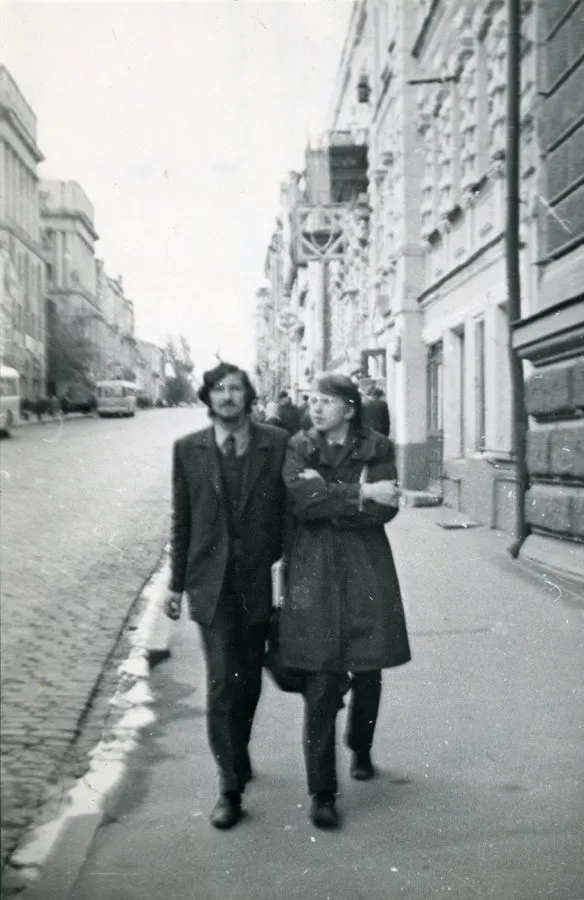
The idea to create a group arose from the tandem of Pavlov and Rupin. They constantly communicated: from the late 1960s they went to the photo club together, then returned home together to the factory district of the city. But mostly the friends communicated in the photo laboratory of the Institute of Orthopedics and Traumatology, where Pavlov at that time worked as the head of the photography and cinema lab (while simultaneously studying at the Kharkiv State University evening economics faculty). It was in the “Orthoped” photo laboratory in 1971 that the idea to create the group «Vremya» was born.
Pavlov recalled the Baltic photographers and the Estonian group Stodom, and Rupin asked the question: “why don’t we create such a group?” For some time, the friends nurtured this idea, considering candidates from the photo club with whom they wanted to unite. If they were newcomers to the photo club, Malovanyy, Suprun, and Tubalev already had the status of mature photographers, and Mykhailov shot a lot and interestingly. They were offered to create a joint creative group. Tubalev was the first to respond, then Malovanyy. They usually gathered at Tubalev’s, staying late: the apartment was on Donets-Zakharzhevskyi Street, right in the city center, so meeting there was quite convenient. Oleksandr Sytnichenko was taken into the group in absentia, as he was in the army at that time. Later, in 1974, Anatoliy Makiyenko (1949) joined the group: there was a period when it numbered 8 people. But Sytnichenko gradually distanced himself from the comrades, and Makiyenko seemingly took his place. The name «Vremya» was invented by Rupin. When a news program with the same name appeared on the Central All-Union TV channel a few months later, the artists were embarrassed and even wanted to change it, but it stuck.
Lobbying for new photography. Activities of the group, concept of the «Theory of Impact»
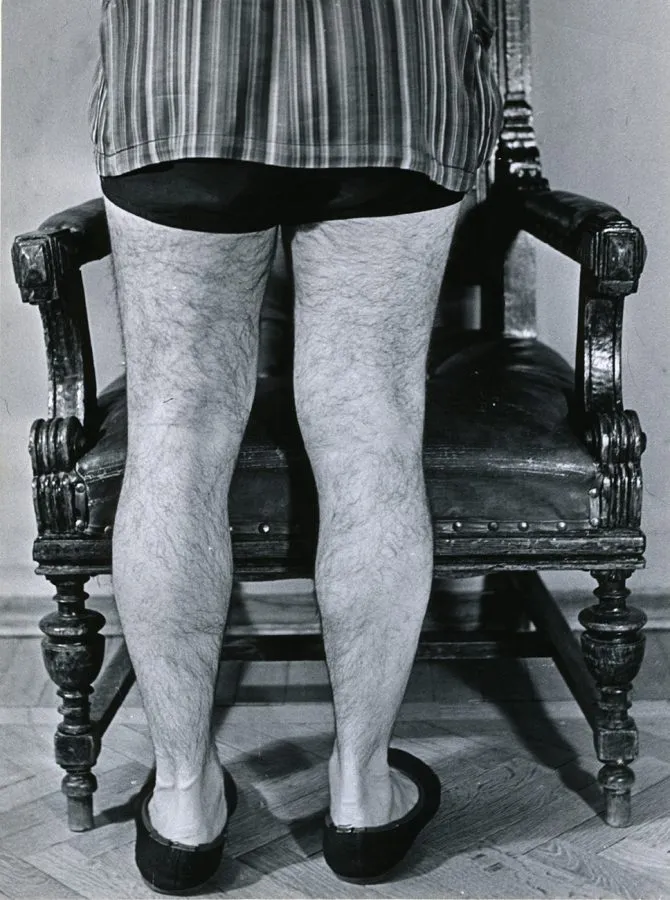
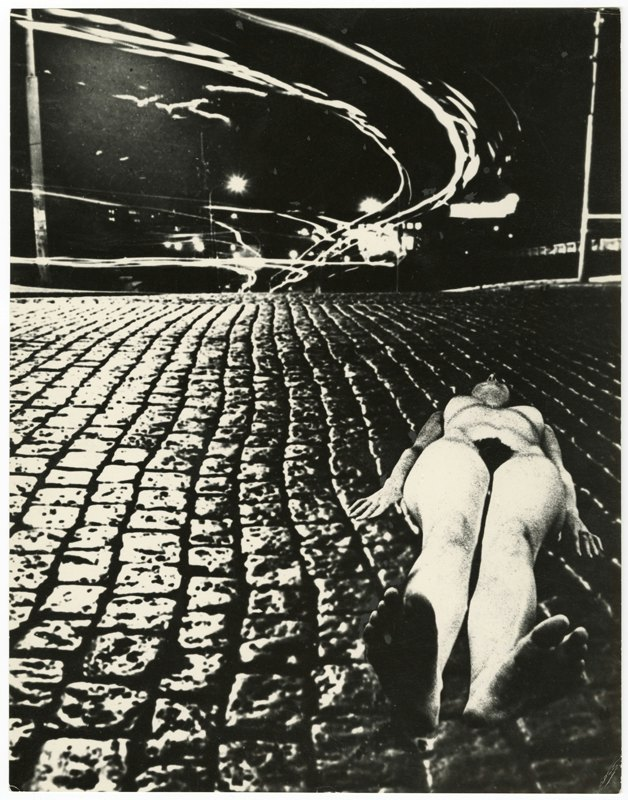
The group fought for leadership positions (chairman, secretary, members of the art council) to carry out a coup and change the club’s tastes from its socialist realist standards imposed by the magazine «Soviet Photo». Despite opposition from the inert club mass and confrontation with the leadership, they actively promoted their point of view, defending the «Theory of Impact» and active photography that seemingly “attacks” the viewer. At the plot level, it was about working with taboos (“dark”, unceremonious moments of life), at the form level — about the use of various techniques (shooting with a wide-angle lens, use of light filters, collage and montage, including “overlaying”). The «Theory of Impact» is a collective manifesto mostly used in polemics (it had no written record). Ultimately, during this struggle, the group ousted the old art council and practically seized power in the Photo Club. Sytnichenko became chairman, and Rupin secretary. But the leadership was dissatisfied with such a Photo Club, and in 1975 it was disbanded.
An important event was the annual report exhibition of the regional photo club, which the group used for their public performances. The club also sent works of its members to official Soviet photo exhibitions (republican and all-Union), but the group «Vremya» neglected them. Exceptions were foreign exhibitions. Rupin compiled a card index, obtained addresses, and began sending parcels with the group’s photos. The group had a stamp with an owl image, which they used to stamp photographs before sending them to exhibitions. Parcels abroad did not always arrive, as censorship worked that way. Sometimes the group received torn packages with damaged photographs returned.
Closure of the photo club or the end of the first period of the group «Vremya»
In the autumn of 1975, the Regional Photo Club, effectively led by the group «Vremya» (chairman Sytnichenko, secretary Rupin, membership in the art council), gathered a collection of photographs to send to Leningrad. The collection was dominated by the group «Vremya» and its priorities. One of the “informers” cunningly obtained the collection and presented it to the KGB. An immediate reaction came to the address of the director of the Regional House of Artistic Amateur Activities (where the Club was located). He told the photographers that he would not give the collection to anyone because all the works bore the Regional Photo Club stamp, and therefore they belonged to him, and the authors, as members of the photo club, must obey his orders. In response to this demagogy, Malovanyy proposed to surrender the membership card in exchange for the works. The director agreed to this condition, and so all group members handed in their cards and took their photographs. After this demarche, the administration decided to close the photo club to prevent similar precedents. Thus ended the early, “communal” period of the group «Vremya» — the period of “protest” that united them and laid the foundations for individual development paths.
Achievements of the early period
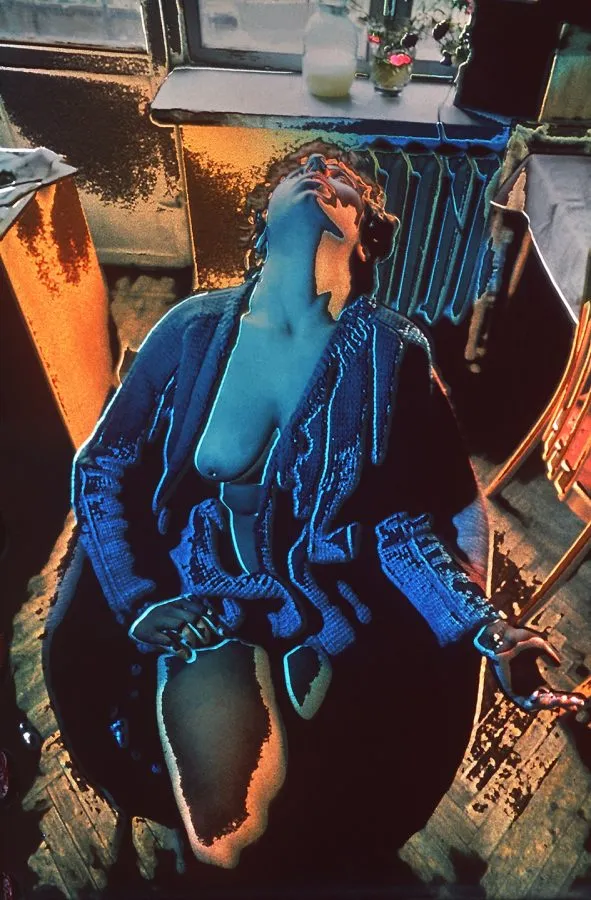
Many innovations arose through the collective efforts of the group. Thus appeared the new Ukrainian photomontage (after a long oblivion of the 1920s experience) — montages by Malovanyy, who was the first to gain international recognition through publications in foreign magazines, and Suprun, who proposed the first adequate images of Ukrainian identity beyond the Soviet “sharovary” aesthetics. At the content level, montages were primarily a way to symbolically remove (Soviet) reality and rework it in a new way. In Suprun, this was hyperreality expressed in material excess, and in Malovanyy — hyperbolization of natural elements (and later — color excess).
An absolutely new photography emerged, which later became famous worldwide. It was most fully expressed by Borys Mykhailov, the most mature artist of his generation. His charismatic nature attracted some and repelled others. The author himself understood and comprehended many photographs taken in the late 1960s much later when he united them into series — for example, “Suzy and Others” (late 1960s — 1970s). Later, the photographs also received proper verbal interpretation. But then, in the 1960s, the shooting itself, conducted in the new paradigm that Mykhailov was only feeling his way to, was extremely valuable. It was about making photography based on one’s personal life impressions.
In the late 1960s — 1970s, Mykhailov created series of black-and-white photographs: “Horizontal Pictures, Vertical Calendars”, “Engineers”. At the same time, he created color series “Red”, “Esthetic” (1968-1975), and others. The latter were made using the “overlay” or “sandwich” technique (slide + slide). This technique, which Mykhailov presented in Kharkiv as his own invention, became a widespread method and yielded new results.
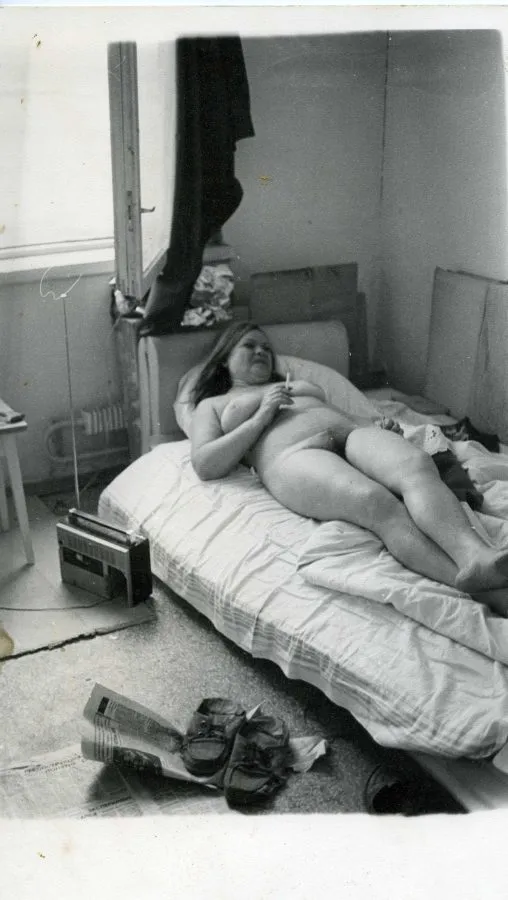
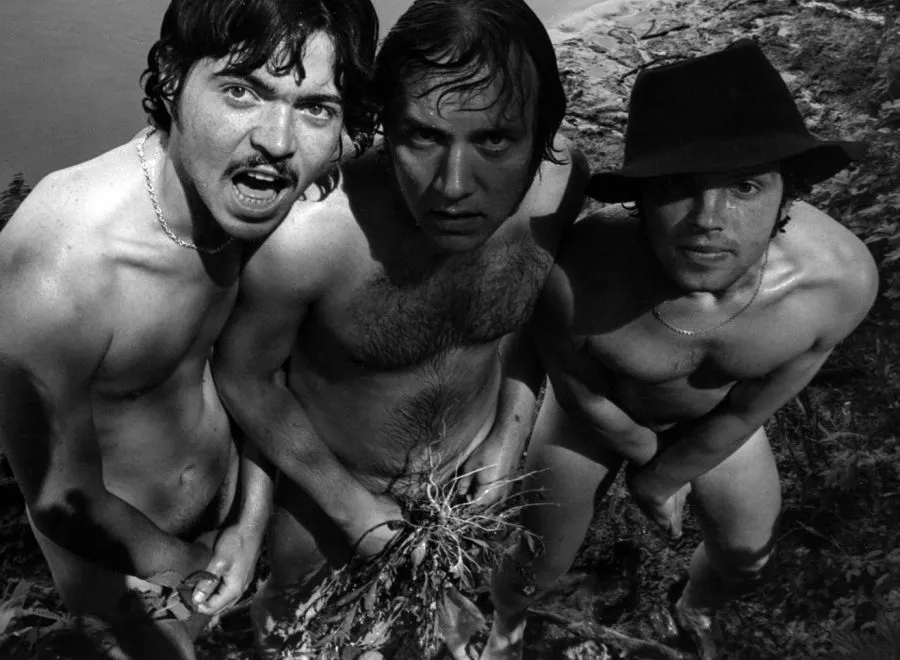
The group «Vremya» reinterpreted the theme of the nude («body» as protest) in the works of Mykhailov, Tubalev, Malovanyy, Pavlov. Yevhen Pavlov’s series “Violin” (the first work in Soviet photography during the Iron Curtain era — with mass shooting of the naked male nature) was published in the Polish magazine “Fotografia” (1973, No. 1) with comments by the well-known Polish art critic Jan Sunderland.
Social-art spirit photographs were found in almost all group members (even before the Moscow social art influence due to Borys Mykhailov’s contacts with the Moscow artist environment). Especially noteworthy are Tubalev’s ironic shots, in particular his 1974 series “Lenin in Kharkiv” (it should be noted that Lenin was never in Kharkiv). Despite the irony, the title gave the right to participate in any exhibition.
This period was characterized not only by the emergence of social but also ecological issues. For example, Sytnichenko joined the movement to protect the Aral Sea, which was threatened with drying up. His photographs constitute an important segment of the critical direction of Kharkiv photography. To support his activities, he received a grant from the Soros Foundation in Moscow. (However, it is generally believed that trips to the Aral Sea and all related events adversely affected his mental health, throwing the photographer off balance and pushing him away from the group).
Second period: late 1970s – late 1980s
From 1973 to 1979, Pavlov was absent from Kharkiv. First — military service, then studies at the Kyiv State Theater Institute (cinematography faculty). However, he maintained constant contact with the group and shot not only photography but also films in the paradigm of the “theory of impact”. At that time, Rupin, Mykhailov, and Malovanyy came to Kyiv and stayed with him in the dormitory of the theater institute.
This second period is associated with the leadership of Borys Mykhailov. He reoriented Kharkiv photography towards conceptualism and established contacts with Moscow photographers and artist Ilya Kabakov (introduced to him by Slyusaryov). As a result, photographic social art, conceptual photography, and Mykhailov’s “books” “Density”, “Crimean Snobbery” (1982), “Unfinished Dissertation” (1985) appeared in Kharkiv. Various types of intervention in photography developed: coloring (Mykhailov, Viktor Kochetov), scratches (“Blatari Vospoda”, Pavlov, 1989), color retouching (“Archive Series”, Pavlov, 1988). An important stage of working with the Soviet archive began, with series “Luriki” (1985) by Mykhailov, “Life of the Factory” by Pavlov (1990), “Phantoms of the 1930s” (1990) by Roman Pyatkovka.
Exhibition at the Kharkiv House of Scientists. A major city scandal
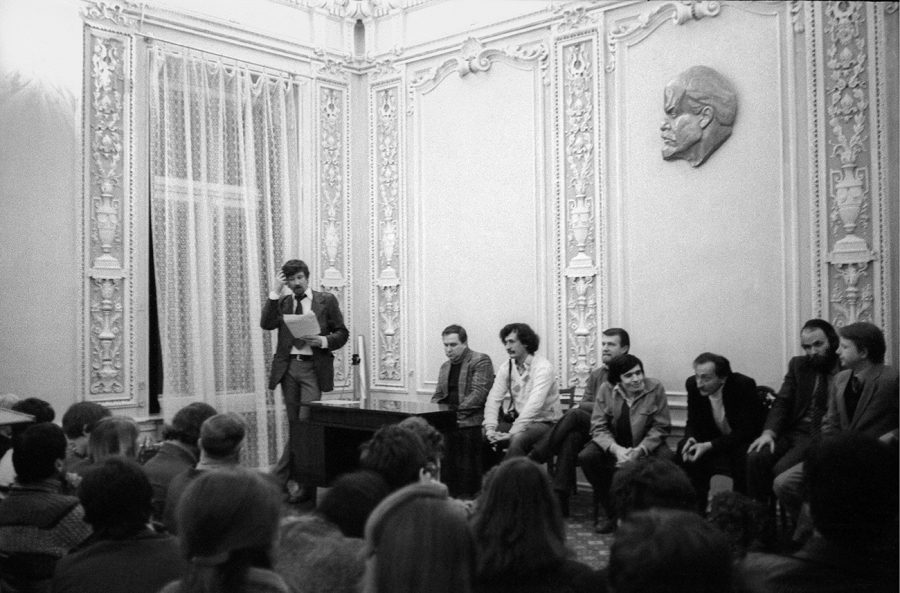
In 1983, the group «Vremya» organized an exhibition at the Kharkiv House of Scientists, counting on its liberal exhibition platform and intellectual audience. All this happened with the support of the Young Scientists Club headed by Volodymyr Bysov. A huge crowd of viewers gathered at the opening, but by evening the exhibition was taken down. The opening included a press conference where the group entrusted Rupin to present its concept and in particular the “theory of impact”. The discussion took place in the conference hall on the second floor, decorated with classical paintings; it was packed with visitors.
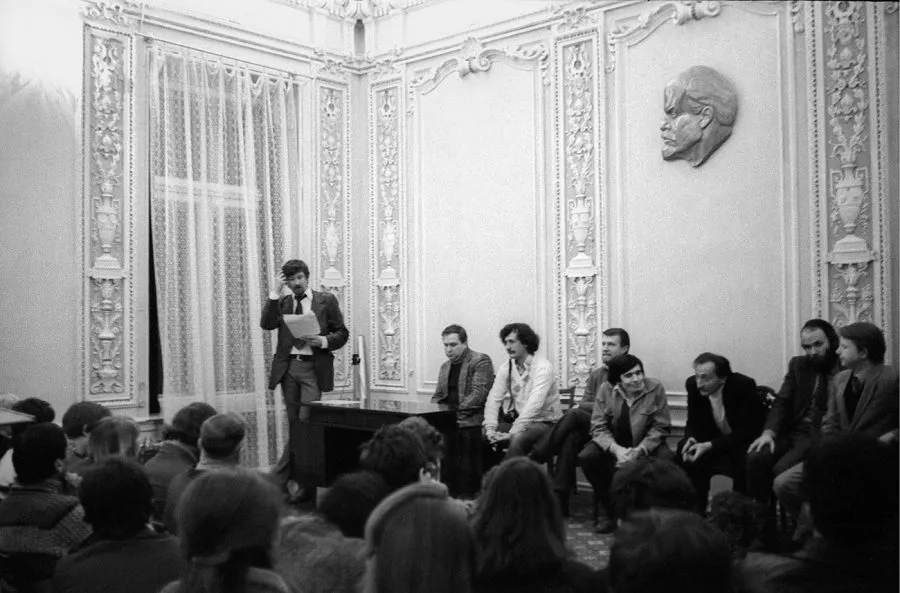
And at the same time, while upstairs in the conference hall the group «Vremya» was delivering its discourse, on the first floor, the culprits of the event — activists of the Young Scientists Club — were saving the situation: in the administration office there was a fierce struggle for the telephone — the director was trying to call the KGB. In the exhibition hall, with guerrilla agility, careful hands removed photographs from the walls and packed them into someone’s “Moskvich” car, brought by some friends. And then a surreal event occurred: the director was shown empty walls as the absence of a crime scene. Thus, KGB intervention was avoided.
Influences
The group «Vremya» was interested in Baltic photographers and exchanged exhibition collections with their photo clubs. The greatest influence was exerted by Vitas Lutskius (1943-1987). Pavlov claims that Kharkiv photographers were “shifted towards the wide angle” precisely by Lutskius (“the wide-angle lens gave artistic power”). The acquaintance with his work was initiated by Malovanyy: it was he who in 1971 brought a large exhibition of Lutskius to Kharkiv, printed in the format 50 x 60 cm. It made a strong impression on everyone. They examined it in the Photo Club, laid out on the floor, because the Soviet leadership would not allow “this” to be hung on the walls. Later, Mykhailov and Rupin befriended Lutskius. They traveled to him in Vilnius, and other photographers did as well. Rupin, Mykhailov, and Pavlov went to Nida, where there was a summer House of Creativity of the Lithuanian photo association. Mykhailov established connections with Moscow conceptualists, Ilya Kabakov and Volodymyr Yankilevsky; sometimes Rupin came to them together with Mykhailov. Rupin and Pavlov visited Moscow for the exhibition of the group “Ermitazh”, which was in the focus of attention of the group «Vremya».
The last joint actions of the group. «Panorama»
There is no clear point of the final dissolution of the group «Vremya». In 1986, Borys Mykhailov was offered to hold a meeting at the republican photo club in Syktyvkar (capital of the Komi Autonomous Republic). But he redirected it to Yevhen Pavlov, who with a large collection of works by members of the group «Vremya», as well as Viktor Kochetov, carried out this event. The creative meeting resulted in a statement to the local KGB the same day. But again, the quick reaction of the local community helped: the exhibition curator was warned in time, Pavlov hastily gathered the photographs and left the “capital” of Soviet camps in time.
Anyway, the last stage of active communication of the group was the period of cooperation with the Ukrainian Experimental Creative Association «Panorama». The Ukrainian youth creative association «Panorama» (later from “youth creative” it became “experimental”, UETO), organized by Leonid Zaslavsky (1951), emerged as a cinema association, but soon added “photo” and “visual arts” to the name and very quickly gathered all active representatives of non-conformist directions. The photography department was headed by Borys Mykhailov, and the visual arts department — Tetyana Pavlova (she was hired as chief editor of the information center).
The office, initially located in a housing maintenance basement in Saltivka (a residential district of the city), unexpectedly became an art center known beyond the city. At the end of the 1980s, photographers and artists were invited here not only from Ukraine but also from Russia and Belarus, as well as art critics and curators from far abroad. Ivan Dykhovichny filmed works of Kharkiv photographers for his film “Red Wheel” (1988). Thanks to the consolidation of forces in “Panorama”, which actively accepted representatives of the global photographic community, Kharkiv authors gained access to numerous exhibitions and publications. Among them was the “Exhibition of American, Estonian, and Kharkiv Photographers” in the alternative Moscow Gallery “Na Kashirke” (1989), where Tetyana Pavlova gave her first lecture on the Kharkiv School of Photography.
After the move of “Panorama” in 1990 to Shota Rustaveli Street and due to its unsuccessful reorganization, cultural activities ceased. But interestingly, even after the liquidation of this creative association, a new center of alternative art appeared on the same street (Rustaveli, 32), in the workshop “Letter A”, where Serhiy Bratkov and Borys Mykhailov moved their activities, creating the gallery Up/Down.
From the group «Vremya», Mykhailov, Pavlov, and Malovanyy collaborated with «Panorama». Anatoliy Makiyenko headed the association after the “overthrow” of Zaslavsky at the general meeting. Members of «Panorama» actively participated in the first independent photography exhibitions “F-87” and “F-88” at the Palace of Students (organized by Misha Pedan), dominated by works of members of the group «Vremya». In 1988, a personal exhibition of Pavlov’s photographs was held at the Art Museum, prepared by the photo department of «Panorama», headed by Mykhailov. The exhibition was also shown at the Republican House of Cinema (Kyiv). The poster for the exhibition was commissioned to Vitaliy Kulykov [6]. The exhibition was “flown” (i.e., censored, given permission for holding and undergoing prior review from political-ideological positions) by a KGB officer. For communication with him, «Panorama» delegated its staff art historian Tetyana Pavlova. As a result of a very tense polemic, where they had to fight for almost every work, the exhibition still took place, although out of 128 works, 23 were not admitted to the exposition by this KGB officer.
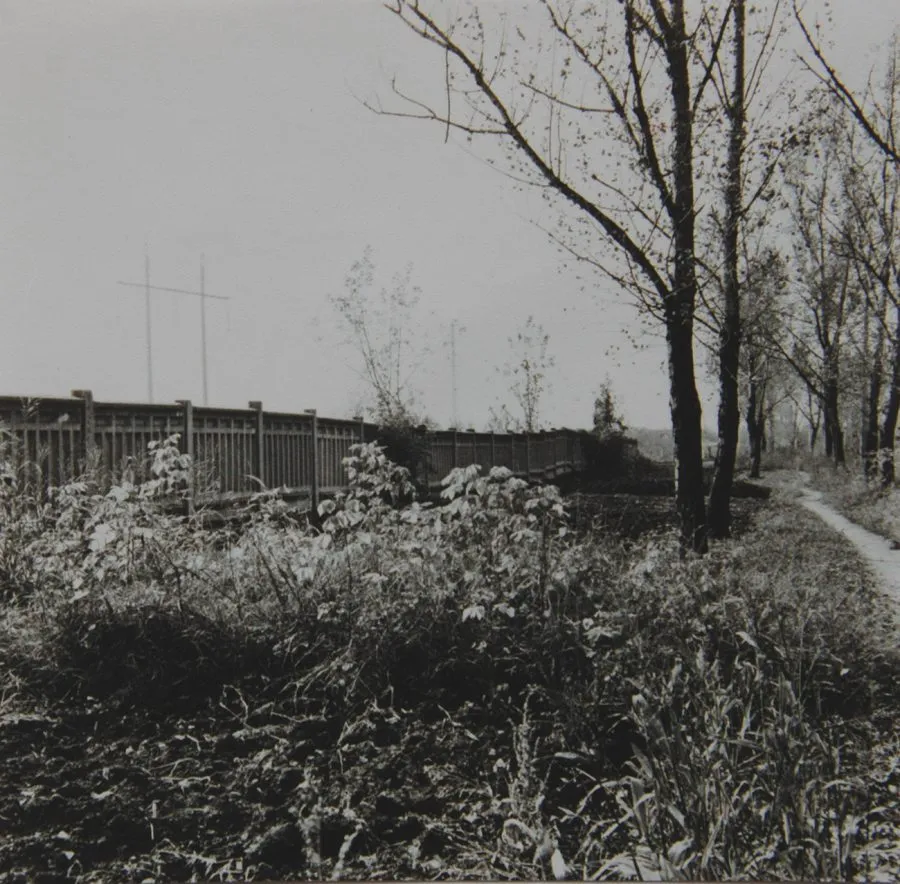
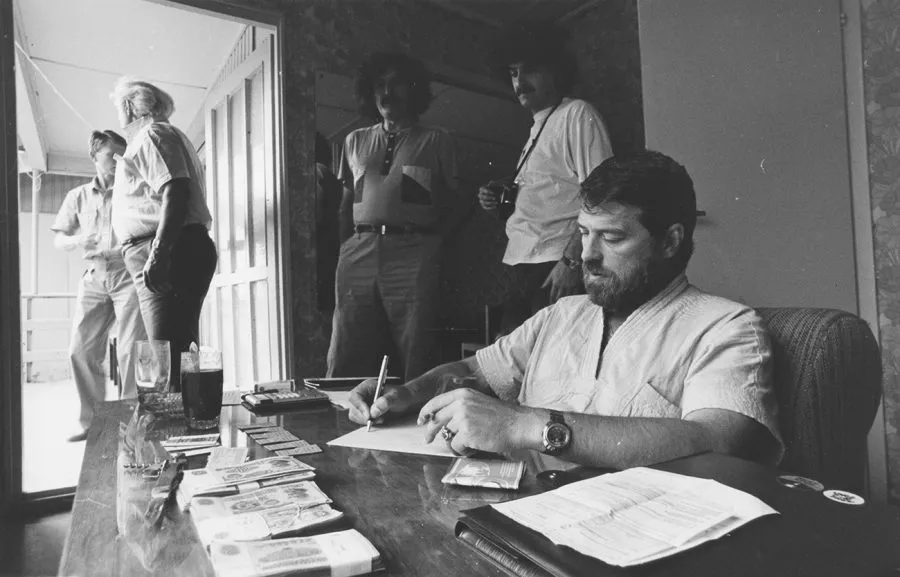
The last large-scale joint action of the group «Vremya» was an expedition to Bulgaria in 1988 to the “Photovacation”. It was generated by Pavlov after a prize trip to Bulgaria and establishing contacts with local photographers. At that time, it was a well-known festival on the Black Sea coast, near Sozopol. The trip of the group «Vremya» was organized and financed by UETO “Panorama”, which sent there, besides director Zaslavsky: Mykhailov, Malovanyy, Pavlov, Makiyenko (and also Roman Pyatkovka). Personal annotations for the exhibition for each author were prepared by Tetyana Pavlova. Within the framework of Photovacations, an exhibition of photographs by members of the group «Vremya», which they brought with them, was held. In addition, on Mykhailov’s initiative, the group shot a joint work on slides, which they presented there (the slides are preserved with Mykhailov). The festival organizing committee provided slide color film to all participants and ensured its development. The competition was dominated by glamorous aesthetics, so the group’s trash photography was not recognized by the jury. During this trip, the group created a collection of slides, using all forms of collective work. Pavlov and Mykhailov also created a joint black-and-white work. It was later published in the Swedish edition Rosengren A. Fotografi tran Harkov i Ukraina, CCCR (B. Mihailov, J.Pavlov, R.Pjatkovka, M.Pedan, V.Krey, S.Bratkov).
That same year, already in Kharkiv, the families of Pavlov and Mykhailov, in full, organized a photographic shoot, the result of which was Pavlov’s series “Mythologies”. During the second period, the group still arranged joint shoots. Mostly this concerned the nude. Therefore, among the photographs of group members, very similar shots sometimes occur. They also went together to shoot various disadvantaged objects.
Throughout both periods, “apartment exhibitions” were the main form of exhibiting the group’s works. These were constant, regular visits, although uneven living conditions created certain preferences. At first, they mostly used Tubalev’s apartment, then Rupin’s and Mykhailov’s, when they had families and settled in separate apartments. Sometimes meetings took place at Malovanyy’s and Pavlov’s apartments (when grandmothers and children went to bed). They arranged photo or slide shows. Photographs were also taken home for individual viewing. For example, this happened with Mykhailov’s “books”. Exchange exhibitions with photo clubs from other USSR cities also took place. The group «Vremya» sent its collection, received another in exchange, viewed and discussed it. In this alternative exhibition practice, the factor of personal contact with photographic works was very important; moreover, it allowed avoiding production costs for exhibition design. Direct reactions of viewers at these improvised exhibitions were lively and relevant.