
At PinchukArtCentre, a research platform was launched with the goal of creating a living archive of Ukrainian art from the early 1980s to the present day. The platform’s team visits artists’ studios: studying their biographies, and the research results can already be seen in the PinchukArtCentre library. As part of the project, Vogue.ua and the art center publish articles about the most interesting Ukrainian artists. The project’s heroes have already included Oleksandr Hnylytskyi, Maksym Mamsykov, Illia Isupov, Oleg Tistol. The next heroine is the artist Maryna Skugaryova.
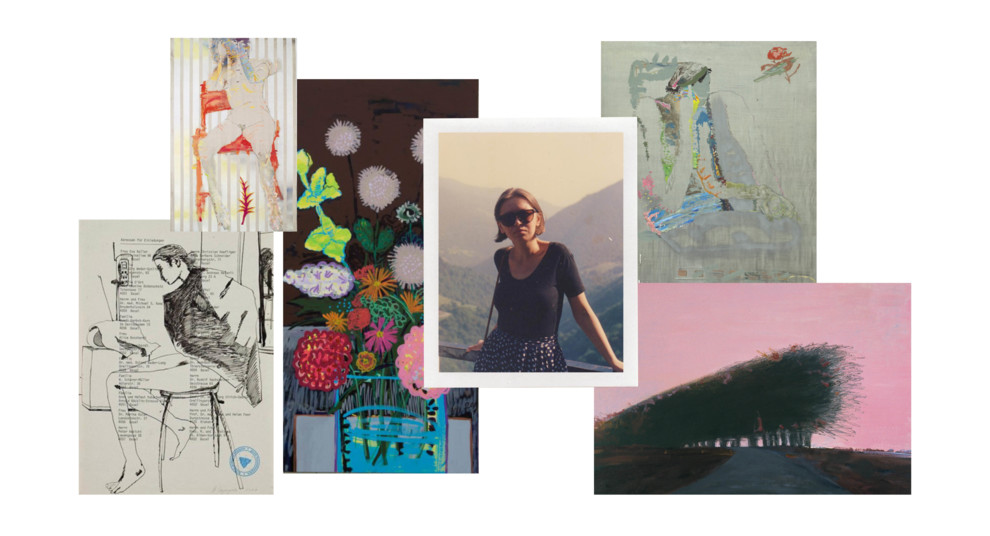
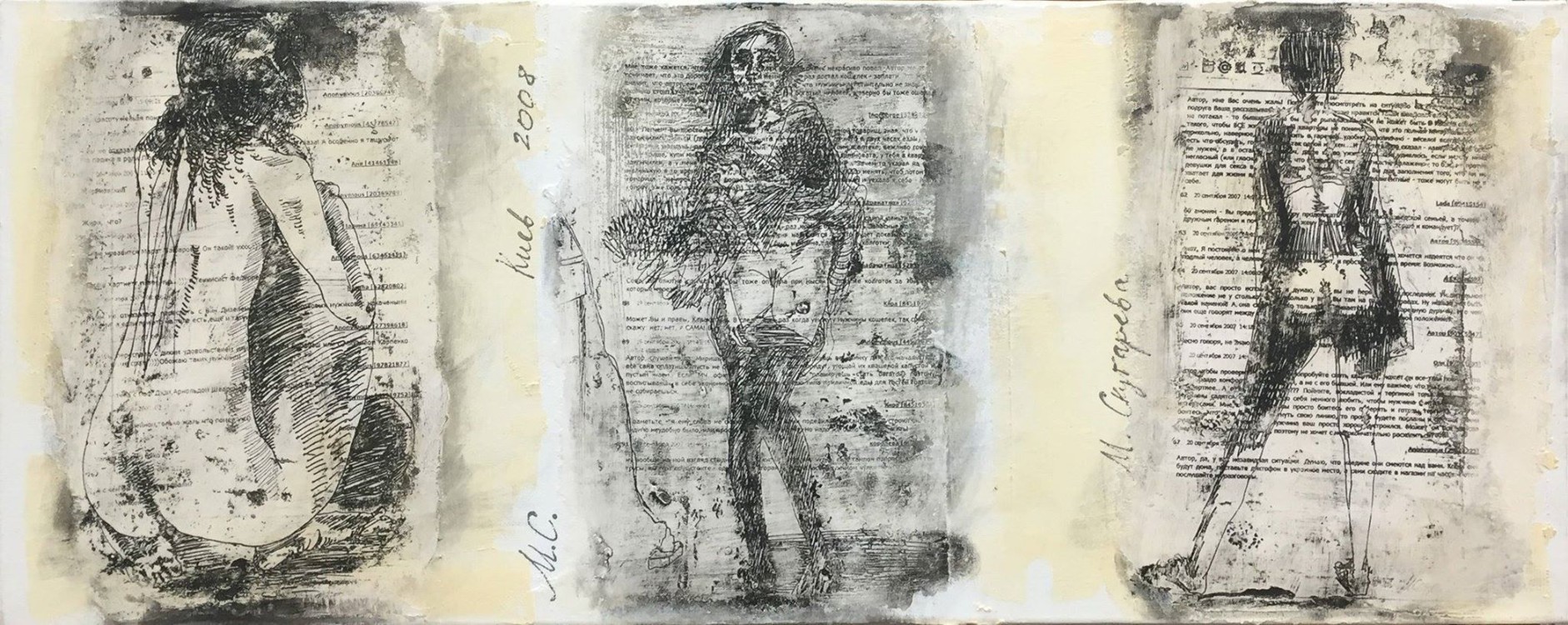
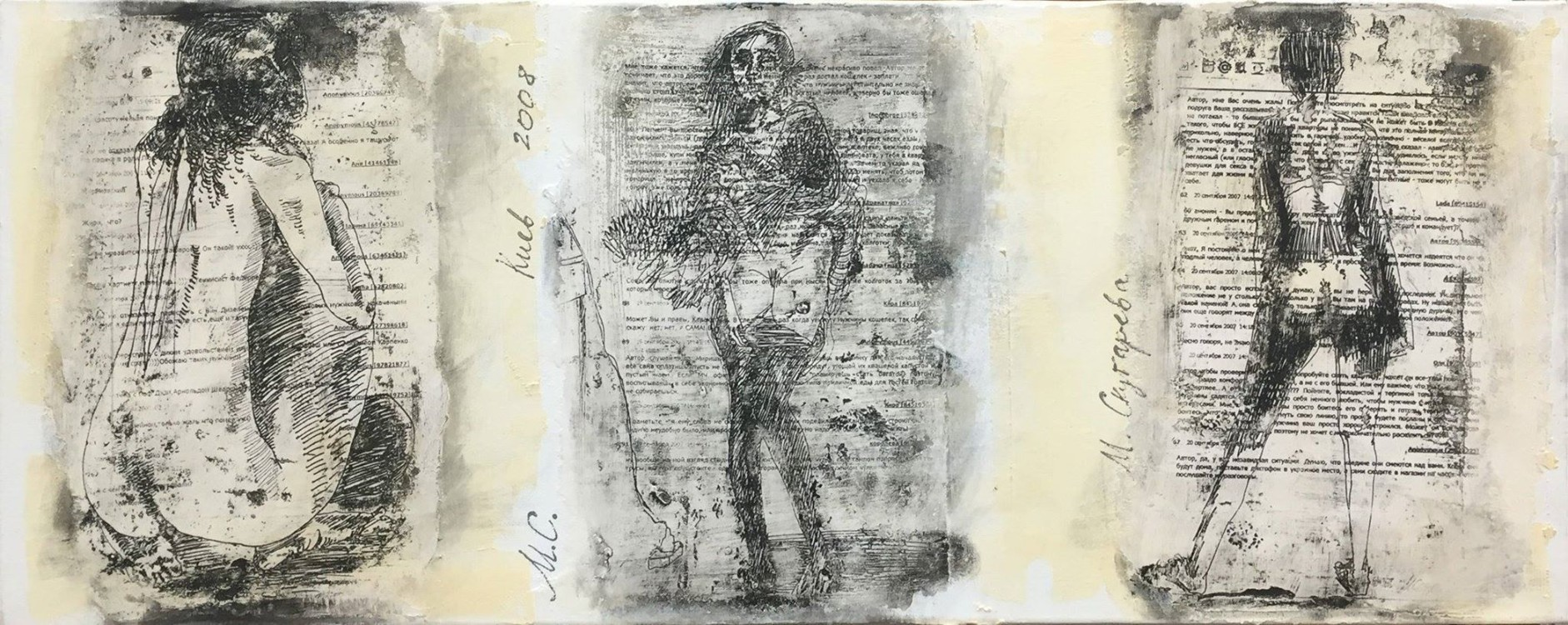
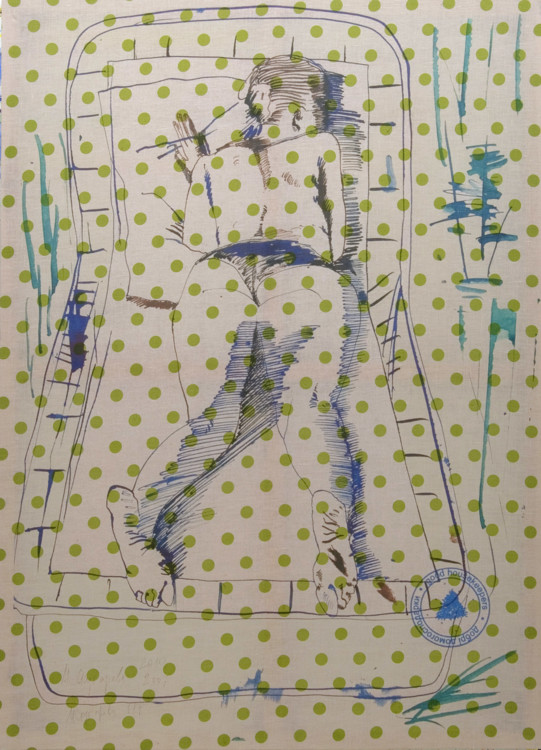
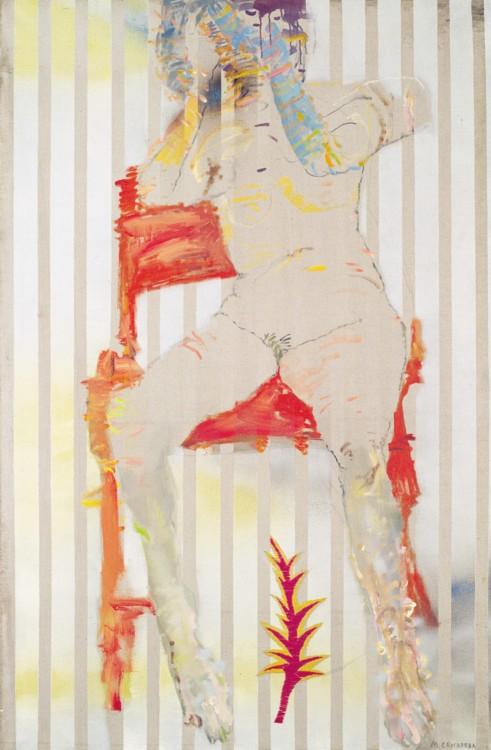
I was introduced to Maryna Skugaryova’s work in 2012 by Olena Chervonik, a curator at the Donetsk “Izolyatsia”. Works from Skugaryova’s series “Michaelis Constellation, or Good Housewives” were shown at the exhibition “Gender in Izolyatsia.” It was a small collection of graphics, hidden under a thick layer of glass in a showcase — nude female figures drawn with ink, colored pencils, and ink on printed internet chatouts surrounded by household items. I remember noting at the time that Skugaryova’s works were very feminist. Personal intimate plots and images give her works a sharp social and cultural nuance. The artist herself claims that she never really thought about feminism, she just painted her surroundings, friends, and girlfriends.
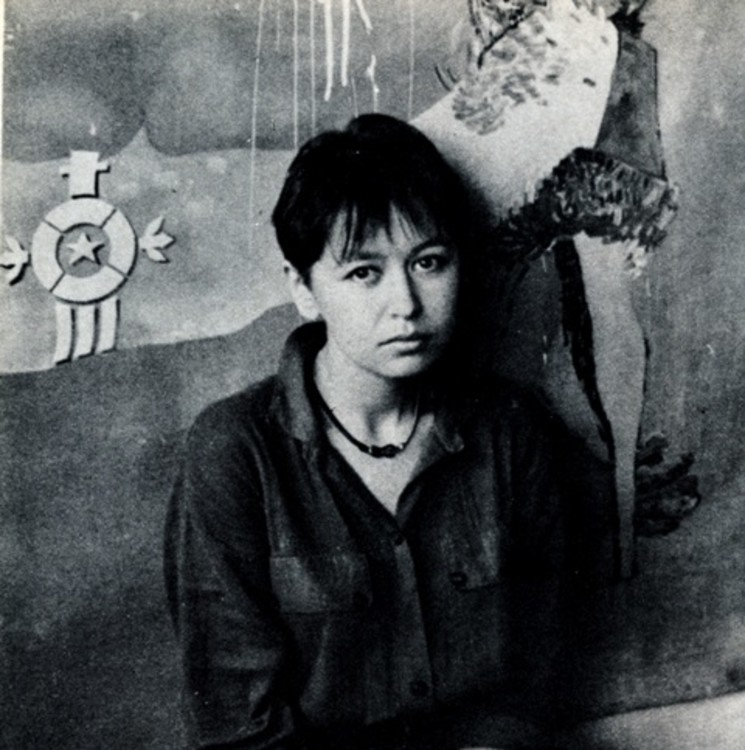
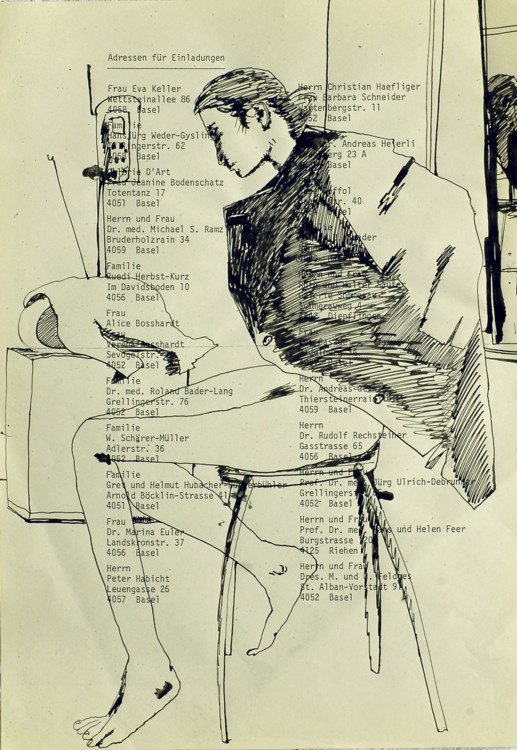
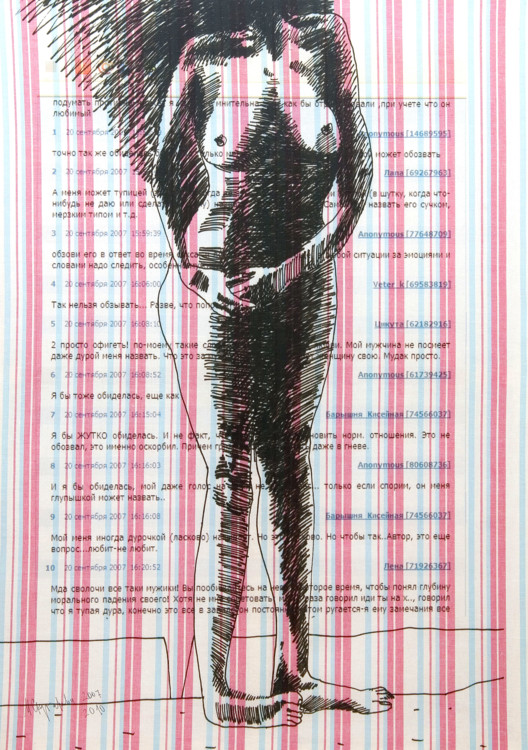
The work with which she participated in her first exhibition “Kyiv-Tallinn” at the Kyiv Polytechnic Institute, the tapestry “Portrait of Anatoliy Stepanenko” (1987), was woven by Skugaryova by hand based on a sketch by the artist Oleg Tistol. Maryna studied in Kyiv at the famous State Art School, then — in Dagestan, where she mastered hand-weaving techniques; later she studied artistic textiles in Lviv. Handwork is deeply “woven” into her creativity. Despite the fact that after the “Portrait of Anatoliy Stepanenko” the artist never wove tapestries again, almost every subsequent painting of hers from 1987-2000 was “marked” with embroidery — birds, flowers, ornaments, like an author’s seal.
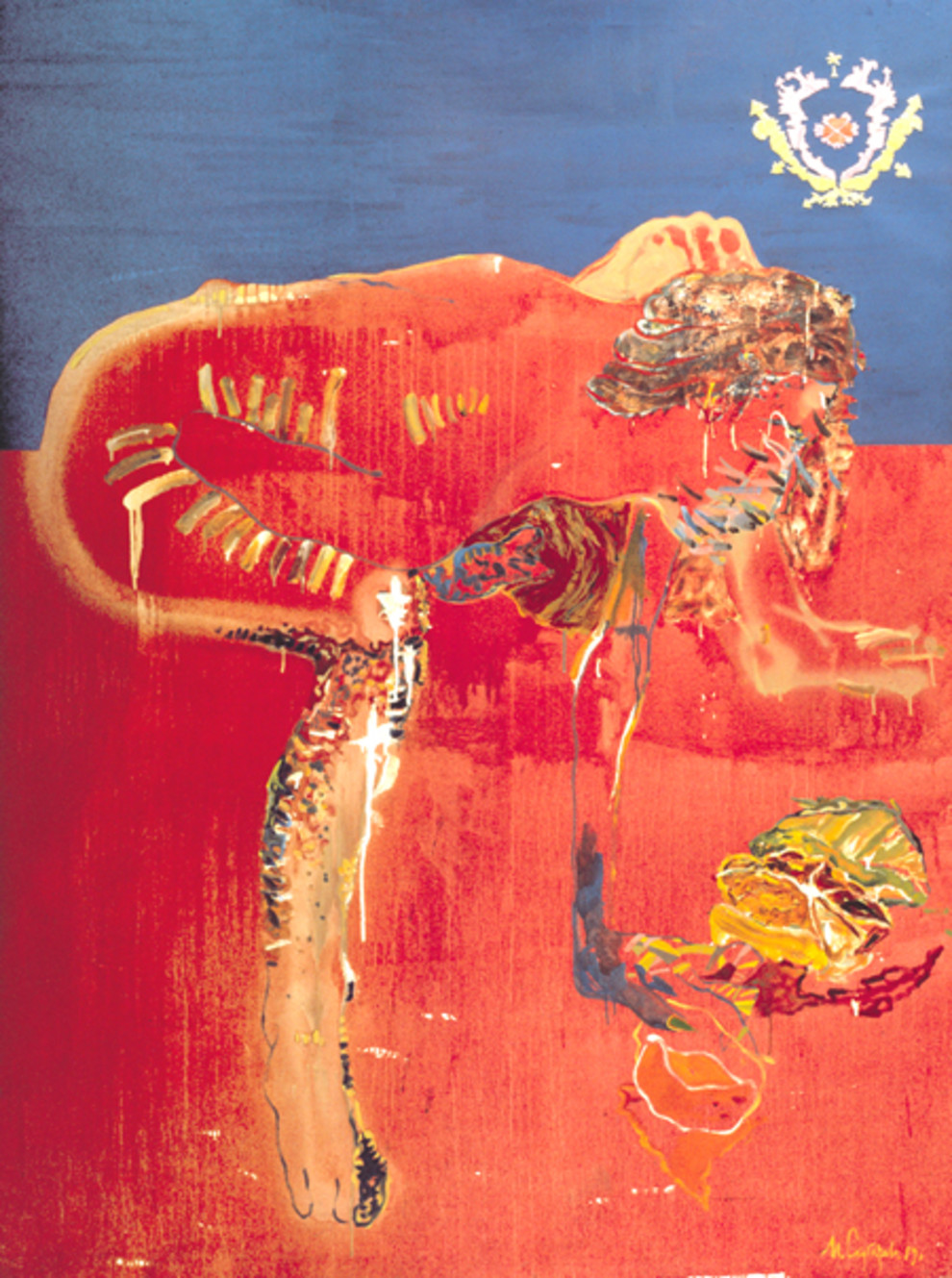
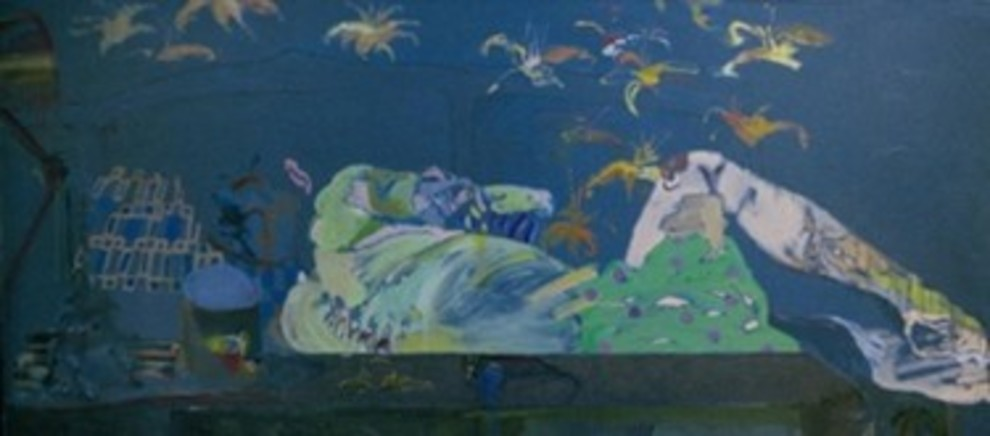
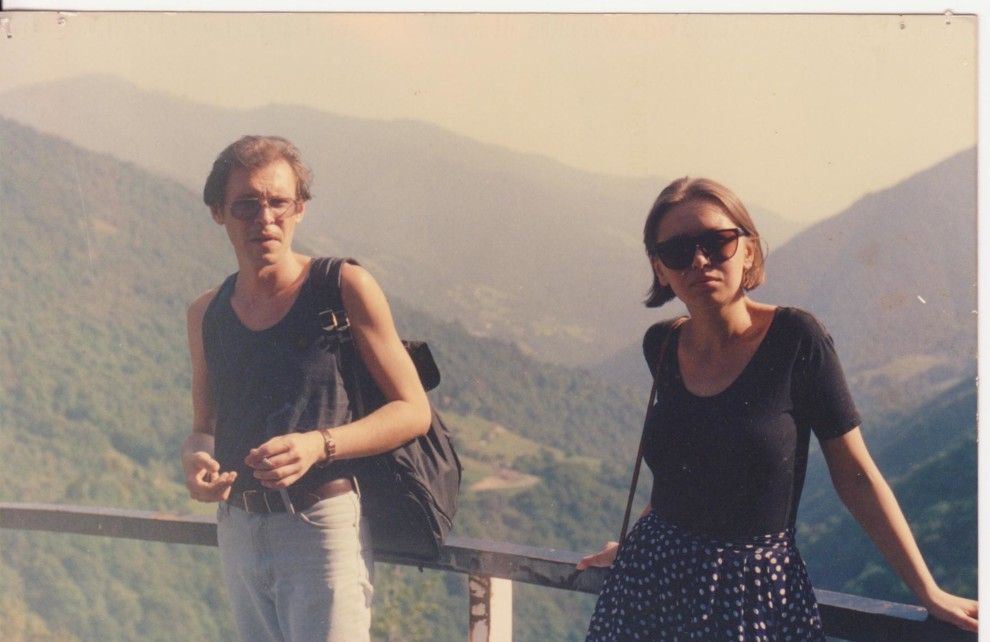
In addition to images of birds and flowers, she embroidered portraits of her artist friends on her paintings, including her husband, artist Oleg Tistol. Tistol and Skugaryova met back in Kyiv when they were students at art school, and many years later they met again in Lviv, during their studies at the institute. At the end of the 1980s, Skugaryova and Tistol got married. Almost immediately after graduating from the institute, Maryna became a participant in the turbulent artistic process of the late 1980s, in which Oleg was already involved, and she herself began to paint. Tistol’s ideas could already be noticed in the artist’s work at that time.
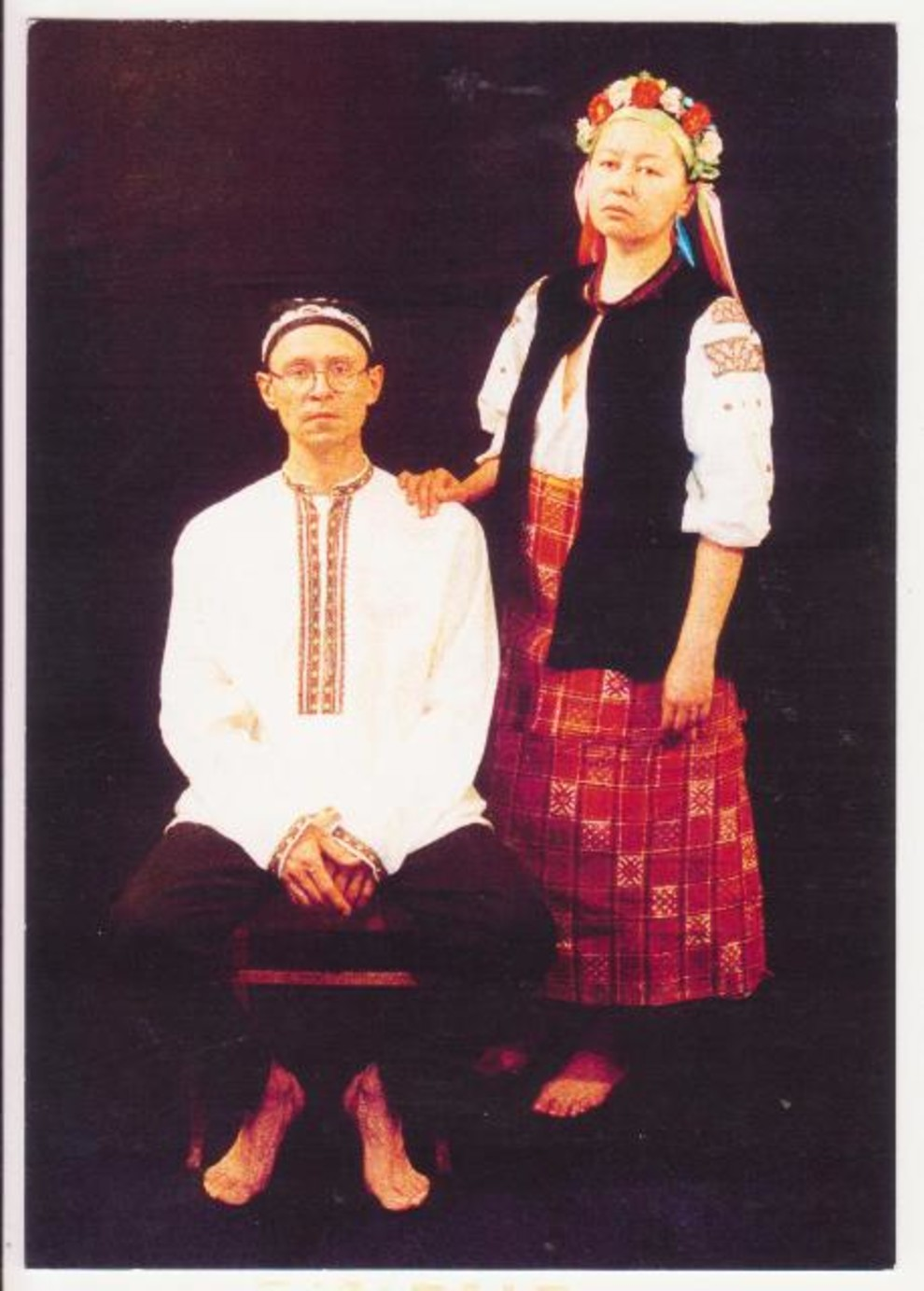
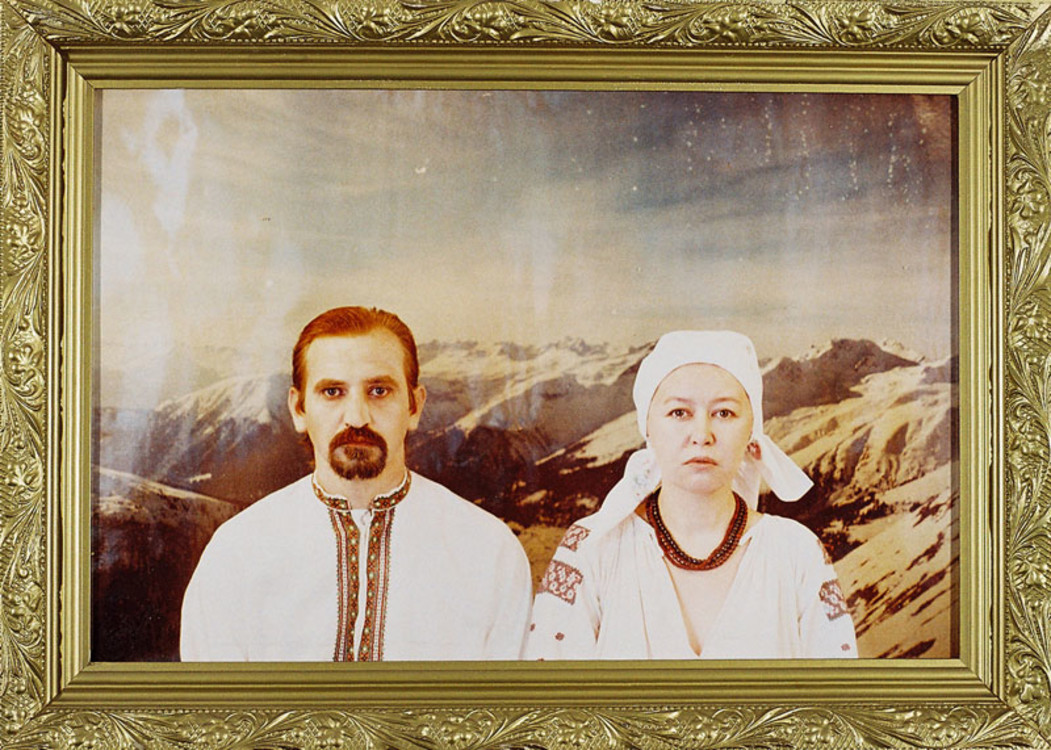
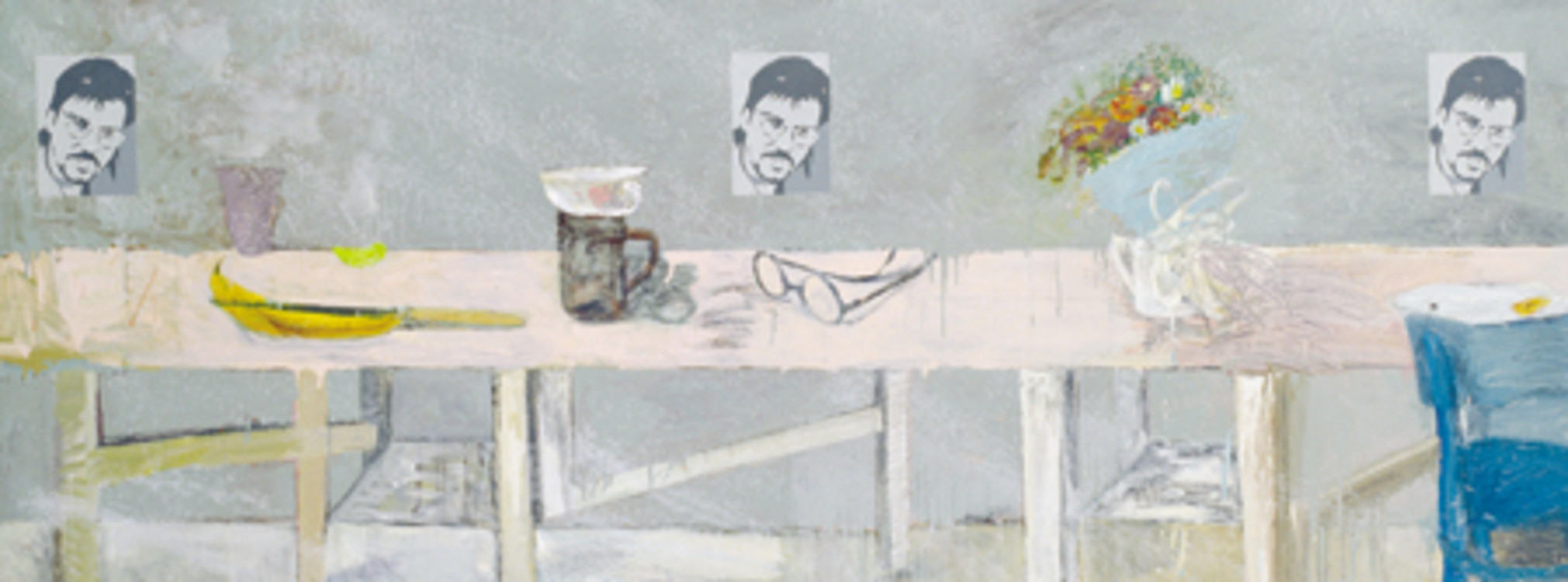
A new cycle of development of the embroidery theme in Maryna’s work fell on 1996. The project “I Feel Good” was implemented with the support of the Soros Center for Contemporary Art in Kyiv (the curator was the now famous Marta Kuzma). The exhibition included paintings — “Sevastopol Waltz,” “Guantanamera,” “Parrot,” “Fragment,” “Mulhouse,” as well as four white pillows embroidered with portraits of close people and friends (artists Oleg Tistol, Kostyantyn Reunov, Olga Sviblova, Mykola Matsenko); the fifth pillow — with a portrait of the artist herself — lay on a metal bed. Portraits on pillows of loved ones are perhaps a desire to bring them closer, to hug them together with the pillow like teddy bears. Or a desire to forever preserve the image of a person by carefully and thoroughly embroidering their portrait on canvas. This gives Skugaryova’s works a resemblance to naive domestic icons, which are embroidered not for a temple, but “for oneself.”
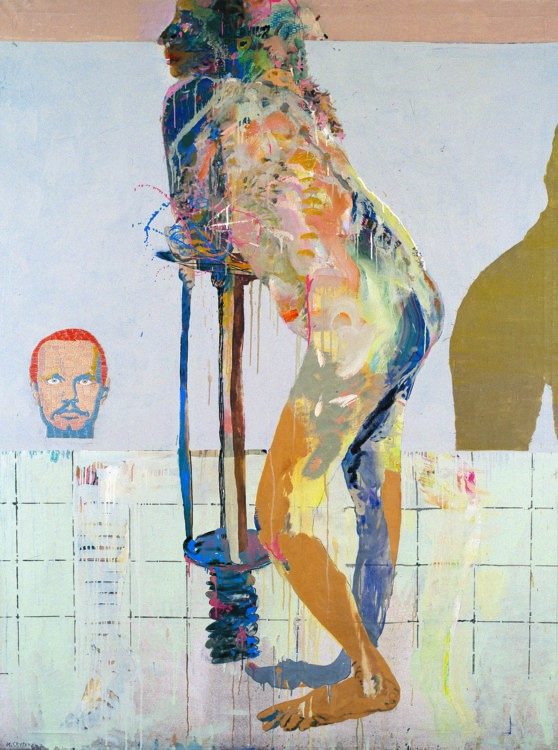
In the 1929-1930s, artist Anatoliy Petrytsky created a series of portraits of his friends, the then Kyiv intelligentsia. These paintings and graphic works today are not only part of the cultural process but also historical material. Following Petrytsky, Skugaryova embroidered portraits of her contemporaries of the new era, her friends, artists whose creativity began to develop at the turn of epochs — from the late 1970s – early 1990s and continues to develop to this day.
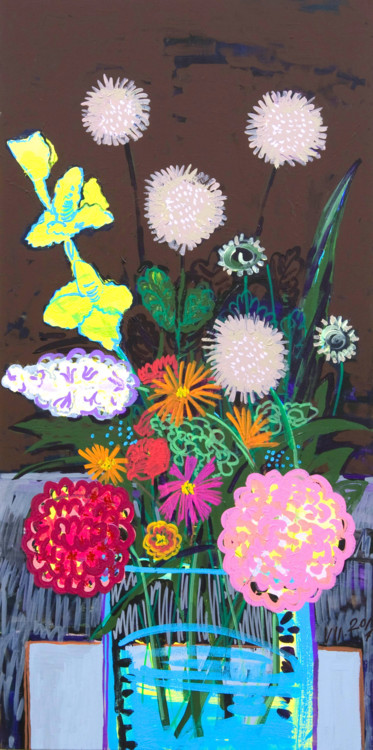
According to Skugaryova, since early 2014 she has hardly engaged in painting and embroidery. The language she always used in her practice was simple and understandable to everyone, and her metaphors appealed to the sensual. The events of the winter of 2014, the annexation of Crimea, the war in Donbas are perceived by the artist as a personal misfortune. Over these years, she has made only a few small works: “July 12” (2014), “July 16” (2014), “Lupine” (2015), “Bouquet” (2015), “Sunflower” (2016), “Immortelles” (2017), “Majors” (2017). All of these are reflections on war chronicles.