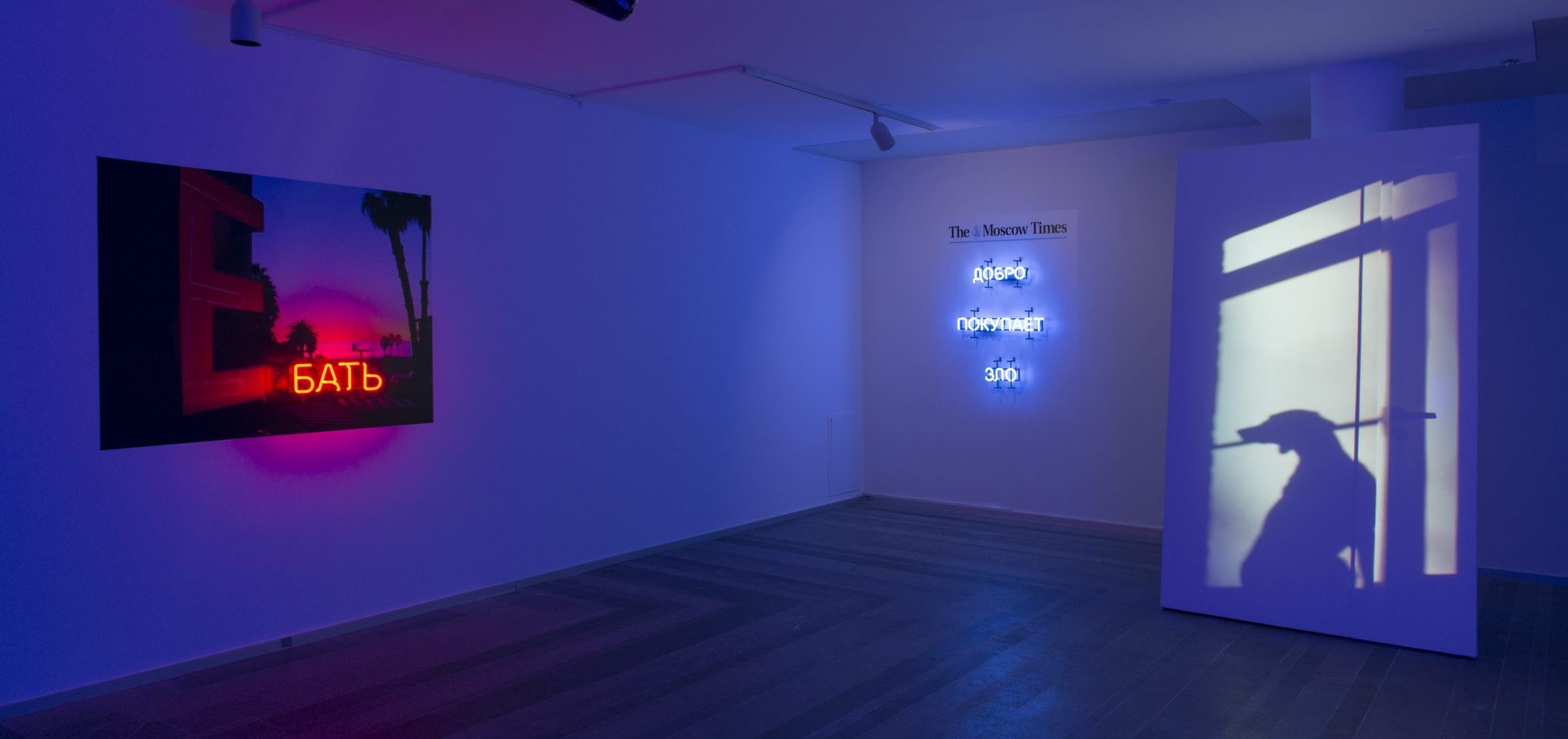
Until October 15, the exhibition of young artists Versus is ongoing at PinchukArtCentre. It takes place within the framework of the PinchukArtCentre Research Platform in the PAC UA space — a name formed from the abbreviations of PinchukArtCentre and Ukrainian Art.
Initially, PAC UA was conceived as a platform for creating new works, new production by Ukrainian artists. Over the years, the project has transformed. Starting in 2011 with solo exhibitions of recognized masters of contemporary Ukrainian art — Vasyl Tsagolov, Oleksandr Roitburd, Arsen Savadov, Illia Chichkan, Mykola Matsenko, and others — in 2014 it acquired a more distinct conceptual direction under the name “PAC UA: Reconsideration.”
The focus shifted to working with young Ukrainian artists, and the main task of the exhibitions became researching and revealing connections between contemporary artistic practices and the artistic practices of the past. Thus, within the first block of “Reconsiderations” in 2014, exhibitions by Alevtina Kakhidze, the Open Group (with the participation of Yuriy Sokolov), and Ivan Svitlychnyi took place.
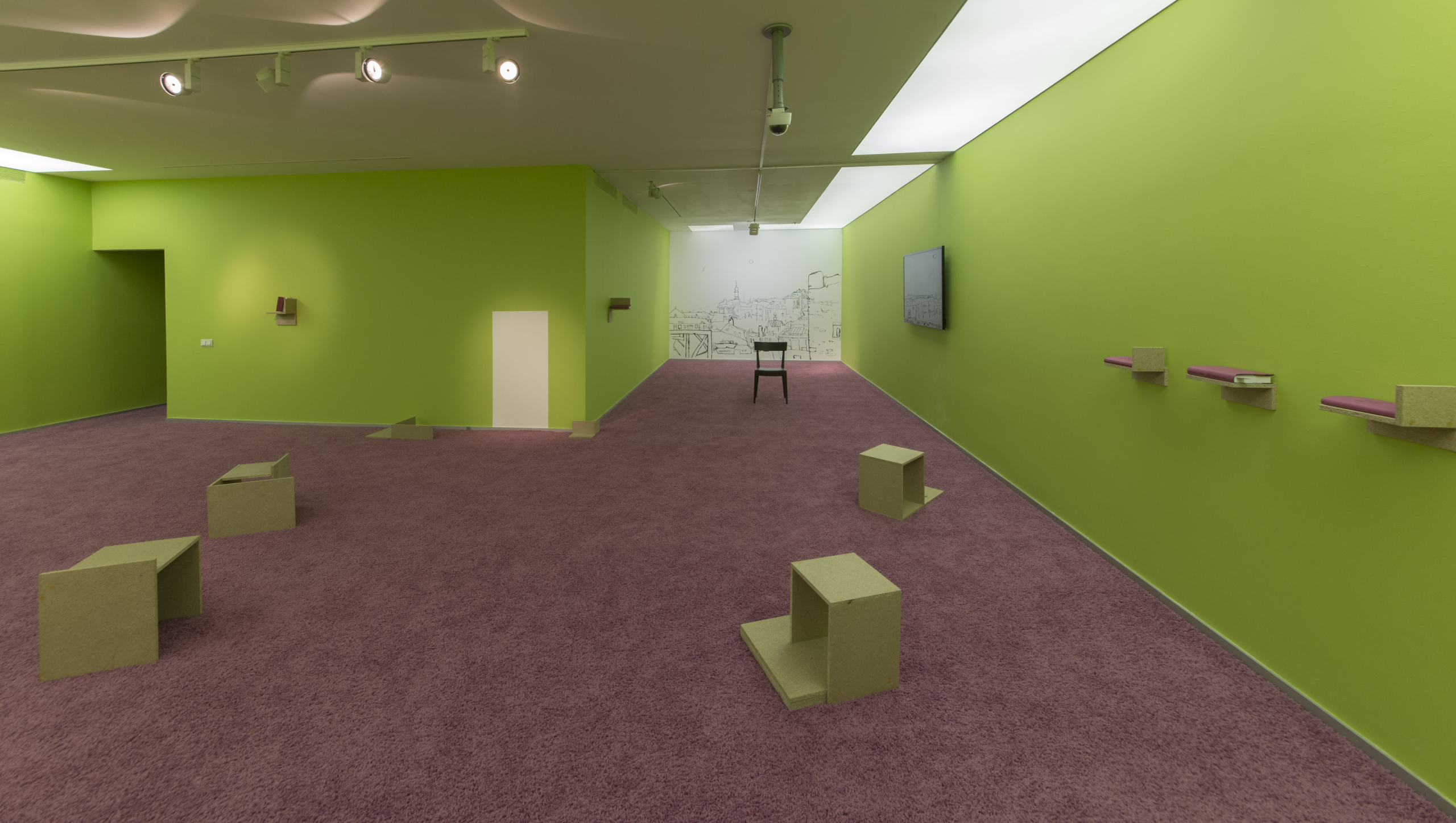
A new stage in the development of the PAC UA space was the exhibition by Lada Nakonechna “Exhibition” (2016). It marked a new practice for the art center — inviting external curators. This time the curator was Anna Smolak, who at that time worked at the BWA SOKÓŁ gallery in the Polish city of Nowy Sącz.
This was the first PAC UA exhibition implemented within the Research Platform. Accordingly, its tasks went beyond just reflecting on the artistic practice of an individual artist and raised questions about the new goals that PinchukArtCentre set for itself in working with the Ukrainian context.
After all, now the PAC UA space is located at the end of the fourth floor of the art center, allocated to the Research Platform. On the way there, the viewer physically passes by a number of other exhibitions based on archival research.
Lada Nakonechna has repeatedly presented her works at the art center within the framework of the PinchukArtCentre Prize. This time, together with Anna Smolak, they decided to reconsider the institution itself — precisely when it was “reviewing its own program.” It was about the mechanisms of the institution’s work and institutional critique as such — the main direction of Smolak’s curatorial practice.
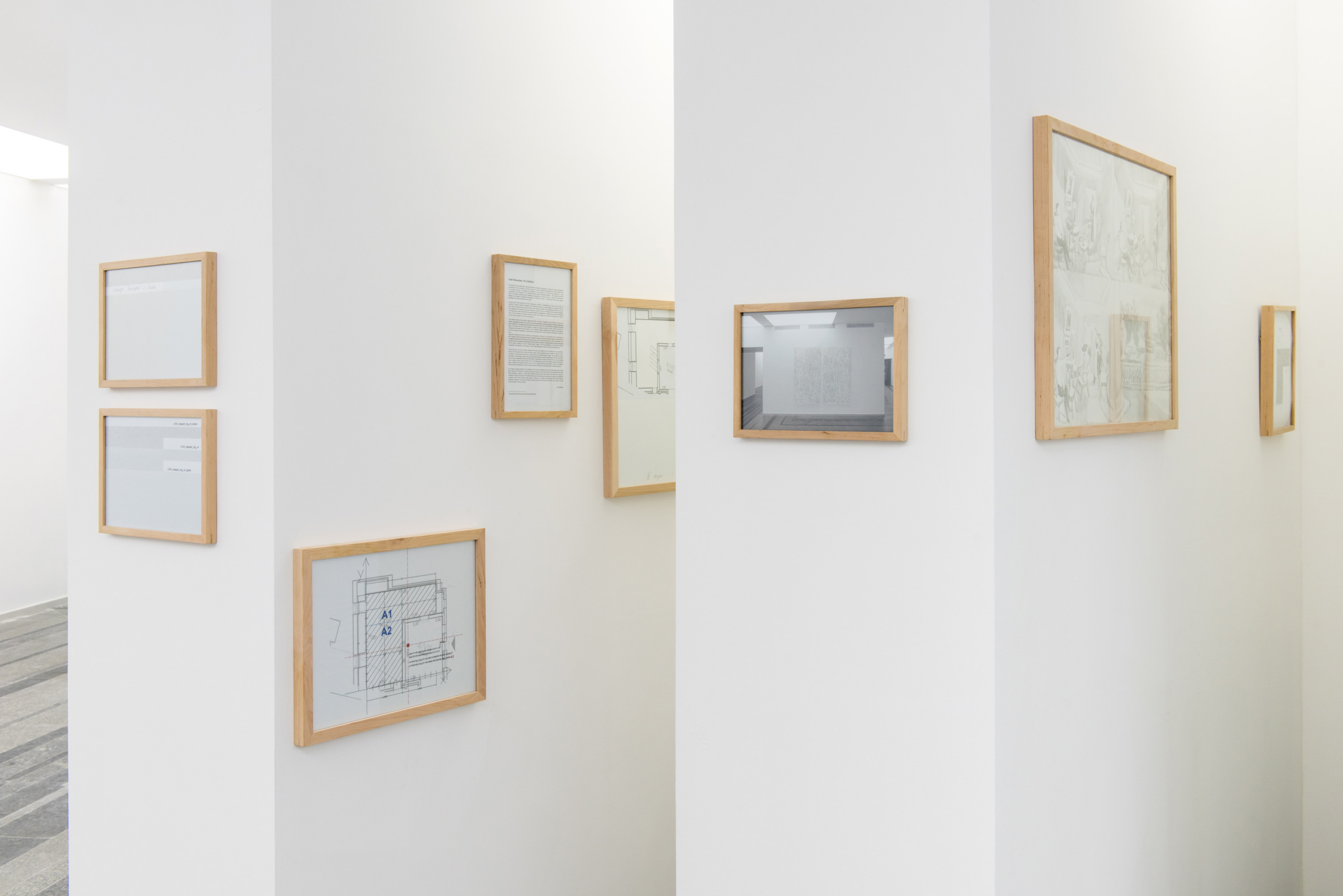
Against this background, the Versus exhibition emerges as a new stage in the development of PAC UA. For the first time, the role of invited curator was performed by a practicing artist — a teacher at the Rodchenko Moscow School of Photography and Multimedia, Serhiy Bratkov.
Bratkov has long and warm ties with the art center. It can be said that he is an artist who is “at home.” In 2007, he was one of the participants in the exhibition “Poem about the Inner Sea” in the Ukrainian pavilion at the Venice Biennale, organized by PinchukArtCentre. Later, two of his solo exhibitions took place at the art center — “Ukraine” (2010) and “Good Buys Evil” (2013). The latter, by the way, was shown precisely in the PAC UA space.
So the artist’s return to this “home” in a different status was quite logical. When Bratkov was offered to organize an exhibition, it became clear that it would not be dedicated to reconsidering art history, and choosing one young artist for a solo expression would be too narrow and limited.
There was also another problem — the vagueness and uncertainty of the very concept of “young Ukrainian art,” the support of which is one of the tasks of the PAC UA space. Bratkov proposed organizing a group exhibition of his students — graduates of the Rodchenko School, who are somehow connected with Ukraine, have Ukrainian roots, but as artists have already formed themselves in Moscow.
As a result, it was decided to make a group exhibition, whose participants were six young artists: Yuliana Holub, Zina Isupova, Alina Kleitman, Oleksandr Kutovyi, Anna Rotayenko, and Dmytro Starusev.
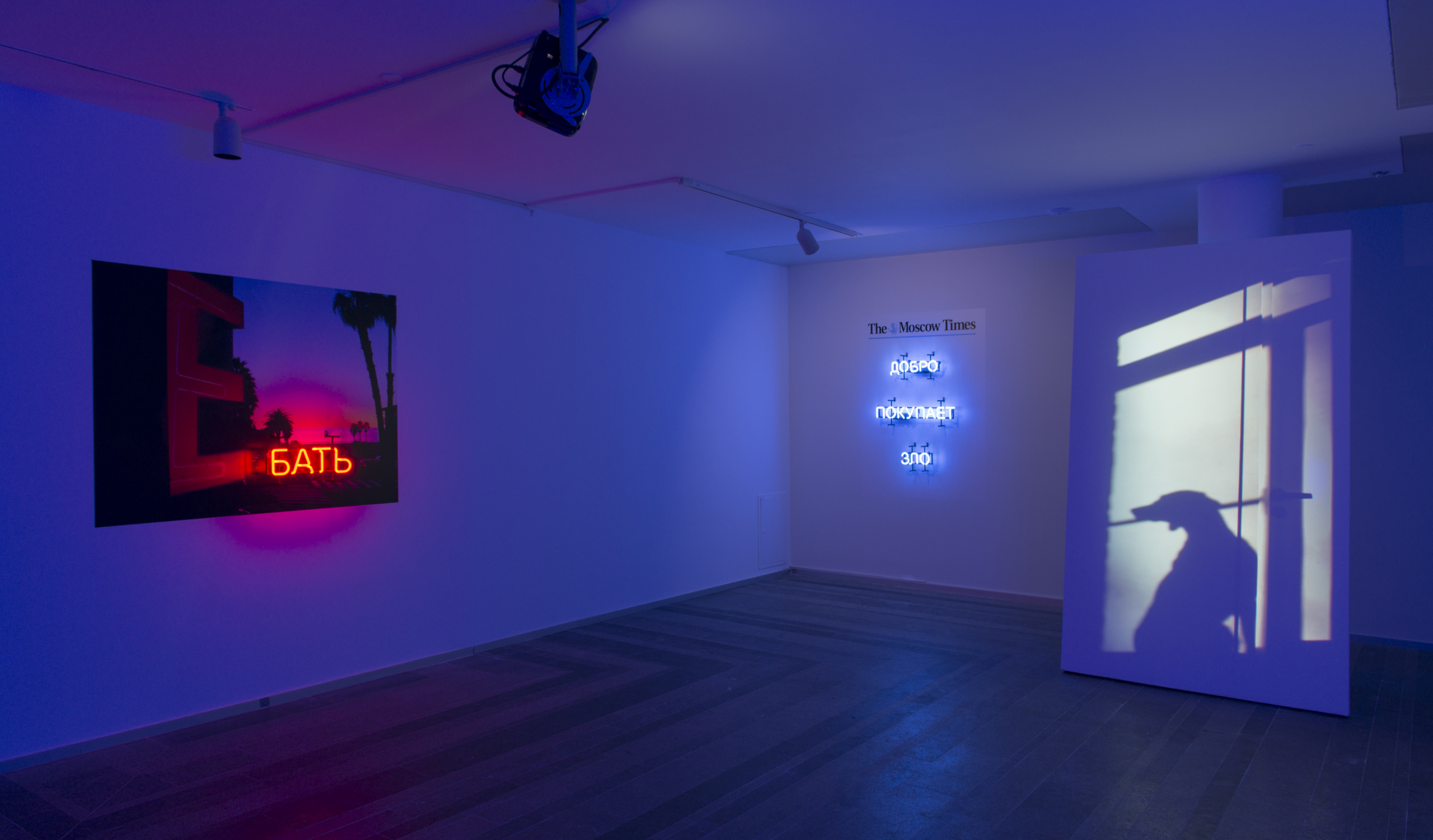
The exhibition space is filled with various media — video, sculpture, 3D animation, photography, and installation. Upon entering the hall, the viewer can take in almost all the works — completely or partially.
During the preparation of the exhibition, Bratkov once remarked: “All such individualists…” — meaning that creating a collective statement would be difficult. And indeed, despite the individuality of each artistic position, the process of preparing the exhibition and making exhibition decisions impressed with the strength of interaction and mutual respect.
It was the interaction of the artists with each other, the desire to best represent each work, to create an atmosphere of equal coexistence of works in a shared space, to prevent hierarchy or dominance of one work over another.
Important was also the interaction of the artists with the “curator.” However, in this case, Bratkov was more of a tutor than a curator. Under his tutorship, Versus to some extent demonstrates the result of “workshop practice.”
Choosing the theme of the exhibition, Bratkov actually applied the methodology he uses in teaching: he proposed a topic for reflection to the artists — broad and universal, but at the same time provocative and allowing various interpretations.
This theme became duality, the necessity of choice. Ultimately, these ideas crystallized into the general title Versus — “against,” “in spite of,” “opposition.”
Opposition to whom and what? Essentially, this is a question that concerns each of us — the eternal struggle with oneself, the problem of “I am not I,” which, in particular, Boris Mikhailov addressed in his eponymous series of 1992. Mikhailov formulated it as: “I photograph others, but who am I myself?”
In fact, Versus exposes the contradictions faced by the artist or author: political and social responsibility, dialogue with oneself and society, the possibility of compromise, uncertainty and doubts, self-analysis, the inseparability or separation of life and creativity, reflection on the limits of what is permissible.
Like the works of Serhiy Bratkov himself — an artist deeply rooted in visual culture — the works in the Versus exhibition are distinguished by expressive imagery.
In contrast to contemporary Ukrainian realities and artistic trends, largely focused on working with historical memory, these artists seem to follow their teacher’s injunction: “Enough self-praise and complaints — it’s time to engage in art.”
Their works are dominated by the visual: the appeal to the viewer occurs primarily through a vivid image. However, despite this visual openness, almost all the works have a diary-like, confessional character and conceal an inner rupture.
The special project of L’Officiel and PinchukArtCentre offers to hear the voices of all the artists presented at the exhibition.
All photographs provided by PinchukArtCentre © 2016. Photographer: Serhiy Illin