
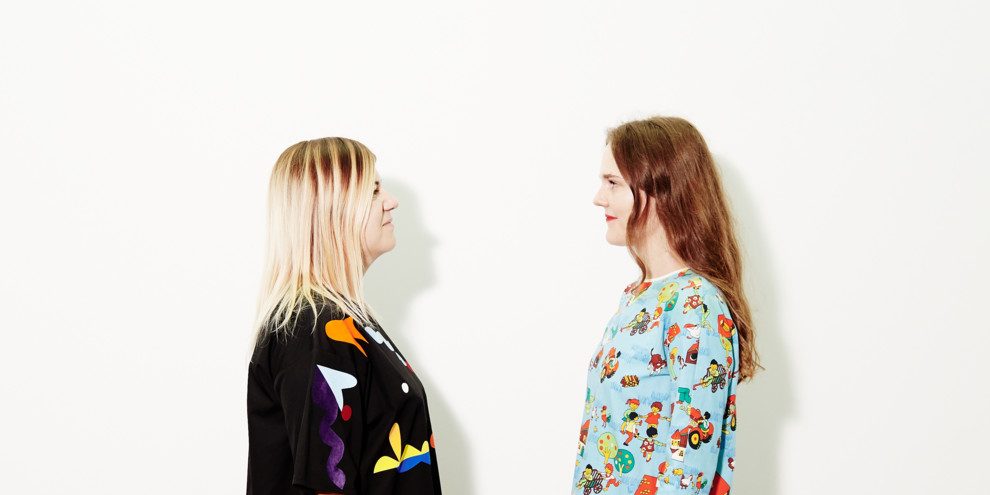
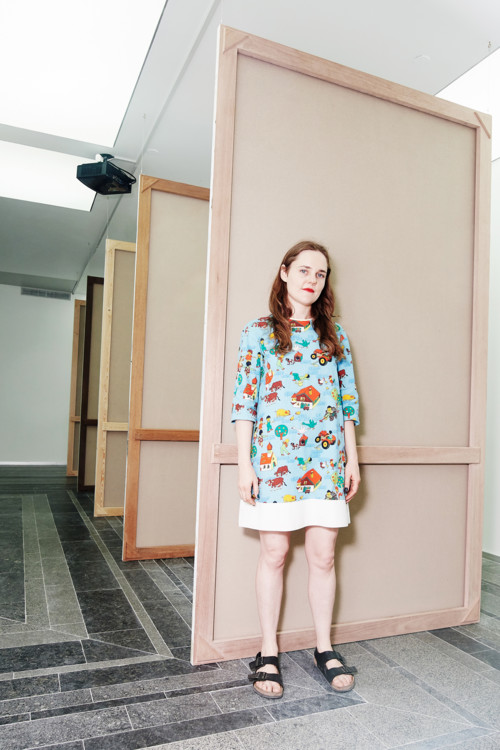
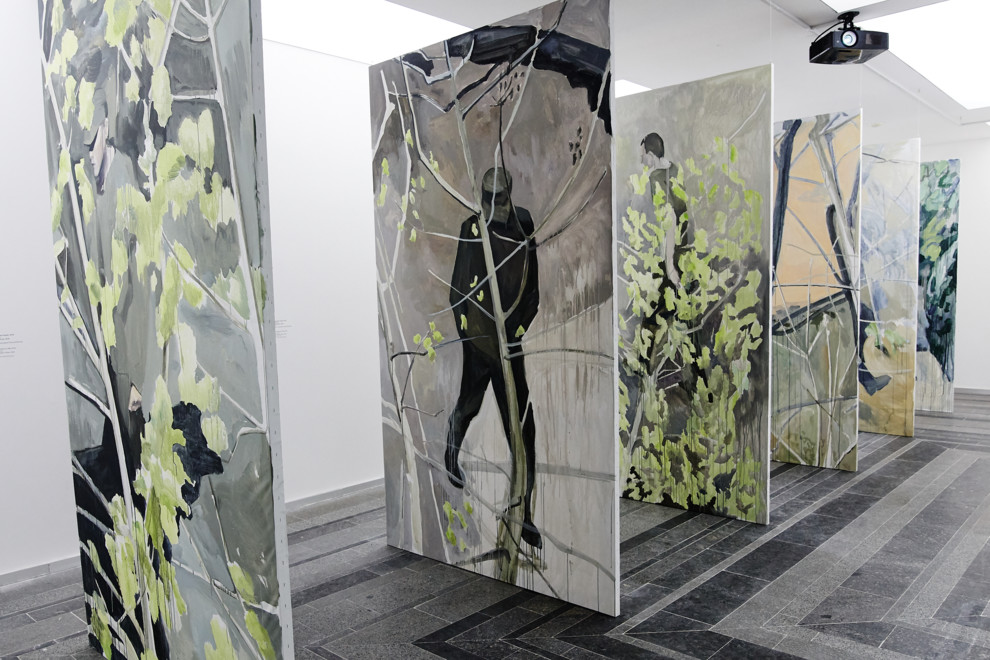
Artist Lesya Khomenko, a representative of the famous Kyiv artistic dynasty, has opened a solo exhibition “Perspective” within PAC UA at PinchukArtCentre. The exhibition curator Ksenia Malykh asked Lesya about the relevance of painting, the art group R.E.P., and whether an artist in the 21st century can invent something anew.
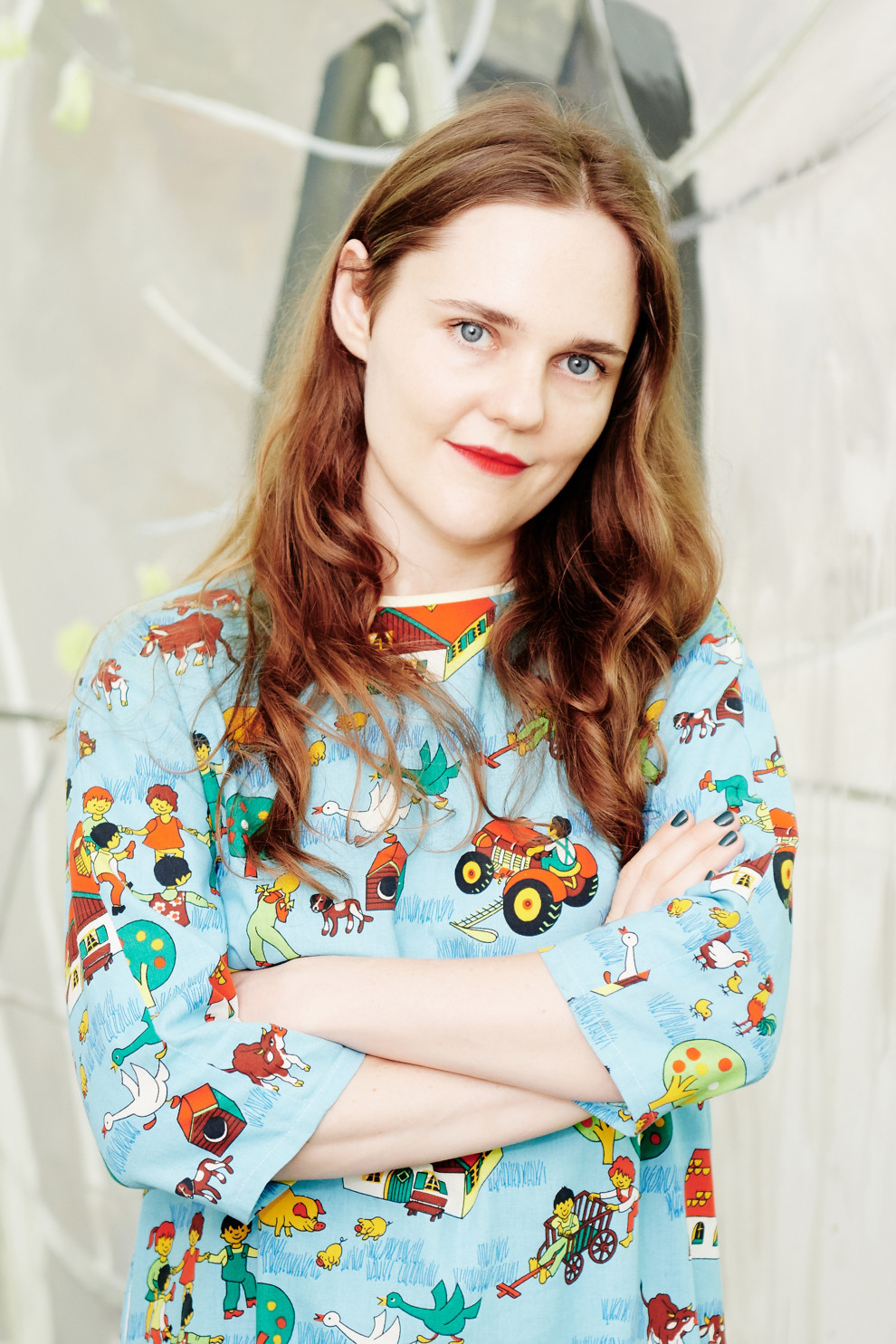
Ksenia Malykh: Lesya, why did you study scenography and not painting?
Lesya Khomenko: I enrolled in scenography because I saw that there was more freedom and opportunities for experimentation there. Besides, theater was close to me: during the last two years of school, I attended Cherkov’s experimental theater studio. We mostly worked on improvisation, based on the principles of Jerzy Grotowski’s Polish theater and the tradition of experimental theater of the mid-20th century. At some point, I even hesitated about what to choose — painting or theater. Eventually, I realized that I could realize more in visual art.
My studies at the Academy were different at times. After all, it is a very long period of life, and sometimes I felt frustrated due to the lack of a circle of like-minded people.
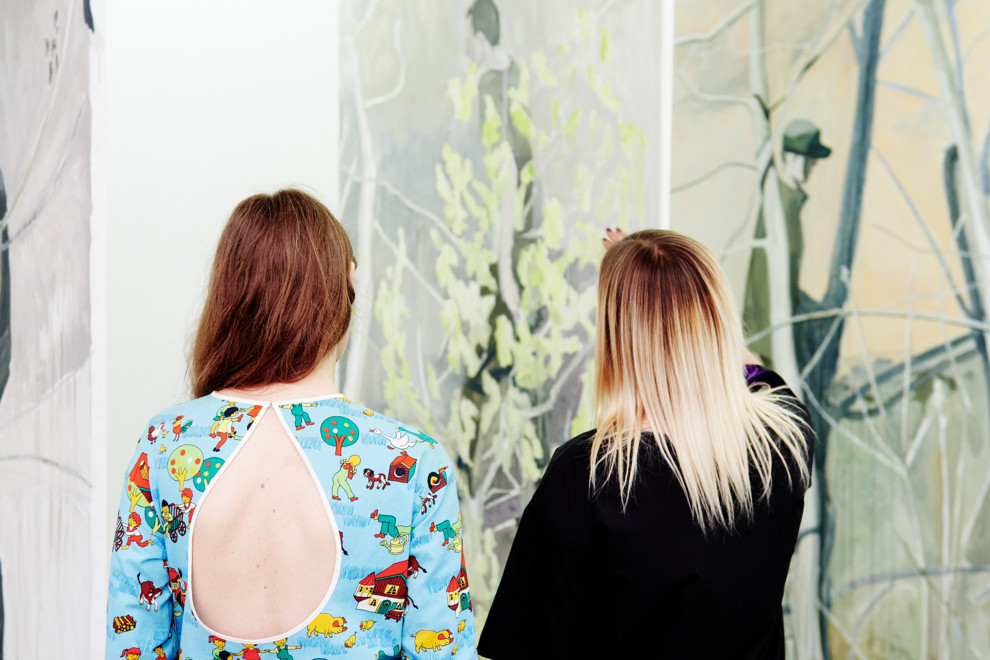
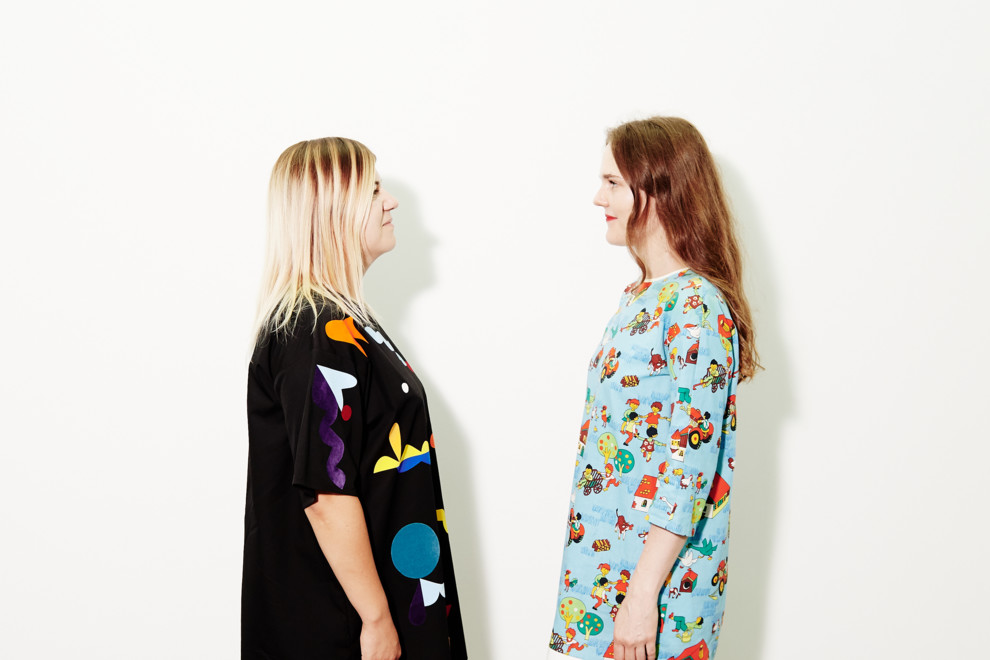
KM: But the R.E.P. group — an association of artists that included Zhanna Kadyrova, Mykyta Kadan, Lesya Khomenko, Ksenia Hnylytska, Lada Nakonechna, and Volodymyr Kuznetsov — was still formed at the Academy?
LKh: In the final year. But I met everyone through Zhanna Kadyrova, who did not study at the Academy at all.
KM: What was the most important thing you gained at the Academy?
LKh: Metaphorical thinking — understanding how an object can tell a story. Theater artists have a limited set of means, so every object must be very expressive. For example, how to show snow falling on stage using an object? You can spray the contents of a can on the coat’s shelves.
Danylo Danylovych Lider told us many stories about his productions and other performances, about how he invented this or that solution. He shared life observations and constantly repeated that we learn not as scenographers but as artists.
KM: What kind of artist did you imagine yourself to be in the future when you were studying?
LKh: It’s very funny to recall now, but even in school, I imagined big exhibitions with large-scale works. In the early years at the Academy, I thought that in ten years I would create some holograms. Like in movies about 2050, where cars fly. That’s how I imagined contemporary art, but I had no idea how to get involved in it.
Later, during the Orange Revolution, Ksyusha Hnylytska, Zhanna Kadyrova, Volodya Kuznetsov, and I painted several pictures right on the snow and wanted to hang them on Khreshchatyk. But we didn’t know where to get a ladder, so we went to the Soros Center for one.
KM: That was your path to contemporary art.
LKh: Yes, and through a very closed institution that seemed to me an unattainable temple. Eventually, Jerzy Onuch offered us to use the Center’s premises as a studio for two months, and we stayed there for more than three years.
During the revolution, we worked there as a whole crowd. Almost everyone, with rare exceptions, was engaged in painting. At that time, our method was appropriating images and objects that appeared on Maidan.
KM: So you constantly and very quickly reacted to current events?
LKh: We really reacted quickly, and it was most convenient to do it through painting. We created not propaganda canvases but rather revealed symptoms of what was happening.
KM: And what did you do on Maidan in 2014?
LKh: I created a work about the relationship between art and reality at the moment when reality reached an extreme point, its peak. It was not an everyday but an extraordinary reality.
The system of relations on Maidan was based on meeting basic needs and free exchange. I painted portraits for free: I gave the original to people and kept a copy made using carbon paper. This single copy that remained with me had more value in the art system than the original.
KM: How does an artist in the 21st century continue to search for something new if it seems that everything has already been invented?
LKh: If an artist invents something really good, it will probably already be part of some work from the seventies. After all, everything that exists now was invented in the 1970s.
I divide myself into an artist who reflects and an animal-artist. When I paint, I become an animal.
KM: But you still don’t give this animal complete freedom. After all, with your painting, you solve certain tasks.
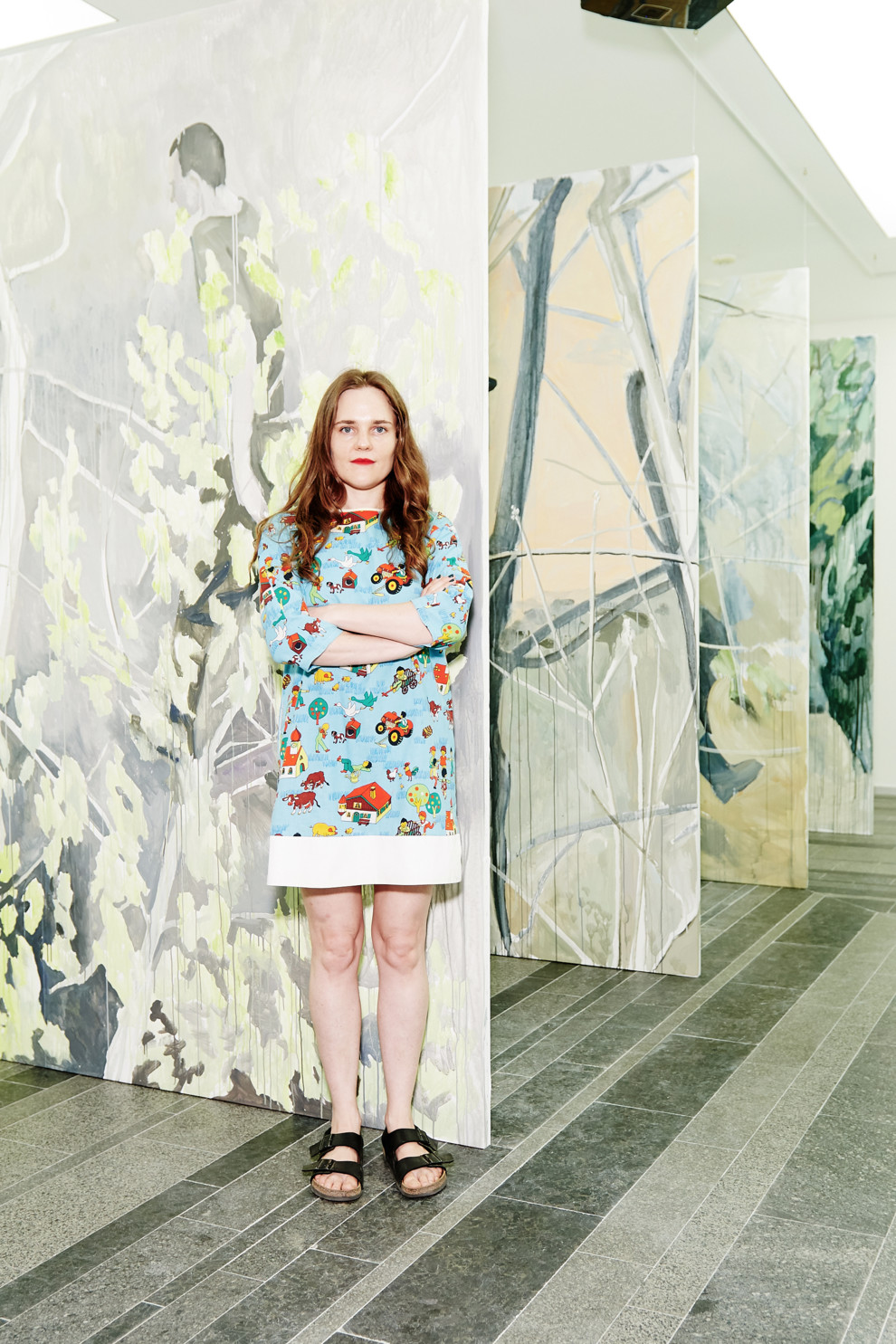
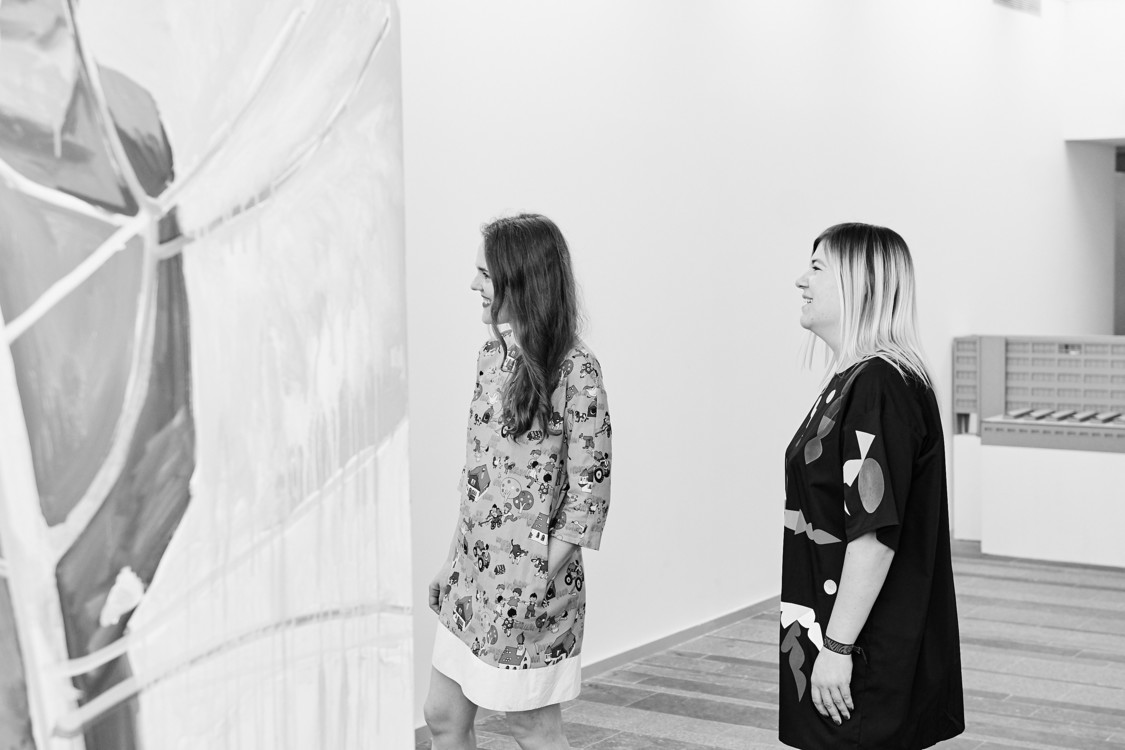
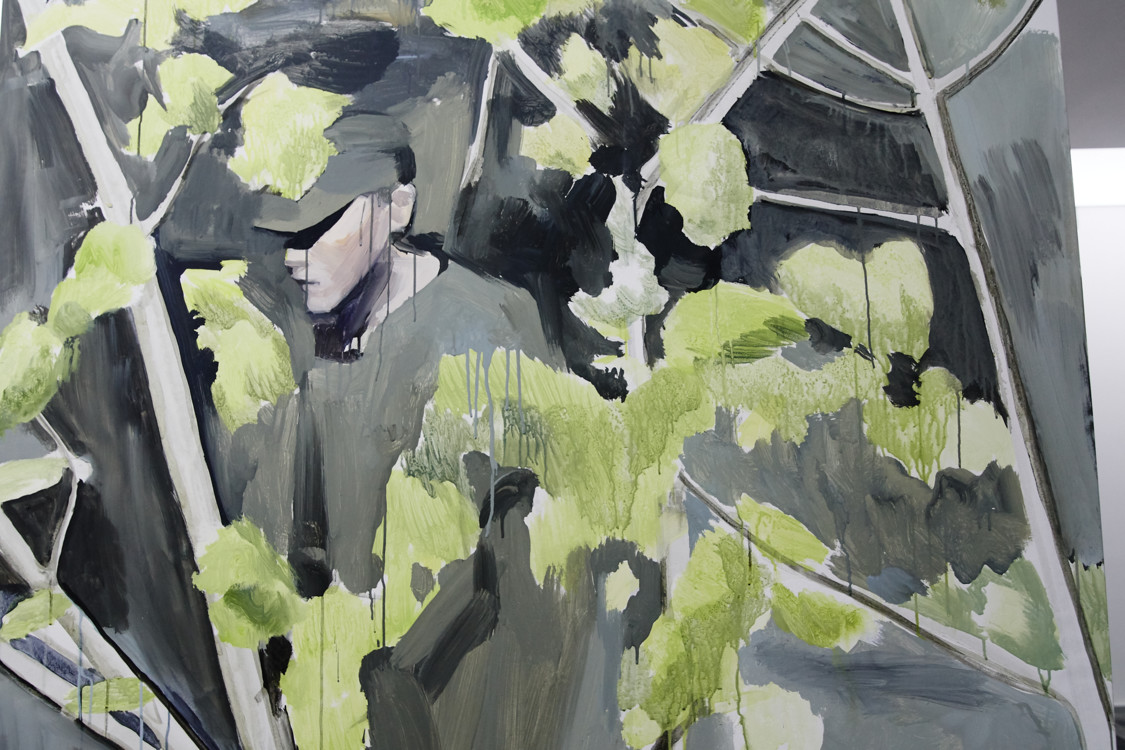
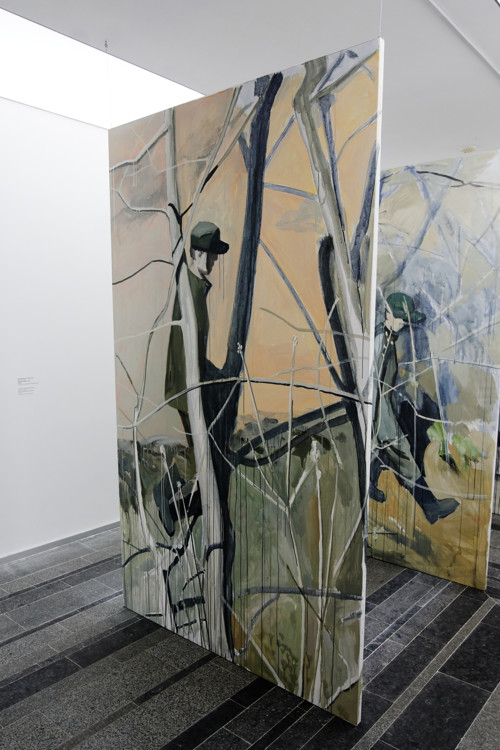
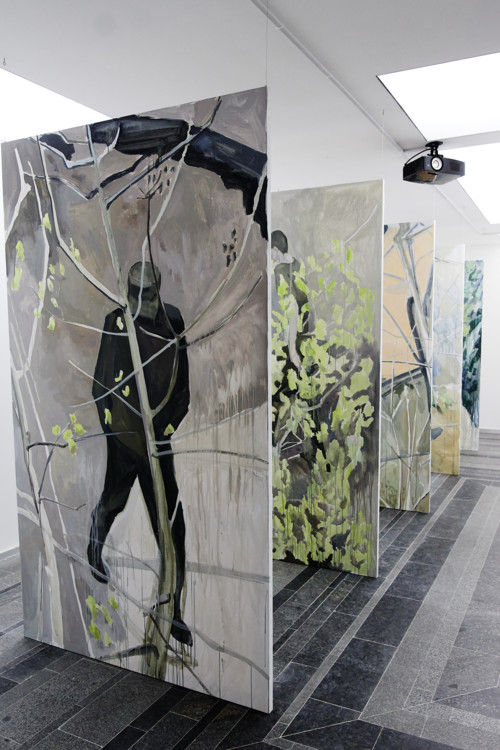
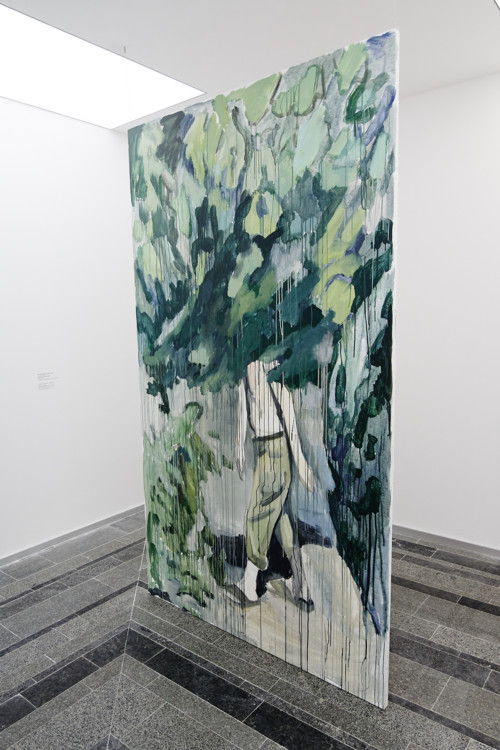
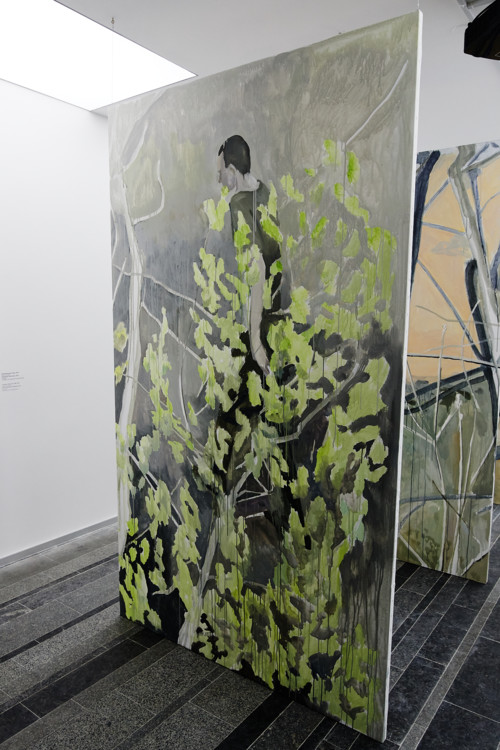
LKh: Yes. In the works for this exhibition “Perspective” at PinchukArtCentre, I chose such a painting style because I wanted to create a dense surface. It is important to me that the figure does not stand out against the background environment in which it is and does not dominate it. So that in each painting it is unclear what is more important — the landscape or the figure.
KM: How can an artist be contemporary?
LKh: In recent years, I like to think of myself as a provincial artist. The fear of being secondary shackles all post-Soviet and Eastern European artistic environments.
When we are in the territory of art, we deal with a space where we constantly criticize something. Often we criticize what is outside us: supposedly someone on the internet is always wrong. Someone is wrong everywhere, and we are the zero point where light refracts.
But I am interested in looking at myself in the zone of my own fears and discomfort — sharply turning around and looking at what is there.
When you accept this and start working with it detachedly, as a tool, calm appears. After all, provinciality does not mean marginality or irrelevance. It is just a certain point of view.
Moreover, there are very few centers and many peripheries. And now the periphery is more interesting than the center, which is becoming narrower.
KM: The territory of art opens up different dimensions of freedom.
LKh: I like to think of art as the fifth dimension. This idea came to me through teaching experience. I lead an author’s six-month course on contemporary art at KAMA.
In the course, we discuss fundamental things that need to be understood about contemporary art: what makes it contemporary, what makes art art, and where its boundaries lie. Sometimes we do funny and absurd tasks.
For example, the exhibition “Perspective” is also, to some extent, a laboratory experiment that I set for myself. It is similar to the task I give students: to build a nonlinear narrative in which many meanings operate simultaneously, there is nothing main, and everything happens at once.
I always tell students: if nothing works out, it’s not scary because I don’t have the right answers.
Such practice is very important in the time we live in. Because of the war and turbulent information flows, we have to quickly determine our own position, take someone’s side, and know the answers to questions about what is good and what is bad. Everything has become unambiguous and binary. And art allows preserving a space where there is no division into good and evil — like in mathematics.
KM: What are the strangest tasks you give students?
LKh: When we think about media, students create works from food. Food itself already has the properties of kitsch: it must be tasty and beautiful; otherwise, it is not successful. This example can show where the boundary between kitsch and avant-garde lies.
There is another interesting task: to find the strength to look at people in public space and not be ashamed of it. After all, you are an artist; you are allowed to observe people because you collect visual material.
Or, for example, to arrange a performance in a public space and never tell anyone about it. This is how I lead students to the awareness of the need for representation, which today is intensified by social networks. When does art begin — when it is declared or when it happens as a process?
KM: And will you take it seriously as art?
LKh: Yes. For me, art becomes political at the moment of representation. Without a system of relations between the audience and the artist, this does not happen.
KM: How do you feel about discussions about the relevance of this or that tool?
LKh: Lately, I hear a lot about this. For example: “Now cinema is relevant.” Such statements immediately corner you, especially when you focus on successful artistic practices.
Many students with basic academic education come to us at KAMA. And we work more on thinking — this is exactly what is lacking in our official education system.
KM: But you still remain in painting.
LKh: Yes, I remain in painting but consider myself a critical artist.
Such division is rather a problem of curators and critics: they like something and dislike something else. They need catharsis; they want the artist to stand on the edge of life and death — then there will be something to write about.
But artists think in language. There is no ranking of media. In classes, we consider all media neutrally: what consists of what, what works with time, what with space, what is pleasant to embody, and what is exhausting.
By the end of the course, I try to give each student an individual tool — to help find in themselves something they can work with further.