
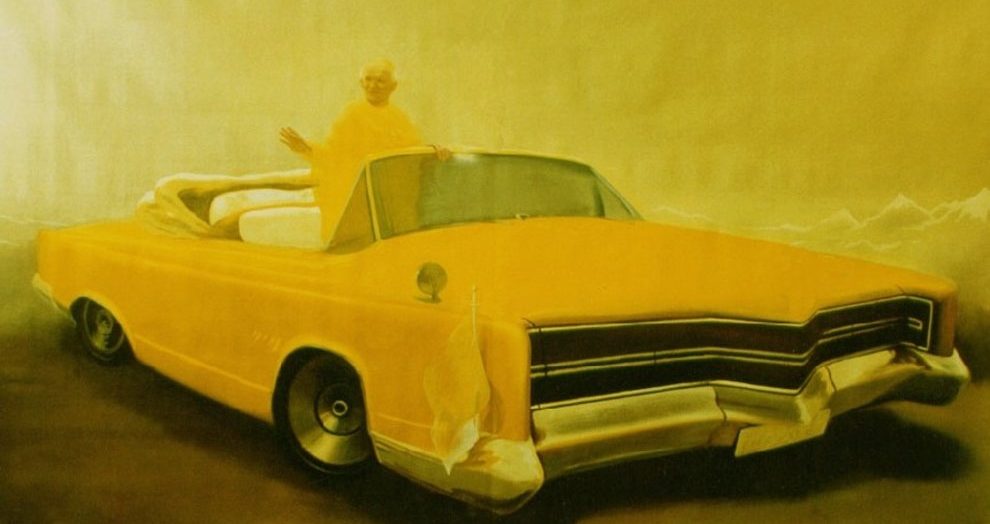
On February 23, a retrospective of Oleksandr Hnylytskyi opens at the Mystetskyi Arsenal. Kateryna Yakovlenko, an employee of the PinchukArtCentre Research Platform, explains why Hnylytskyi is one of the most important Ukrainian artists.
Hnylytskyi began working in the 1980s, during a period of social and political transformations, and today he is in the focus of attention of Ukrainian gallerists. Last year, the PinchukArtCentre Research Platform presented the exhibition “Parkomuna: Place. Phenomenon. Community,” most of the exposition of which consisted of Hnylytskyi’s paintings, graphic works, and videos. Also, in 2016, the artist’s works were included in the permanent exhibition of the National Art Museum of Ukraine. And now, the new exhibition year at Mystetskyi Arsenal will open with an exhibition of works titled “Hnyly” — this is what the artist’s friends called him. Under the curation of Oleksandr Solovyov, works from different periods of the artist will be gathered here.
Period of the Paris Commune
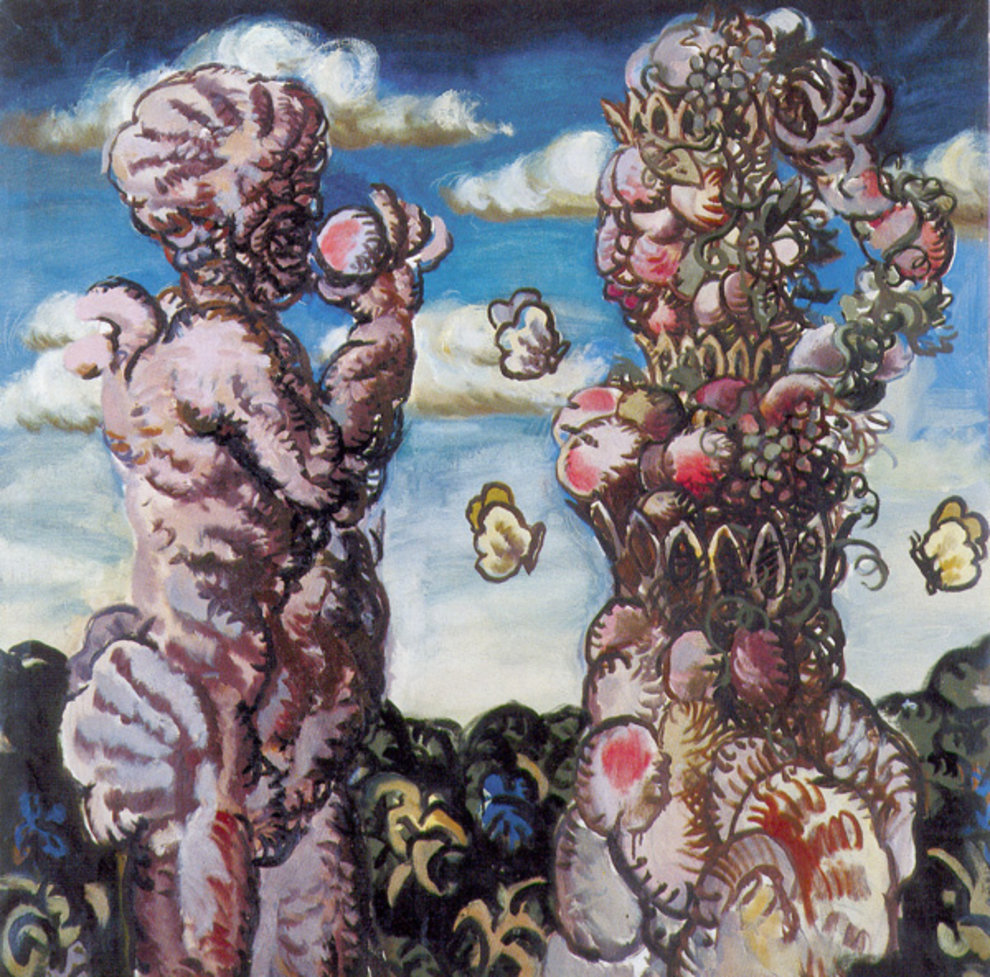
In 1981, Hnylytskyi entered the Kyiv Art Institute. There he met those who today belong to the most famous Ukrainian artists: Oleh Holosiy, Lera Trubina, Dima Kavsan, Arsen Savadov, Max Mamsikov, and Yura Solomko. The Art Institute could not give artists what they aspired to. The Soviet system was categorically opposed to contemporary art and postmodernism — a word that at that time had a derogatory connotation. Artists had to find their own way by feel. However, despite official rejection, in 1989 Hnylytskyi, Trubina, and Holosiy still participated in a plein air (residency) in Sedniv, organized by the Artists’ Union. There they created their famous works in the neo-Baroque style. After the final exhibition, they caught the attention of Moscow critic Leonid Bazhanov, who called the young Kyiv generation representatives of the “Ukrainian neo-Baroque transavantgarde type.”
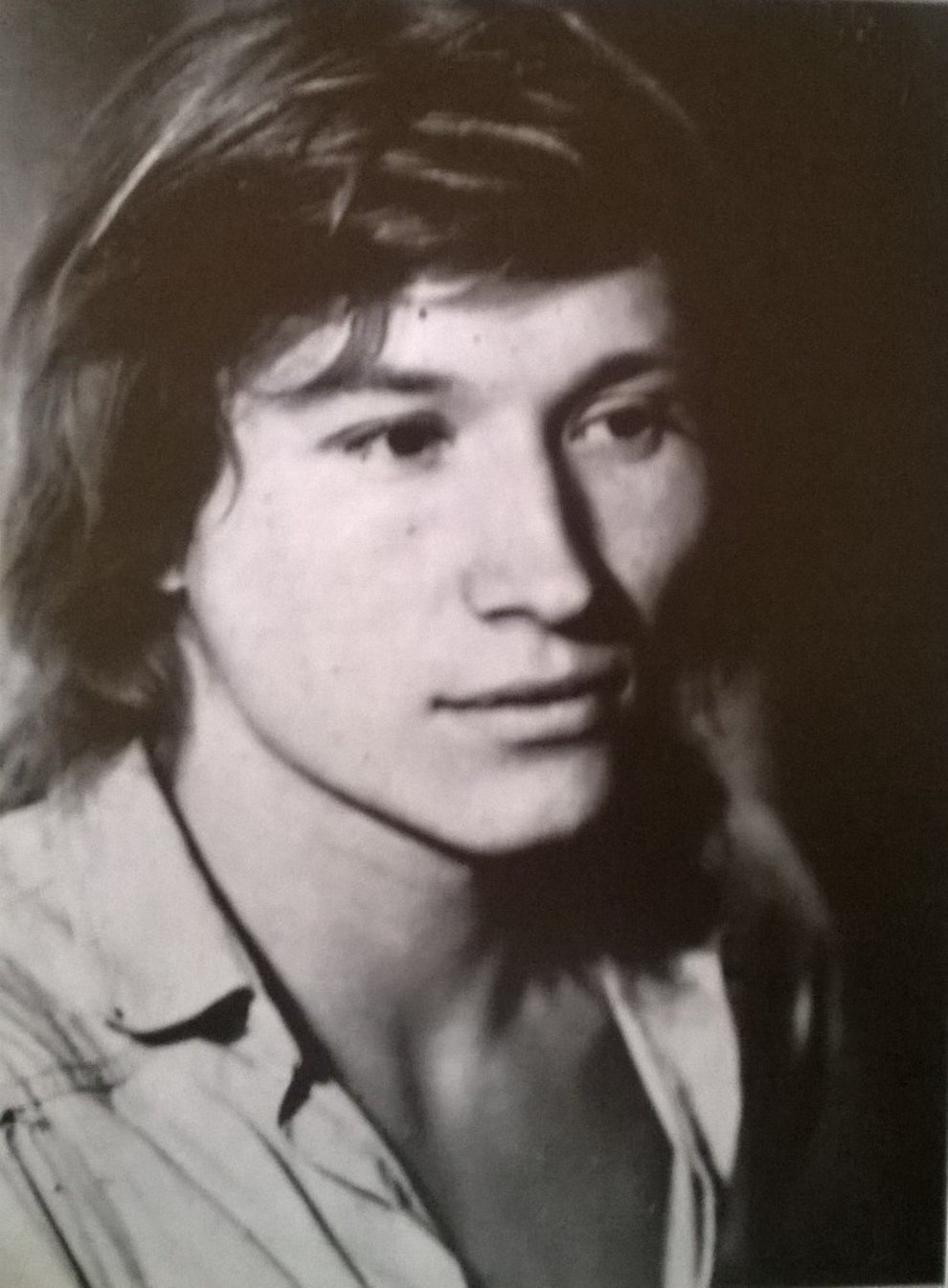
Events of the following years unfolded rapidly. Already in 1989, Kyiv artists occupied a house on what is now Ivana Franka Street for studios. Visitors to McDonald’s probably do not know that once in this building canvases were created that today are valued at tens of thousands of dollars. In 1990, the artists moved to Parizka Komuna Street, now Mykhailivska, where they worked until 1994. The name “Paris Commune” became a proper name: it was the name given to the painting boom that swept Kyiv in the 1990s. Even those who previously had no connection to painting painted in Parkomuna, and installations and sculptures were made from improvised materials — whether Christmas decorations or sponges.
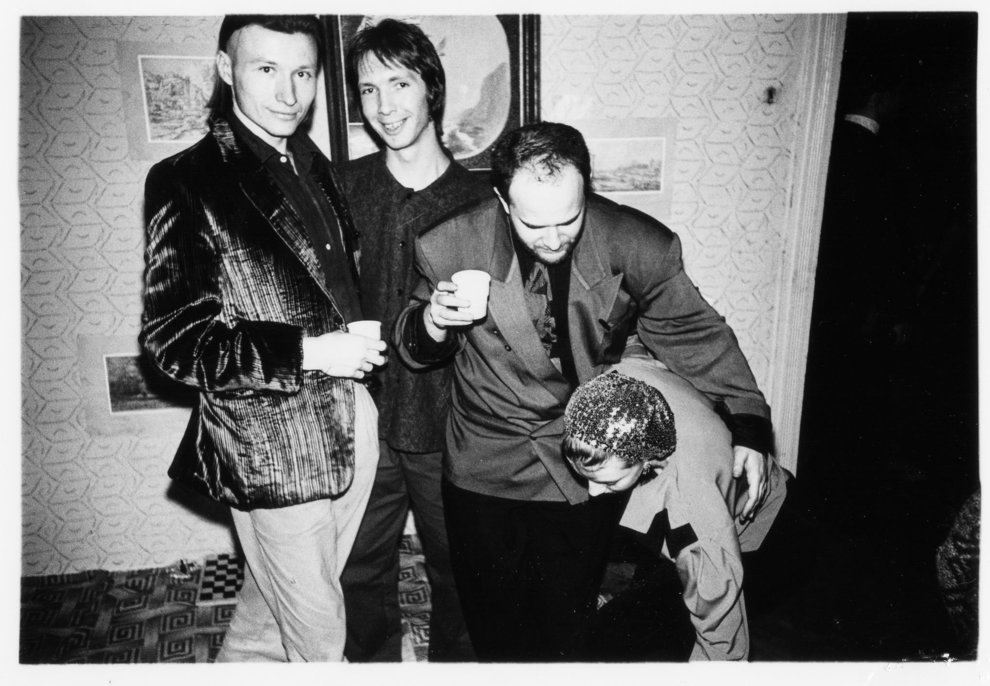
Other squats also emerged around the Paris Commune. All this together formed Kyiv’s Soho. On Khreshchatyk, currency exchangers traded dollars, and artists walked around with suitcases of “coupons” with which they bought their works. Money, curator Oleksandr Solovyov, who lived in Parkomuna, says, appeared and disappeared.
“Everyone tried to spend money immediately so that inflation wouldn’t eat up the fee. Someone could ride taxis all night to spend what they earned, while someone else bought foreign chocolates and covered the kitchen with wrappers.”
In modern terms, life in the Paris Commune can be called an endless performance and rave.
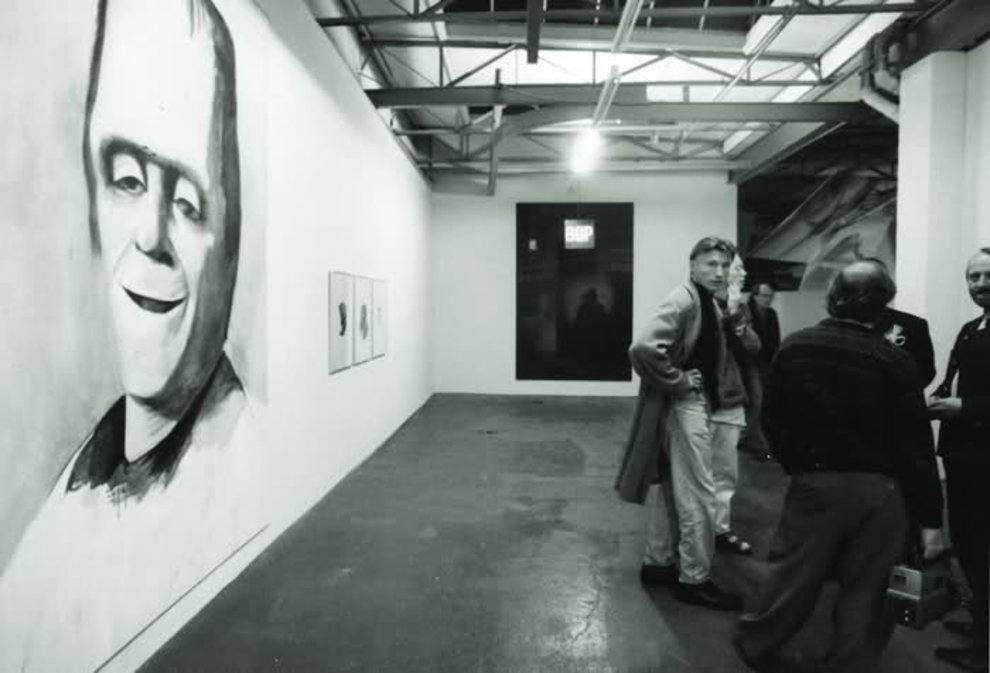
Hnylytskyi was one of those who gathered people around him. He often organized collective actions that later turned into video art and entered the history of Ukrainian performance. All these works could be seen at the exhibition at PinchukArtCentre.
Hnylytskyi’s early works are very diverse. He could create a painting based on a classical plot, or depict Lenin surrounded by naked Indian women. Or a refined Hitler in white leggings and a black jacket holding a thin leash with a dog.
“Hnylytskyi created projects unlike each other, but in each of them his style was recognizable,” says Mystetskyi Arsenal curator Oleksandr Solovyov. He has been familiar with Hnylytskyi’s work since the late 1980s, when the artist was studying at the art institute. They lived together in Parkomuna: Hnylytskyi had a room and a studio, and Solovyov had a “little office.” They typed texts on the same typewriter: Hnylytskyi — explanations of his works, reflections, and poems, and Solovyov — critical articles.
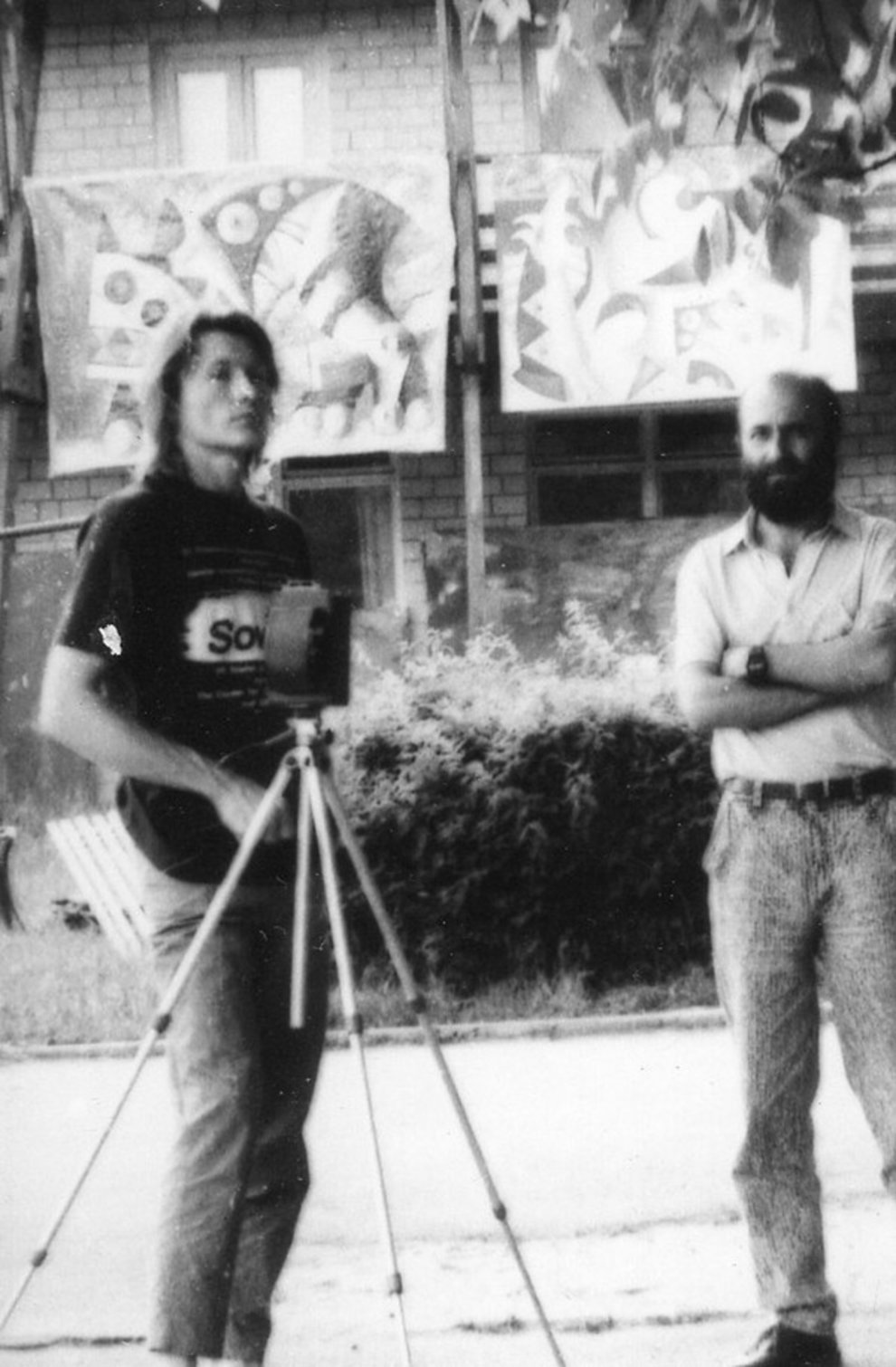
“Dostoevsky said: a broad person, he should be narrowed. Hnylytskyi had just as many themes and plots he worked on. They cannot be combined into any frames, and Hnylytskyi himself was always afraid of being ringed and tried to avoid any restrictions,” Solovyov continues.
Hnylytskyi was interested in everything: music, art, design, production of luxury items.
The artist was fascinated by still life painting. He paid special attention to household items and clothing — a hospital chair, a bottle opener, or a pink spacesuit. The video installation for the project “Poem about the Inner Sea,” presented at the 2007 Venice Biennale, was filled by Hnylytskyi with concrete, recognizable things: in particular, the latest collection of shirts from world brands and a Louis Vuitton bag. In this way, he created a space that could be filled with various meanings — from critical reflection to purely aesthetic pleasure of painting or design.
“Crew with caution”
In 1996, Russian art historian Yevgeniya Kikodze invited Ukrainian artists to a residency in Georgia. Hnylytskyi went there with his wife Lesya Zayats. The travel route passed through Georgian villages, so the artists had the opportunity to see the everyday life of local residents. Along the roads, Georgians sold fruits, wine, and some “black-red fabric,” as Zayats recalls, which later turned out to be pastila. Local craftsmen simply formed thin sheets from crushed dried fruits by the roadside. The fantastic structure of this natural material impressed Zayats and Hnylytskyi.
Later they created their “Georgian” project with pastila, making thin designer panties from it. Such a costume could easily compete with the famous costume that Jacques Fonteray created based on Paco Rabanne’s ideas for Jane Fonda in the legendary film “Barbarella.” At the final exhibition in Moscow, this object was exhibited in ordinary jars with the inscription chew with care. Later, the jars were given to friends who were greatly impressed by the project.
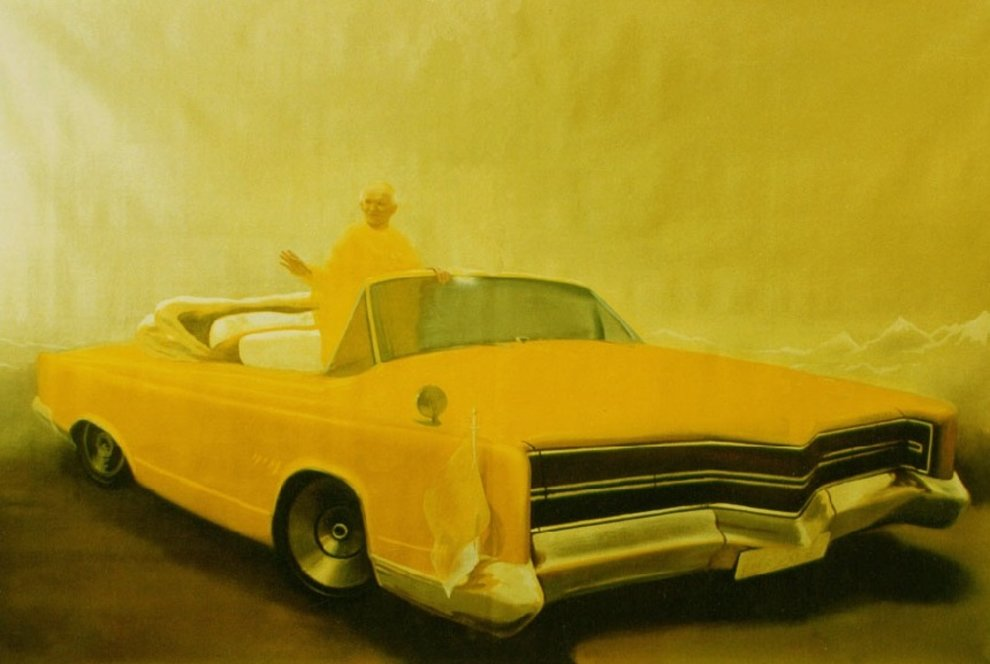
Hnylytskyi did not think about what design and painting are.
“For example, is clothing a design object or a painting object? Wallpaper, decorations, philosophy? Abstract or still life painting? These are elements of everything,” the artist noted in an interview.
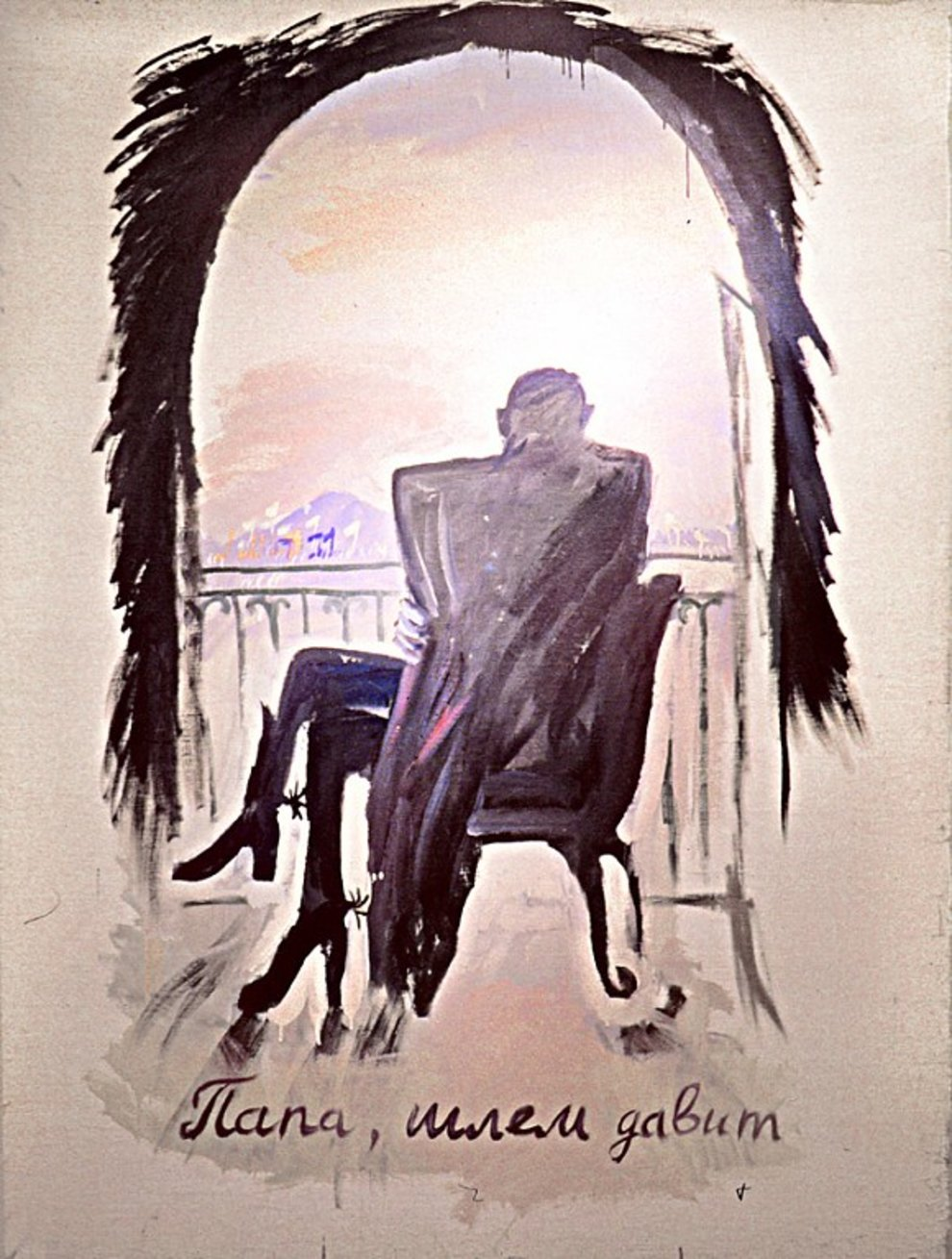
As Lesya Zayats notes, Hnylytskyi was interested in everything — music, art, design, production of luxury items.
“Sashko loved art more than collectors love it. He himself could not afford to buy works of art or designer things, so the subjects of his paintings became design objects — ties, shirts. His famous pink spacesuit, for example, seems to embody perfect kitsch but could easily become the costume of a hero in a futuristic film.”
“Delirium”
The concept of the exhibition at Mystetskyi Arsenal arose based on one of Hnylytskyi’s favorite themes — illusion, or rather, delusion. In Russian, this word sounds like “bred,” in Ukrainian — “marennya.” The latter best conveys the state of sleep, which the artist often spoke about.
Hnylytskyi appears as an illusionist who, using projections, mirrors, and other visual effects, creates the appearance of what does not exist: changes in weather in a room, phantom reflections. The viewer often does not understand where the real floor lamp is and where its picturesque copy is, where the projection is and where the real shadow is. All this immerses him in a dream, in delirium, which will end as soon as he leaves the exhibition and again faces what we call reality.
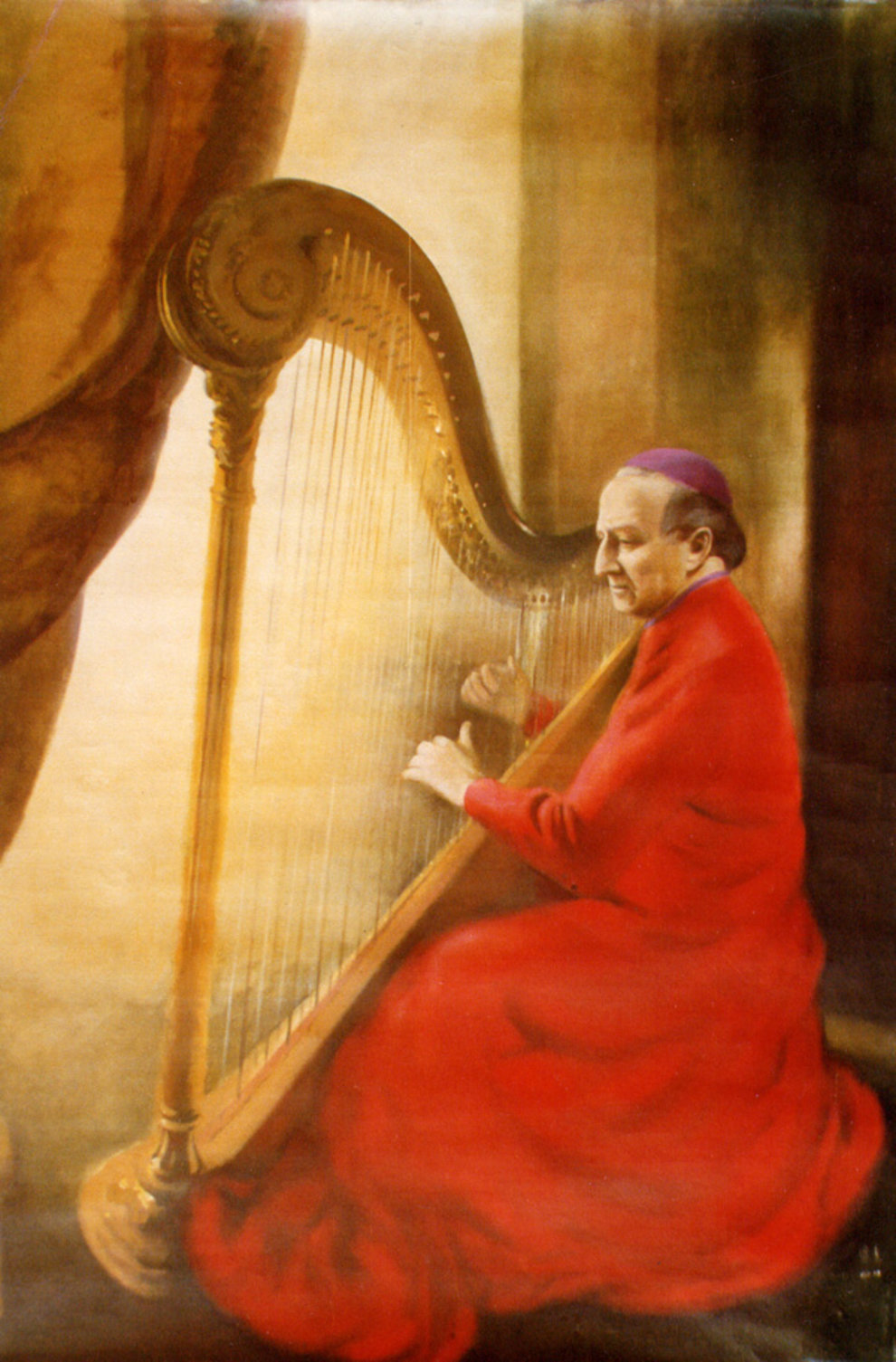
The exhibition at Mystetskyi Arsenal is Hnylytskyi’s third solo exhibition, but, as the organizers assure, the most complete. They promise many surprises for viewers, primarily works that have not been exhibited before.
At the same time, Hnylytskyi’s work continues to be studied at PinchukArtCentre. Today’s return to the artists of the 1990s is due to many factors — not only local but also global cultural phenomena and trends. For Ukraine, this is also important because, due to strange historical circumstances, many events, phenomena, and figures disappear from collective memory, so each new generation has to start from scratch. Everyone becomes a discoverer of what has already been discovered. And everything begins anew.
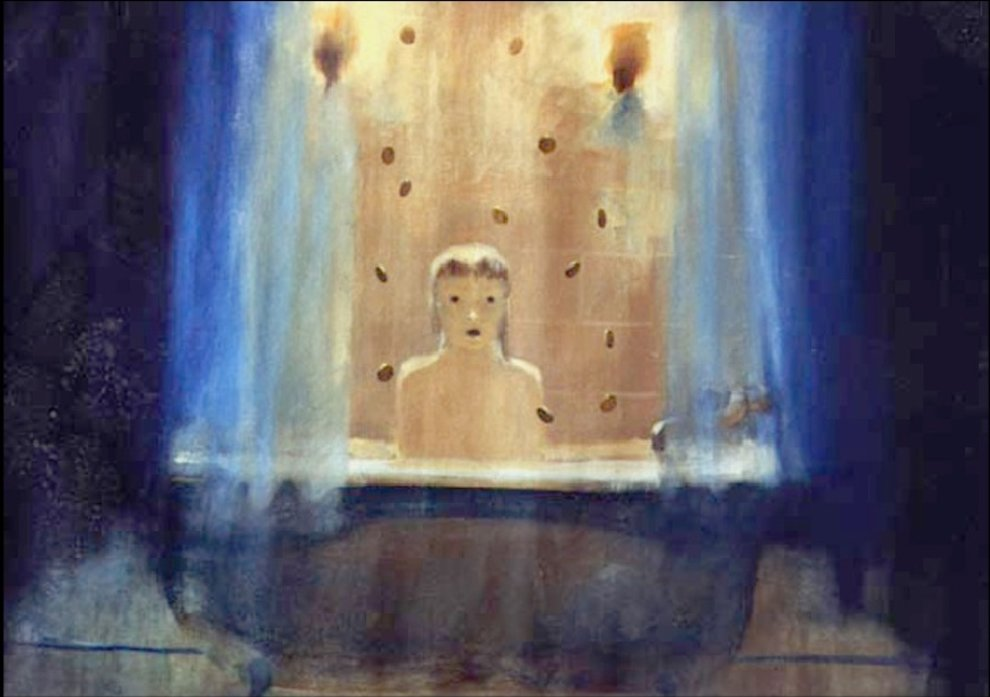
For those born in the early 1990s or even in the 2000s, life in the nineties seems like a film — a fun story that you want to either repeat or at least study. Therefore, the archive of contemporary Ukrainian art created by PinchukArtCentre is important not only as testimony and memory but also as an argument. Ukrainian independent art, formed a quarter of a century ago, can quite become part of the intellectual history of the new post-Soviet space.