
Frida Orupabo
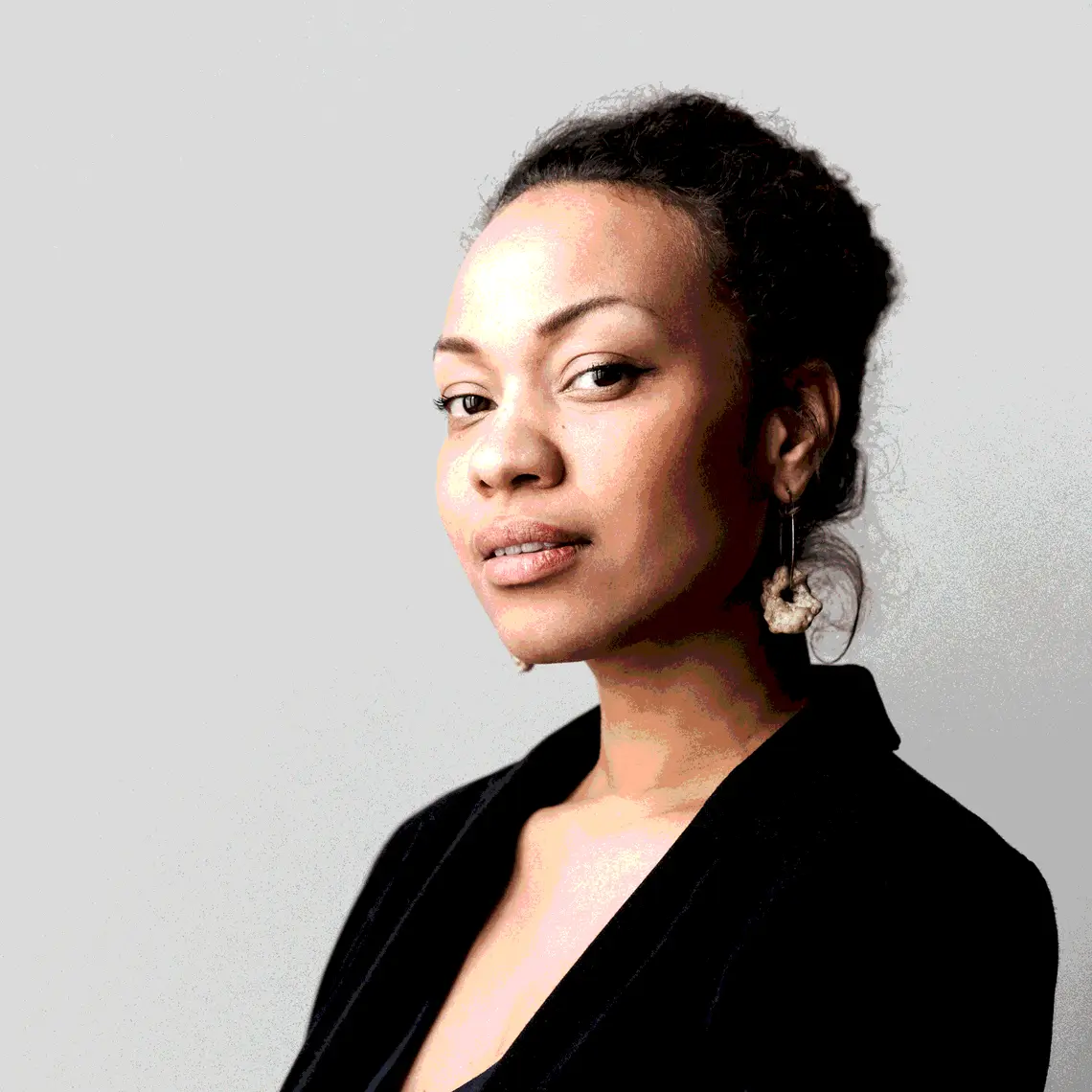
Using found photographs and archival materials as a source, Frida Orupabo creates multiple collages that investigate themes of race, gender, identity, sexuality, and post-colonialism. Mainly rendered in black and white, the depicted figures and objects remain minimalistic, visually clear, and open to interpretation. The artist’s central focus is the construct of a black female body — she investigates the ways it is presented and perceived through historical narratives, popular culture, and media. The work explores the ability of the gaze, which translates relations of power, to determine the way people see and interpret different social and political issues.
For her work Two Women, Frida Orupabo creates a complex collage. It implies everyday changes to the element’s placement, and therefore becomes a subtle performative action in the space. Each compilation of the objects produces new meanings and narratives, giving the viewer a sense of their own ability to change the flow of the story.
The relationship between the pictures of the black and white women becomes defining in the work. Responding to the claim of American author and feminist Bell Hooks that the white feminist movement made “woman” synonymous with the white woman and “black” synonymous with the black man, the artist seeks to restore the visibility of the black woman. Her figure in the installation cannot be removed, thus preserving the possibility of her perspective and view. At the same time, however, in all possible scenarios she is positioned together with the image of the white woman, thus remaining partially covered.
