“Oleksandr Roitburd. Theorem of Power” Exhibition of the Research Platform PinchukArtCentre
The exhibition “Oleksandr Roitburd. Theorem of Power” is the result of the consistent work of the PinchukArtCentre Research Platform, which reflects on phenomena and personalities important for the history of Ukrainian art.
This exhibition was supposed to open in March 2022, six months after the premature death of the artist. The large-scale Russian invasion disrupted our plans, as well as the plans of other cultural institutions and millions of Ukrainian citizens. But the relevance of the topic we chose – the interaction of the artist, art, and power – has become even more significant for society over these years.
Oleksandr Roitburd believed that it is natural for an artist to have the power to influence the world and dedicated his life to realizing this vision. In his art, encyclopedically rich to excess, among other things, he revealed various embodiments of power: through myths and superstitions, the pinnacles of global intellectual and artistic heritage, the bodily and subconscious, political ideologies, and images of specific state figures. He fought for the institutionalization of Ukrainian contemporary art and towards the end of his life headed and reformed the institution – the Odesa Art Museum, which thanks to Roitburd and the team he gathered received the status of National.
In 1995, Oleksandr Roitburd published his own manifesto “Art and the State,” in which he wrote: “Objectively, the state is the only force interested in our existence. We are able to create a more attractive image for it in the eyes of the global community. We can more effectively solve the issues of creating a new spiritual climate in culture and society, necessary at the stage of formation and reforms. We can help society get rid of stereotypes, become more open and dynamic. We can make a tangible contribution to creating a modern culture worthy of a European state, give Ukraine relevant contemporary art oriented towards global artistic issues… We and the state are interested in each other. It is time to legalize our relationship.”
He collaborated with political figures, presidents, and other influential persons. This is also evidenced by the beginning of the exhibition, which starts with a meeting with Harald Szeemann, one of the most influential curators in world history. For the realization of this vision, Oleksandr Roitburd communicated with representatives of political forces across the broadest spectrum, established connections with representatives of state power, influential business, remaining open to very different people and far from snobbery. At the same time, Roitburd was always characterized by irony, a tendency to openly criticize even those representatives of power he supported if he saw anti-modern or anti-democratic manifestations in their activities. He believed in enlightenment, freedom, and the unconditional importance of art. This path ultimately led the artist himself into power – in 2020 he was elected a deputy of the Odesa Regional Council.
“The theme of power in today’s world is extremely relevant. The Russian war against Ukraine has become the frontier of the confrontation between dictatorship and democracy. Another global challenge is populism. Oleksandr Roitburd believed in the enlightenment project and the ability of civil society to defend universal values. And he saw uncontrolled power as a threat both to rights and freedoms and to itself,”
The selection of works allows understanding the artist through his perception of the interaction of culture, society, and power. Focusing on works, documents, and artifacts from private collections and the artist’s family collection, this exhibition is the result of the consistent work of the PinchukArtCentre Research Platform, which reflects on phenomena and personalities important for the history of Ukrainian art.
Oleksandr Burlaka was invited to work on this exhibition; he created the architecture of the exposition, which comments on Roitburd’s figure and, in particular, the city of his birth – Odesa.
Exhibition curator: Kostiantyn Doroshenko, invited expert of the PinchukArtCentre Research Platform.
Exhibition architect: Oleksandr Burlaka.
Video tour of the exhibition “Oleksandr Roitburd. Theorem of Power”
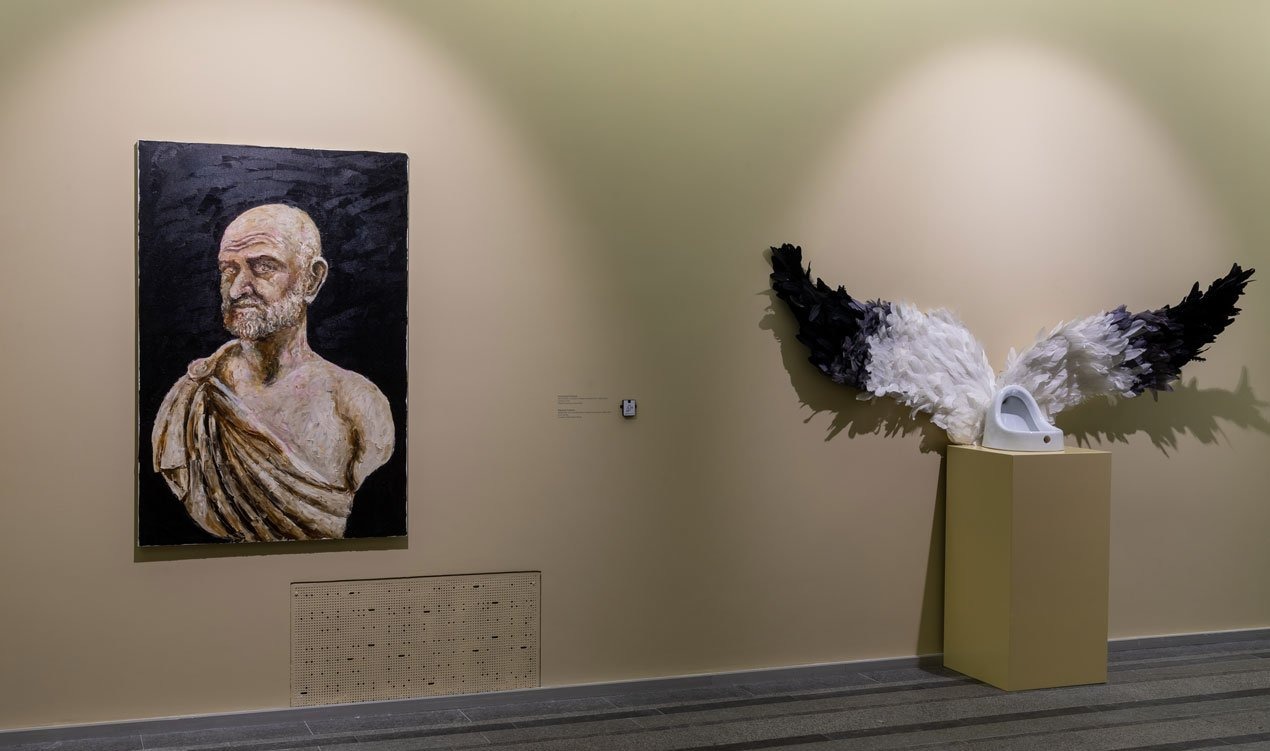
ARTIST’S POWER.
CULTURE’S POWER
This section of the exhibition is dedicated to Oleksandr Roitburd’s dialogue with figures, images, and ideas of world culture. The artist considered it the driving force of civilization’s development and true power, and thinkers and artists – those whose vision, imagination, insight, delusion, or even madness direct the movement of history. In Roitburd’s eyes, talent, giftedness, and boldness of thought gave a person the right to any extravagance and egocentrism, freed from moral restrictions, justified practices unacceptable from the point of view of social norms or even common sense. Postmodern irony, devaluation of ideological hierarchies, and confidence that there can be no taboos in art were for the artist a natural development of the Enlightenment project. He included himself in it, despite any difficulties, socio-economic and political crises, remaining an optimist regarding the prospects of expanding the territory of freedom both for humanity and for the individual.
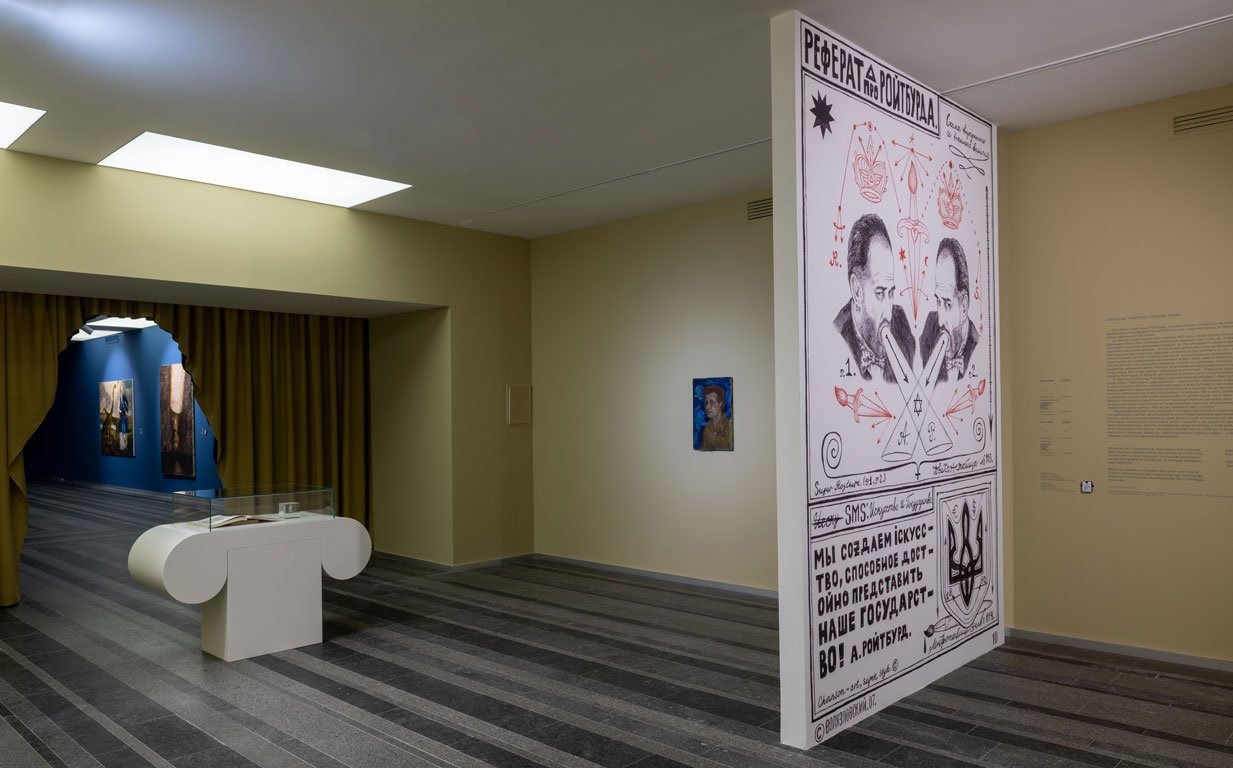
Stas Volyazlovskyi
Essay on Roitburd, 2007
exhibition copy, digital print
Image from the “Karas Gallery” archive
Reproduction rights granted by Grynyov Art Collection
Photo in the exposition
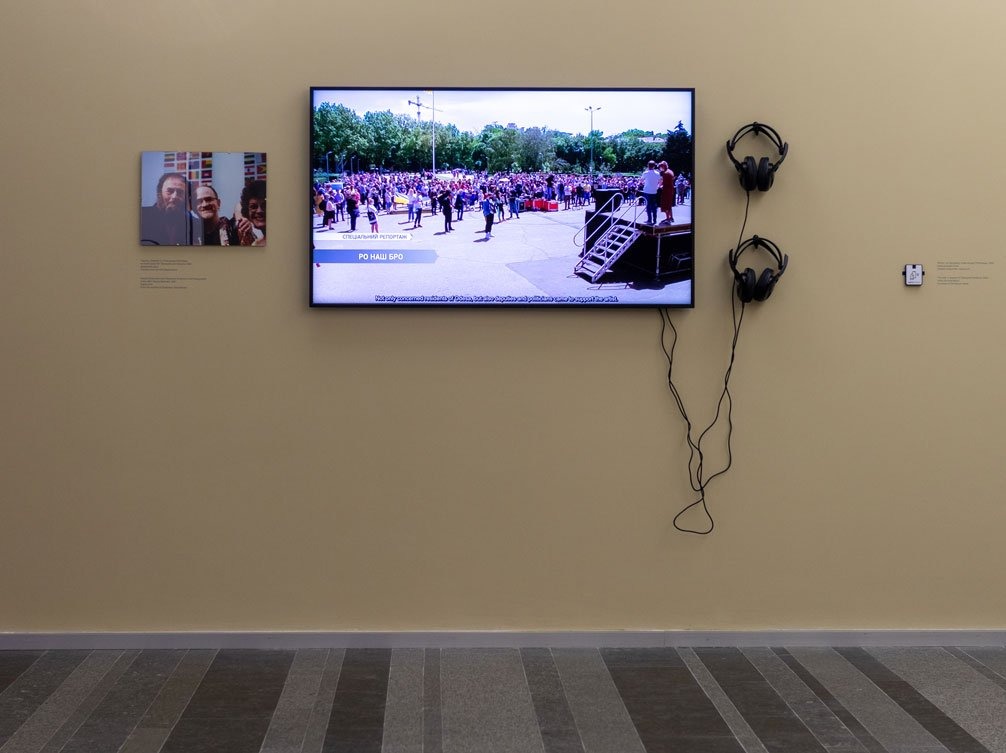
Harald Szeemann and Oleksandr Roitburd
at the inauguration of the 49th Venice Biennale, 2001
digital print
From the archive of Kostiantyn Doroshenko
Rally in support of Oleksandr Roitburd, 2020
video documentation
Provided by the “Dumskaya” publication
Oleksandr Roitburd
Self-portrait from the project “Exercises in Uninhibition,” 2020–2021
canvas, oil
Provided by the artist’s family
Photo in the exposition
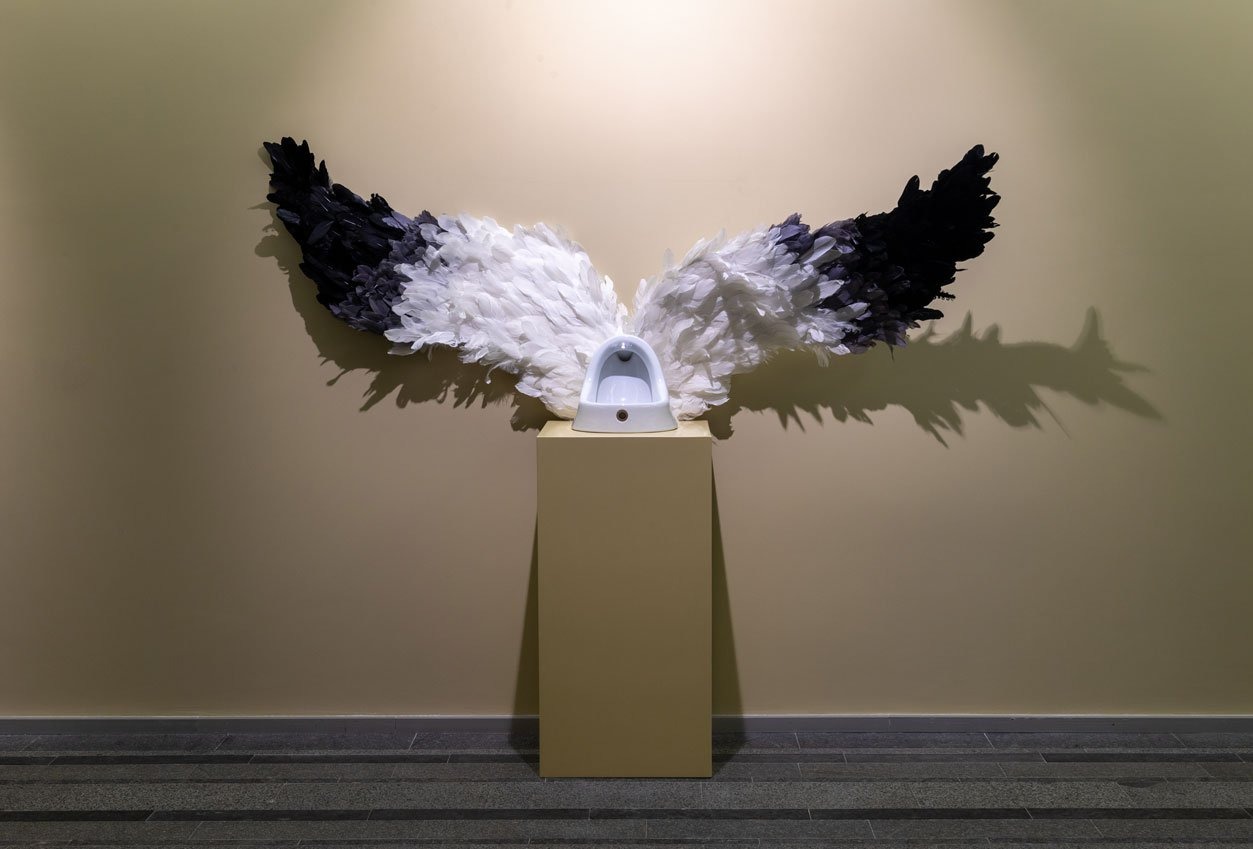
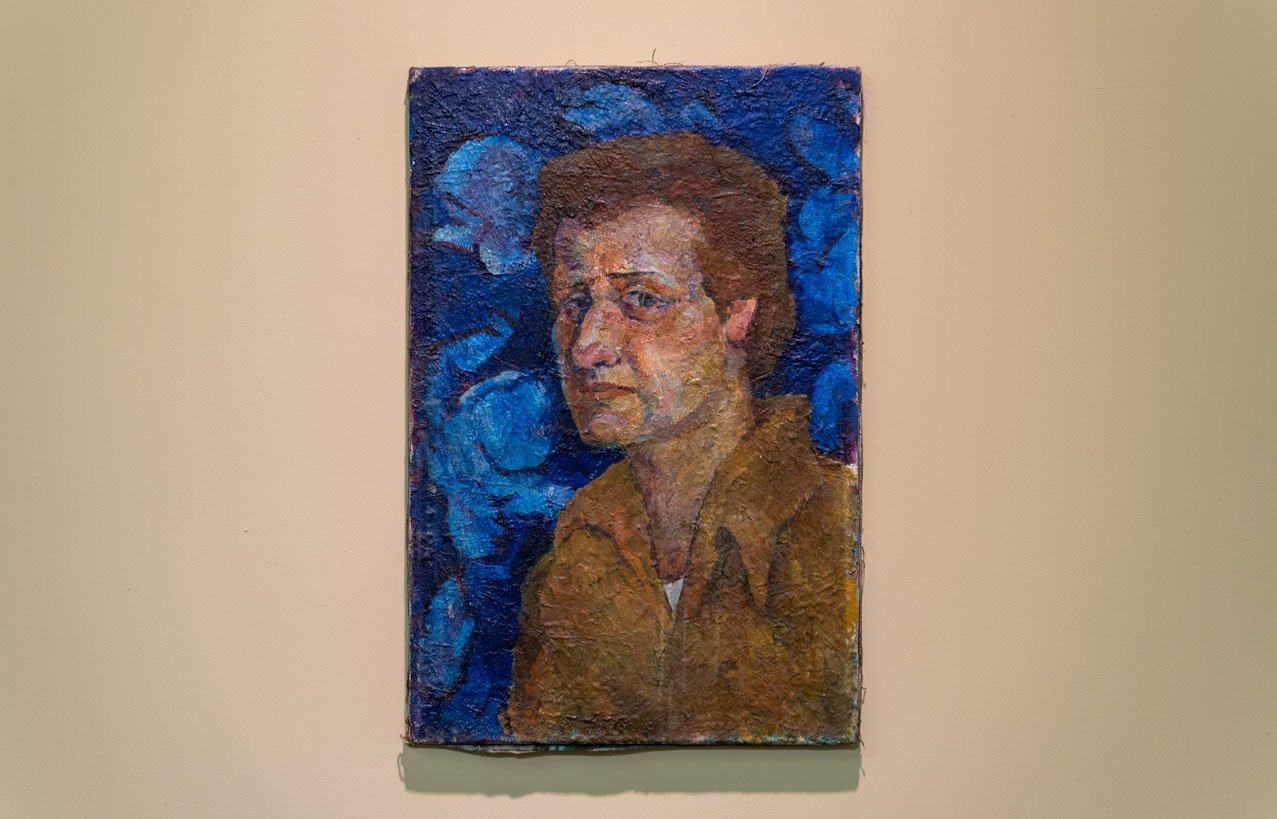
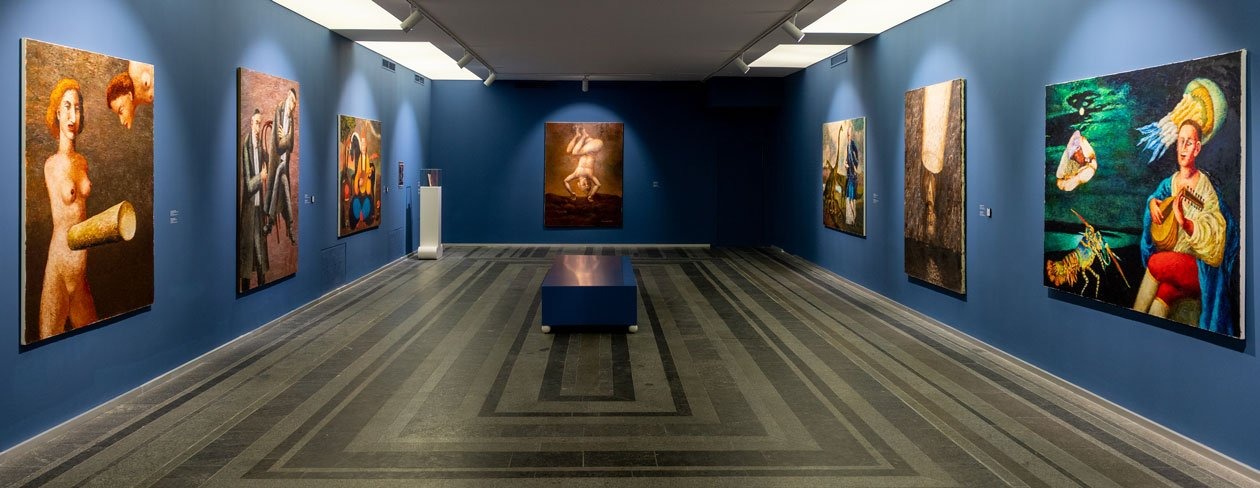
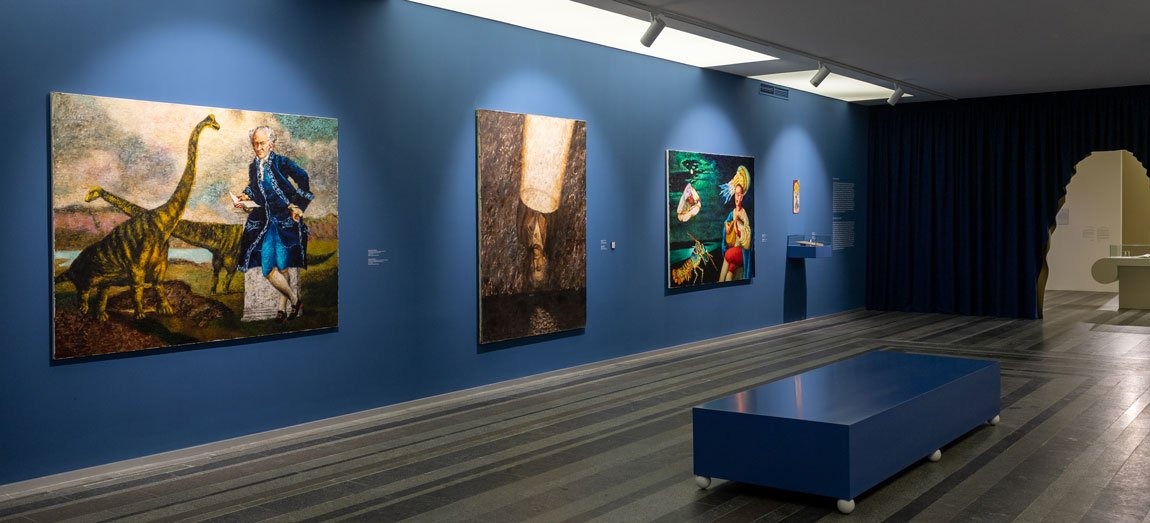
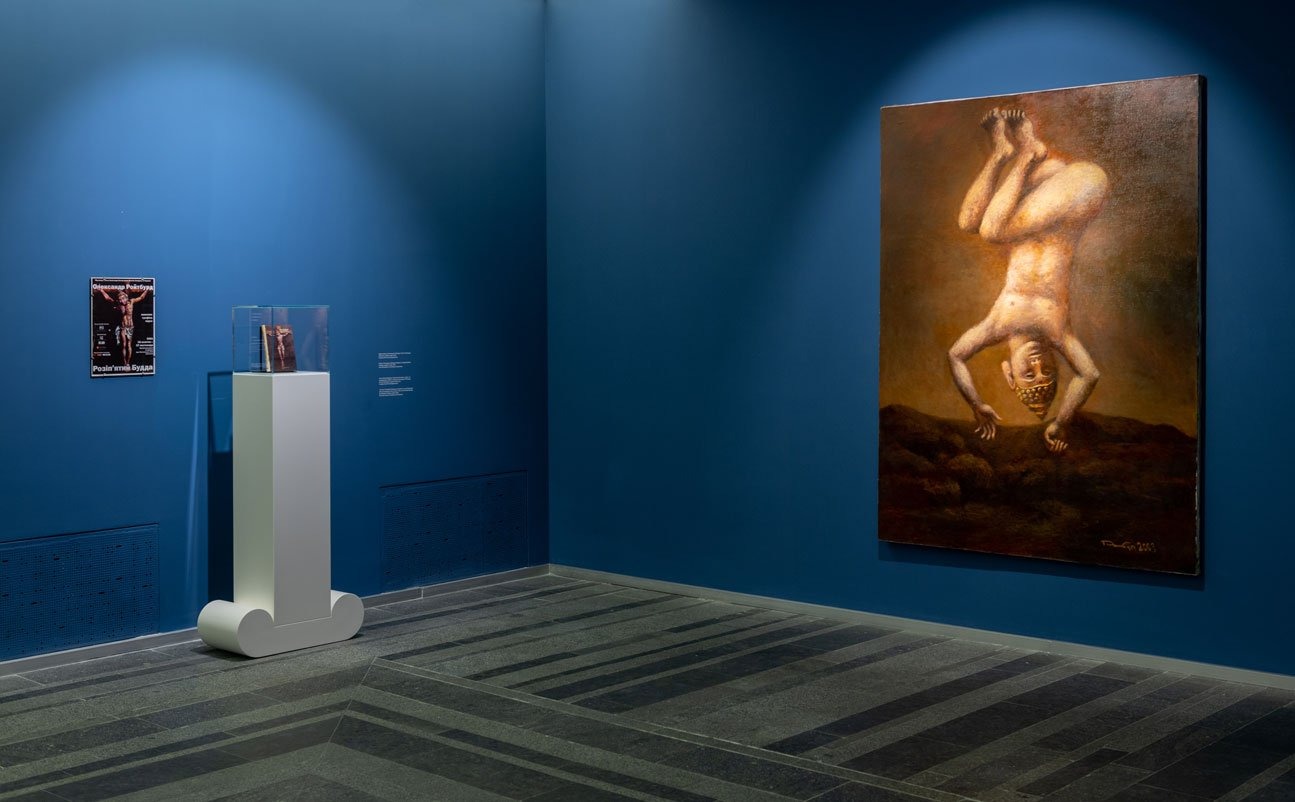
Фото в експозиції
POLITICAL POWER
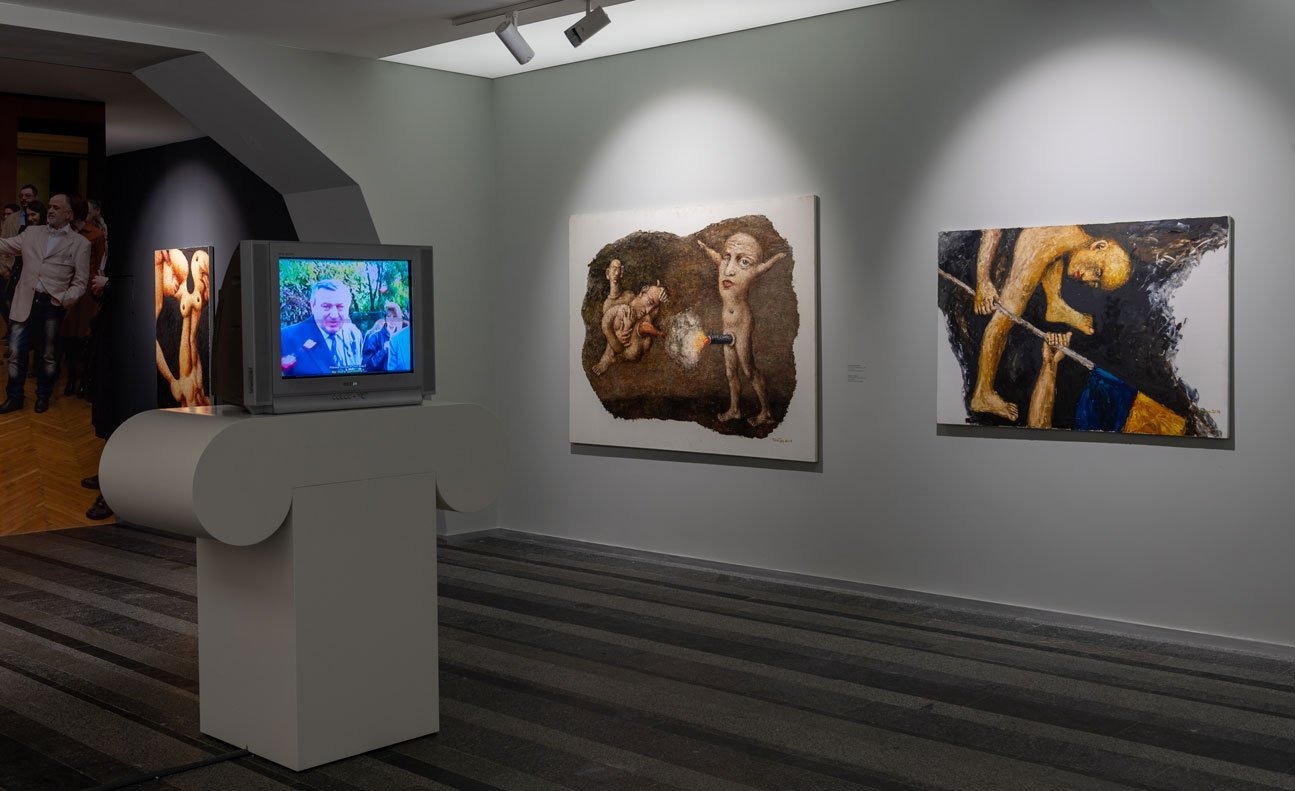
Oleksandr Roitburd’s youth coincided with the period of Gorbachev’s “glasnost.” It was then, for the first time in decades of Bolshevik dictatorship and uniformity, that citizens of the Soviet empire felt the right to expression, their own opinion, and choice and gained experience of influencing the situation in the state. The main thing was the experience of victory and liberation because the USSR monster eventually collapsed, although in certain structures, mental and customary practices, it has not yet completely died out. The Russian war against Ukraine, which initially began as a hybrid one, is essentially the last Soviet war against the rights of people and nations to freedom. Concern for political processes, confidence that an individual, especially an artist, can influence their direction, accompanied Roitburd all his life. He sincerely cared about the political situation in Ukraine, actively commented on it in artistic works, interviews, social networks. The artist sought and found opportunities to communicate with representatives of politics and power, attracted their attention with paradoxical and sometimes sarcastic works, demanding attention to the sphere of culture and art. The Revolution of Dignity became for the artist a culminating point in the history of independent Ukraine, which he perceived passionately and emotionally, as his own life.
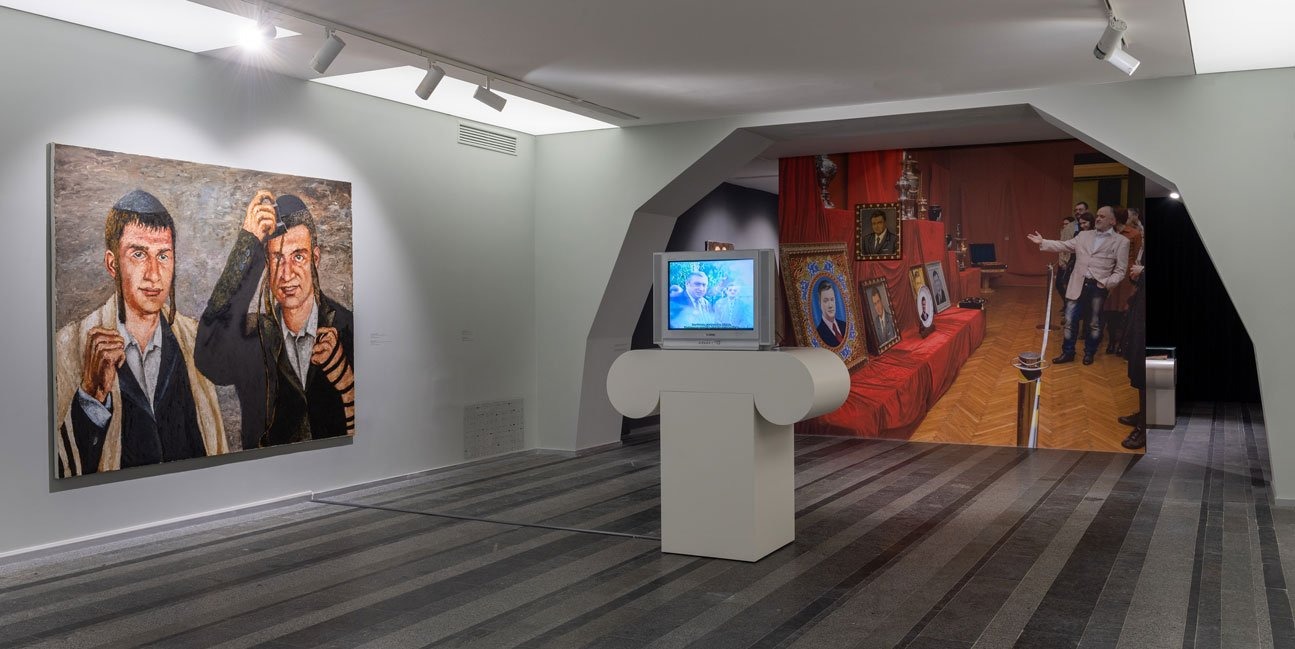
Oleksandr Roitburd
The Klitschko Brothers from the series “If There Is No Water in the Tap…”, 2011
canvas, oil
Provided by the artist’s family
Photo in the exposition
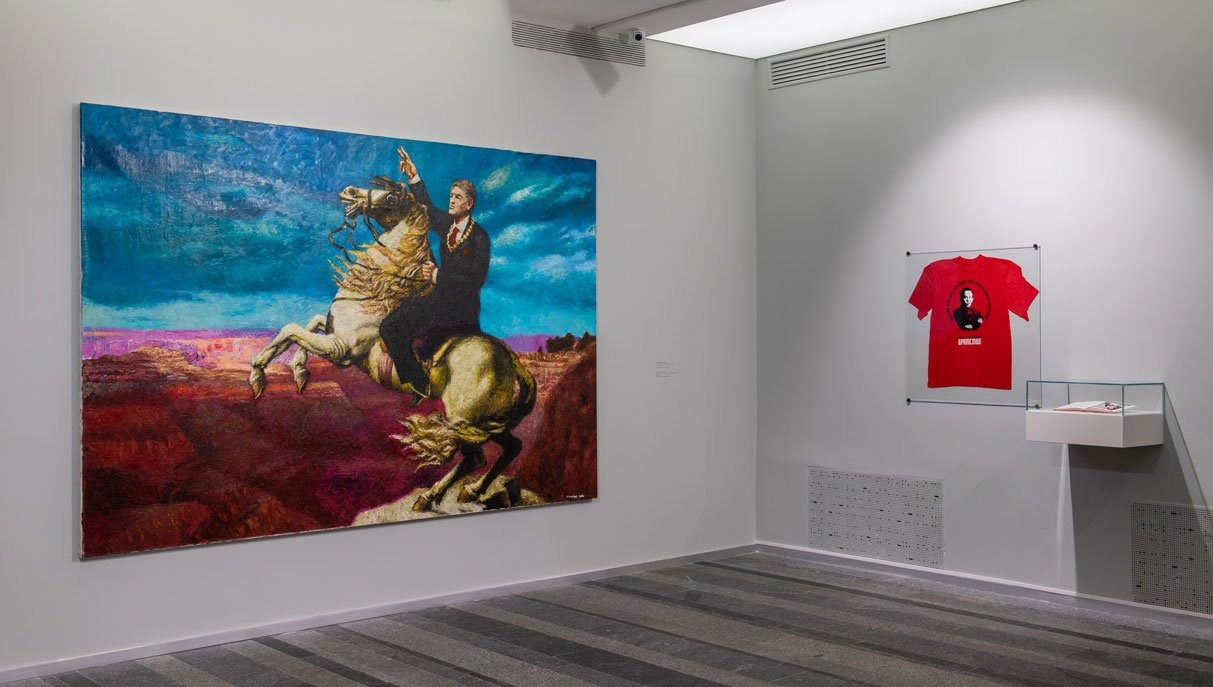
Oleksandr Roitburd
Equestrian Portrait of Viktor Yushchenko, 2006
canvas, oil
Collection of Mykhailo Vasylenko
Photo in the exposition
Oleksandr Roitburd
Video portrait of Eduard Hurvits, 1997
video, 2’00
Collection of the Odesa Museum of Contemporary Art
Oleksandr Roitburd
Premonition of Hybrid War, 2015
canvas, oil
Collection of Volodymyr Mitin
Photo in the exposition
Oleksandr Roitburd
The One Who Raises the Flag, 2014
canvas, oil
Collection of the Museum of the Revolution of Dignity
Photo in the exposition
POWER OF THE BODILY AND SUBCONSCIOUS.
ABSOLUTE POWER
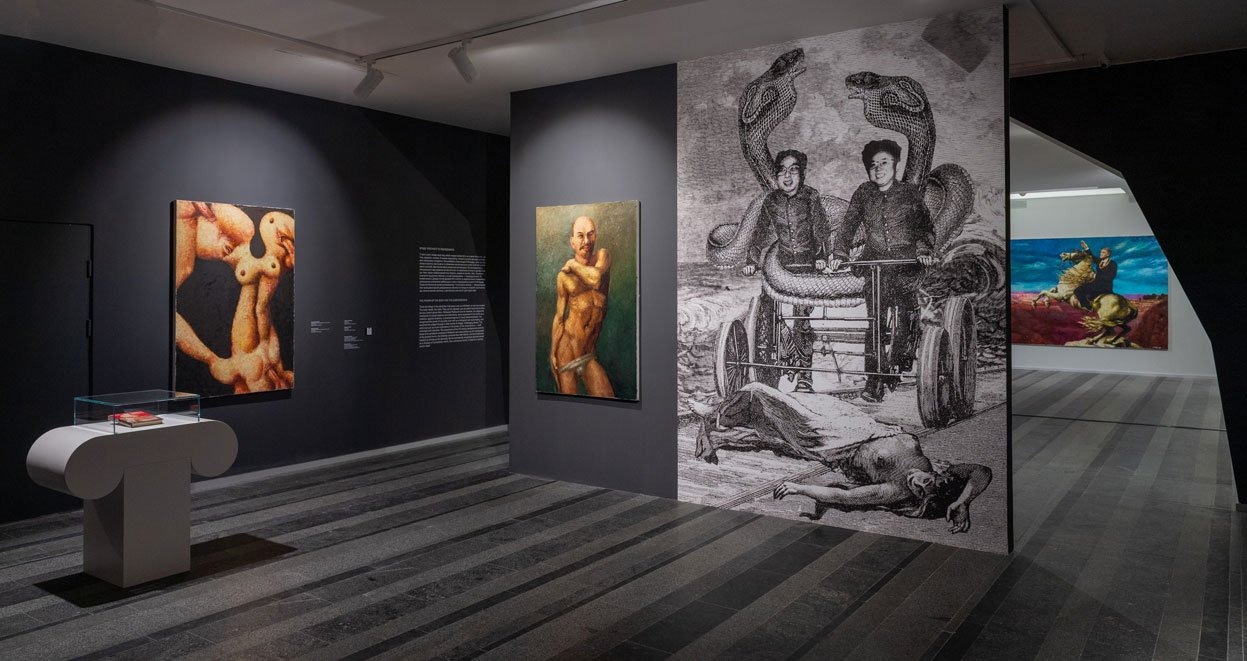
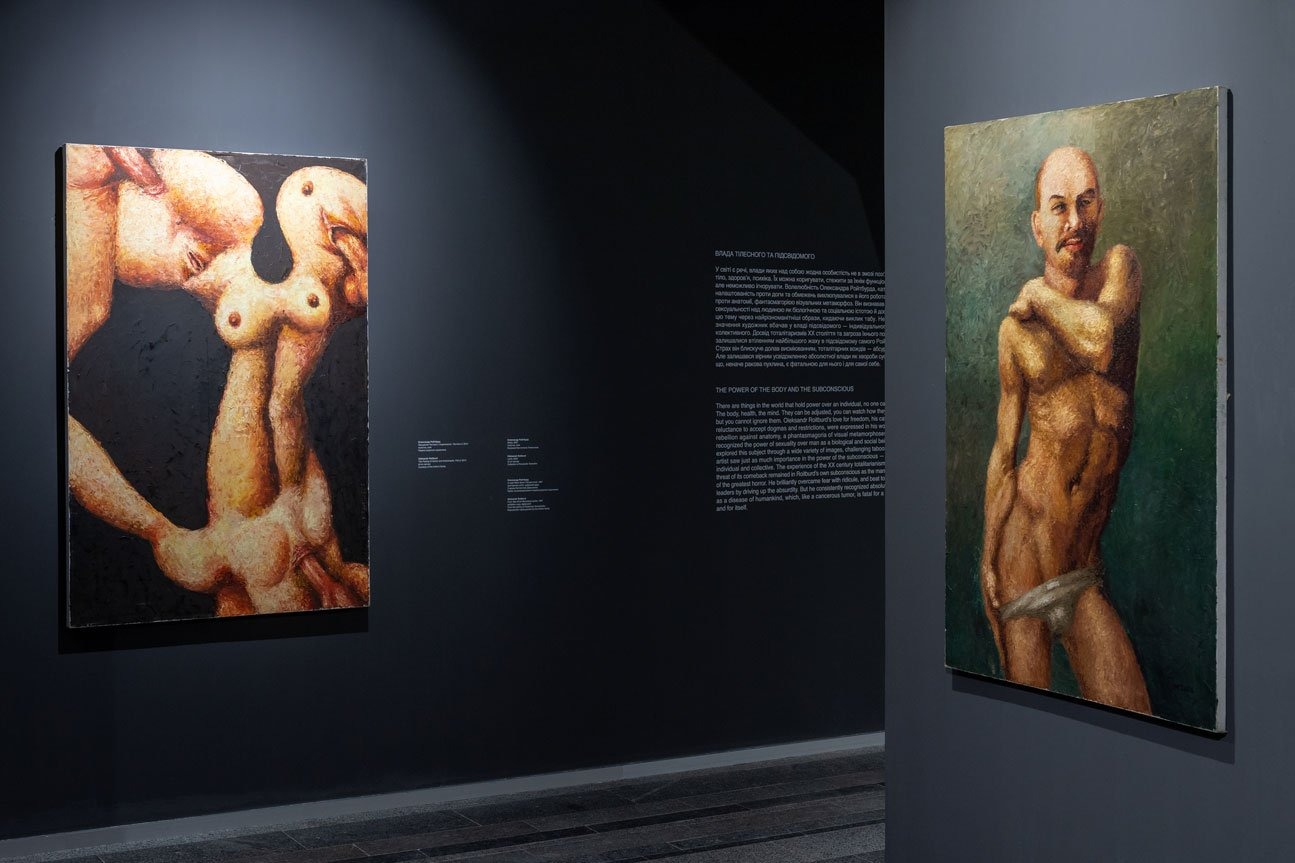
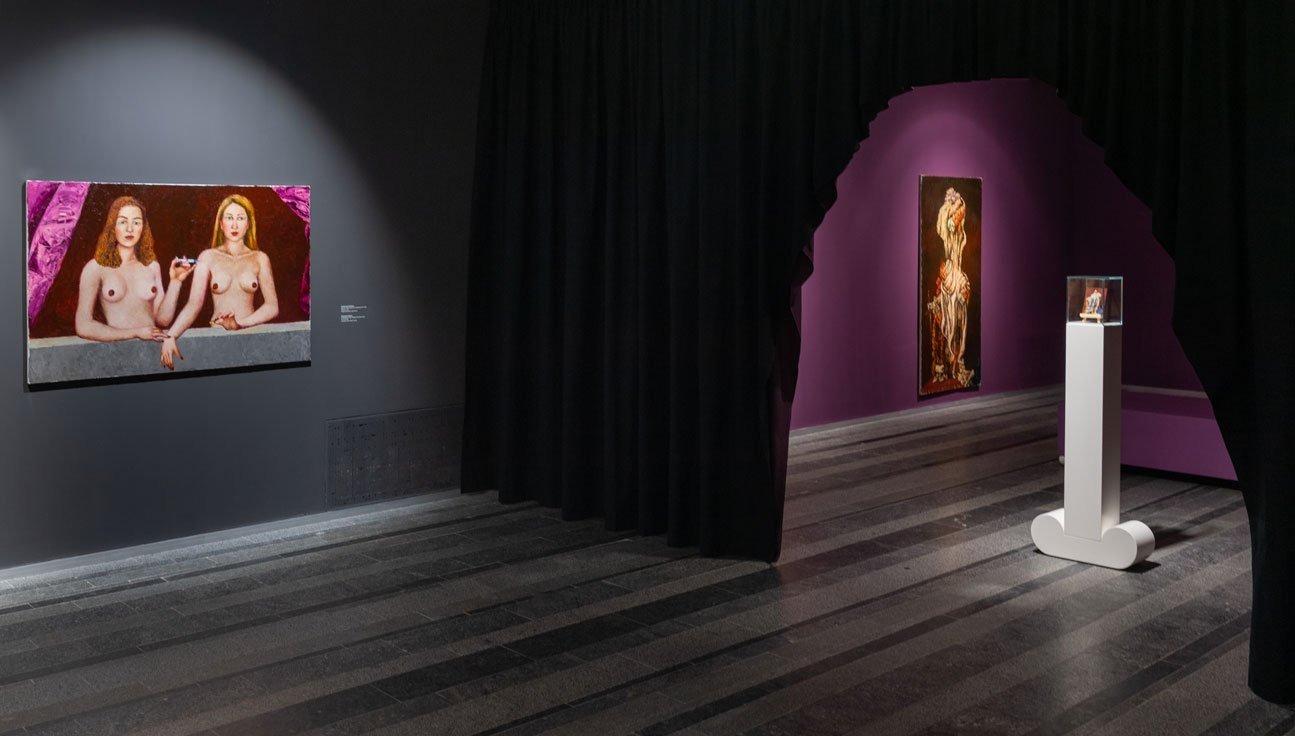
There are things in the world whose power over a person no individual can get rid of. These are the body, health, psyche. They can be adjusted, monitored for their functioning, but cannot be ignored. Oleksandr Roitburd’s love of freedom, categorical attitude against dogmas and restrictions spilled over in his works as a rebellion against anatomy, a phantasmagoria of visual metamorphoses. He recognized the power of sexuality over a person as a biological and social being and explored this theme through the most diverse images, challenging taboos. The artist also saw great importance in the power of the subconscious – both individual and collective. The experience of 20th-century totalitarianisms and the threat of their return remained the embodiment of the greatest horror in Roitburd’s subconscious. He brilliantly overcame fear with ridicule, totalitarian leaders – with absurdization. But he remained faithful to the awareness of absolute power as a disease of society, which, like a cancerous tumor, is fatal for it and for itself.
Oleksandr Roitburd
From the series Max Ernst Neizvestny, 1997
exhibition copy, digital print
From the archive of Kostiantyn Doroshenko
Reproduction rights granted by the artist’s family
Photo in the exposition
Oleksandr Roitburd
Farewell of Hector to Andromache. Part 2, 2010
canvas, oil
Provided by the artist’s family
Photo in the exposition
Oleksandr Roitburd
Lenin, 2007
canvas, oil
Collection of Kostiantyn Tymonkyn
Photo in the exposition
Oleksandr Roitburd
Girls from Fontainebleau Getting Vaccinated, 2021
canvas, oil
Provided by the artist’s family
Photo in the exposition
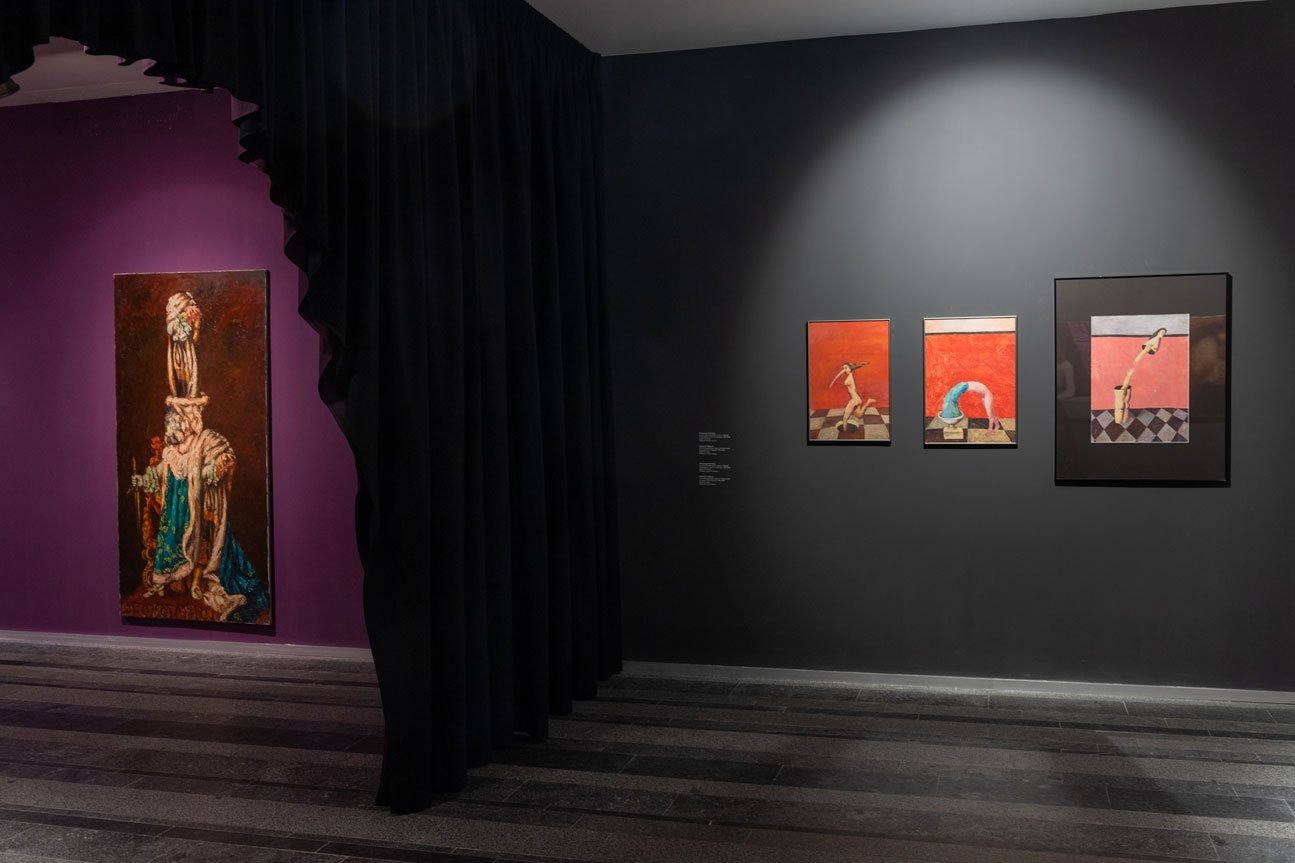
Oleksandr Roitburd
From the cycle Everyday Life in Pompeii [Повсякденне життя в Помпеях], 1994-2000
acrylic on paper
Collection of Matvii Nikitin
Photo in the exposition
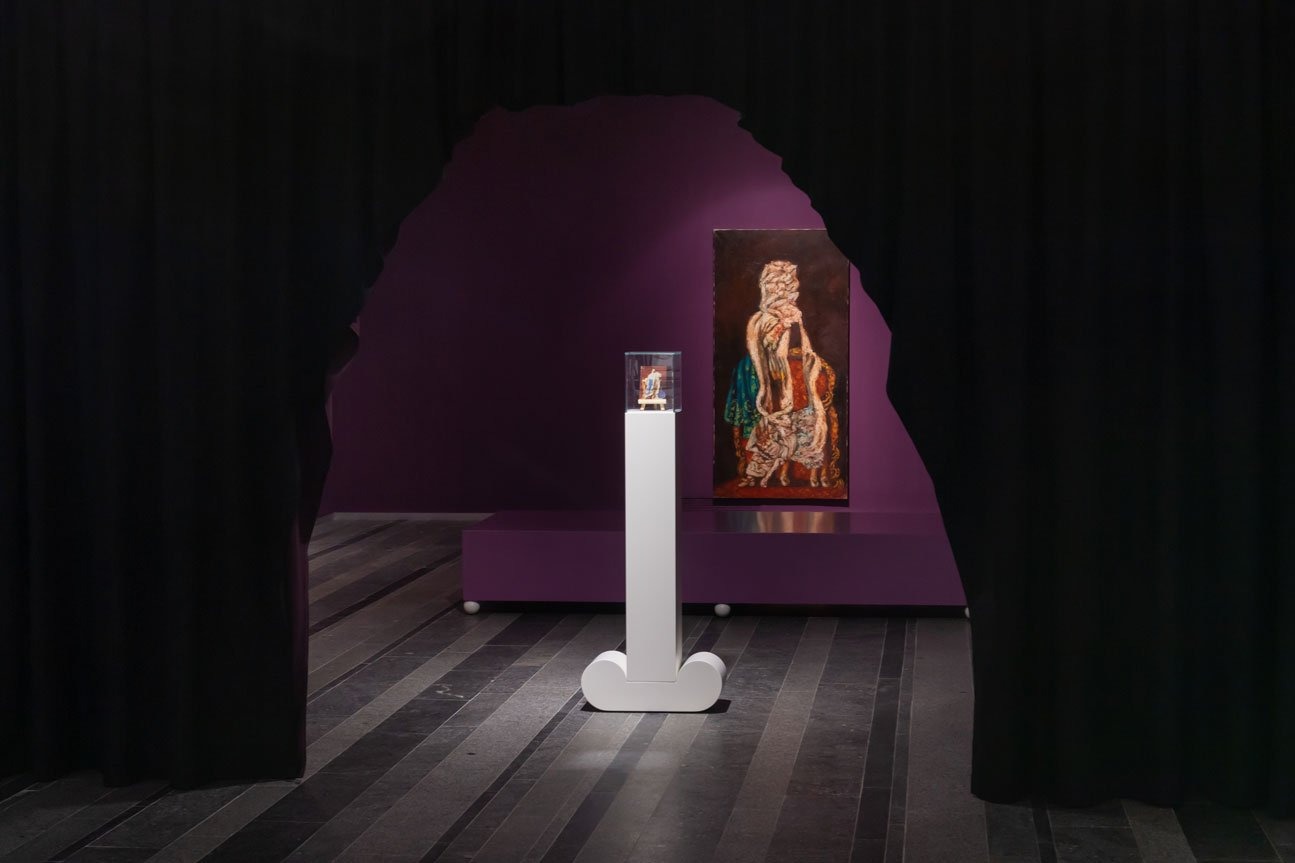
Фото в експозиції
We are grateful to Lesia Kulchynska, who together with Kostiantyn Doroshenko began work on the exhibition in 2021, Halyna Hleba and Dariia Shevtsova, members of previous compositions of the Research Platform, and Kateryna Lazarevych, our archivist.
Thanks for assistance in creating the exhibition to: Iryna Dratva, Roman Zvinyatskovskyi, Semen Kantor, Oleksandra Kovalchuk, Sonia Koshkina, Anna Makolkina, Betty Roitburd, Olha Salo.