A Space of One’s Own
The research platform PinchukArtCentre presents a group exhibition A Space of One’s Own, which offers one of the possible perspectives on the history of Ukrainian art and the position of women in it, emphasizing exceptional artistic phenomena and taking into account the complex features of the Ukrainian socio-political context. Aiming to create a living archive of Ukrainian art from the early 1980s to the present, the PinchukArtCentre Research Platform visualizes the results of its work through continuous exhibition activity.
The exhibition’s title refers to Virginia Woolf’s classic essay A Room of One’s Own (1929), in which the writer challenged the stereotypical notion of the position and place of a woman artist in the “male” world. By appealing to this title, the exhibition invites reflection on what constitutes a “space” for women in contemporary Ukrainian society. The project does not provide clear definitions of what this space should be but rather poses questions about what constitutes a zone of comfort, freedom, a place for expression, and so on.
Exhibition participants: Yevheniya Bielorusets, Yana Bystrova, Kateryna Bilokur, Kateryna Yermolaieva, Margarita Zharkova, Anna Zvyahintseva, Semen Yoffe, Zhanna Kadyrova, Oksana Kazmina, Alevtina Kahidze, Alina Kleitman, Alina Kopytsia, Oksana Pavlenko, Maria Prymachenko, Polina Rayko, Vlada Ralko, Maryna Skugaryova, Hanna Sobachko-Shostak, Mykola Trokh, Oleksandr Chekmeniov, Oksana Chepelyk and Anna Shcherbyna.
This exhibition is an attempt to show the specifics of the Ukrainian artistic context, which, having inherited significant contradictions of the Soviet experience, simultaneously somewhat artificially tries to fit into already existing Western European narratives.
The exhibition is conventionally divided into three sections, each interpreting the idea of space differently as forced/hidden, political/manifestational, and bodily/sensual. “Spaces” are constructed around dialogues between works of contemporary artists and historical phenomena such as propaganda posters from the 1920s–1930s, Soviet monumental art, so-called “folk art,” and more. For the first time within the framework of the PinchukArtCentre research exhibition, artists who created new works to express and rethink the raised issues were invited to participate.
The curators of the exhibition are Tetiana Kochubinska and Tetiana Zhmurko.
The exhibition was made possible through collaboration with the National Art Museum of Ukraine, the National Museum of Ukrainian Folk Decorative Art, the V. I. Vernadsky National Library of Ukraine, and the Polina Rayko Charitable Foundation.
Technical partner of the exhibition: Front Pictures.
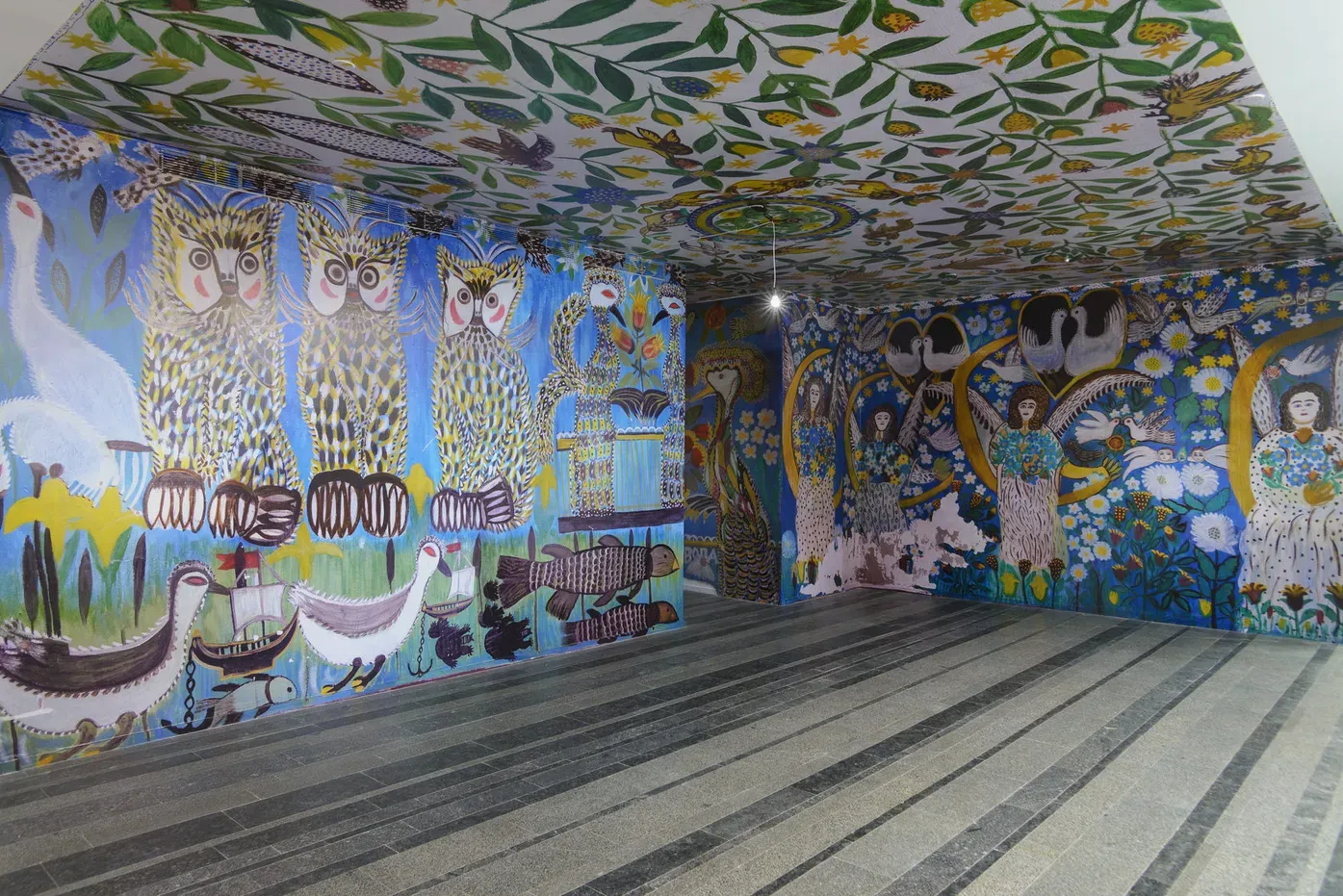
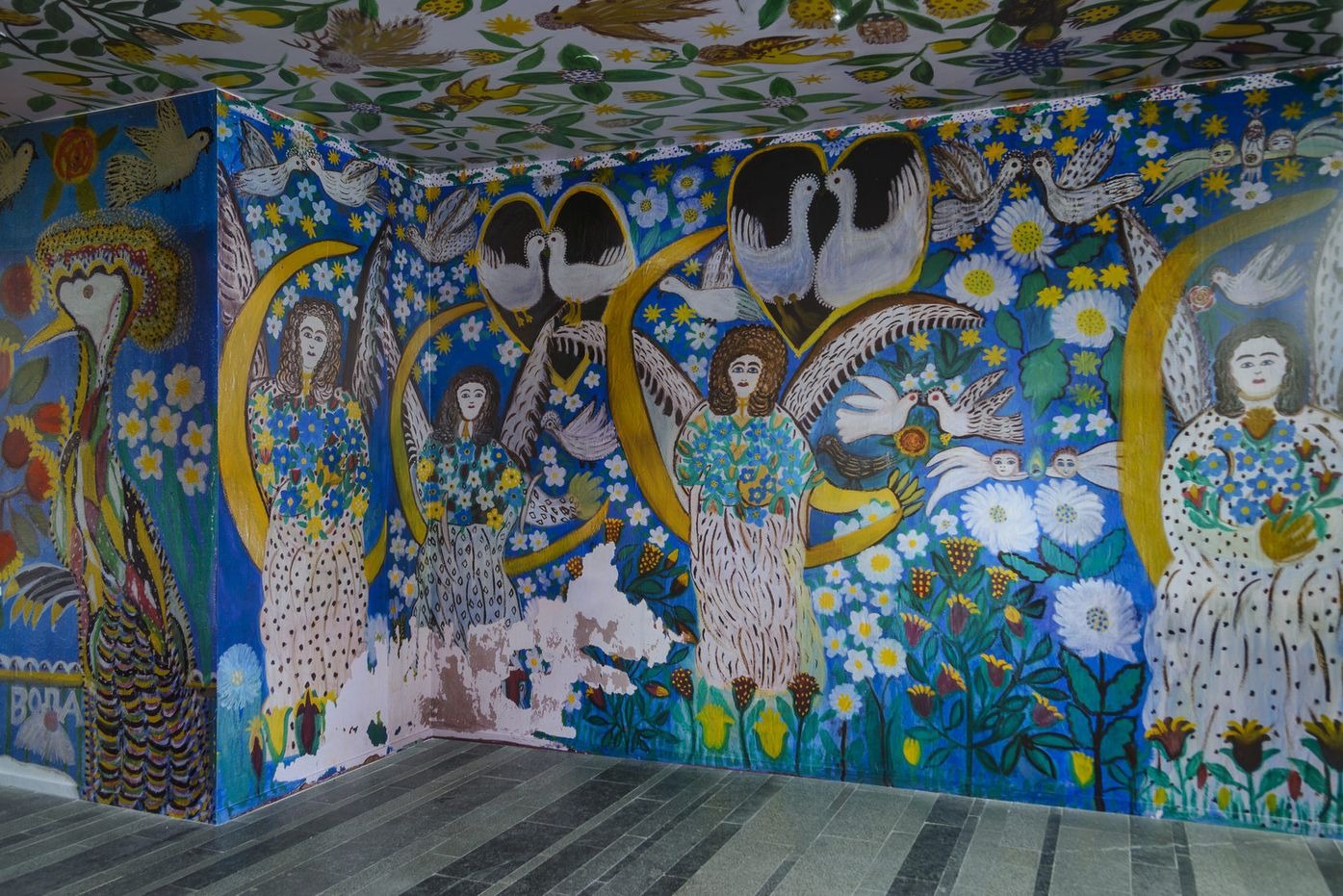
This hall recreates Polina Rayko’s “own room” (1928–2004) — an artist who was born and lived her entire life in the city of Tsyurupynsk (now Oleshky) in the Kherson region. Rayko became known in the early 2000s for her murals that completely covered her house. Her painting combines autobiographical stories, religious motifs, Soviet symbolism, and dreams. In her seven small rooms, Rayko created her own “iconographic system” of plots and images describing her earthly life and ideas about life after death.
Without professional education, Polina Rayko began creating only in the late 1990s. The reason was forced tragic loneliness: the loss of her husband, daughter, and son gave rise to chthonic energy. In life, Polina Rayko embodied the stereotypical image of a recluse — a “half-crazy” woman usually misunderstood and condemned by society. Seclusion opened up possibilities for unlimited creative freedom for the artist, physically confined, however, within the space of her “own room.”
Artist Anna Shcherbyna enters into a dialogue with Polina Rayko’s “room” and creates an audio work. By uttering zoomorphic guttural sounds, she seems to raise something domestic, archaic, animalistic from the depths, touching on physiological instincts opposite to the social and authoritative. Amid the general “murmuring,” a clear “No!” sometimes sounds, carrying a political charge and capable of manifesting the voice of a woman in contemporary society.
Reproduction of Polina Rayko’s house murals (1928–2004)
Photography: Semen Khramtsov.
digital print
Provided by the Polina Rayko Charitable Foundation
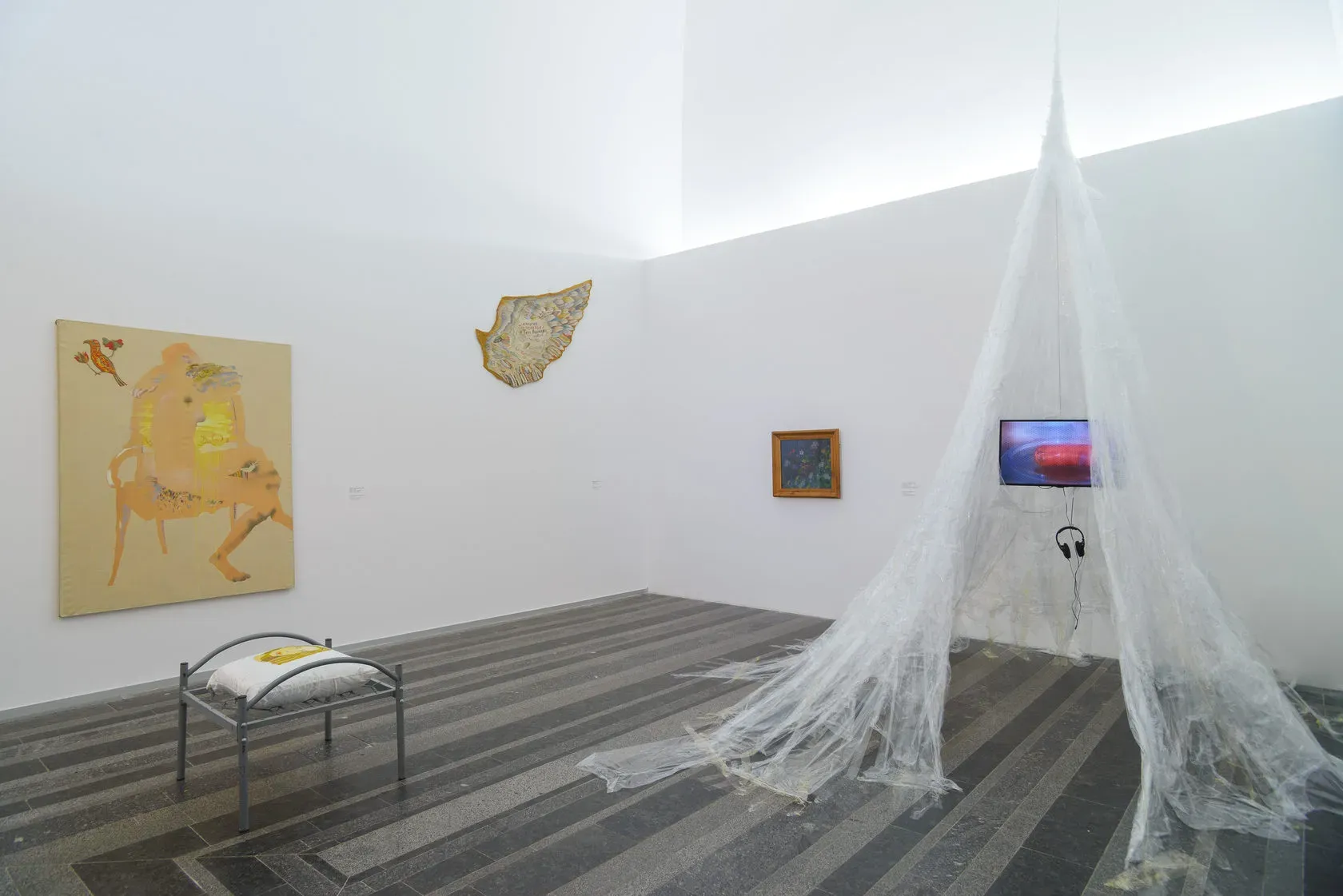
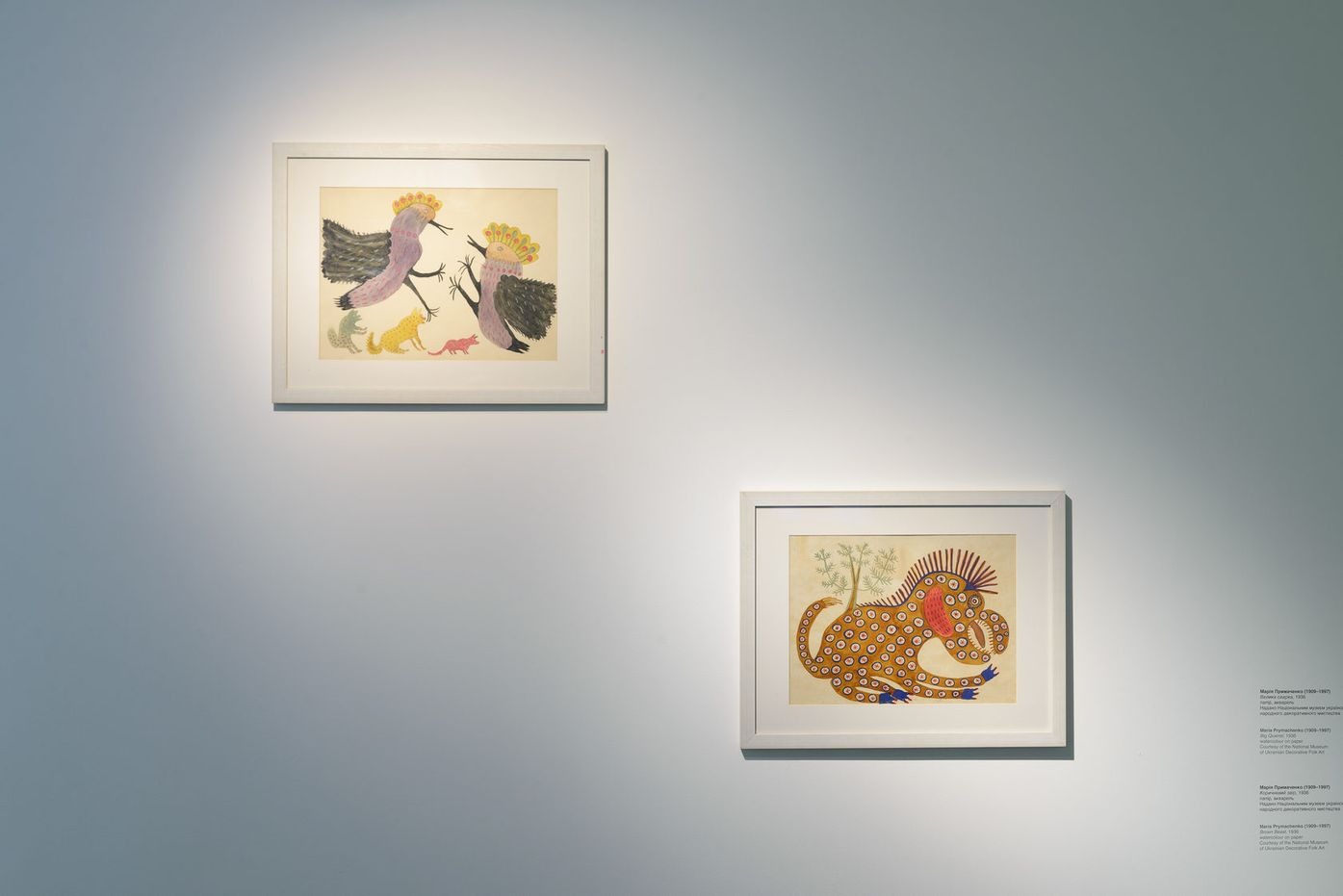
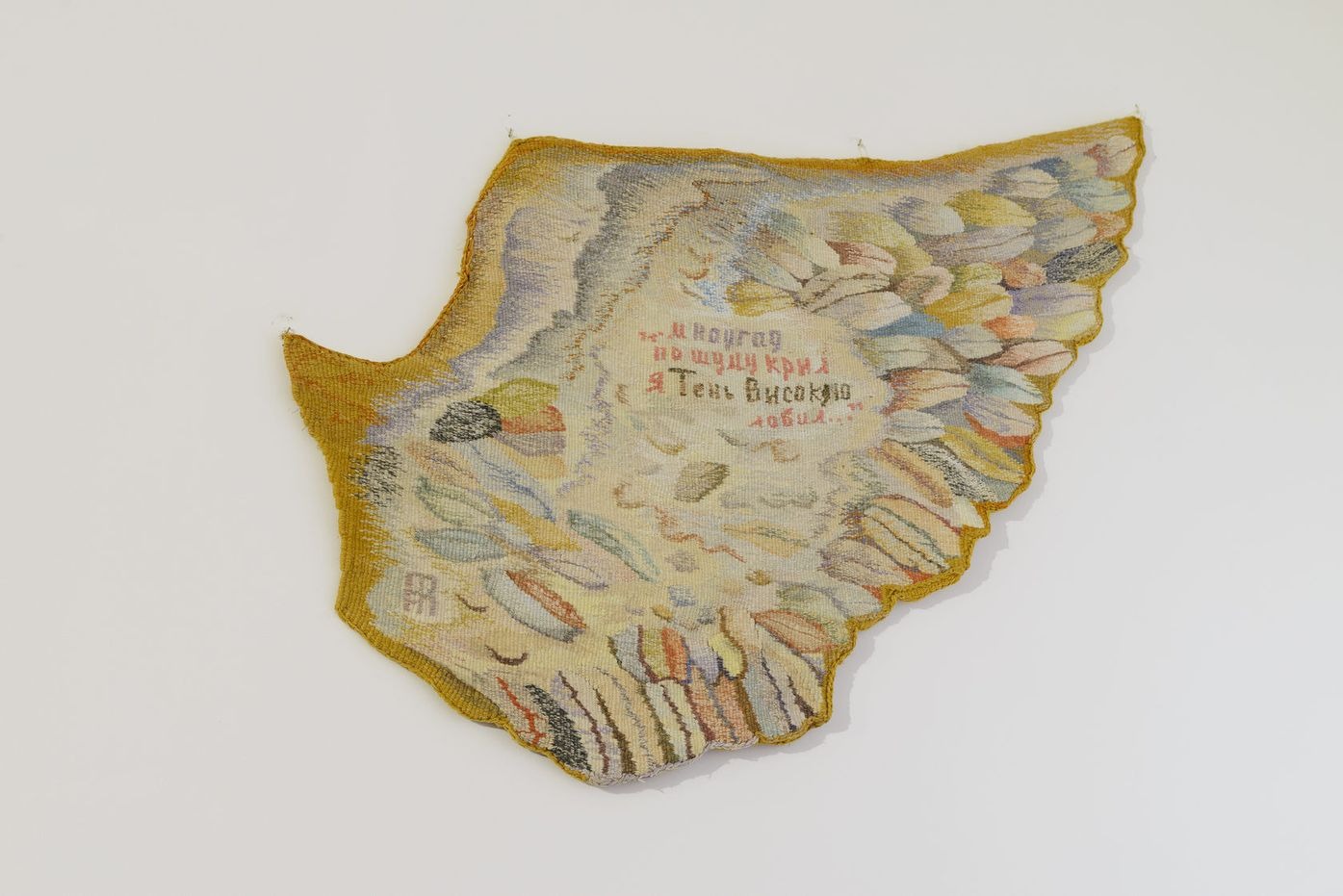
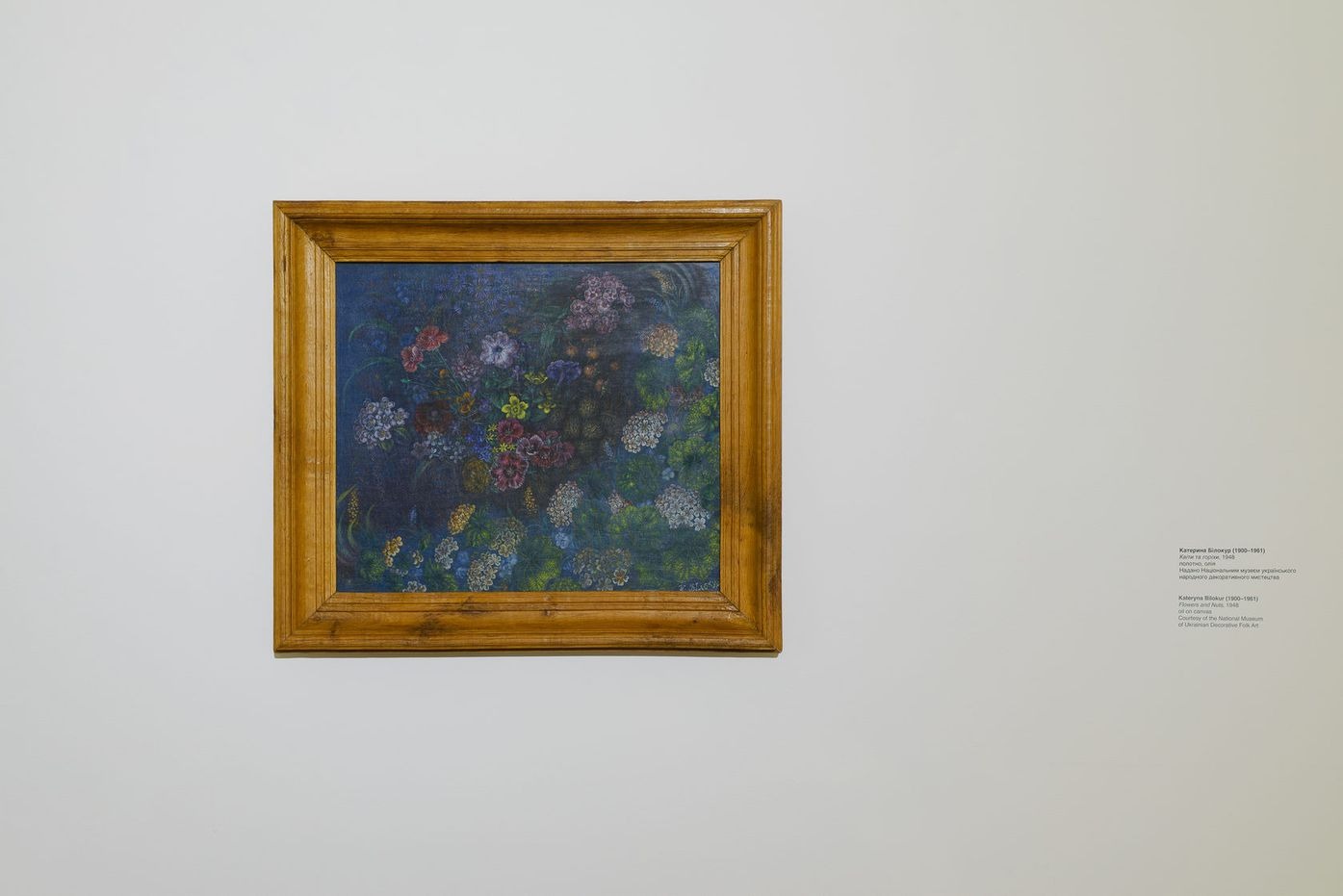
Appealing to stereotypes about “women’s” creativity historically associated with artistic practices such as weaving, embroidery, and textile work, this hall constructs an intimate hidden space where media, generations, and contexts intertwine. An atmosphere of home comfort is created here, traditionally maintained and preserved by women. Among other works, the hall presents pieces by Kateryna Bilokur and Maria Prymachenko — artists whose creative formation took place under a strict patriarchal society without a “room of their own.” This prevented them from realizing themselves as professional artists. The “suppressed” creative and feminine manifested in the creation of a special figurative world inhabited by imaginary animals, birds, and flowers. These naive images are expected from women and thus allowed in the male world.
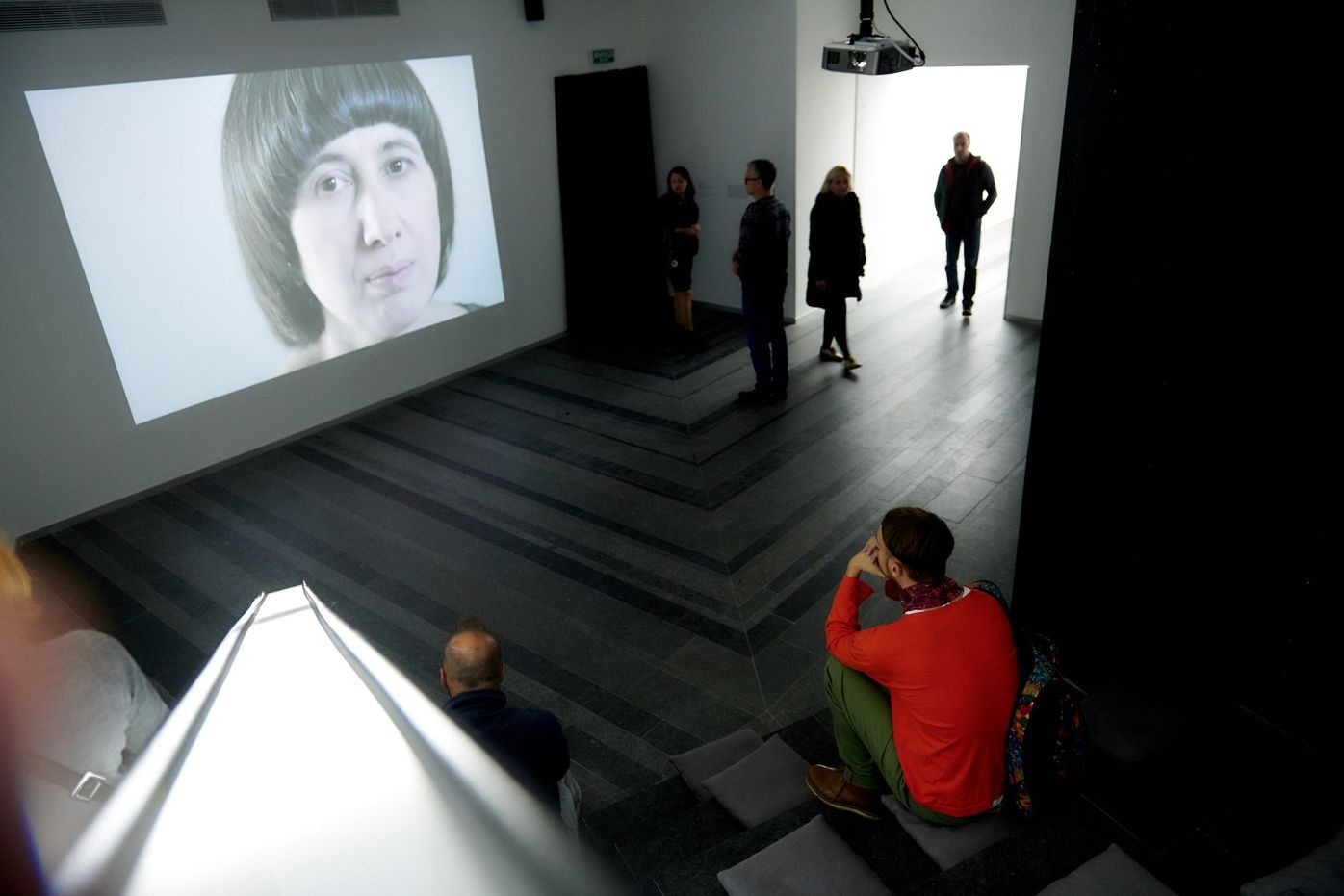
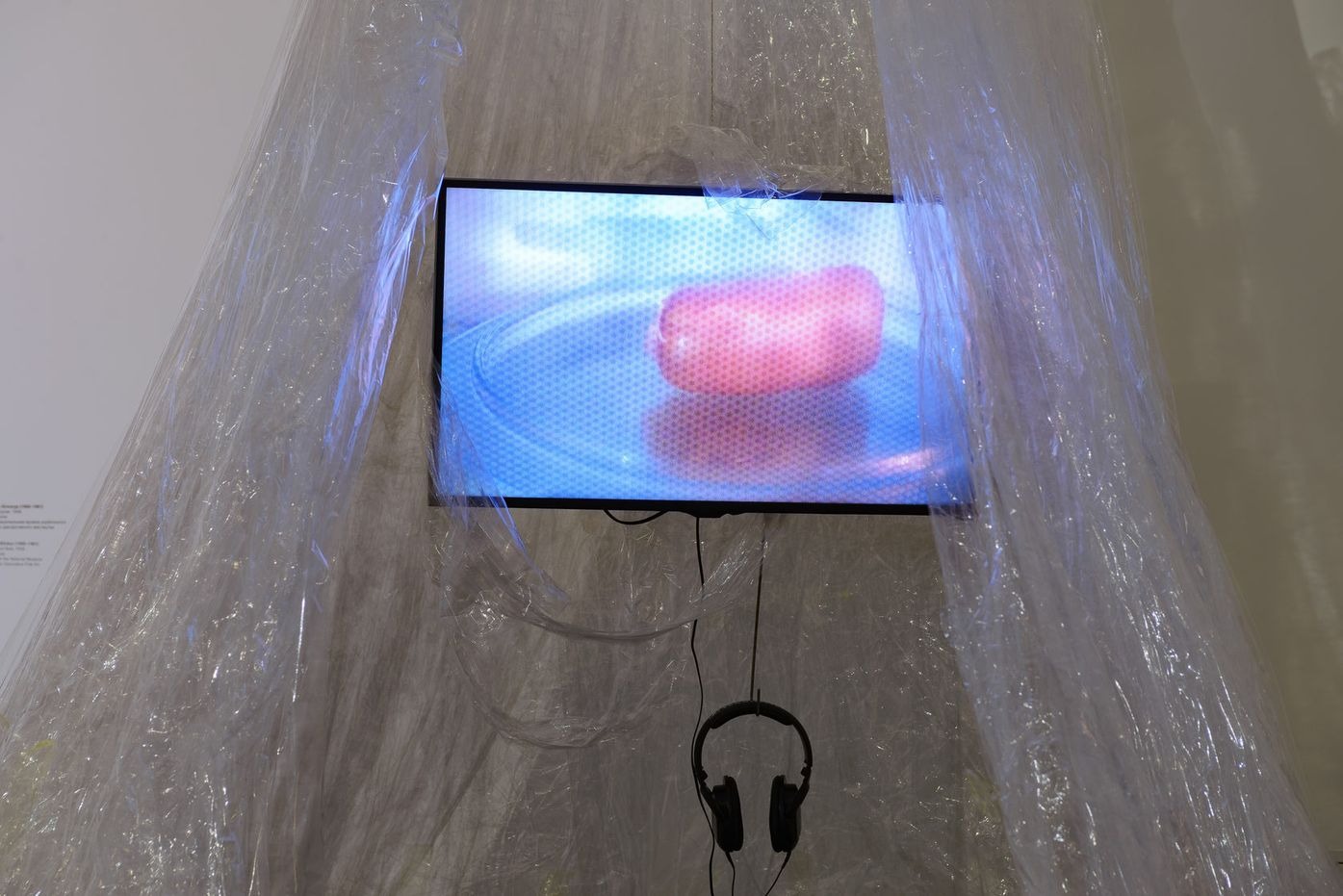
Their works appear in dialogue with a tapestry by Margarita Zharkova — an artist who was at the origins of the nonconformist movement in Odesa and whose apartment became a meeting place and venue for early apartment concerts. Supporting the development of artistic processes, Zharkova neglected her own artistic practice in favor of others, whom she considered more “talented.” All these works gathered together raise the question: where is the place where one can find space for creativity? The climax of the hall is a work by Alina Kleitman, in which the artist accumulates and absurdly exaggerates stereotypes and clichés in society related to women’s self-perception and self-expression. The heroine of her video humiliates and stigmatizes herself to please a man.
Alina Kopytsia
Interior, 2018
textile collage
Created on commission for PinchukArtCentreInterior, 2018
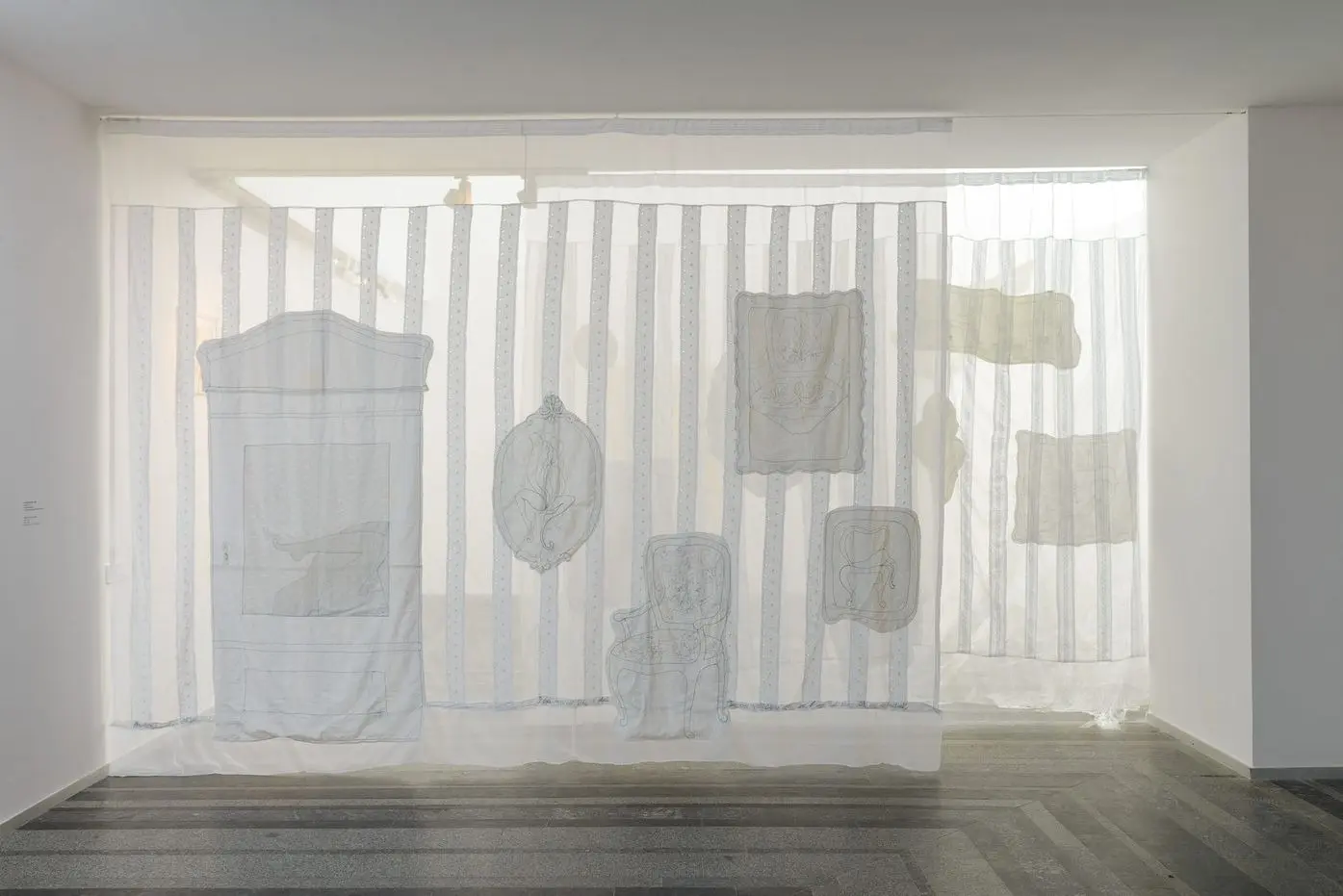
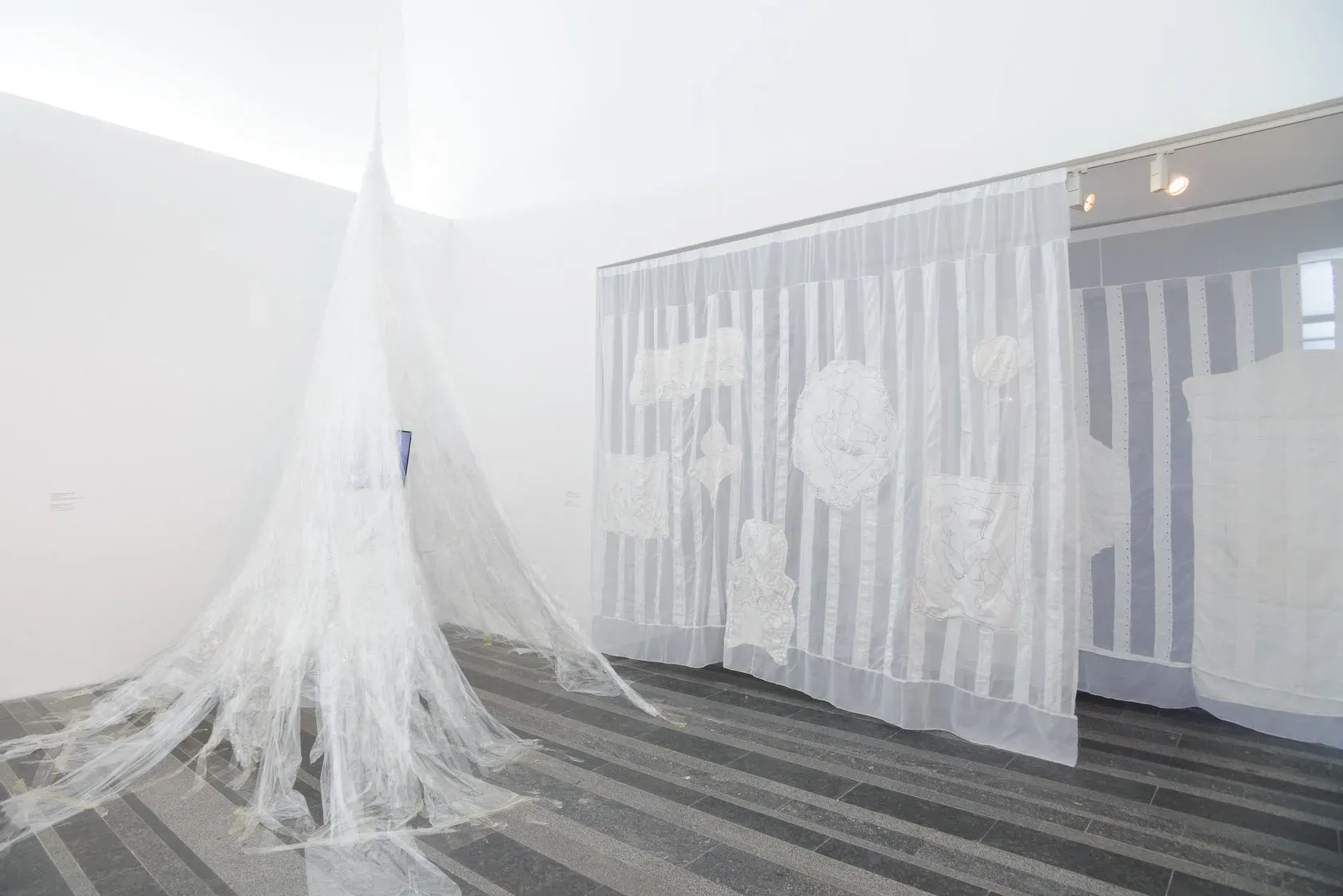
Alina Kopytsia consciously uses textiles as a “typical” female material in her artistic practice but saturates it with frank erotic content, problematizing the position of women in contemporary society. Her new work physically divides two rooms and marks the section of the exhibition dedicated to intimacy. The work acts as a metaphor for a secret personal world and simultaneously as an obstacle for the viewer, hiding and protecting. All these works gathered in one space embody the “intersection” of different “rooms”: its absence (Bilokur, Prymachenko), uncertainty and self-torment (Zharkova, Kleitman), comfort (Skugaryova).
Alina Kleitman
The Story of the Old Fat Girl. Chapter Three. Plucked Forehead, 2018
video
Created on commission for PinchukArtCentre
Maria Prymachenko
The Big Quarrel, 1936 and Brown Beast, 1936
paper, watercolor
Provided by the National Museum of Ukrainian Folk Decorative Art
Maryna Skugaryova
I’m Fine, 1996
bed, pillows, embroidery
Provided by the artist
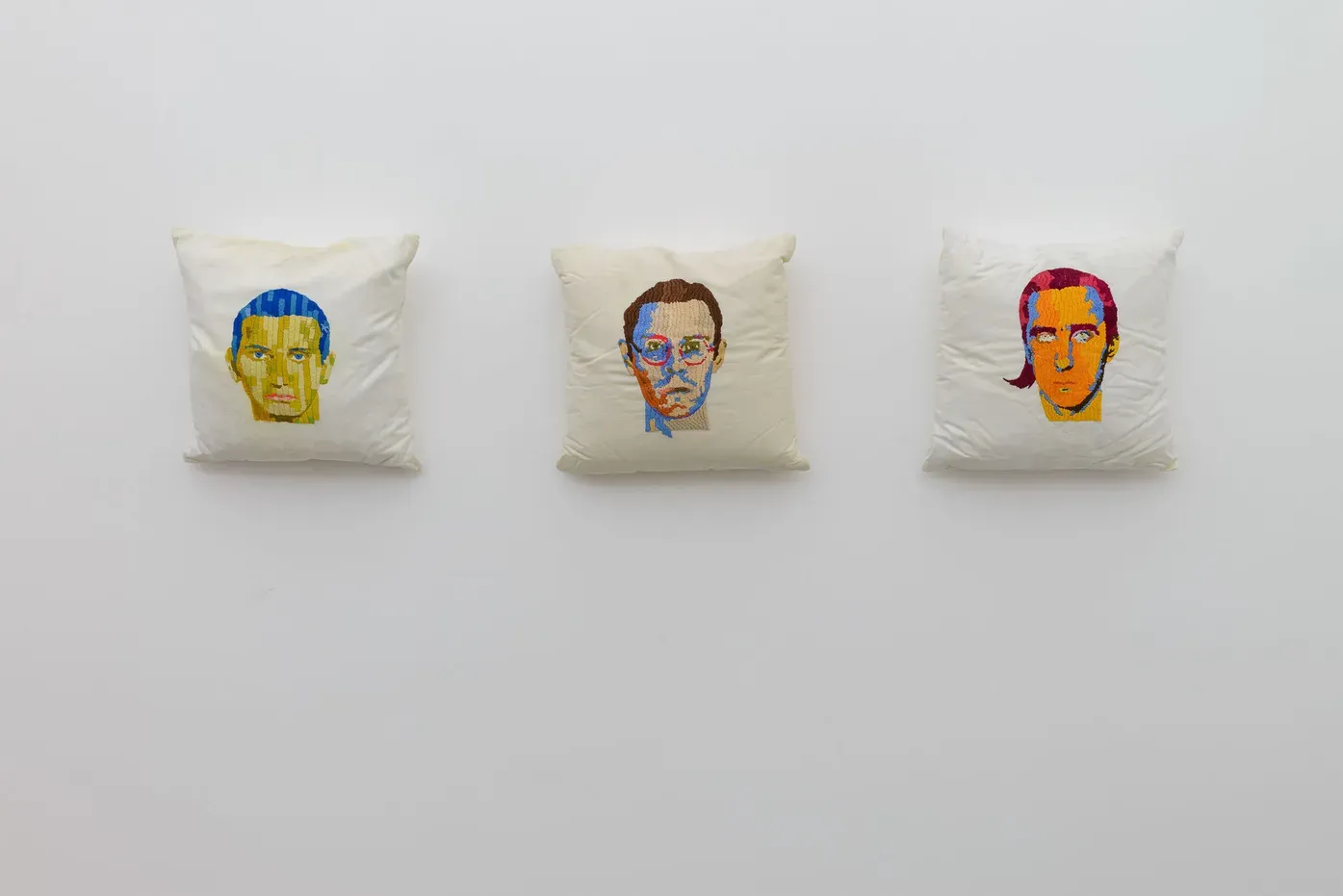
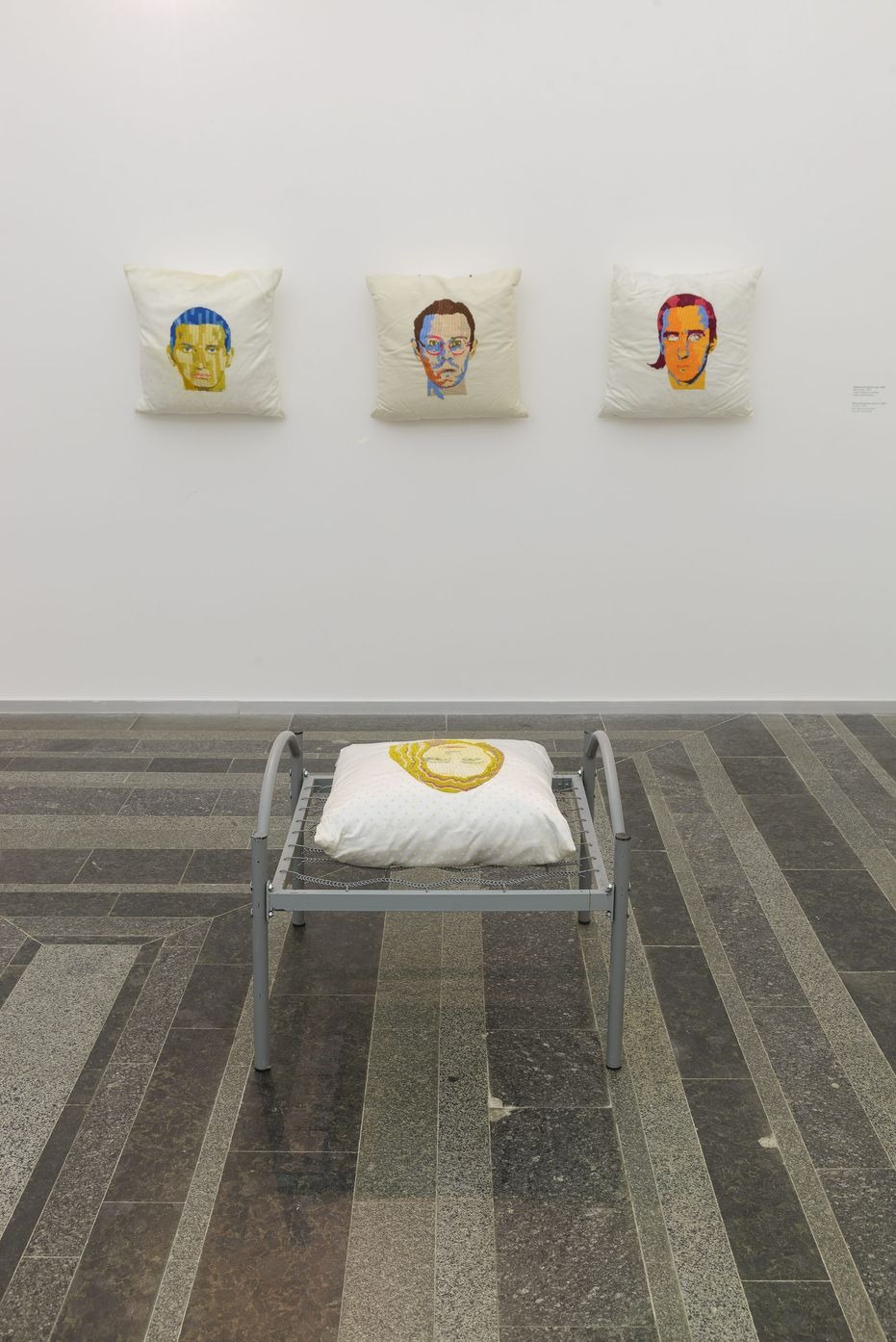
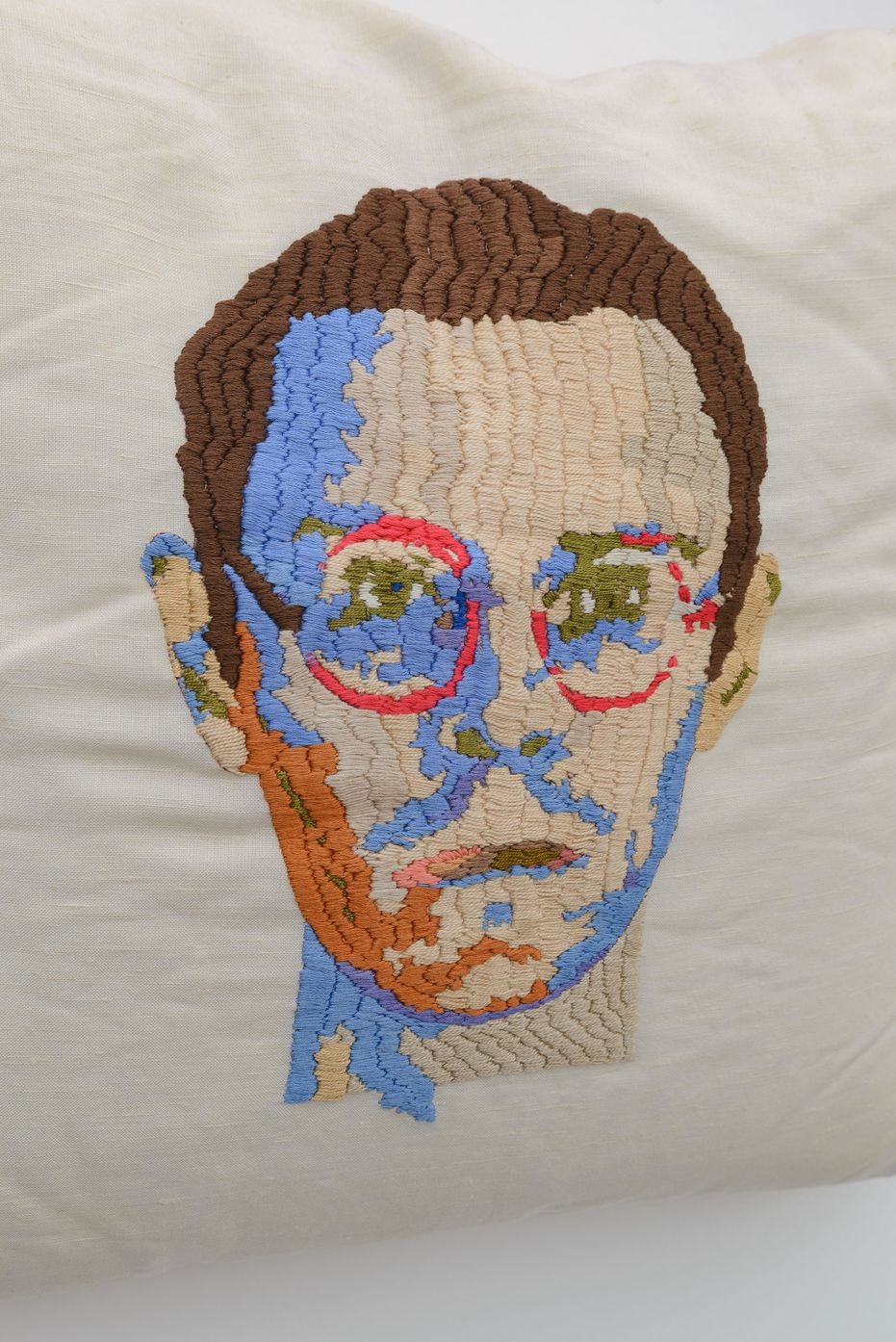
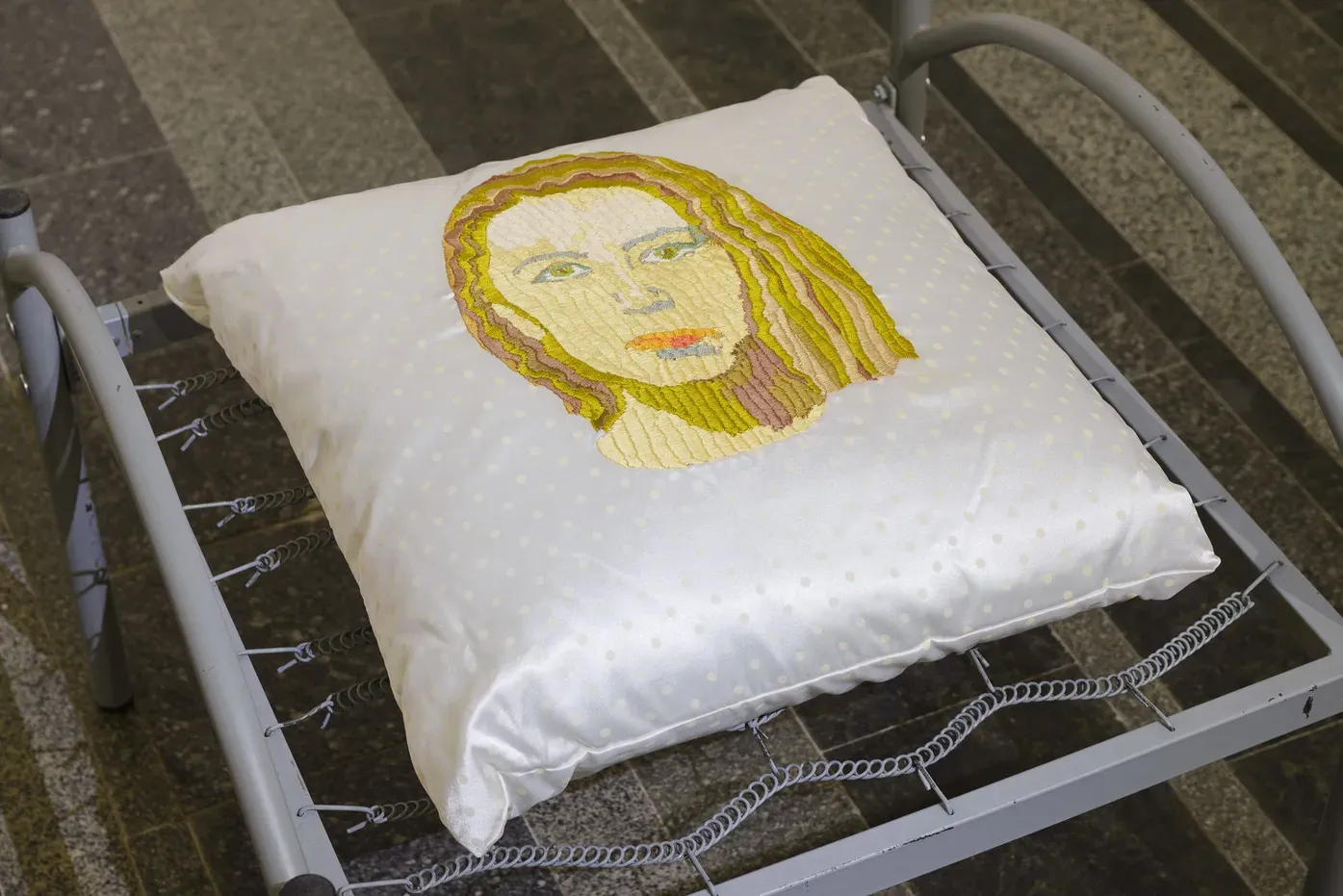
Maryna Skugaryova’s installation “I’m Fine” was created in 1996 under the curatorship of Marta Kuzma for the Soros Center for Contemporary Art in Kyiv. The work consists of a metal bed and pillows embroidered with portraits of artists close to Skugaryova — her husband Oleh Tistol, friends Mykola Matsenko and Kostyantyn Reunov, and a self-portrait. The title itself conveys the idea of home comfort, coziness, and a friendly environment necessary for creativity.
However, the metal armored bed, on which lies a pillow with the artist’s image, evokes associations with institutional settings and causes discomfort, contradicting the intimacy of the overall atmosphere. This work fully reveals the contradictions of the 1990s when the possibility of creating was largely due to a community of friends, mostly men. Often performing a protective function, they simultaneously became obstacles to the creative realization of women artists in the public sphere.
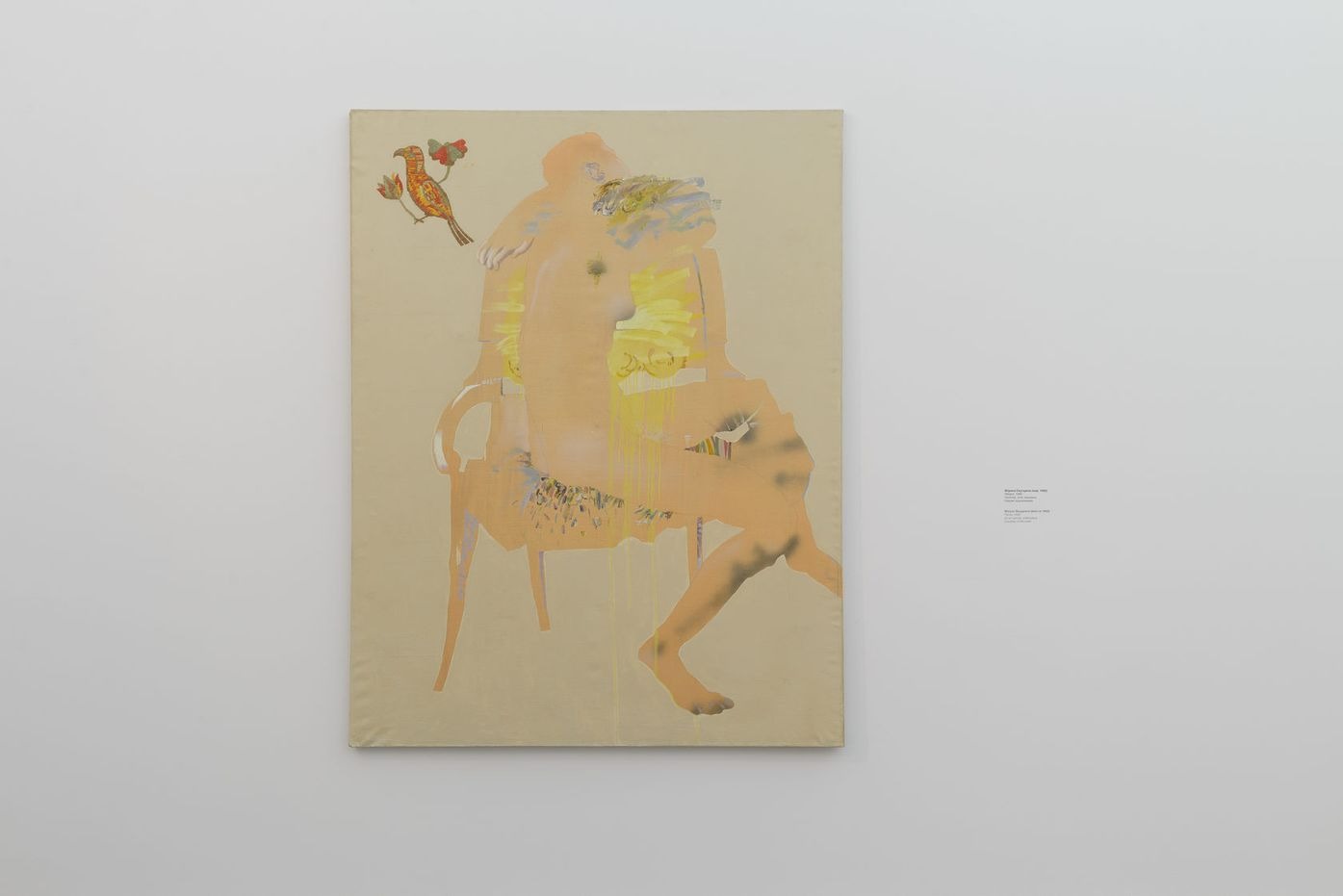
Maryna Skugaryova
Parrot, 1992
canvas, oil, embroidery
Provided by the artist
Margarita Zharkova
Wing, 1984
tapestry
Provided by Yulia Zharkova
Kateryna Bilokur
Flowers and Nuts, 1948
canvas, oil
Provided by the National Museum of Ukrainian Folk Decorative Art
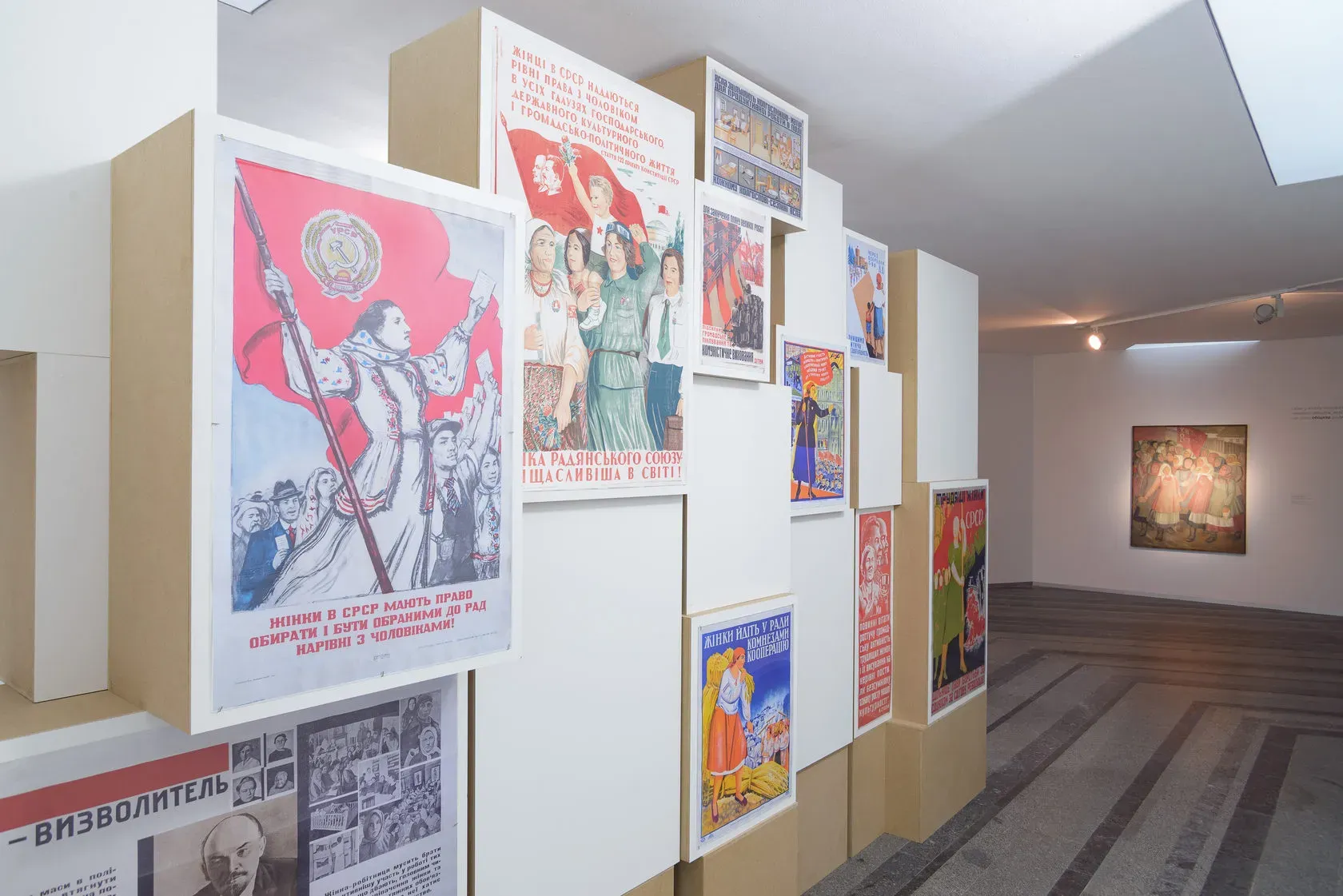
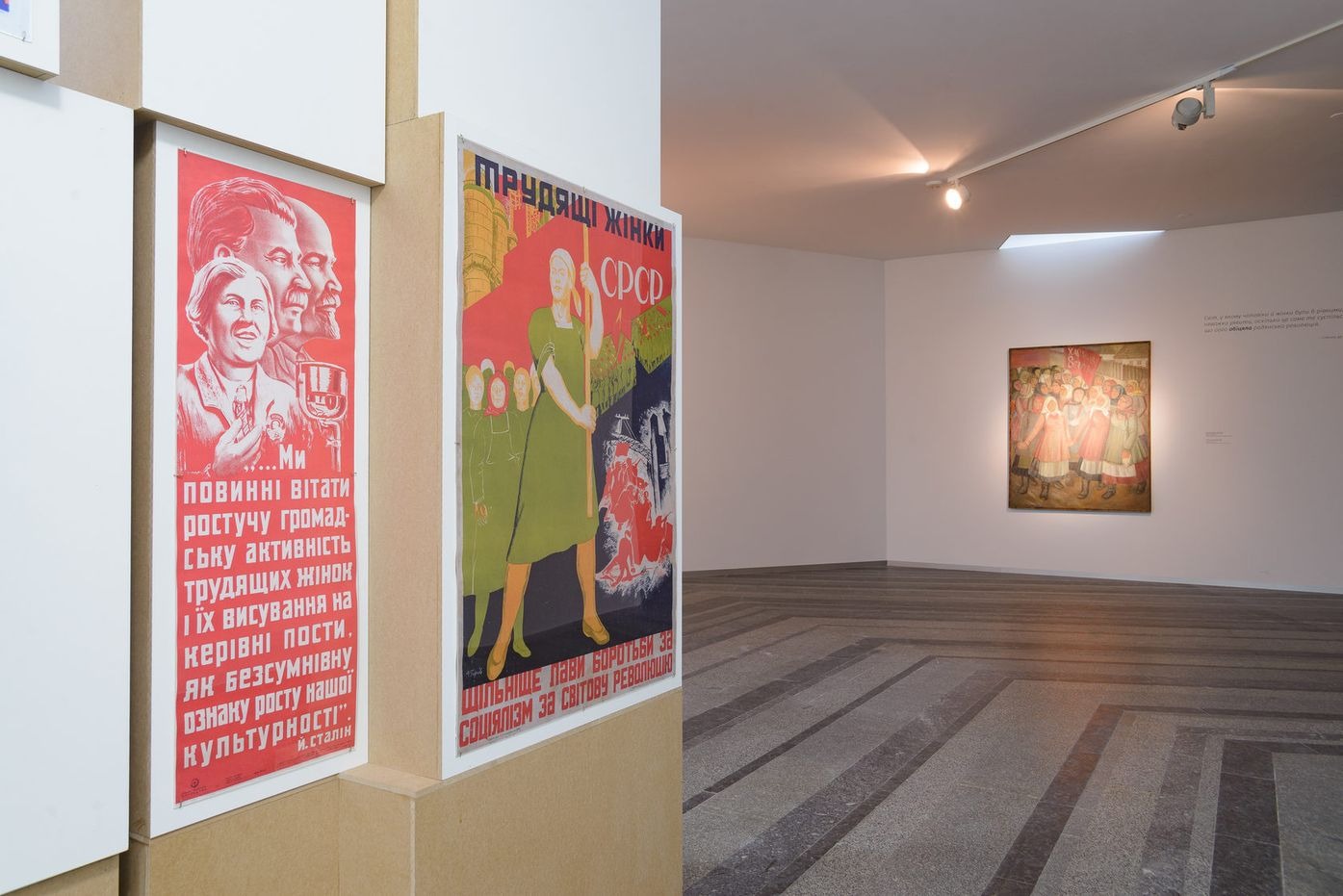
This hall demonstrates the “external,” political space into which women had to step with slogans and posters to fight for the rights they have today. The right to choose and be chosen, the right to education and professional realization now seem eternal and given, but once they were won at a high cost.
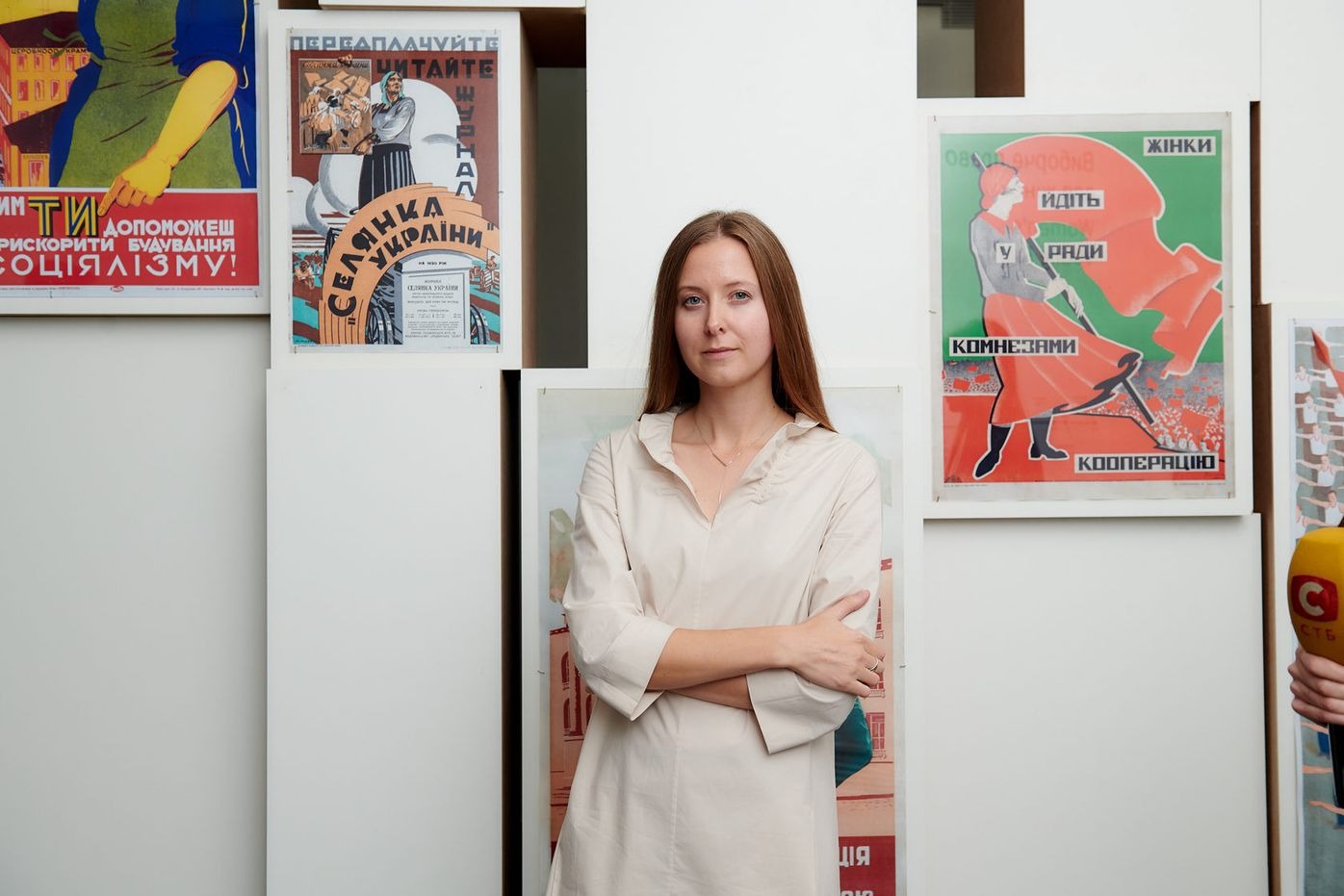
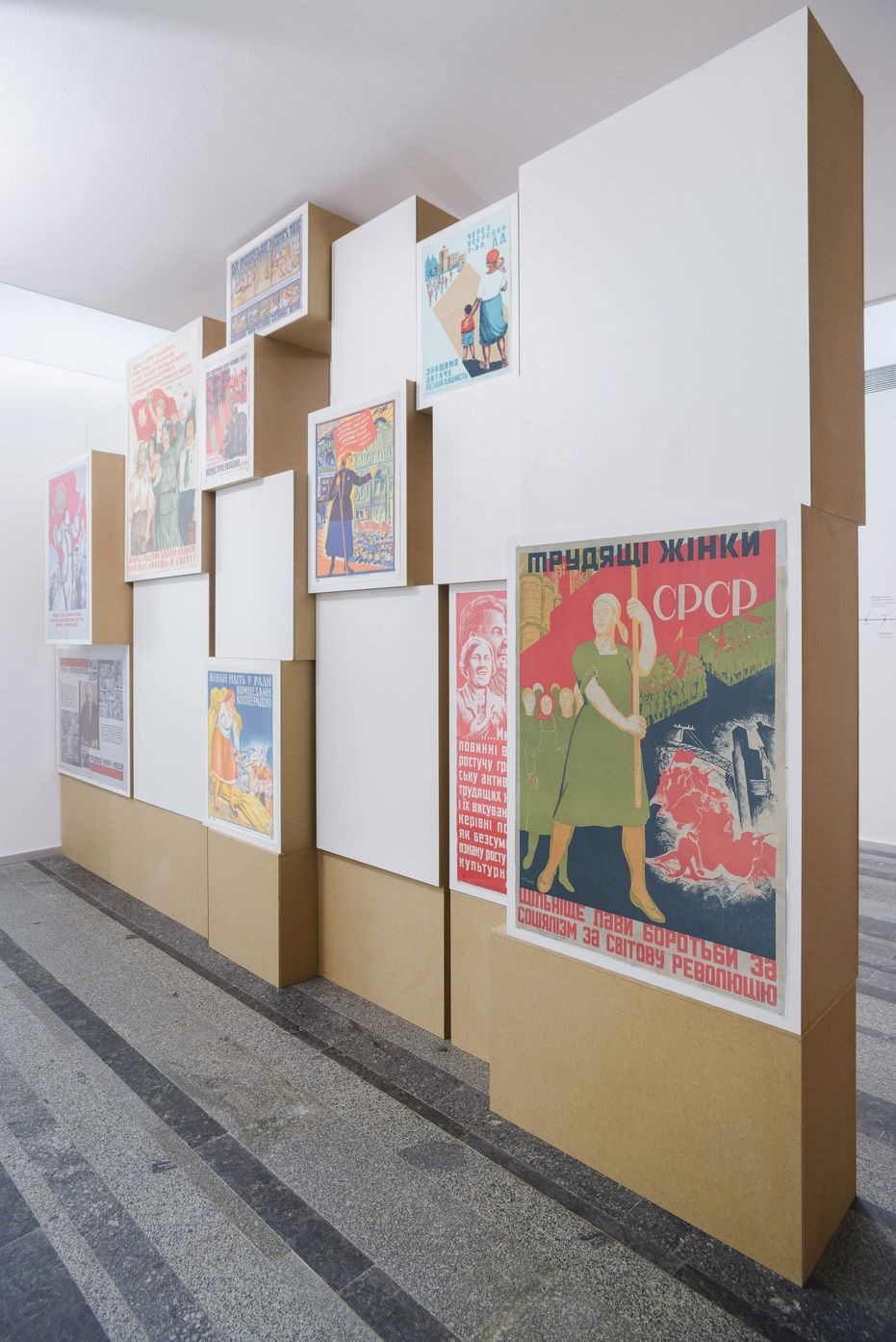
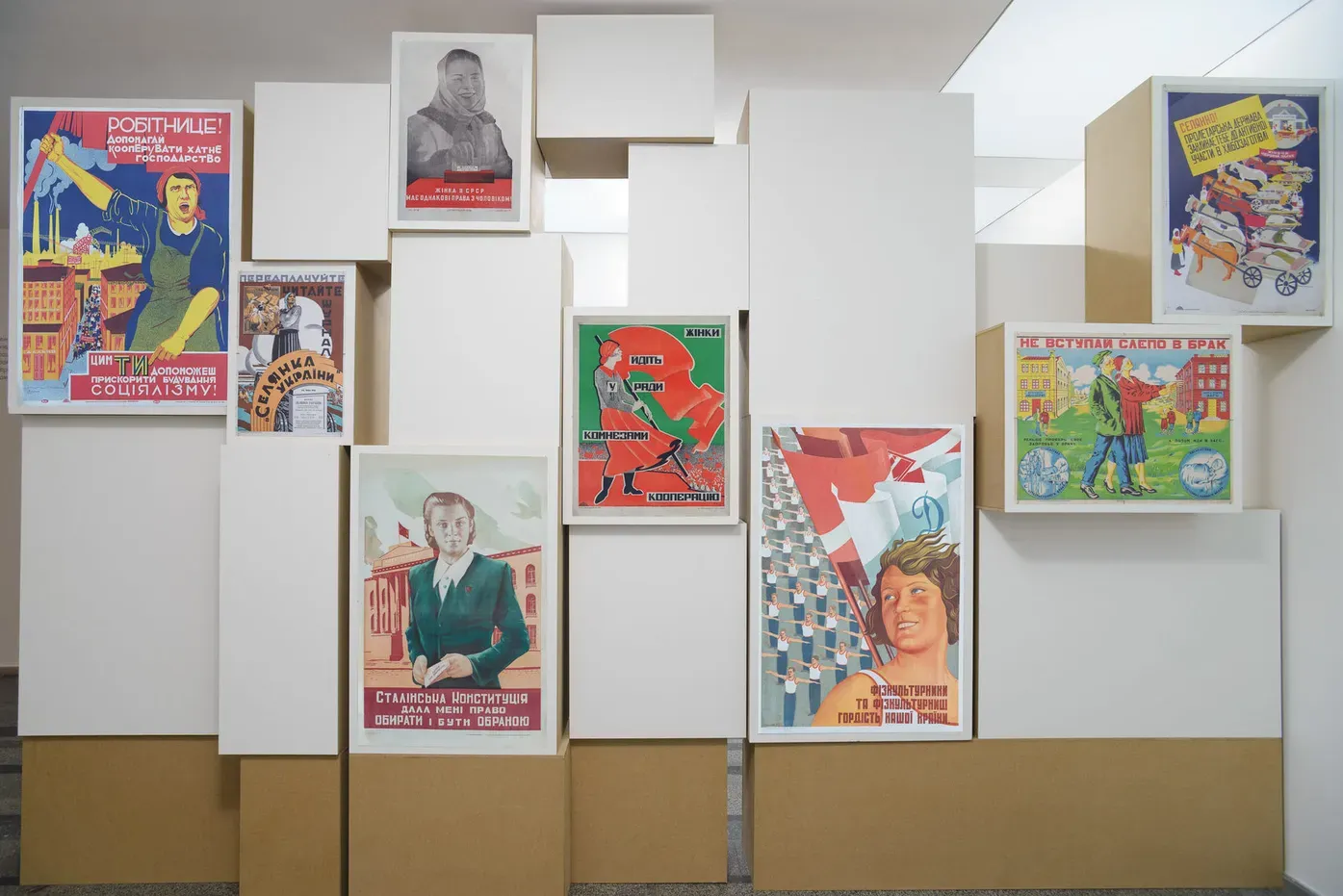
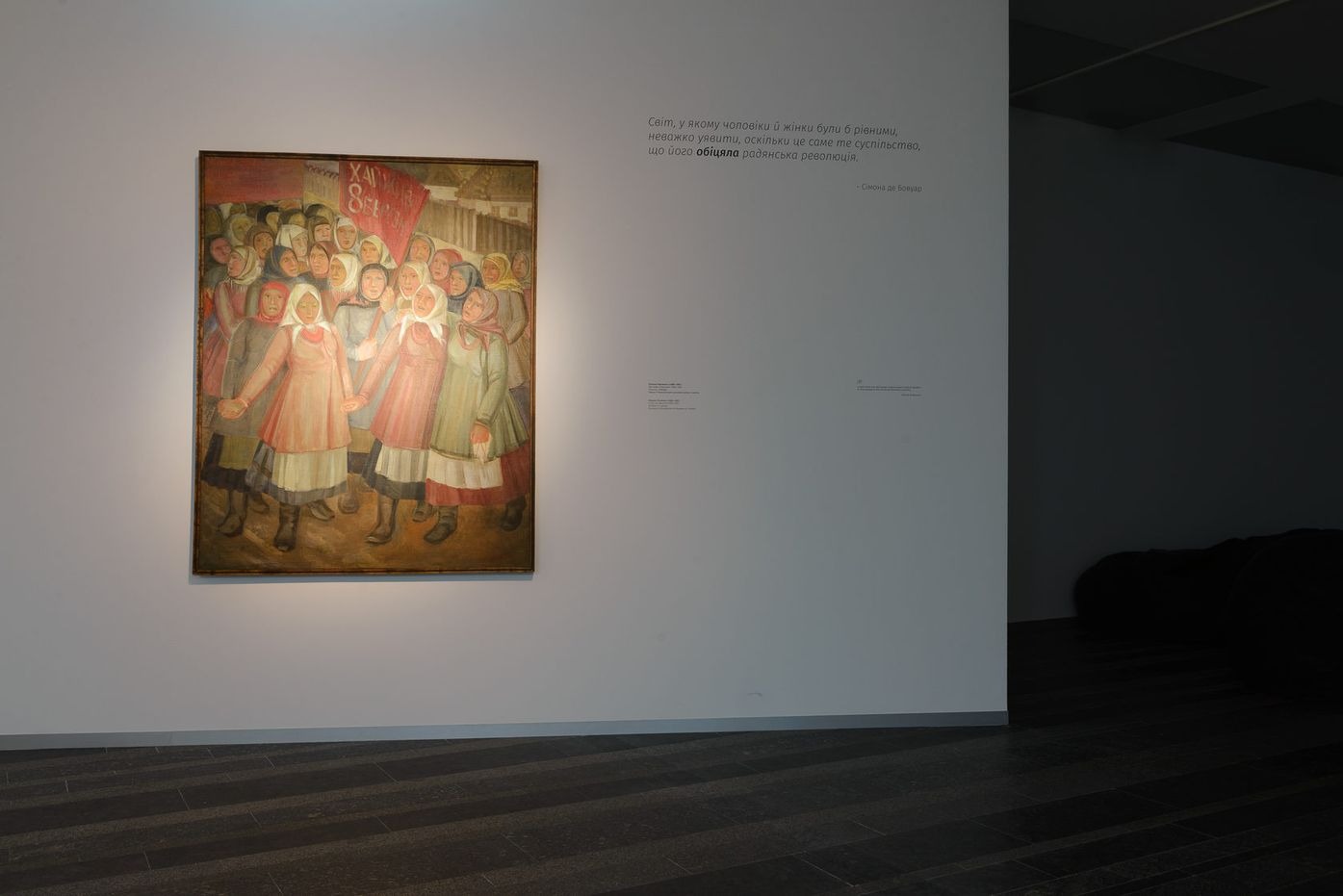
The conceptual solution of the hall influenced the transformation of its architecture, which sets two semantic lines. The first is associated with International Women’s Day on March 8 as an embodiment of the idea of the struggle for equality, and the second shows that this equality was achieved to some extent at the expense of the masculinization of women. The first line begins with Oksana Pavlenko’s work “Long Live March 8!”, in which the artist depicts a group of women who went out to a demonstration. Today, the work reminds us of the political charge of this holiday, which since the second half of the 20th century has turned into a decorative greeting from men to women. This first line is reinforced by posters from the 1920s–1940s with slogans and calls. Most posters recall the first wave of feminism, which in the Soviet Union lasted very briefly and ended in the early 1930s. Avant-garde in form and bold in content, the posters of the 1920s demonstrate a genuine attempt at women’s emancipation, while the posters of the mid-1930s–1940s only exploit and imitate former calls for equality. This is also reflected in the artistic form: the posters become gray, stereotypical, and uninspired. Combined in one installation, they turn into a symbolic “ruin of history,” revealing the human tendency to forget.
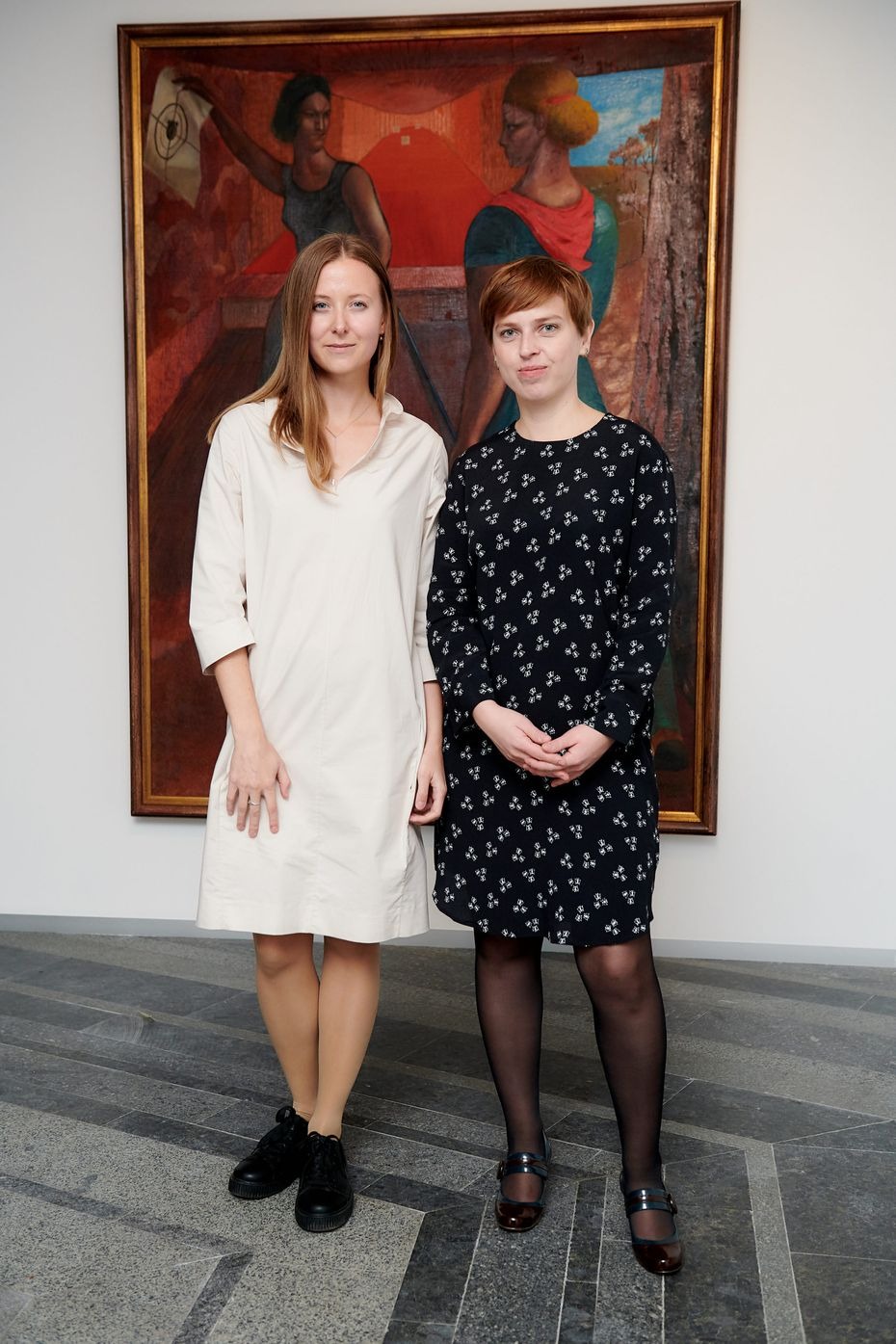
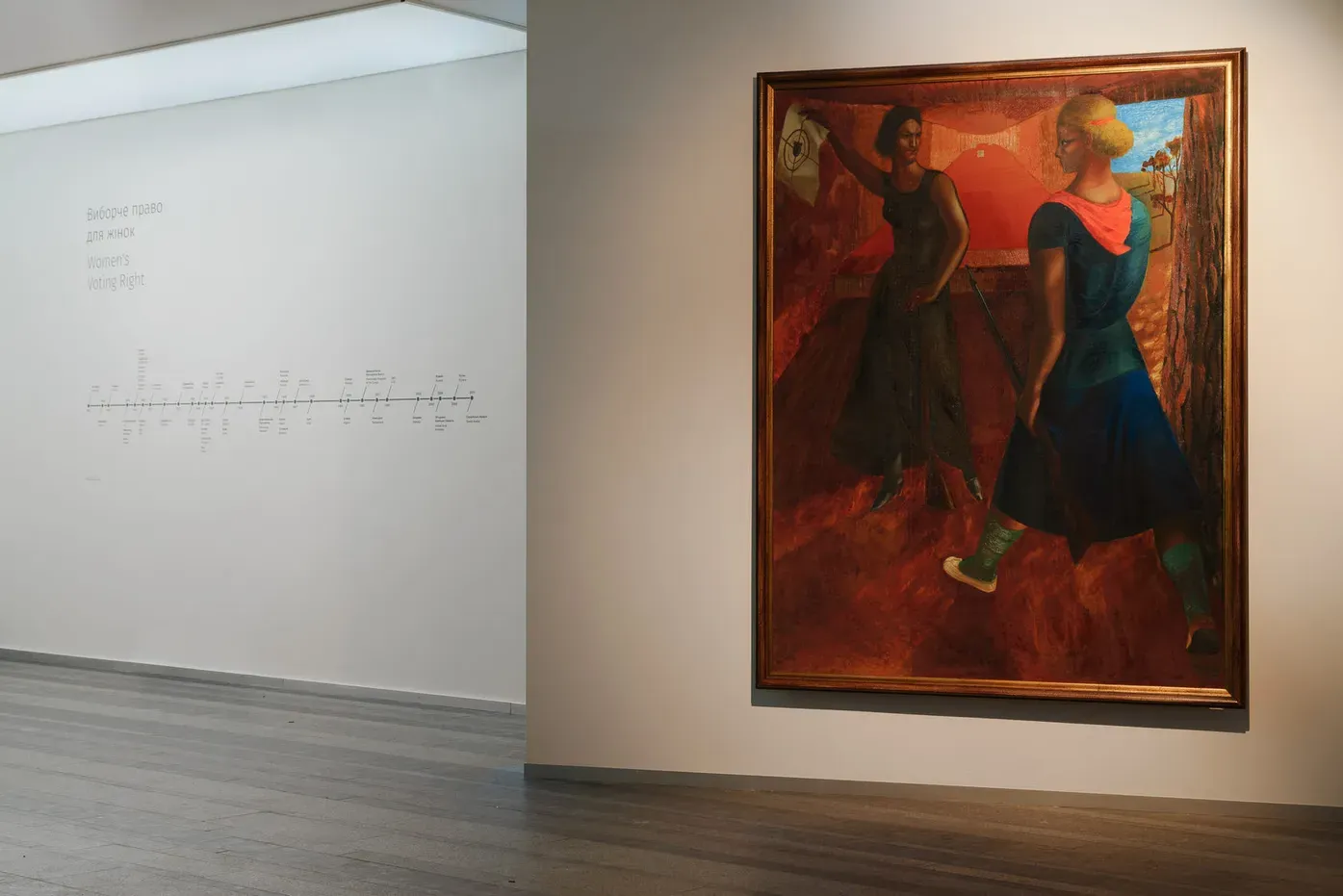
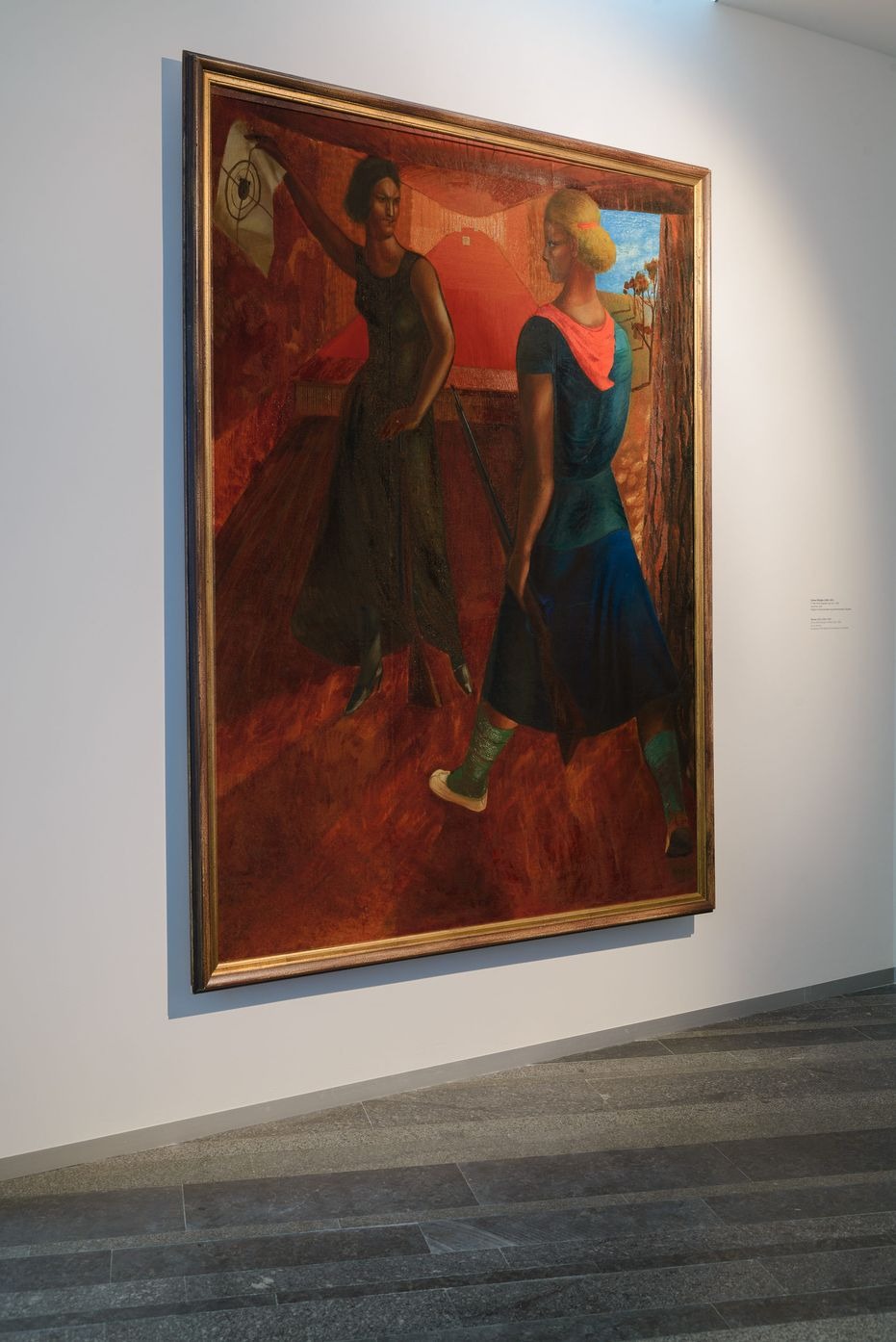
The second line is set by Semen Yoffe’s painting “Shooting Club (At the Shooting Range),” depicting “women warriors.” This painting shows how women’s emancipation occurred in the 1920s–1930s. Mostly, it was realized at the expense of their masculinization: in all physical parameters, women were equated to men, including work in production, participation in combat, and social life. Yoffe’s work enters into dialogue with Oksana Chepelyk’s video “Chronicles from Fortinbras,” in which the artist analyzes contemporary society and notes a new turn of patriarchal existence. In her film, Chepelyk constructs the image of an emancipated woman of the 1990s, who again finds herself in a situation of struggle due to political and economic crises after the collapse of the USSR, which led to the masculinization of society as a whole.
Photocopies of printed posters from the 1920s–1940s
The originals of the printed posters are kept in the collection of the V. I. Vernadsky National Library of Ukraine
Photographs provided by the V. I. Vernadsky National Library of Ukraine
Semen Yoffe
At the Shooting Range (Shooting Club), 1932
canvas, oil
Provided by the National Art Museum of Ukraine
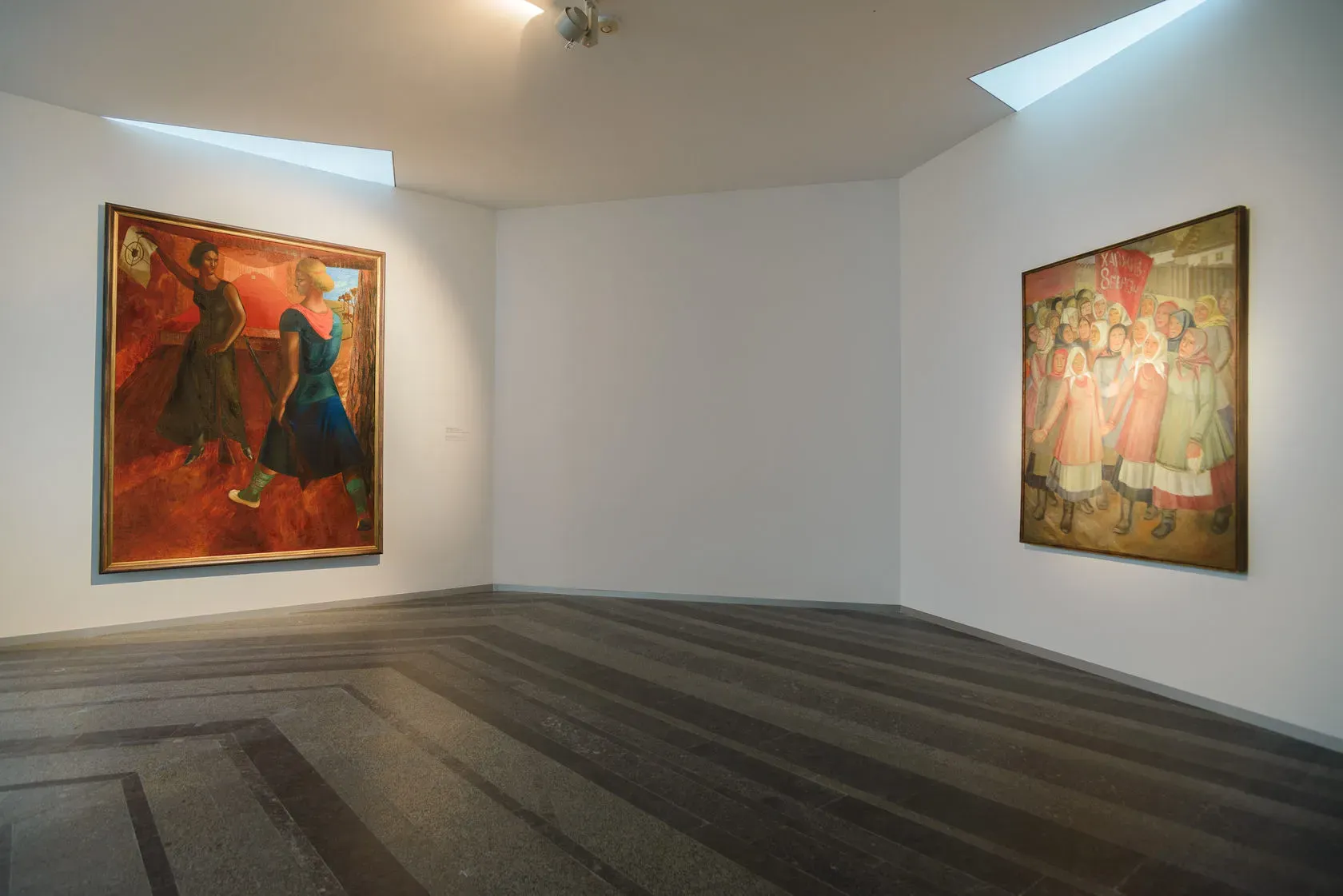
Oksana Pavlenko
Long Live March 8! 1930–1931
canvas, tempera
Provided by the National Art Museum of Ukraine
Oksana Chepelyk
Chronicles from Fortinbras, 2001
digitized 35mm film, 30′
provided by the Ukrainian Studio of Chronicle Documentary Films
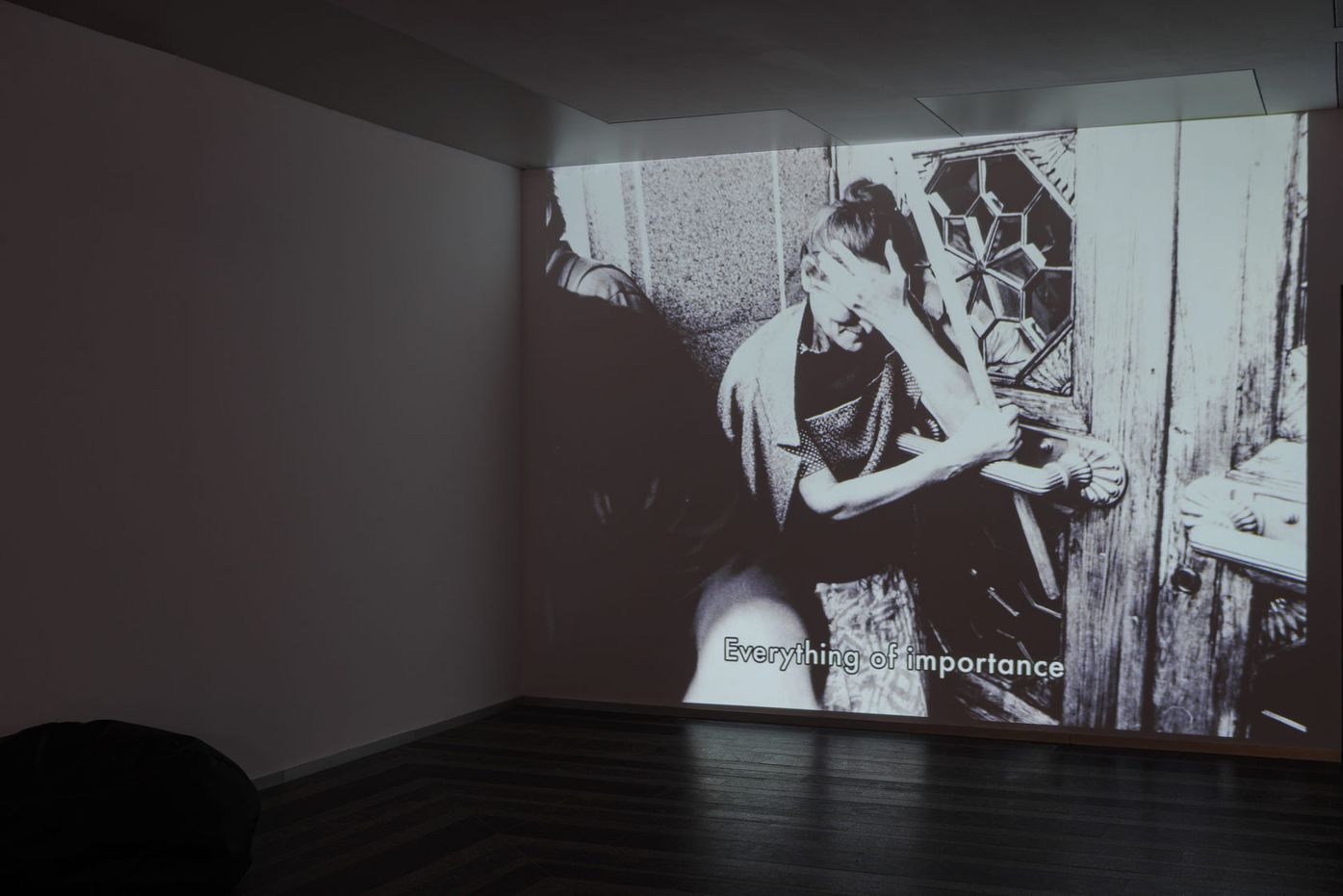
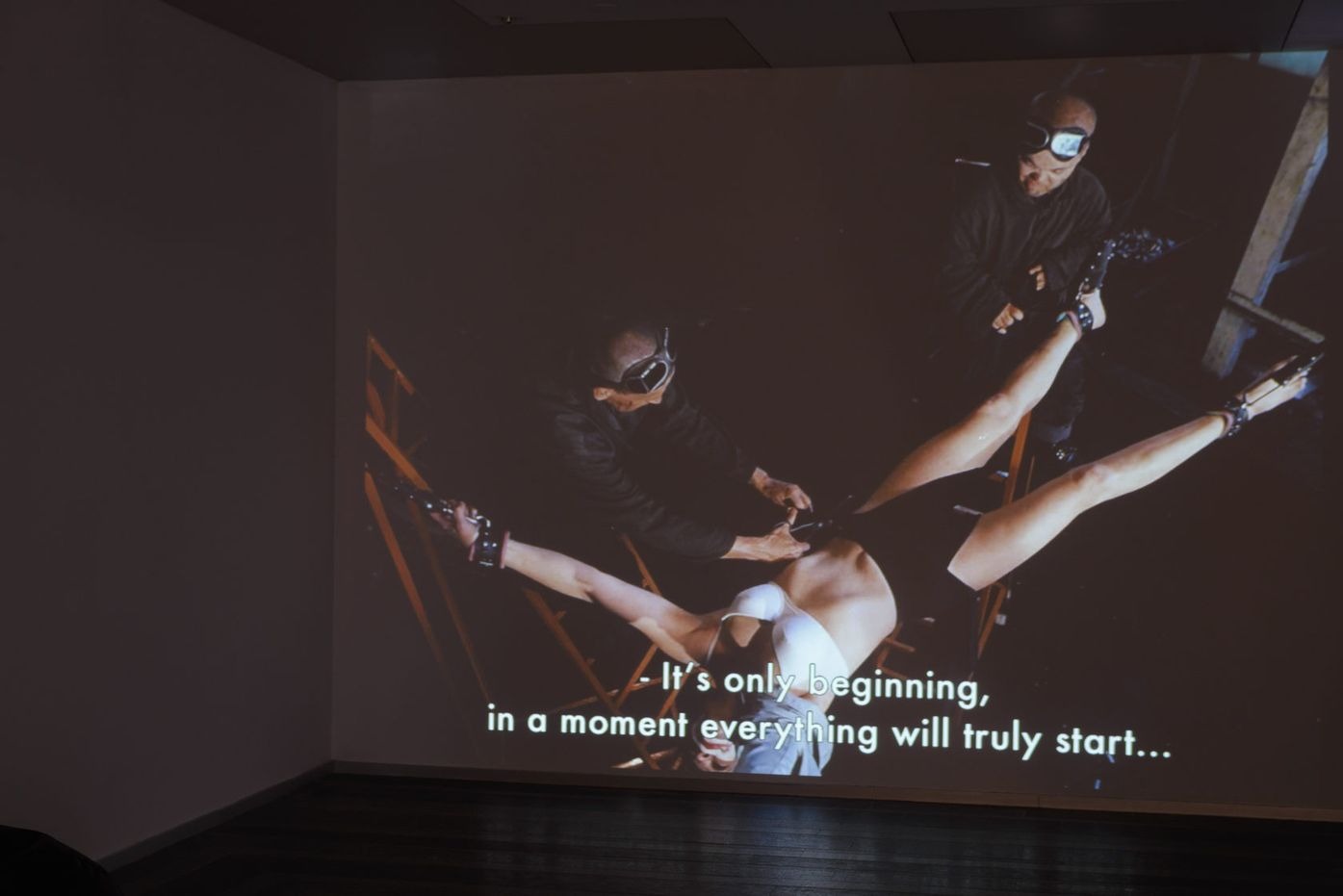
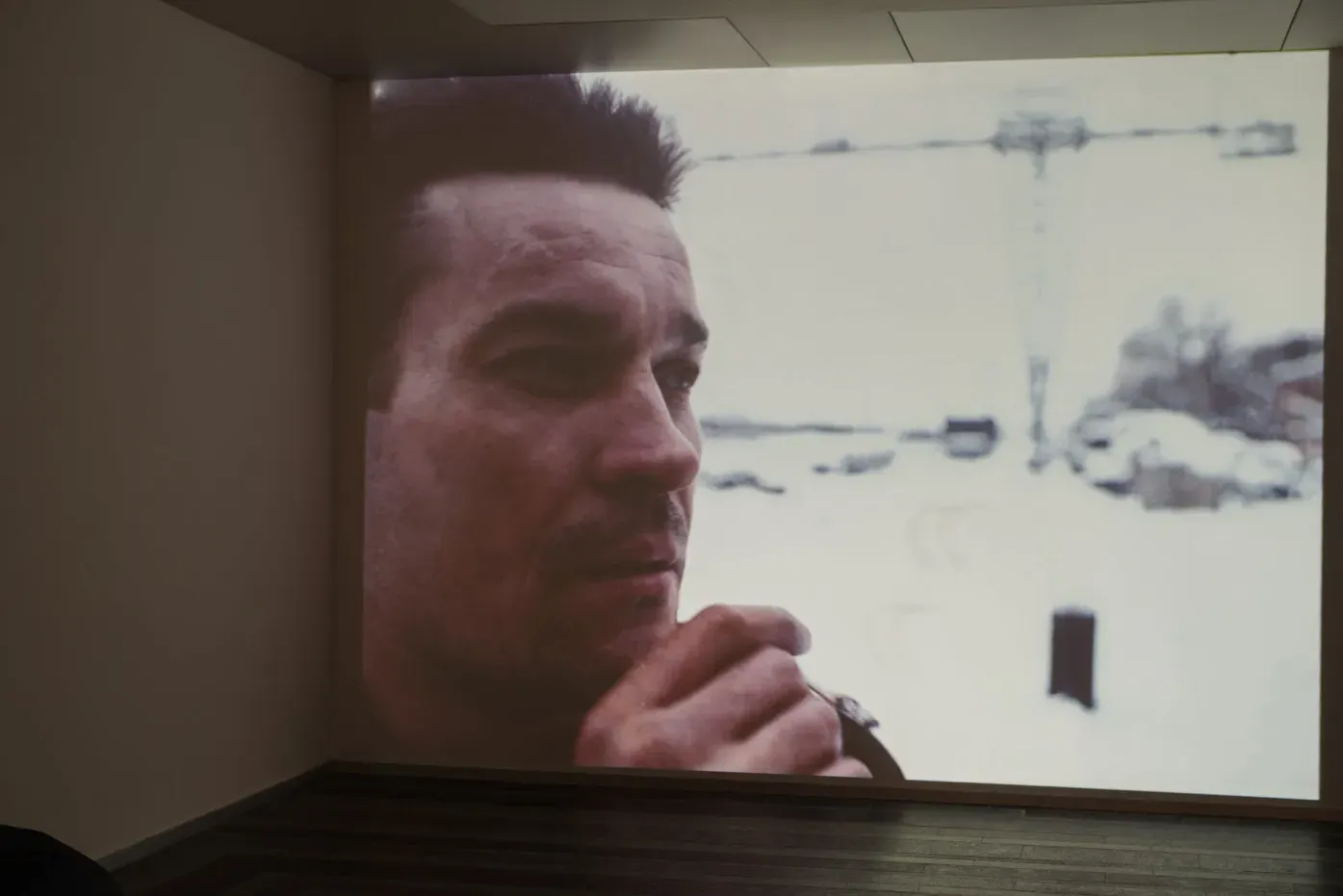
Oksana Chepelyk’s film “Chronicles from Fortinbras” is based on the eponymous collection of philosophical essays by Oksana Zabuzhko, in which the writer portrayed Ukraine as violated by foreigners. In the film, this image unfolds literally: a naked woman becomes the object of prolonged torture by two grotesque dwarfs embodying the male totalitarian principle. These scenes alternate with fragments of historical films, documentary chronicles from the early 20th century, and the time of the film’s creation.
The title refers to Fortinbras — a fictional character from William Shakespeare’s tragedy “Hamlet, Prince of Denmark.” A direct participant in the events, Fortinbras transforms them into chronicles simultaneously with their course. In the film, Chepelyk notes the situation of the late 1990s when, against the backdrop of political and economic crises, there was a return to archaic, patriarchal values.
Alevtina Kahidze
44, 2018
video
direction, camera, editing: Kateryna Hornostai, Nikon Romanchenko
makeup: Tetiana Malyuga
Created on commission for PinchukArtCentre
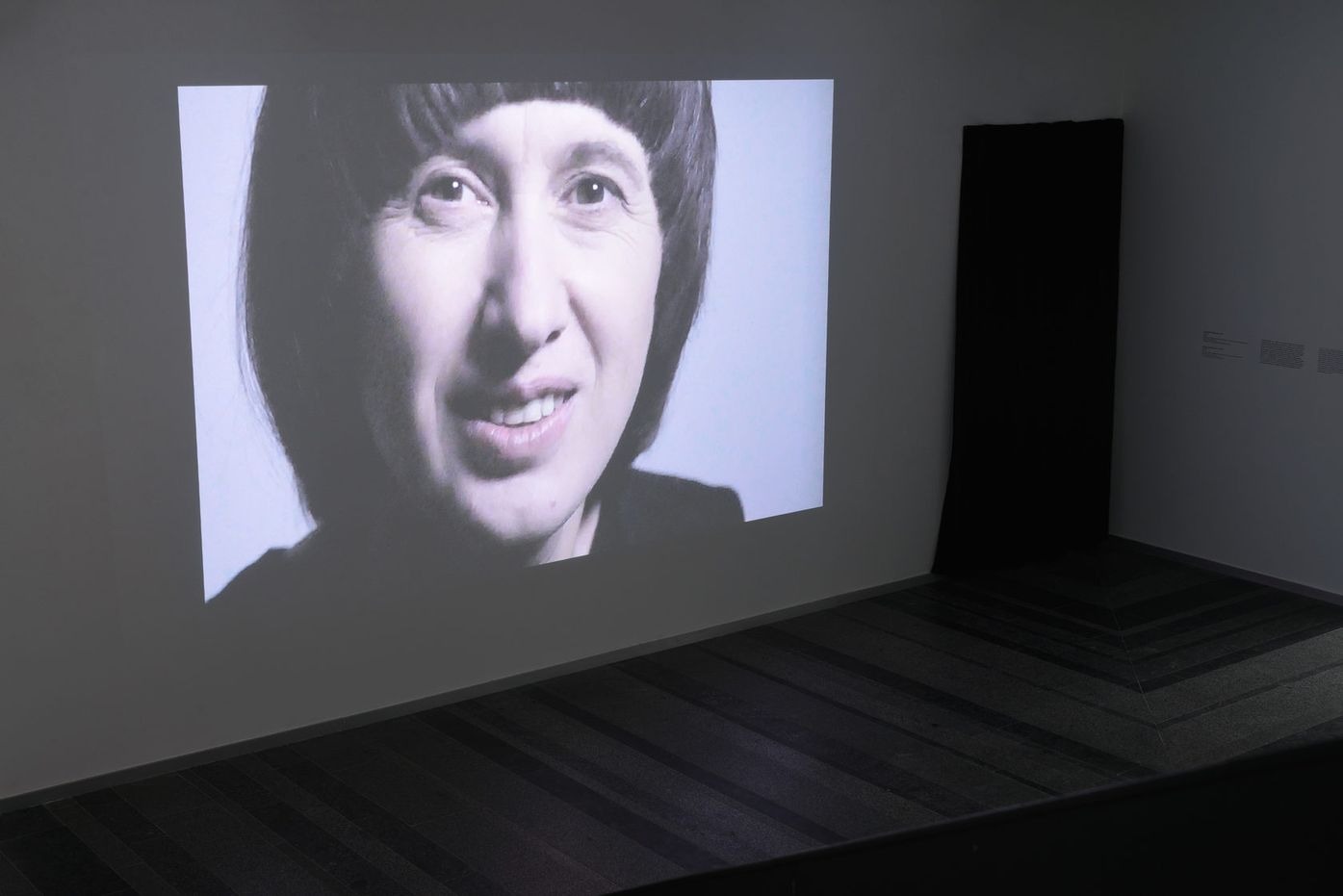
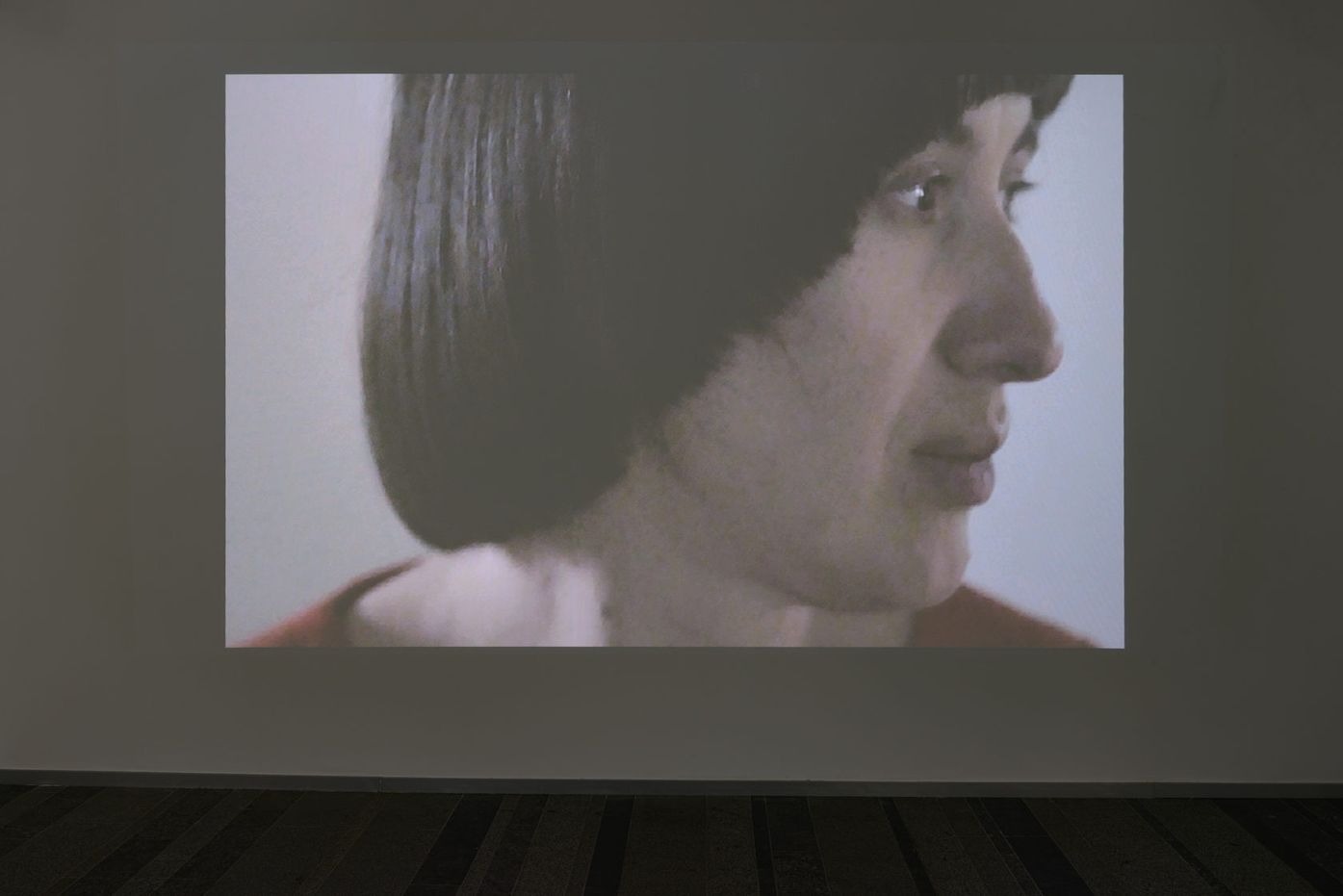
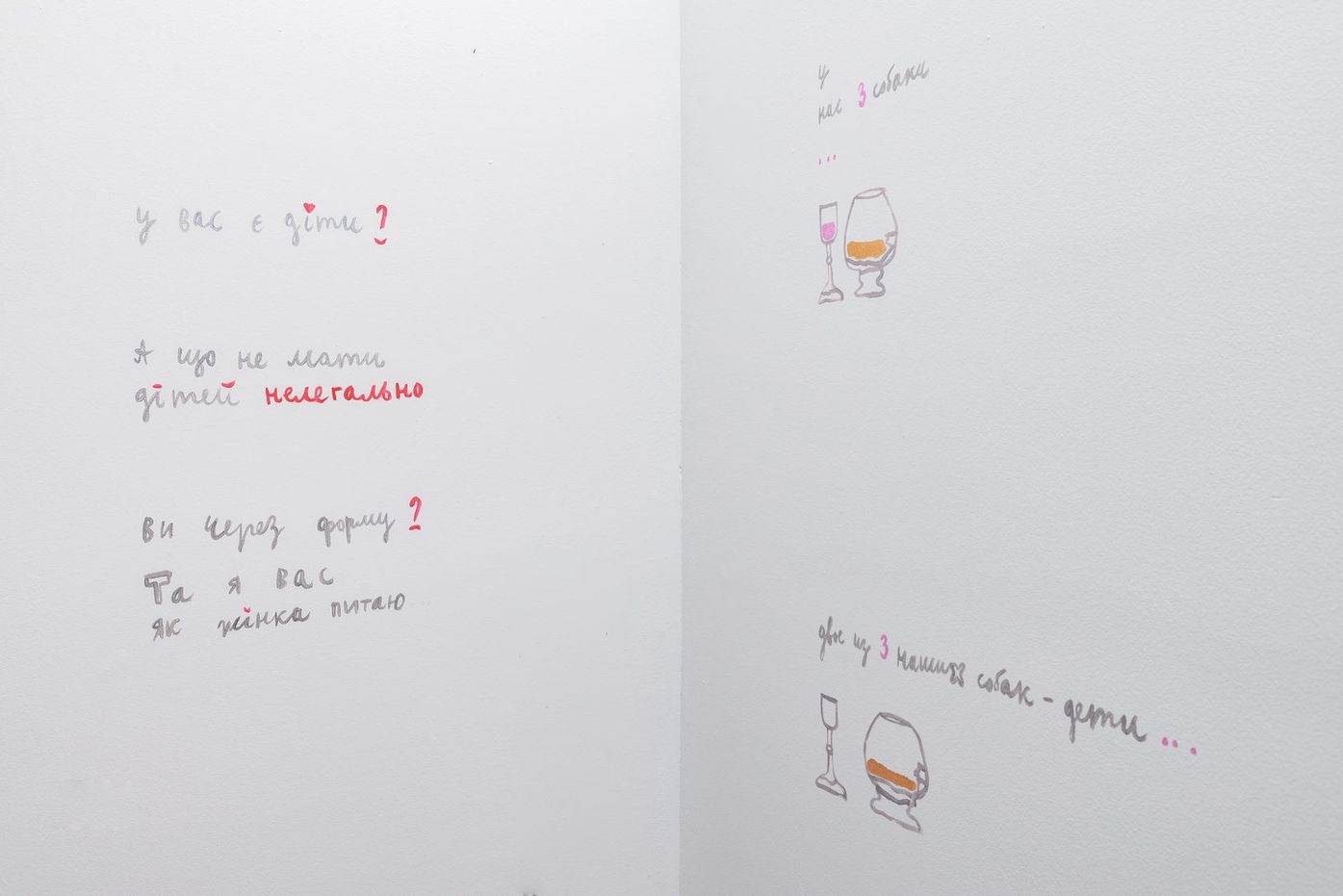
In her video “44,” Alevtina Kahidze attempts to reproduce 44 different emotions in response to the question to a woman “Do you have children?” Emotions vary from indifference or helplessness to anger and despair, from powerlessness or offense to resignation and submission. The number “44” is taken as the critical reproductive age for women, as asserted by Ukrainian reproductive medicine. In this work, the artist raises the issue of reproductive violence in contemporary Ukrainian society. Is childbirth always a woman’s choice, or is it a traditional perception of a woman’s function as purely reproductive? Analyzing society, existing stereotypes, and speculations about childbirth, Kahidze provides space for reflection on moral violence, affirming personal choice and responsibility.
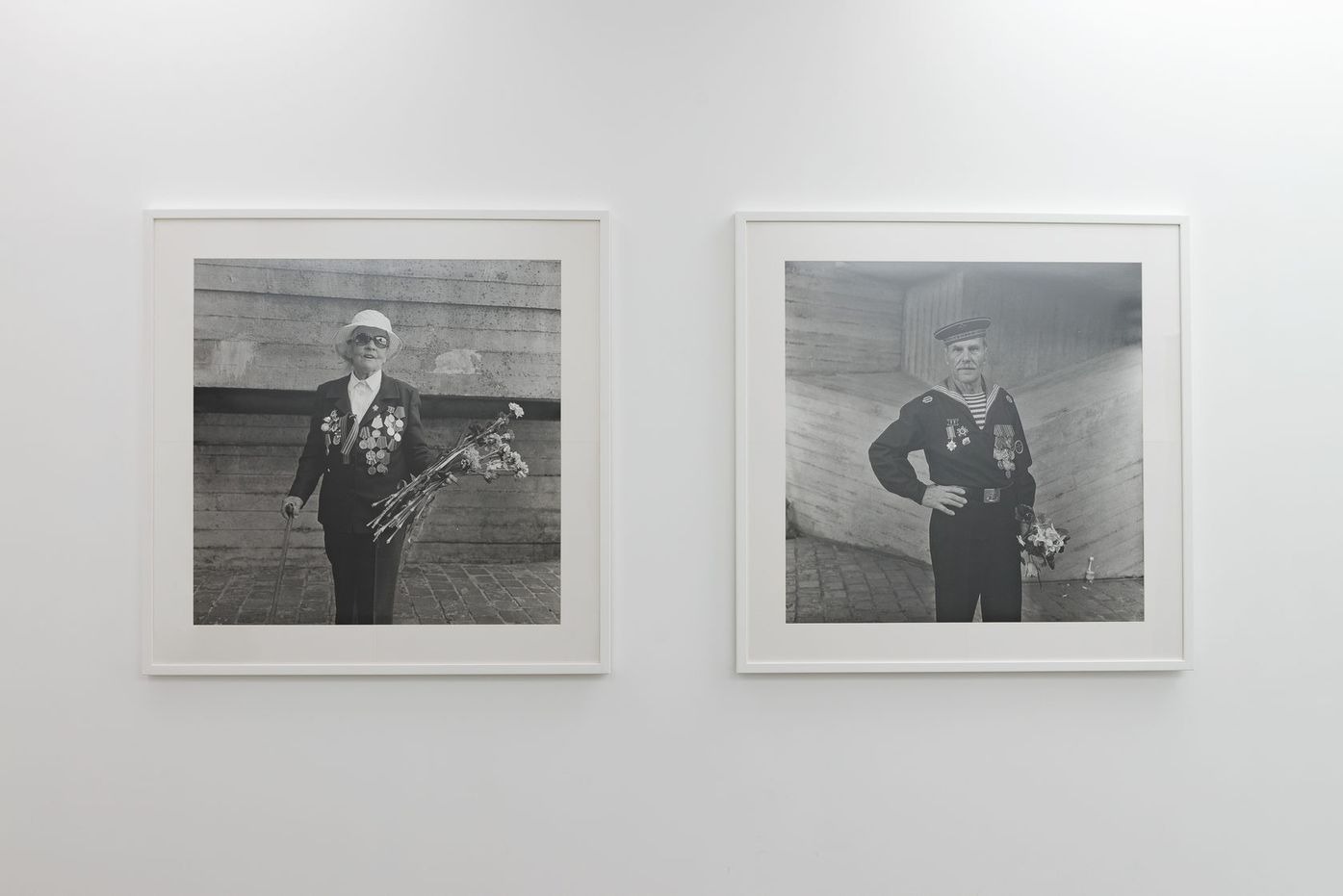
Oleksandr Chekmeniov
From the series “Winners”, 2002 – 2012
photographic paper, analog print
Provided by the artist
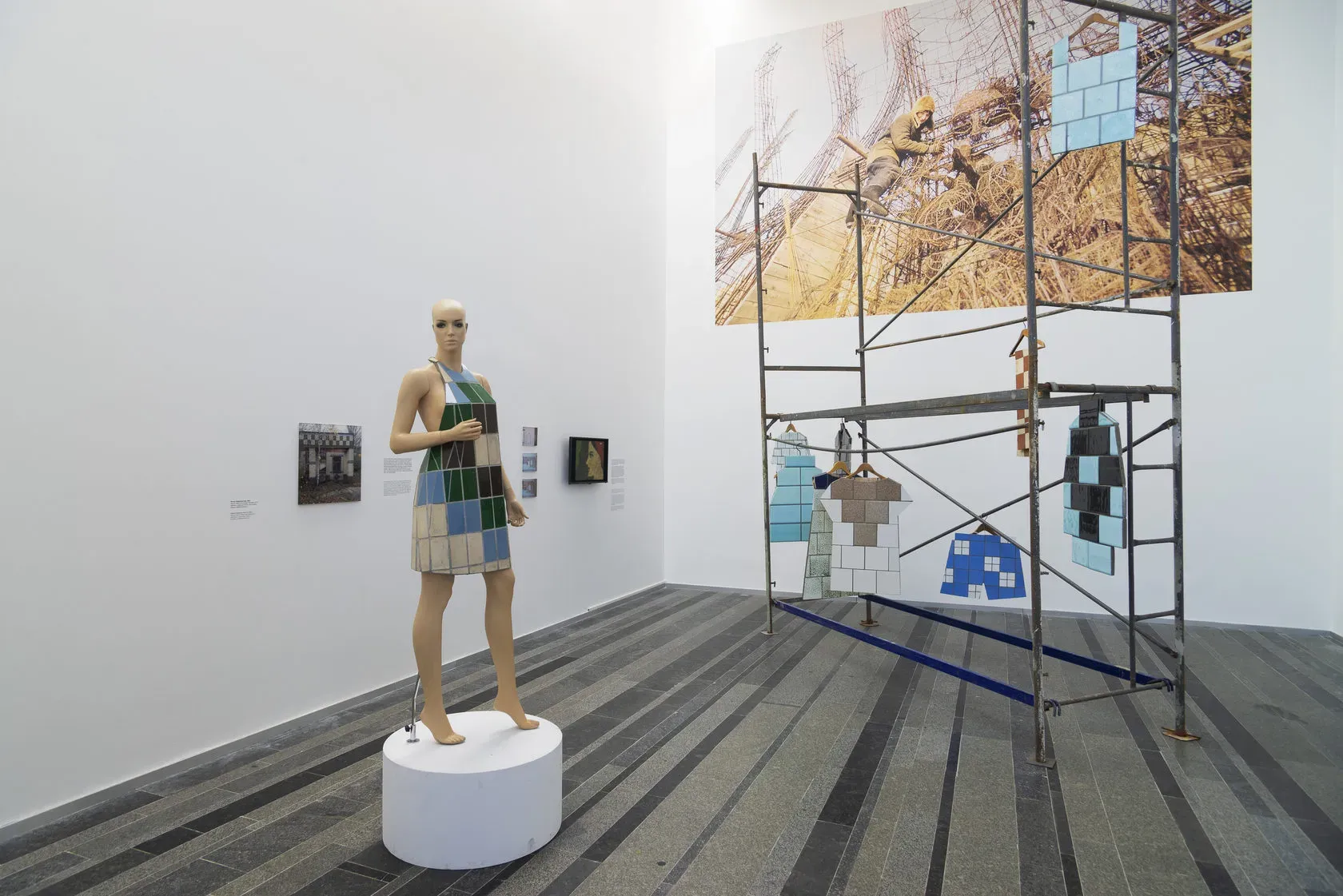
The works presented in this hall are united by the idea of Soviet monumental art, whose heyday was in the 1960s. Ukraine had a whole generation of prominent female artists whose creative and teaching practices were closely linked to monumental art. Among them were Alla Horska, Ada Rybachuk, Lyudmyla Semykina, Tetiana Yablonska, and others. It was Soviet monumental art that opened opportunities for freedom of expression — ideological in content, yet its mostly applied function and conventional artistic language allowed experimentation with form. The notable involvement of women artists in physically demanding monumental art reveals the phenomenon of totalitarian identity — without division into female/male.
“Man — and with him art — becomes almighty — and eternal — at a great cost,” wrote Ada Rybachuk, whose large photograph is presented in the center of the hall. Ada Rybachuk is depicted on scaffolding working on the Wall of Memory at Baikove Cemetery in Kyiv, which she worked on with her husband, artist Volodymyr Melnychenko, for almost twenty years and which was concreted in 1982.
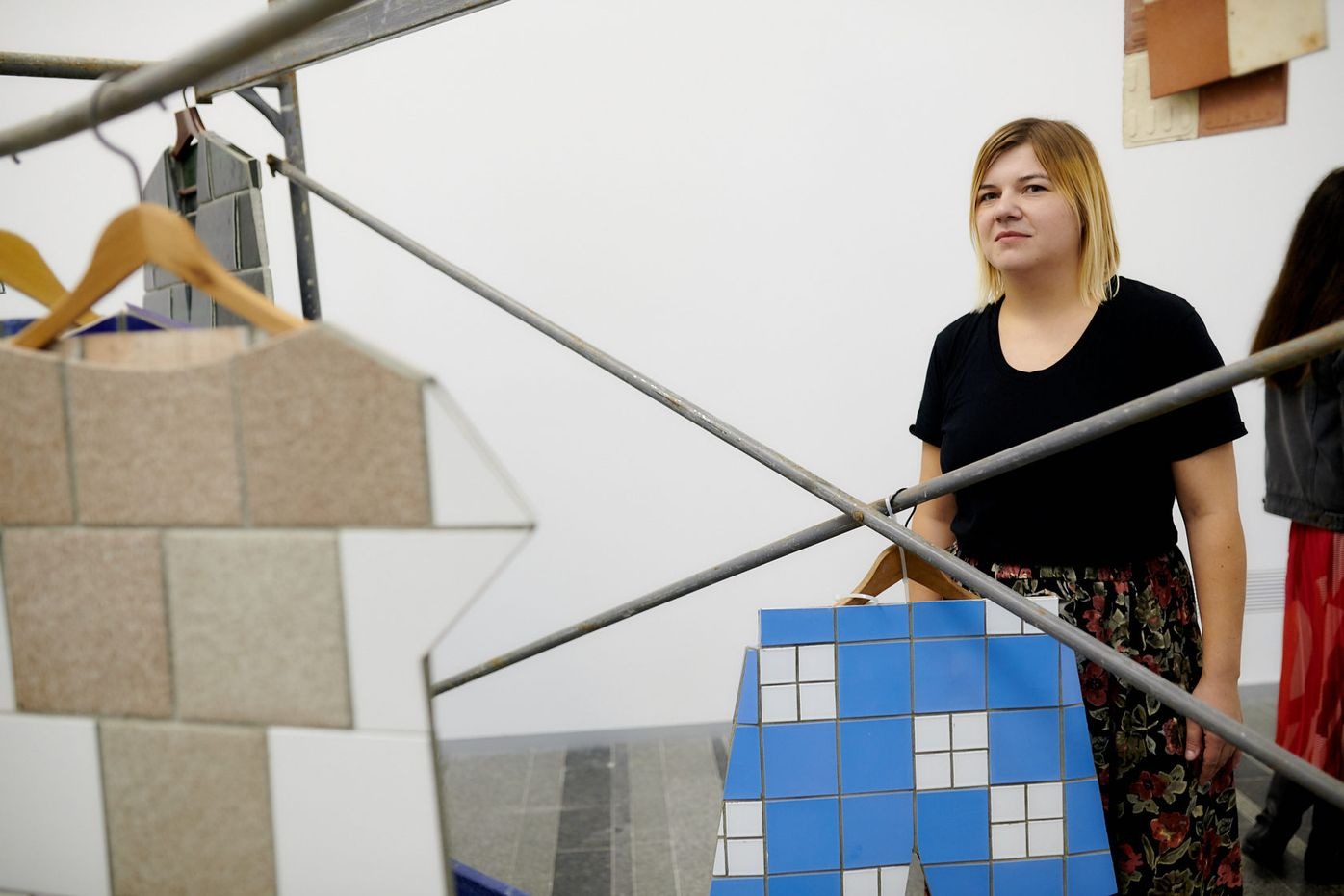
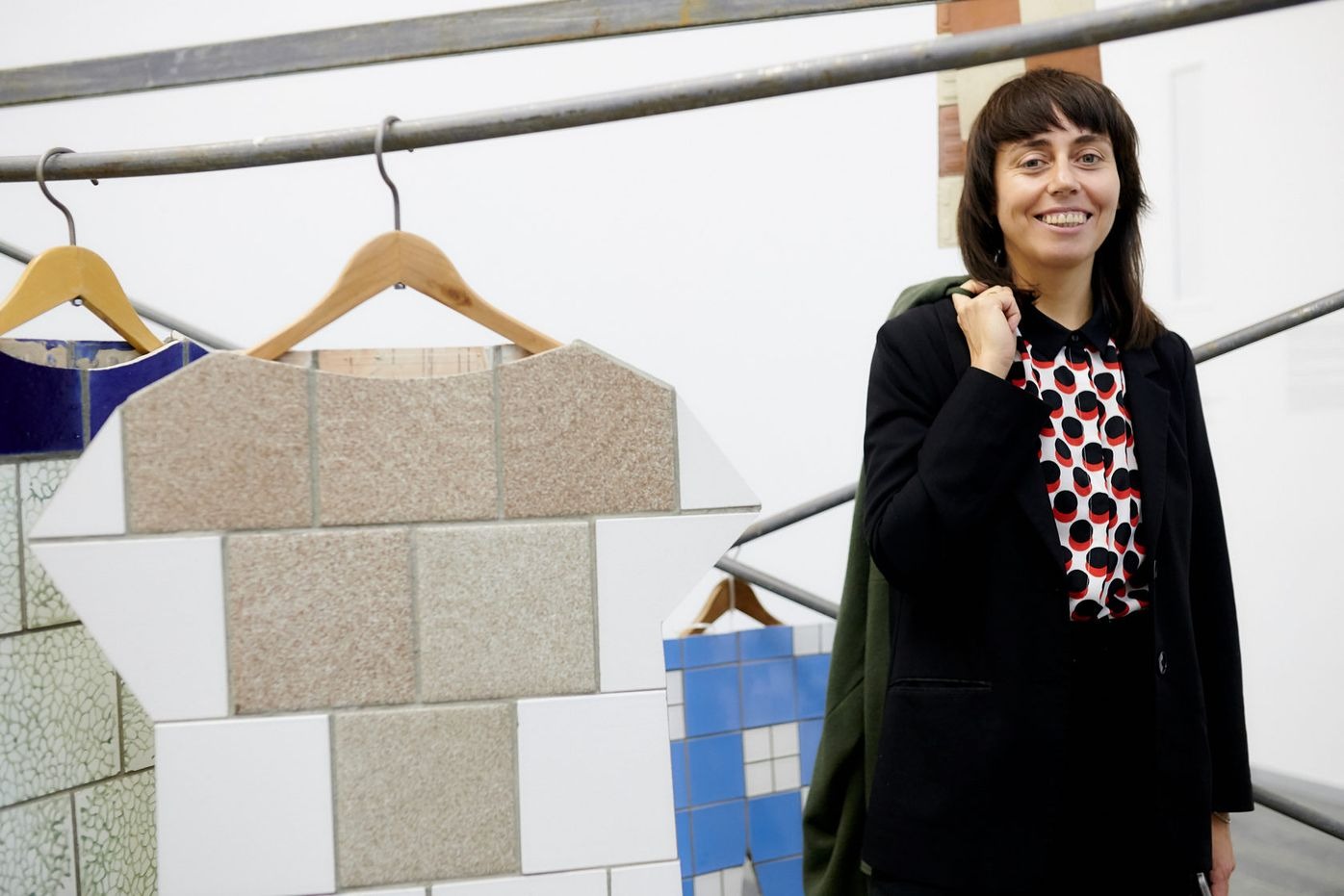
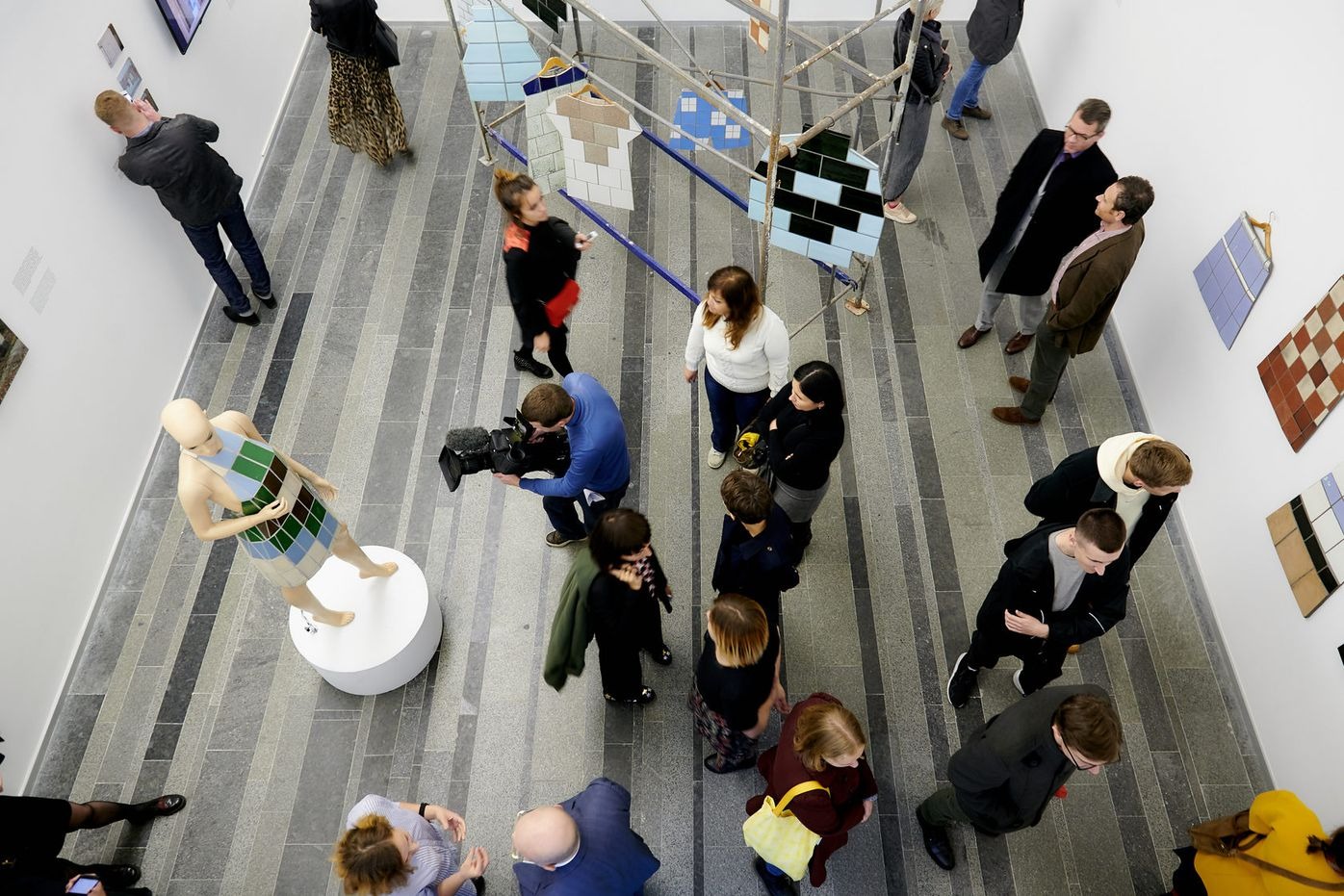
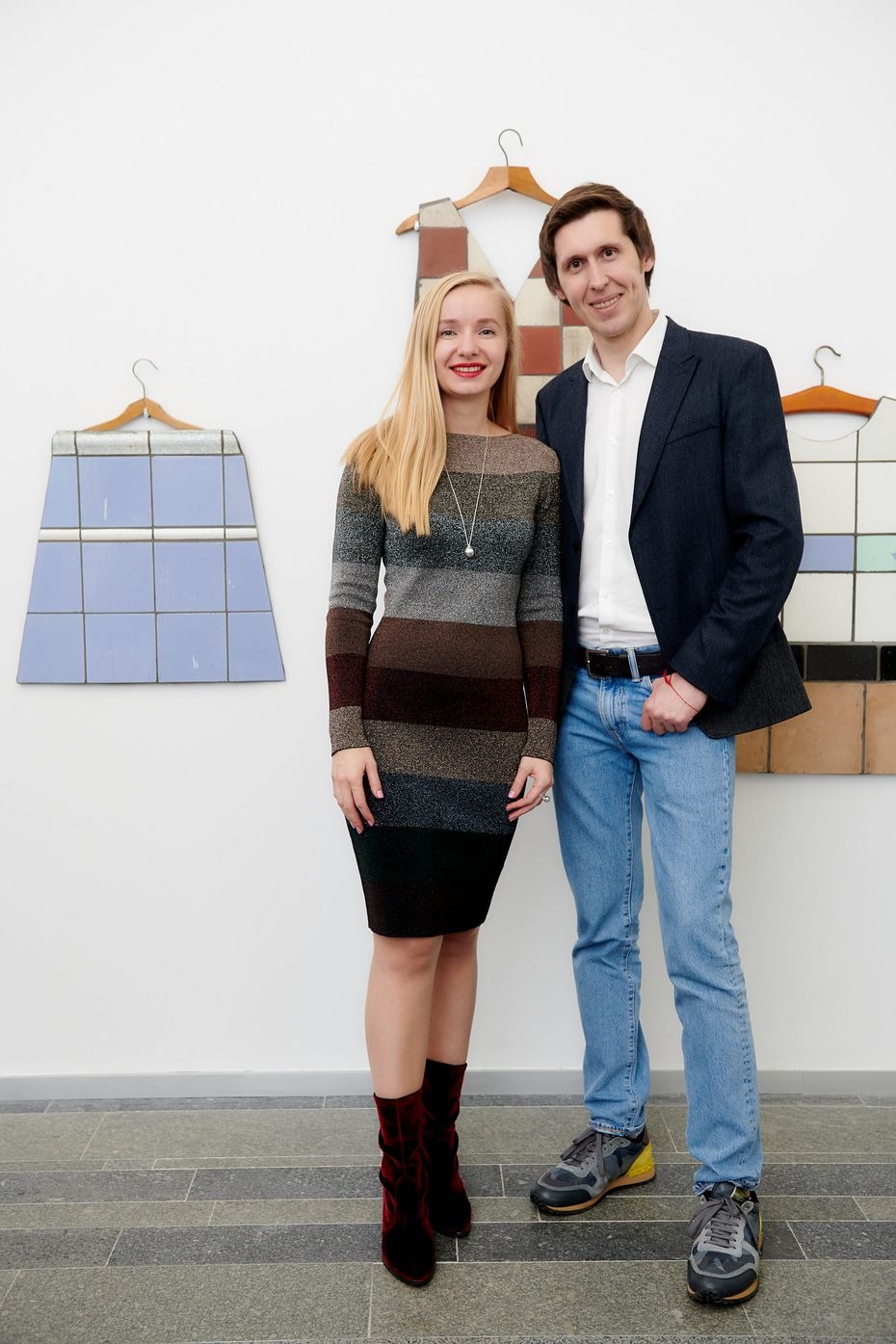
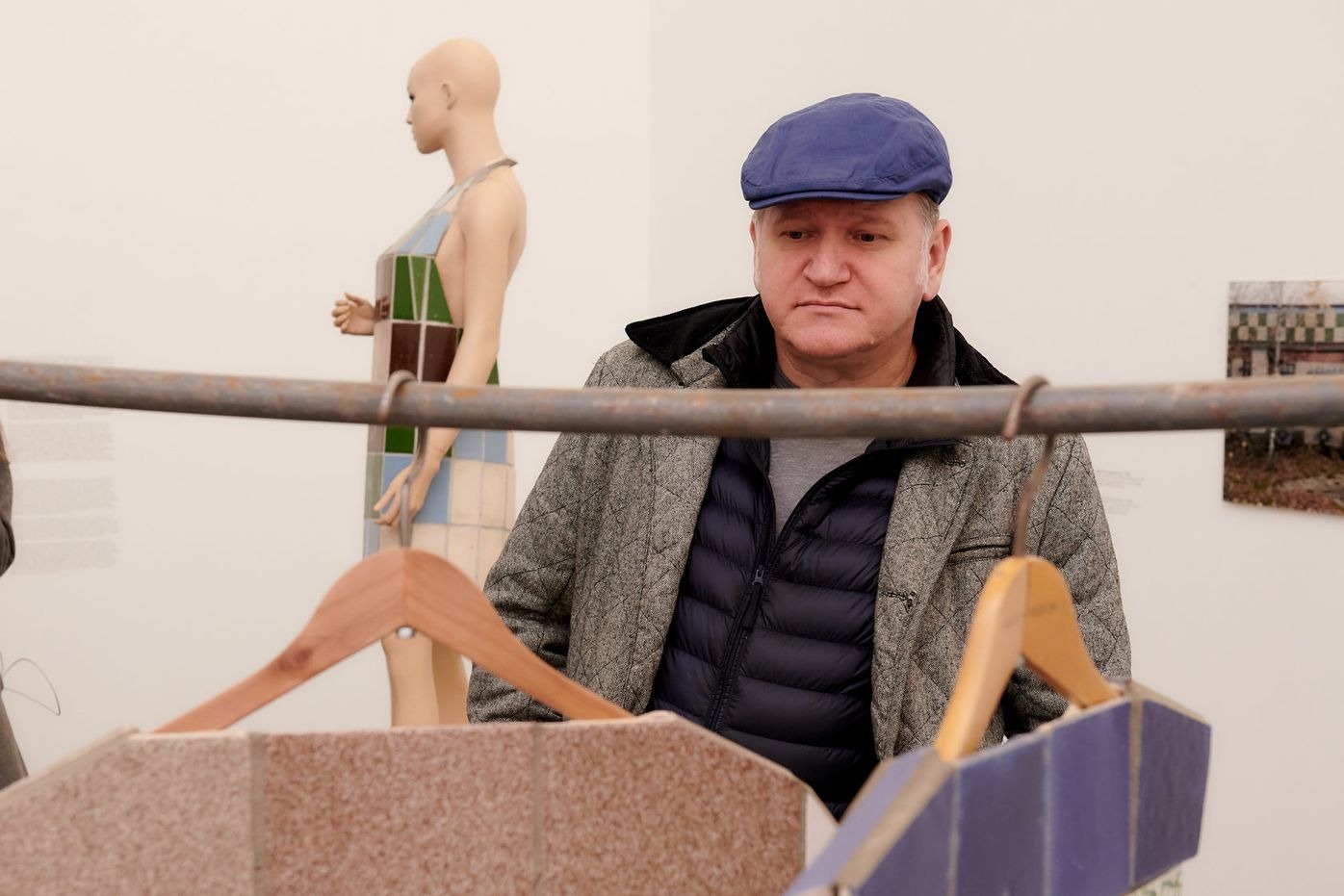
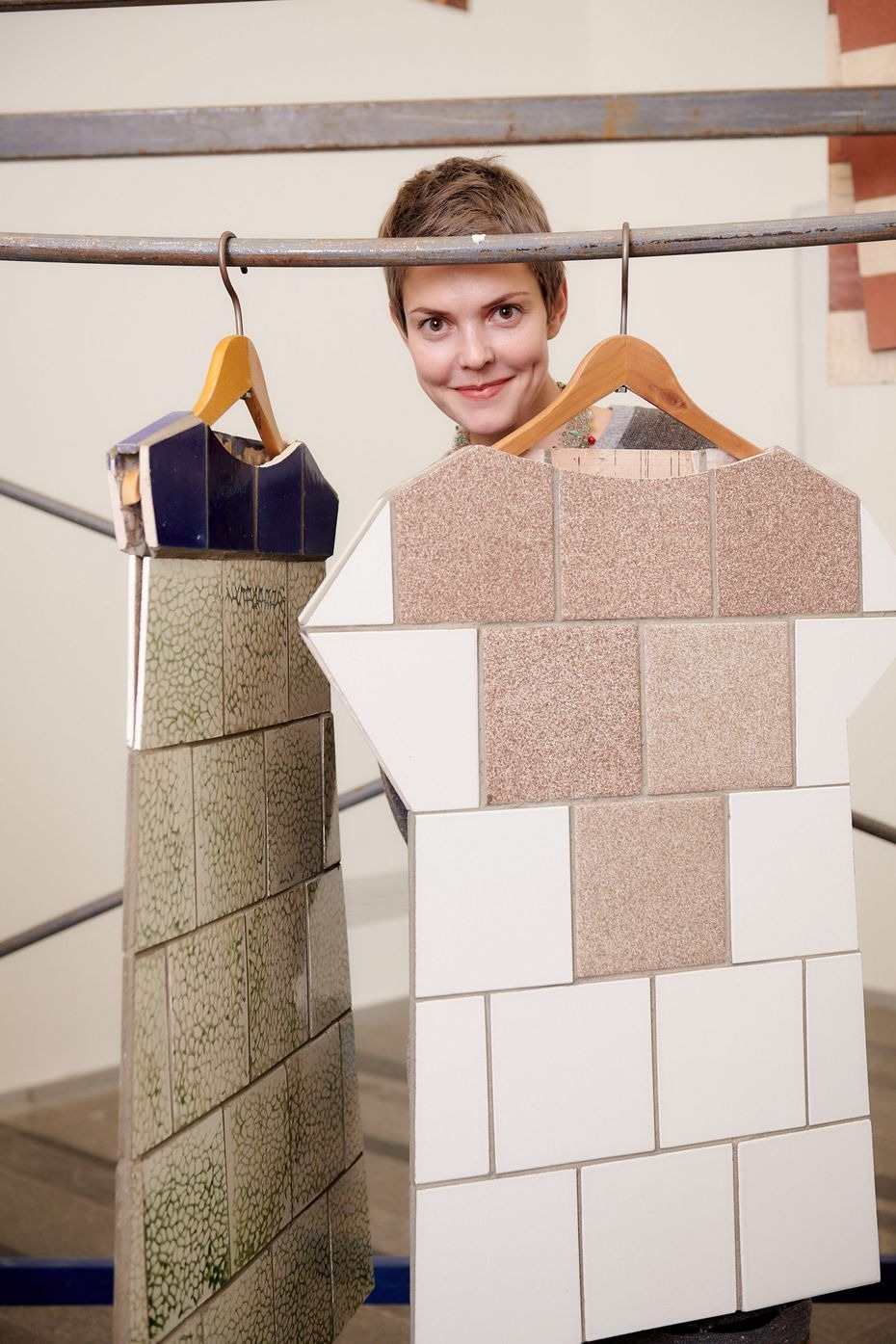
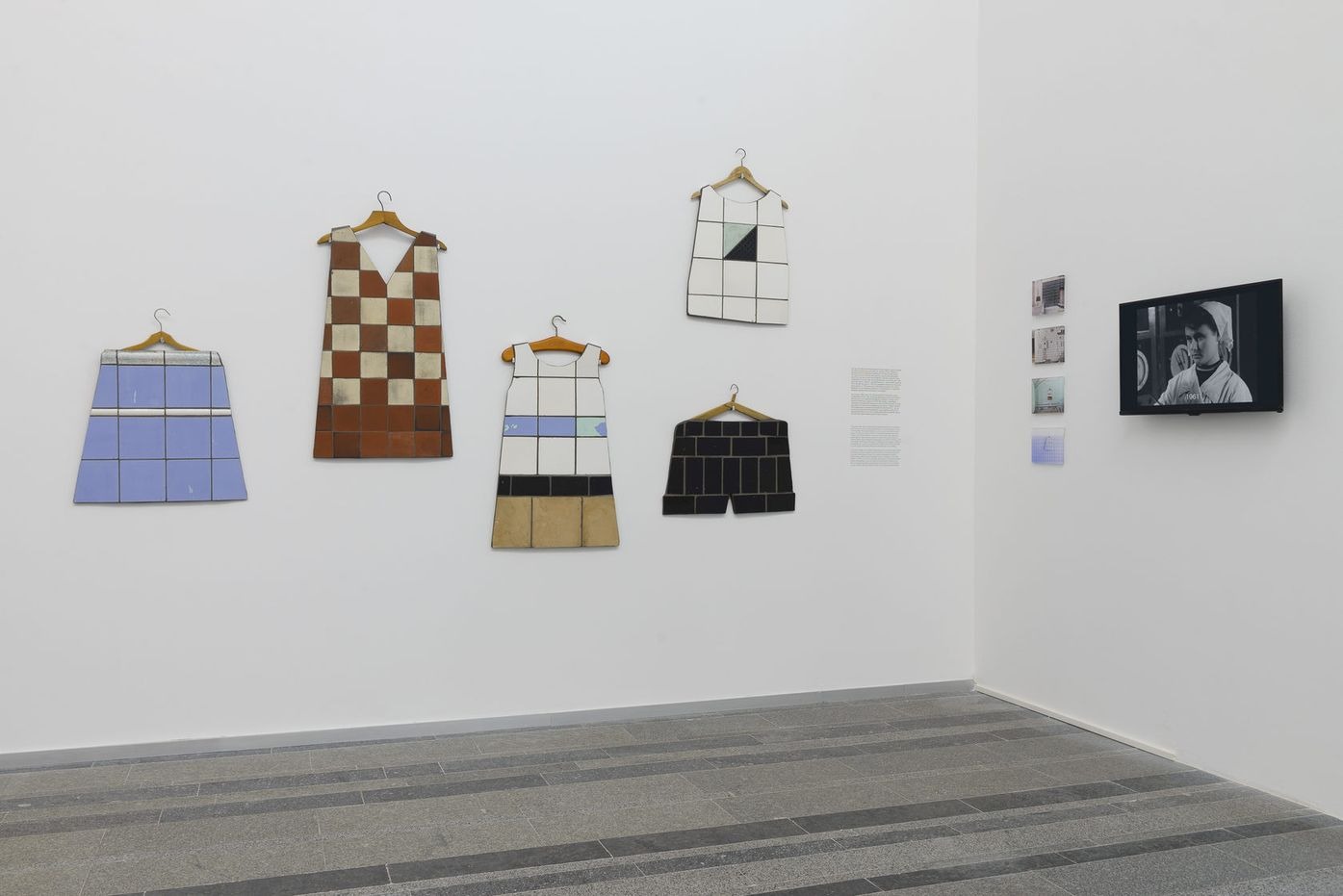
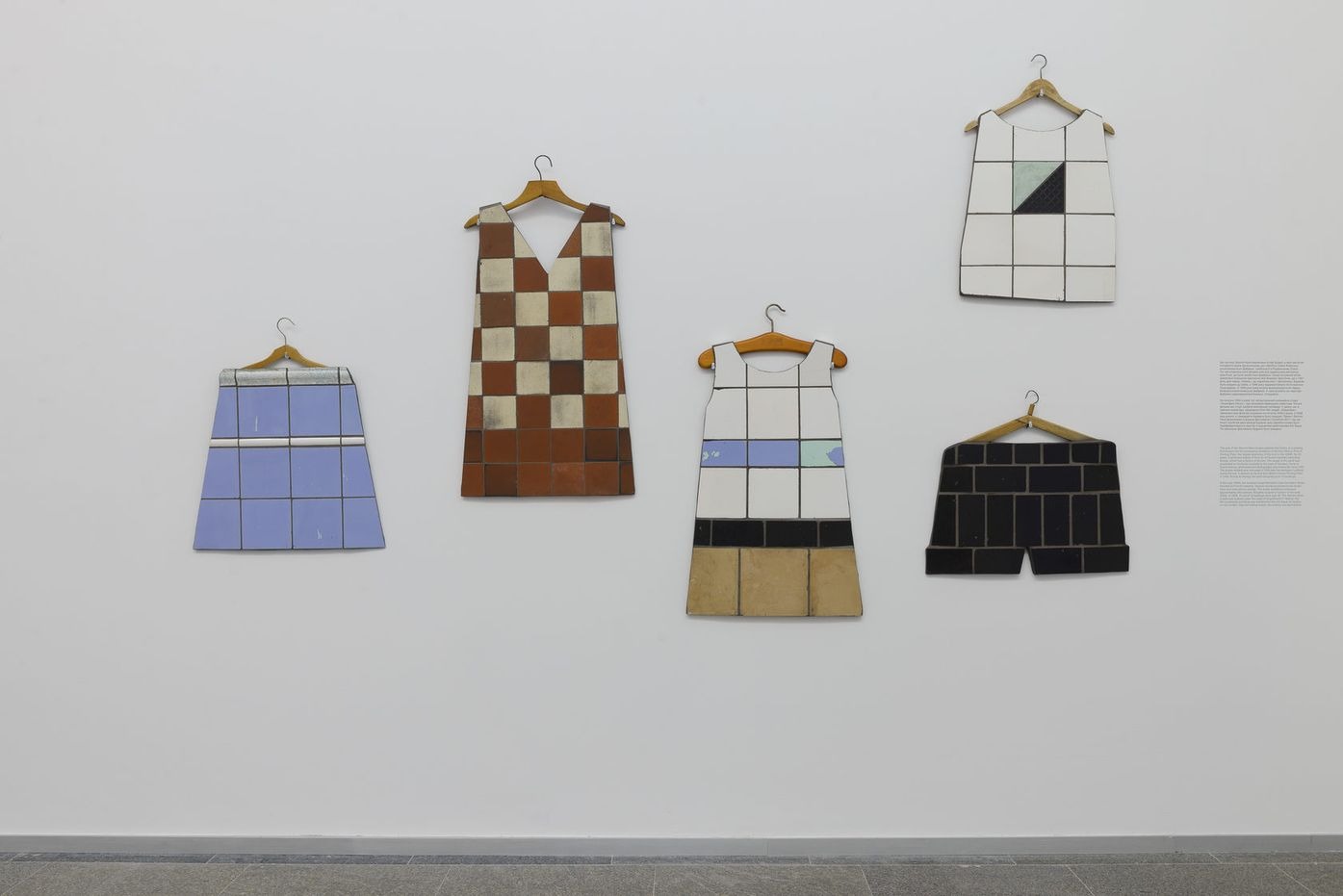
Zhanna Kadyrova’s works from the long-term project Second Hand, which she began in 2014 and continues to work on today, appear in dialogue with the reflection on the legacy of Soviet monumental art. In her works, Kadyrova often uses ceramic tiles both as a means of artistic expression and as carriers of information. In the Second Hand series, the artist creates various objects in the form of clothing reminiscent of Soviet fashion from the 1960s–1970s, using original ceramic tiles from the Kyiv Film Copying Factory, Poliska Bus Station, and the Darnytsia Silk Factory. Today, these buildings either no longer exist or have lost their original functions. Thus, Kadyrova’s objects acquire new historical value: they carry the memory of Soviet production and everyday culture.
Zhanna Kadyrova
Second Hand. Darnytsia Silk Factory, 2015
ceramic tiles, photographs, video
Provided by Galleria Continua
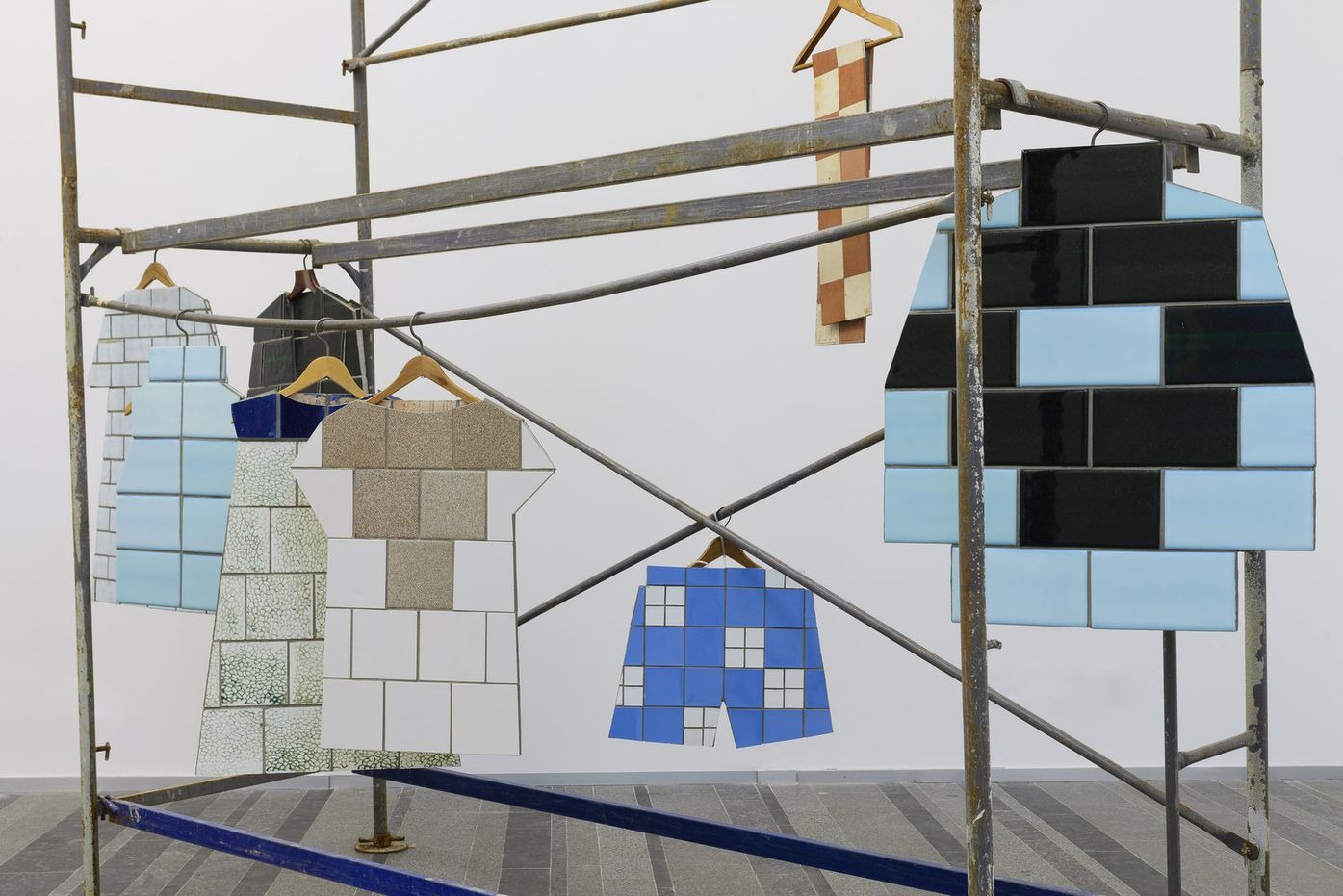
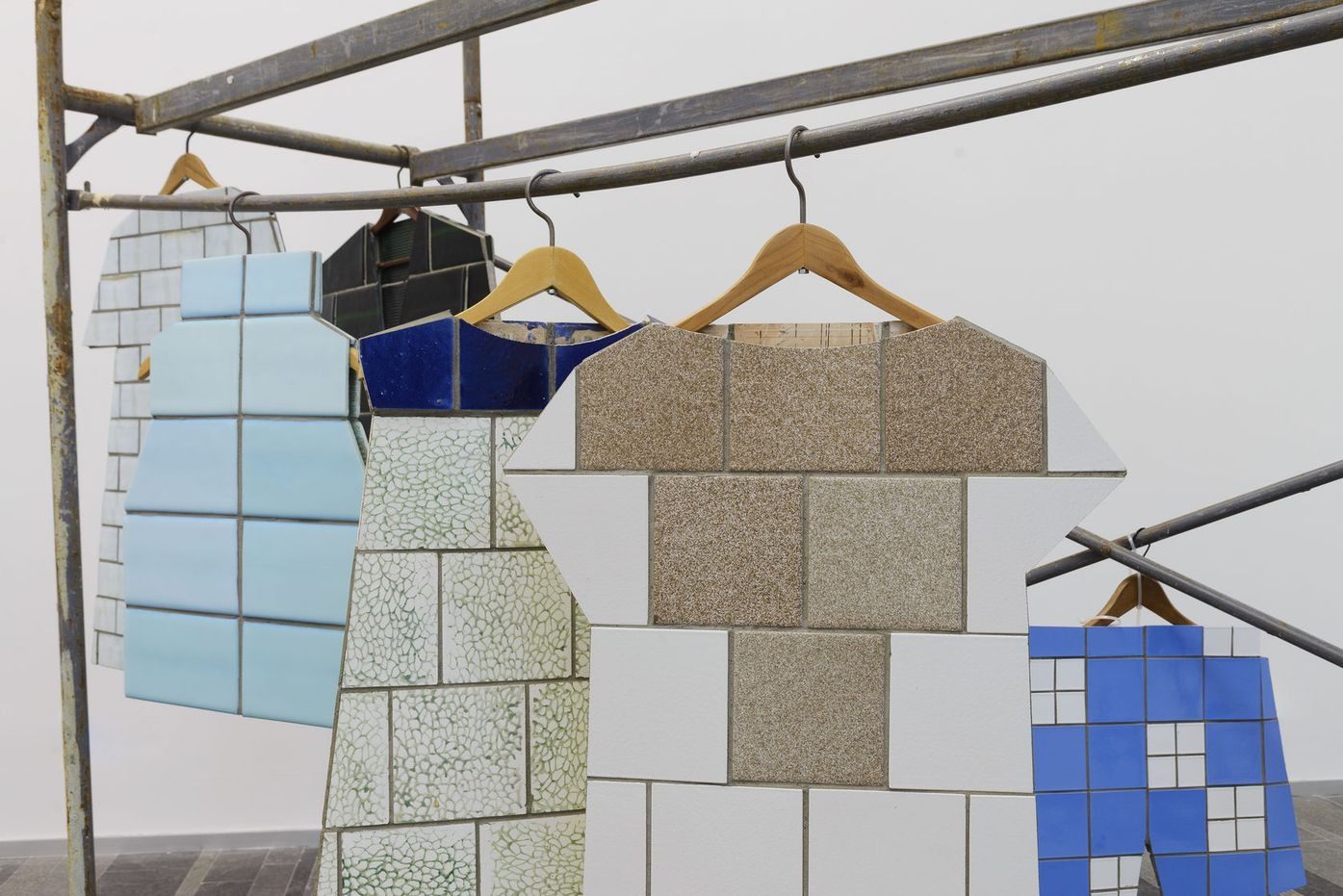
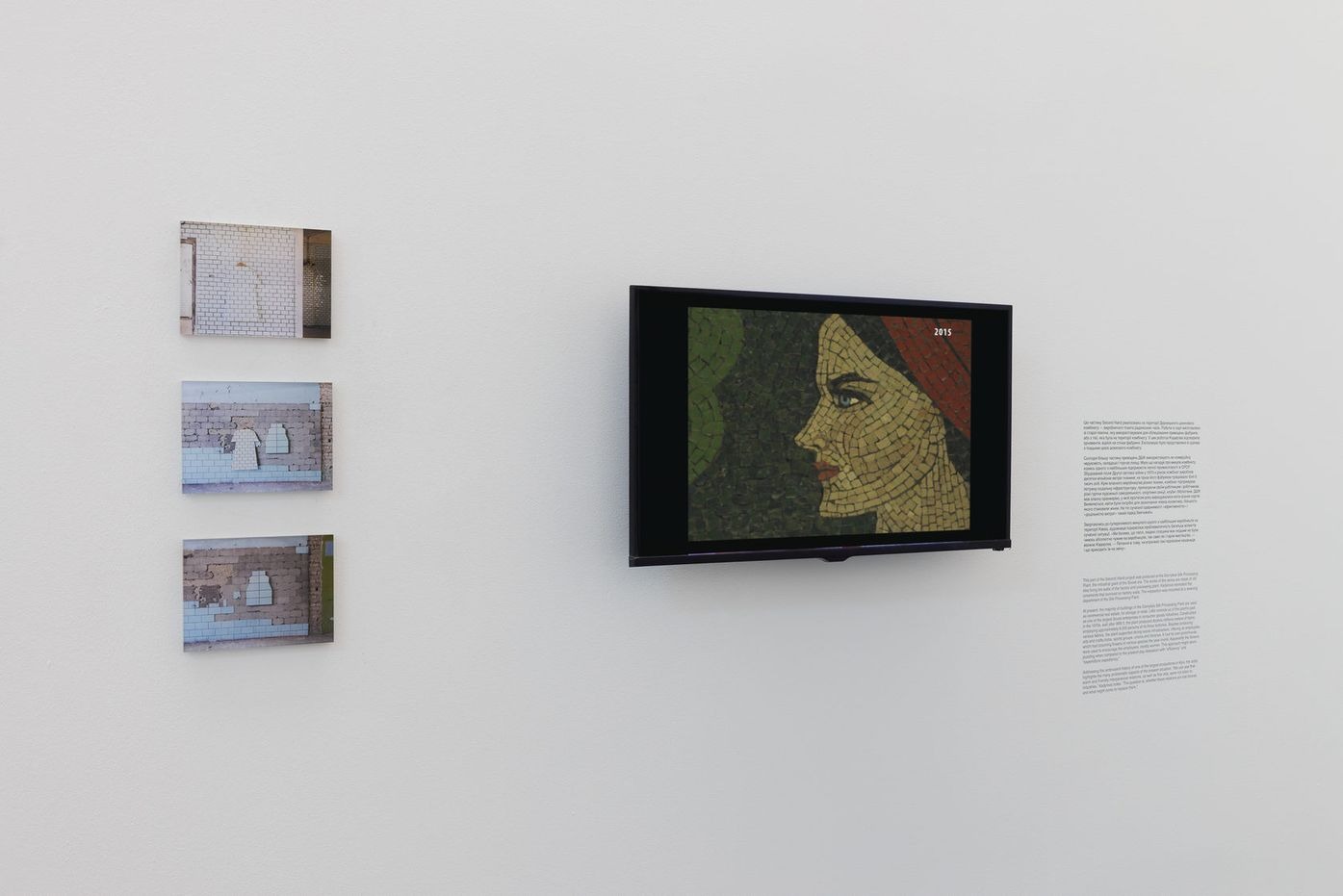
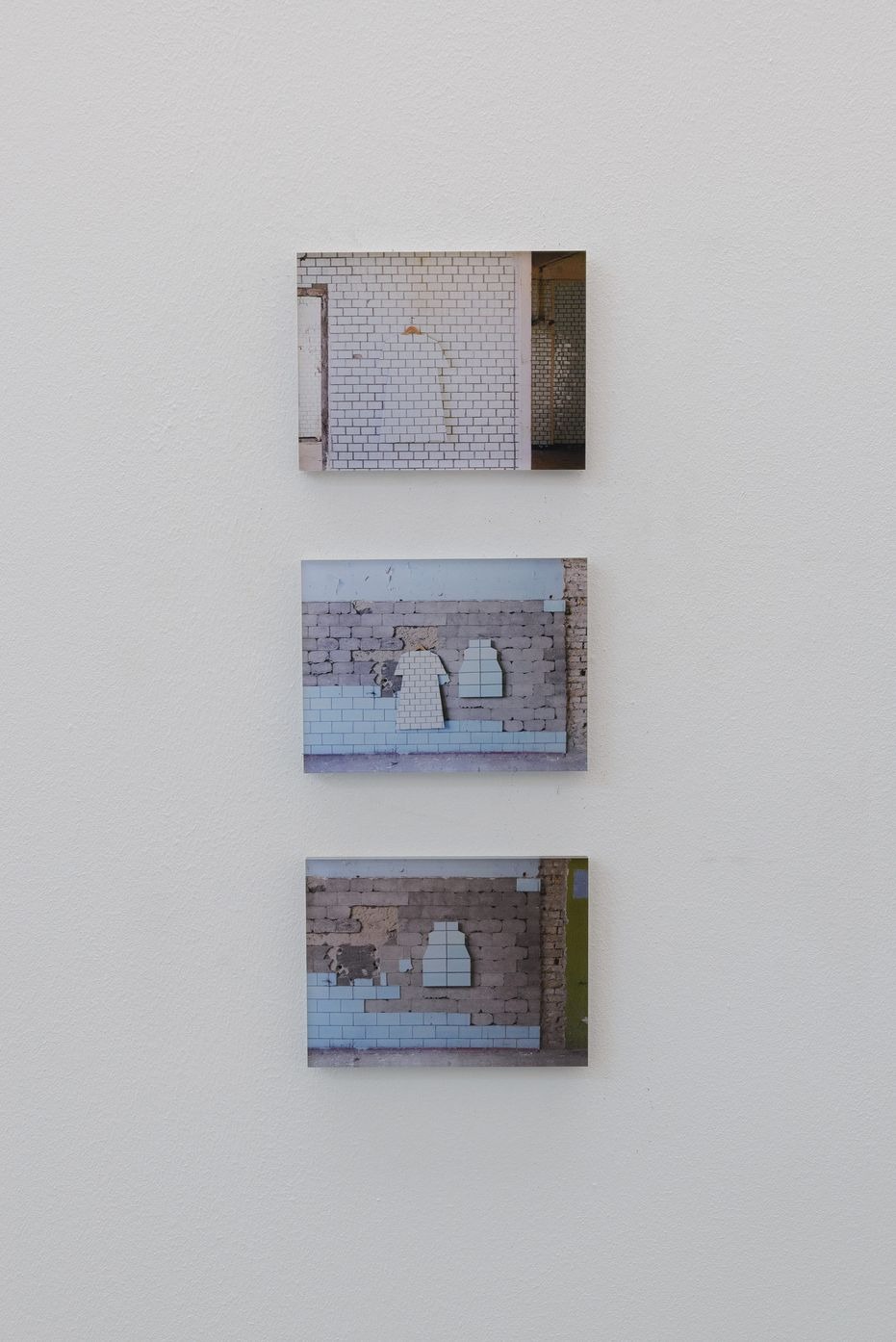
This part of Second Hand was realized on the territory of the Darnytsia Silk Factory — a Soviet-era industrial giant. The works in the series are made from old tiles used to decorate the factory’s premises or from those found on the factory grounds. In these works, Kadyrova recreated patterns that survived on the factory walls. The exhibition was presented in one of the silk factory’s weaving workshops.
Today, most of the Darnytsia Silk Factory premises are used as commercial real estate, warehouses, and retail spaces. Little reminds of the factory’s past, once one of the largest light industry enterprises in the USSR. Built after World War II in the 1970s, the factory produced tens of millions of meters of fabric; about 6,000 people worked at its three factories. Besides its own fabric production, the factory supported a powerful social infrastructure, offering its workers various amateur art groups, sports sections, clubs, and libraries. The factory had its own greenhouse where flowers of different varieties were grown year-round. It turns out flowers were needed to encourage the collective members, most of whom were women. Against the backdrop of today’s obsession with “efficiency” and “cost-effectiveness,” such an approach is unsettling.
Addressing the controversial past of one of Kyiv’s largest productions, the artist emphasizes the problematic aspects of many contemporary situations. “We see that warm, humane relationships between people were not entirely alien in production, just as good art was not,” Kadyrova believes. “The question is whether such relationships are lost forever and what replaces them.”
Zhanna Kadyrova
Second Hand. Poliska Bus Station, 2017
mannequin, ceramic tiles, photograph
Provided by Galleria Continua
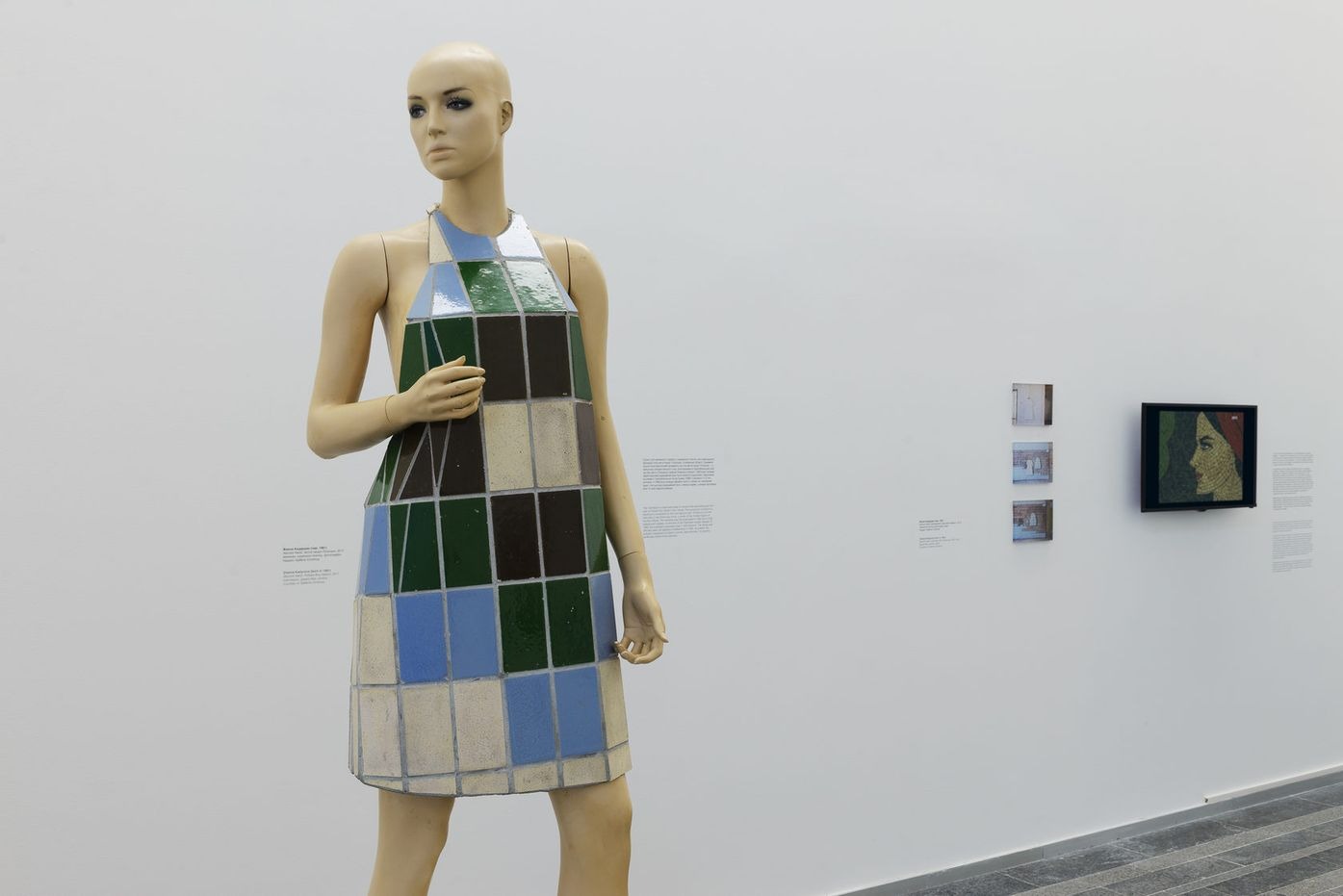
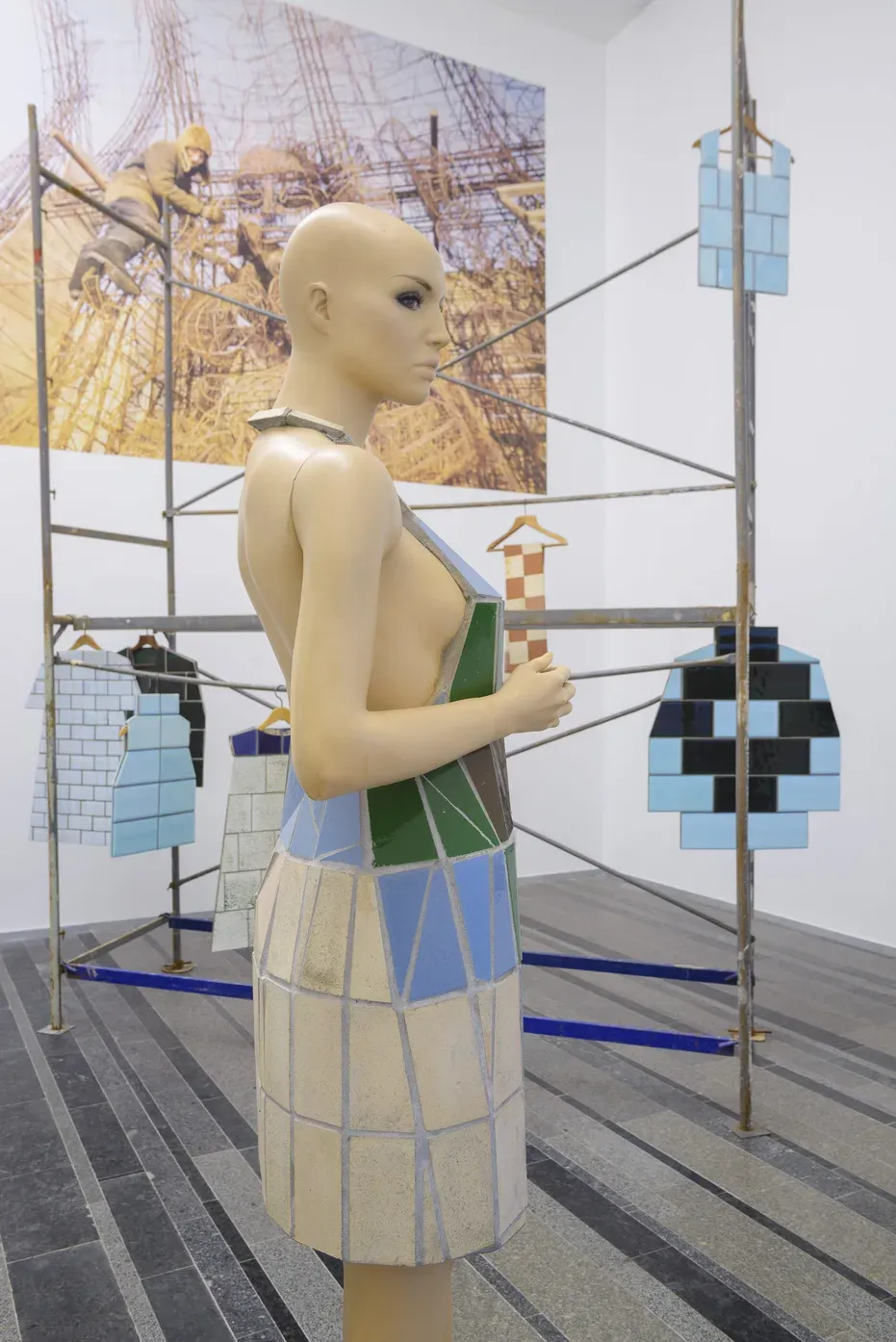
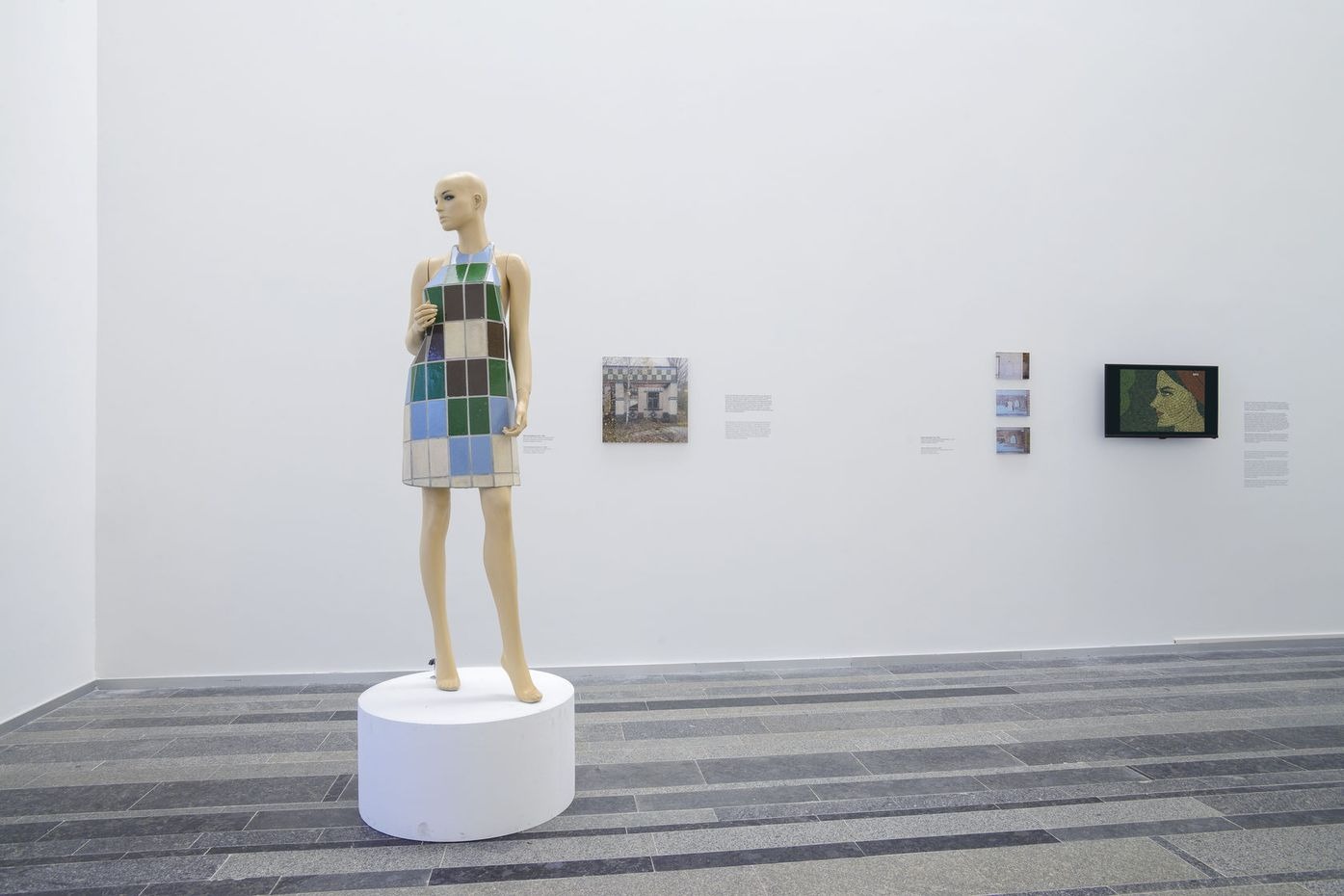
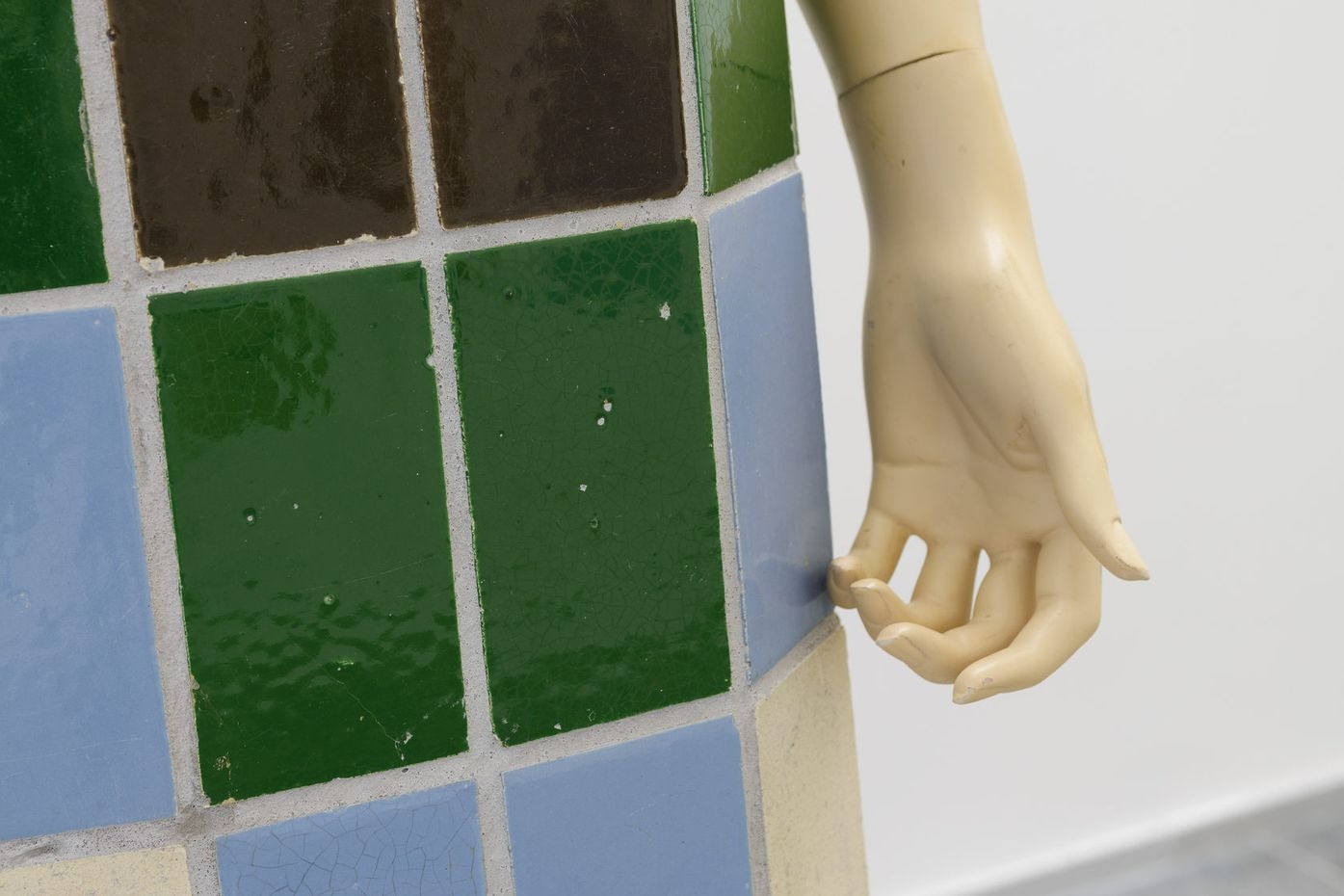
The dress for the mannequin is made from ceramic tiles that decorated the facade wall of the Poliska Bus Station in Kyiv region. The sculpture’s ornament is identical to the ornament on the bus station wall. Poliske was formerly an urban-type settlement located in the Chernobyl zone. It was the center of Poliske district in Kyiv region; in 1993, the settlement was completely evacuated due to high radiation levels. The population at the time of the Chernobyl disaster (1986) was 11.3 thousand inhabitants. In 1999, the settlement was officially deregistered as a populated place. Today, the radiation level is within normal limits; about 10 self-settlers live there.
Zhanna Kadyrova
Second Hand. Kyiv Film Copying Factory, 2017
ceramic tiles, photographs, video
Provided by the artist
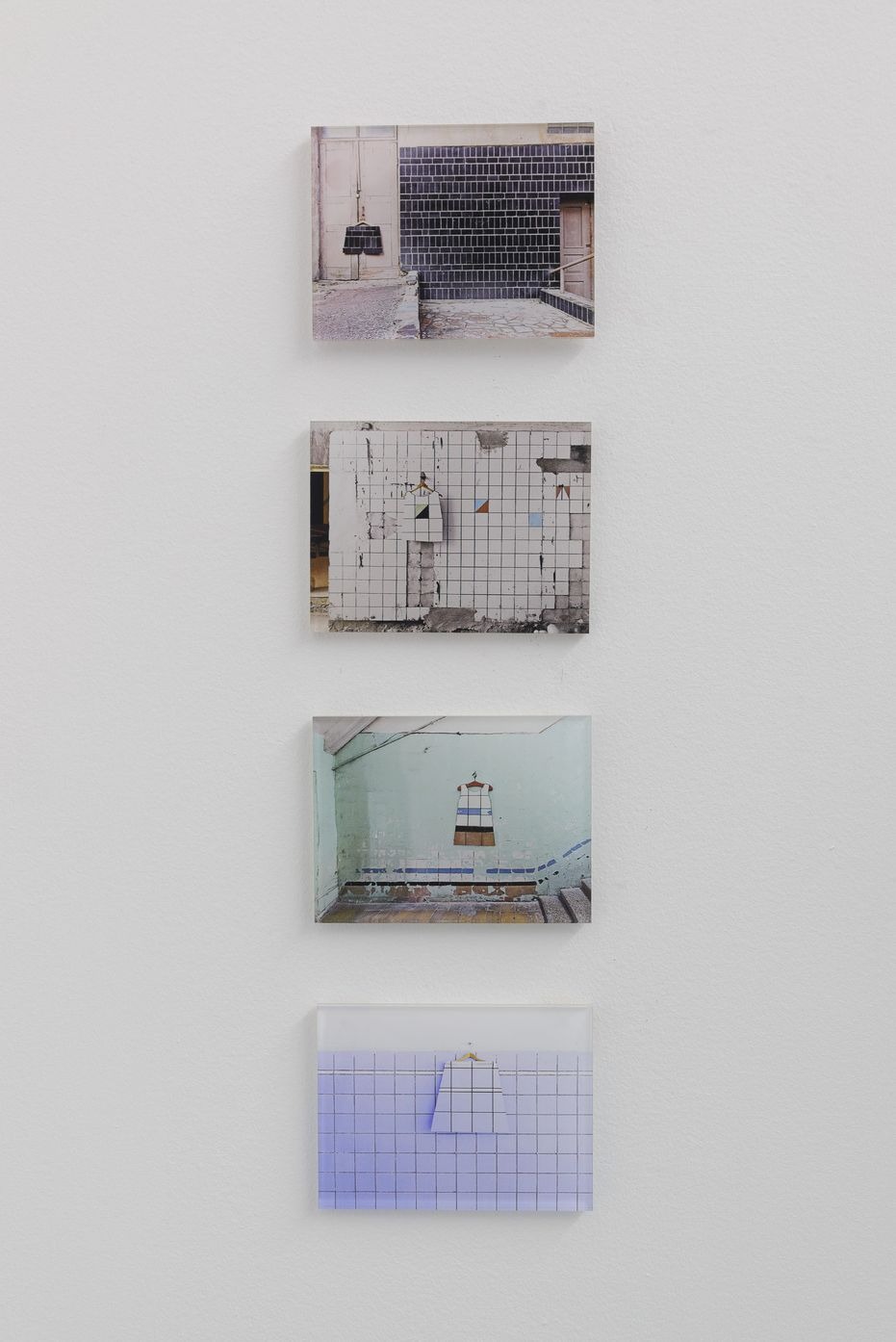
This part of Second Hand is dedicated to the history of the building that housed the film processing workshop of the Kyiv Film Copying Factory, the largest in the Soviet Union, for fifty years. Copies of films were made here for all Soviet republics except Russia, which had a similar factory. Such a large volume was due to the close distance between Kyiv and Shostka, where the “Svema” factory producing cinema and photo film operated since 1931. The building was constructed before the war and repaired in 1948 after war damage. In 1949, it began functioning as the first Kyiv Film Copying Factory. At its peak, the factory complex included about 13 buildings.
In the early 1990s, the animation studio “Borysfen-Lutes,” founded by French investors, settled here. Several films by this studio won international awards. About 450 people worked in the workshops occupied by animators. “Borysfen” ceased to exist physically in the early 2000s. In 2008, ten of the thirteen buildings were sold. The Second Hand project was realized as part of the GogolFest 2017 festival, during which the film processing workshop building was transformed into a space with art studios called Ark Squat for two months. After the festival, the building was demolished.
Artist Ada Rybachuk (1931–2010) working on the composition “Civil Defense” for the “Wall of Memory” at Baikove Cemetery, Kyiv, 1977
Photo by Volodymyr Melnychenko
Provided by Volodymyr Melnychenko
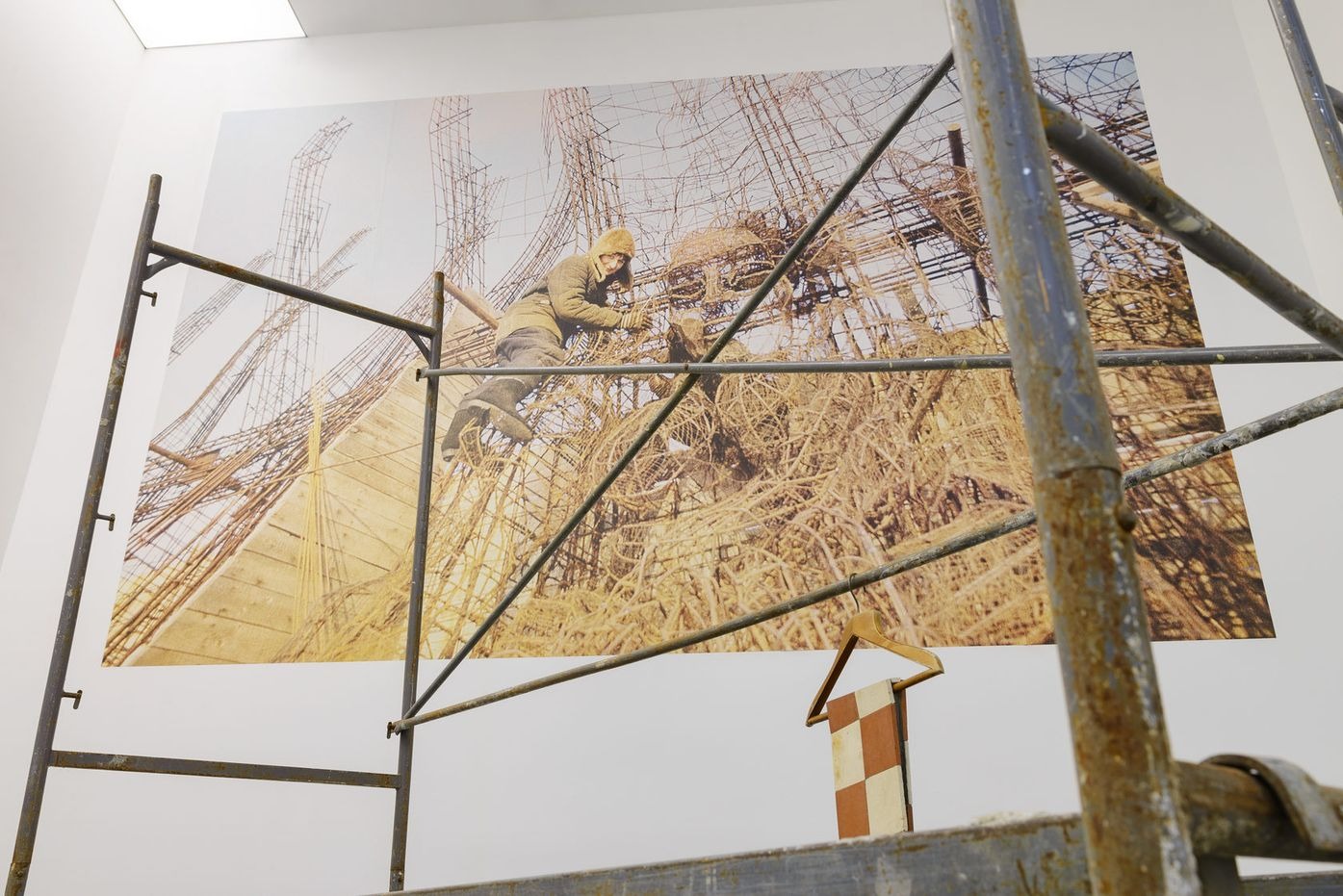
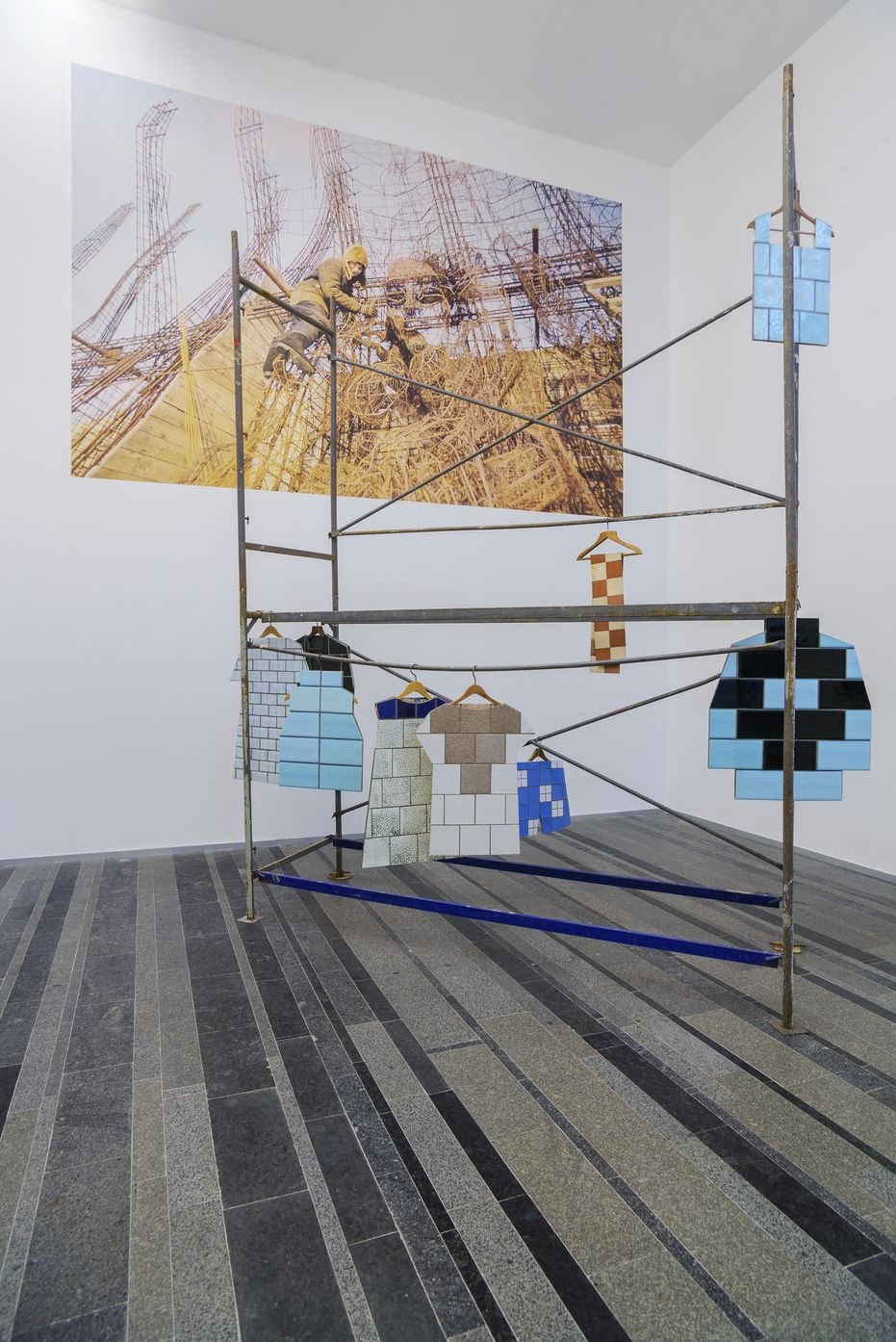
The photograph shows artist Ada Rybachuk working on the reliefs of the Wall of Memory at Baikove Cemetery in Kyiv. Rybachuk personally worked on complex volumetric metal structures for the composition “Civil Defense,” dedicated to women in World War II who dug trenches and installed anti-tank hedgehogs in Holosiivskyi Forest.
Rybachuk worked on the Wall of Memory with her husband, artist Volodymyr Melnychenko, for thirteen years — from 1968, when they made the first sketches, to 1981, when it was almost completed. In January 1982, when the work was practically finished, an order was issued to dismantle the Wall.
The Wall of Memory is a strong large-scale structure 213 meters long and 4 to 16 meters high, made of metal and concrete. The artists invented a unique technology for working on it, inspired by Pablo Picasso.
Volodymyr Melnychenko recalls: “Ada and I were looking through a book about Picasso’s studio that was given to us. Among other photos, we found the maestro in his underwear, barefoot, dancing in front of his lady with a stick with fire, drawing fiery figures. And Ada asked me: ‘Volodya, do you feel the shape of the objects that the maestro draws with this moving fire?’ I answered: ‘Yes, I feel and see. Like I see the shapes and lines of streets when transport moves along them!’ And Ada said to me: ‘Can’t we draw our volumetric forms in metal as Picasso draws with fire?!!’ I answered: ‘Yes!'”
Yevheniya Bielorusets
Me and She, 2018 (reinterpretation of the 2012 work)
installation: book editions, objects
Created on commission for PinchukArtCentre
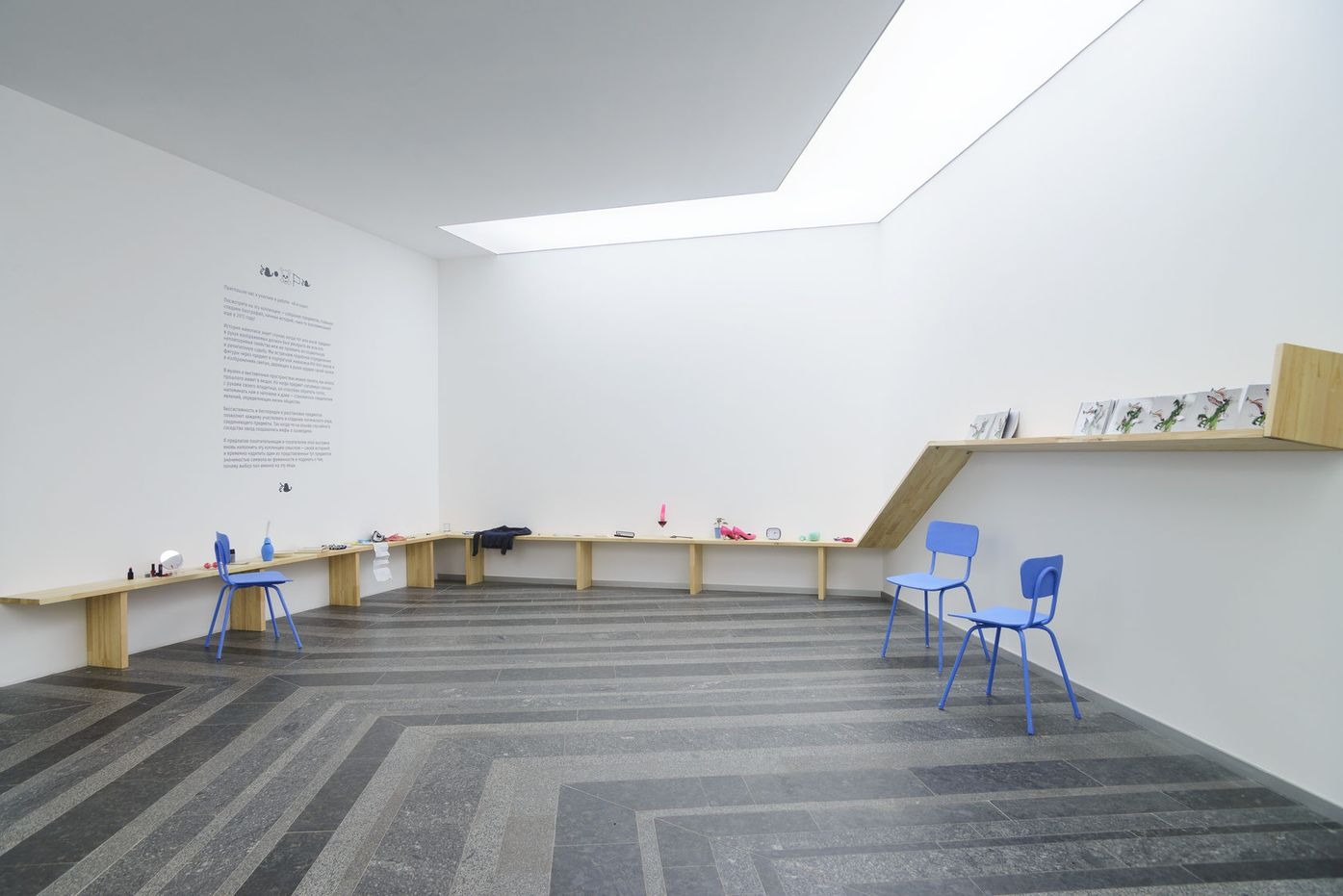
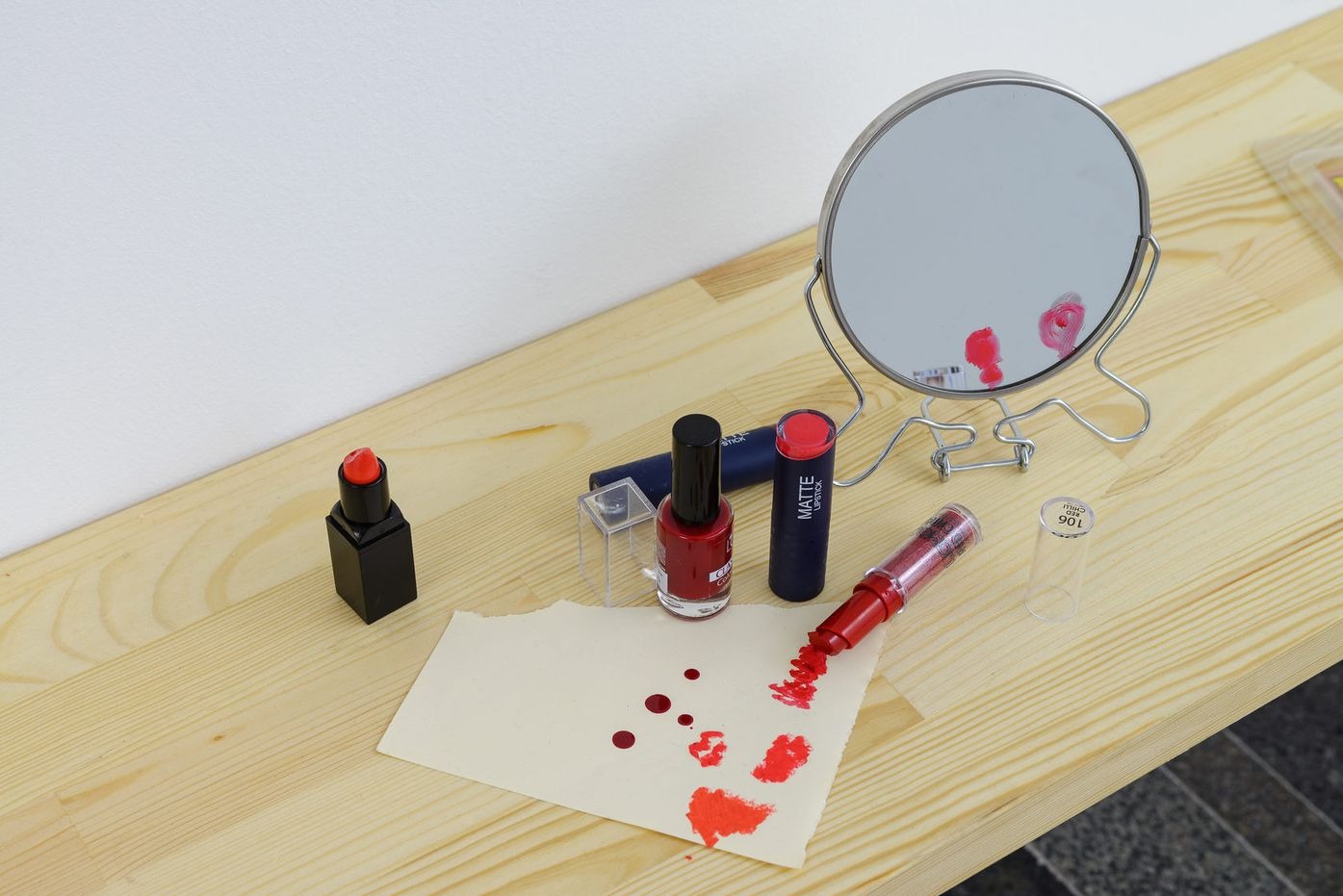
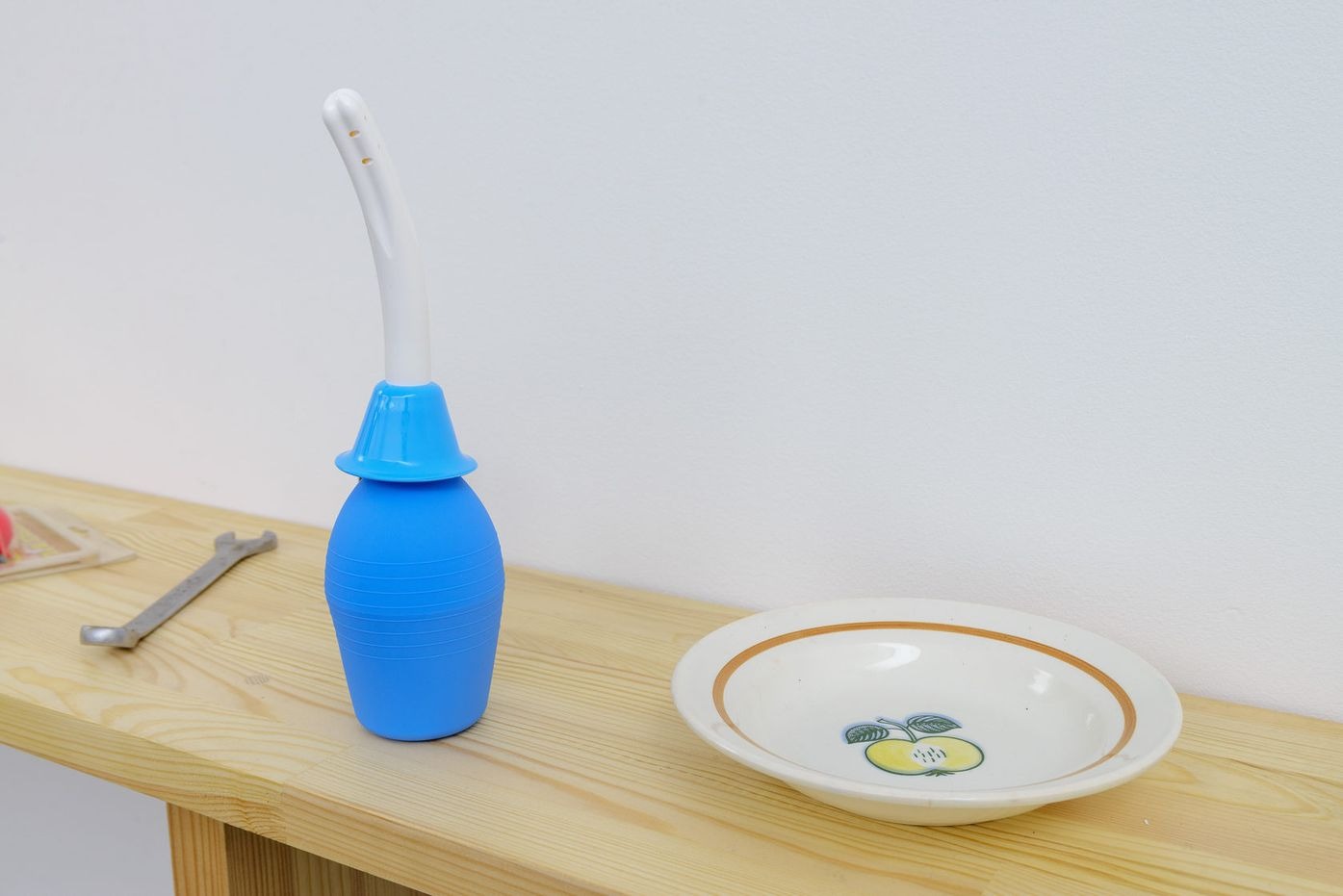
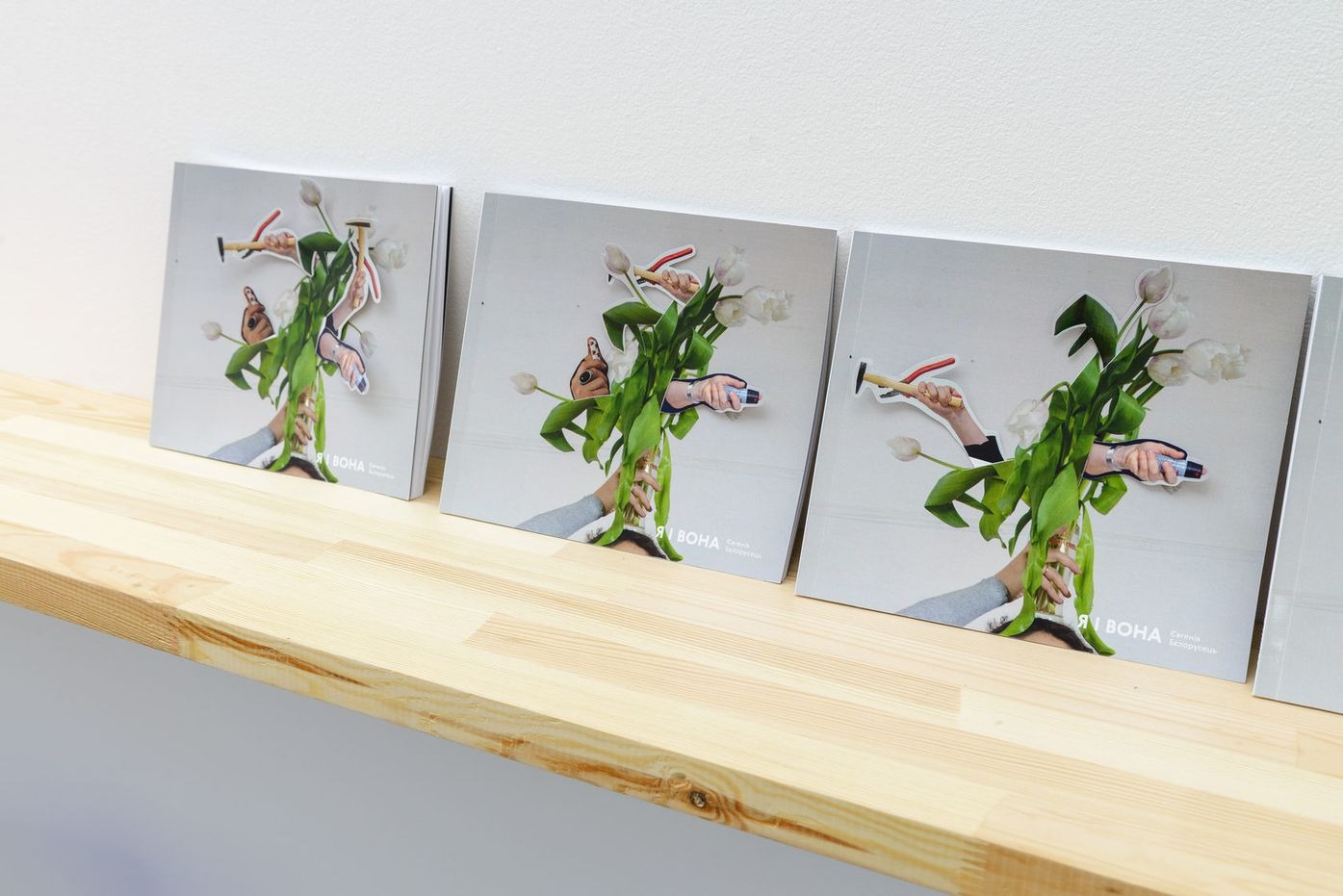
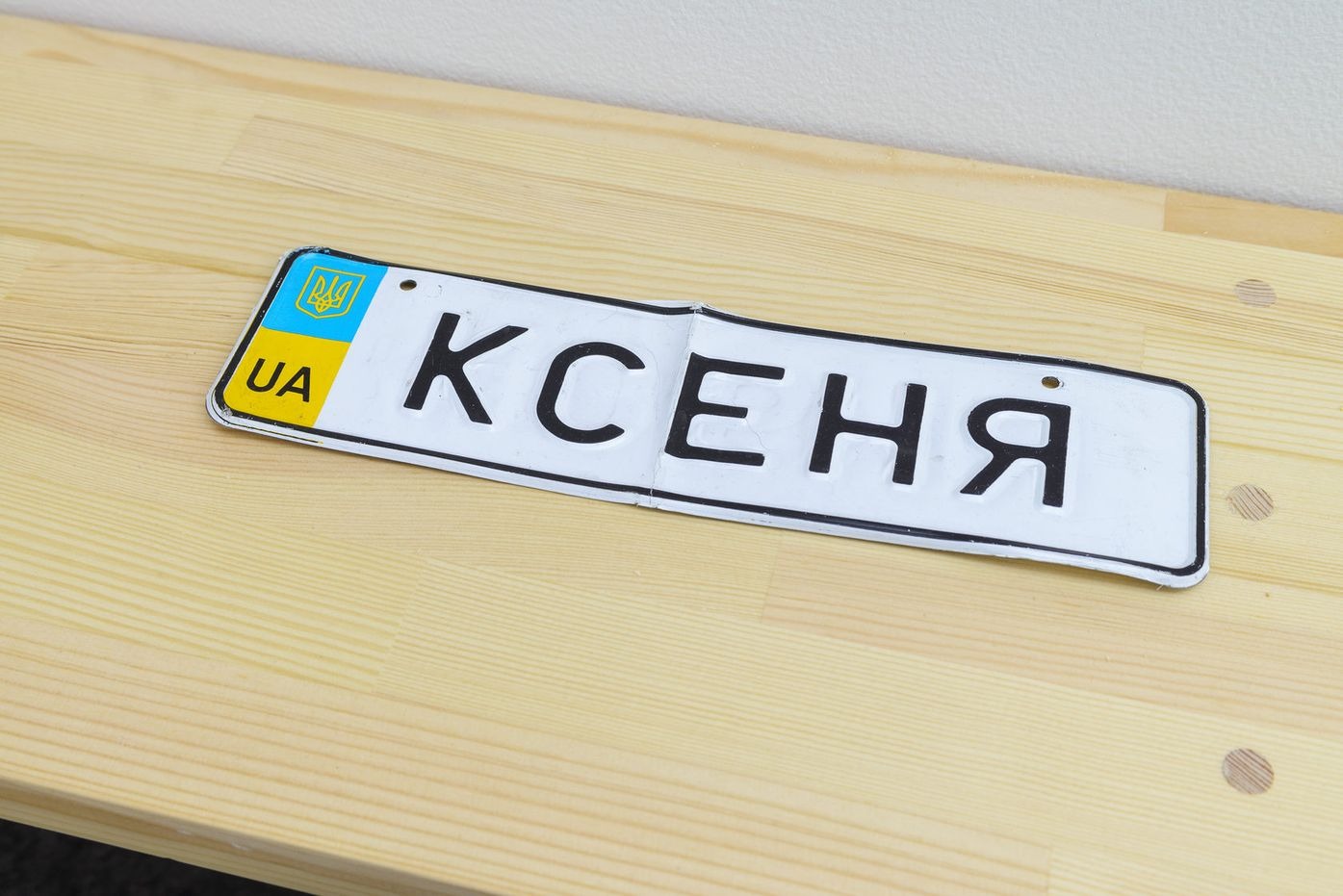
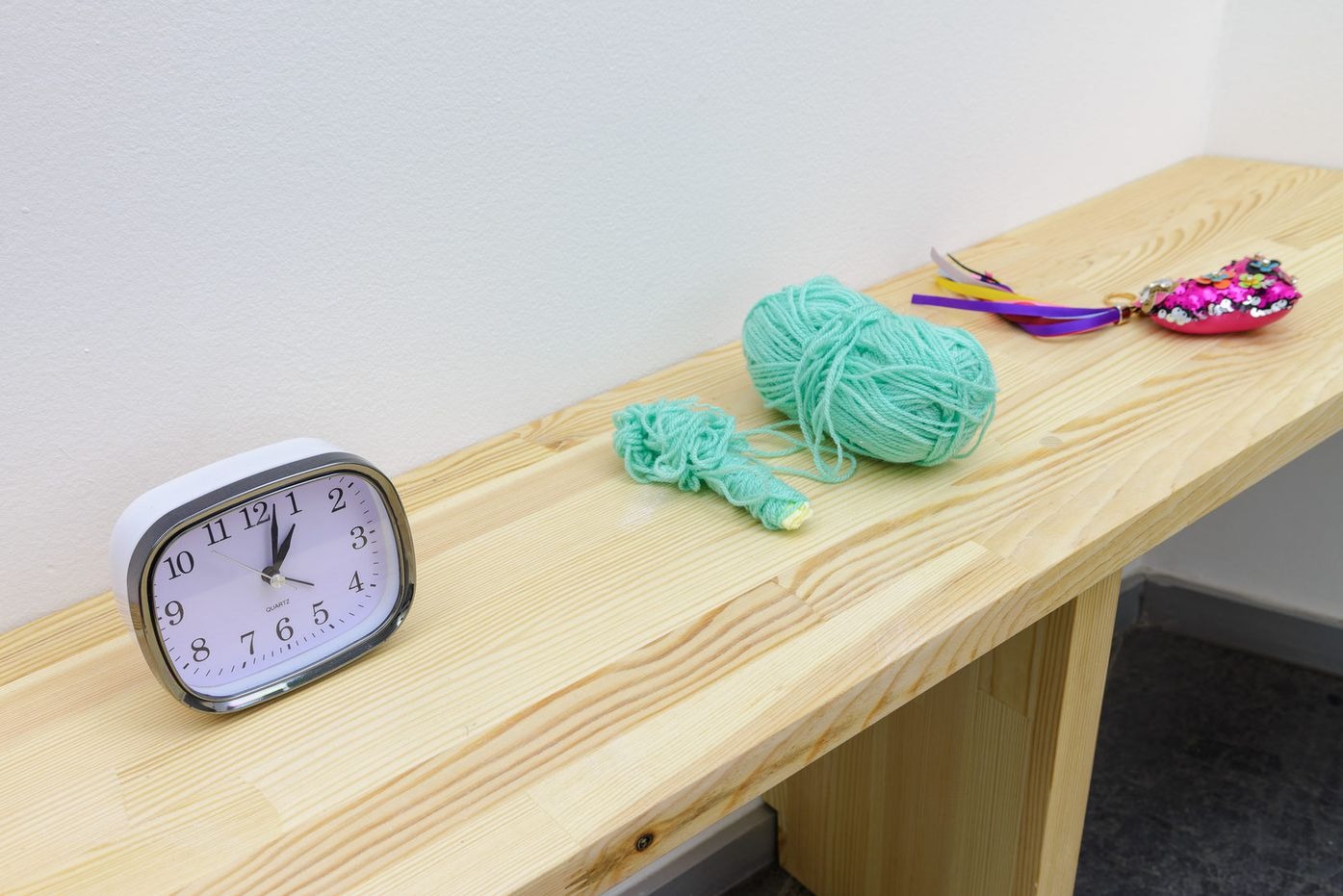
Yevheniya Bielorusets’s installation “Me and She” is an author’s reinterpretation of a work created within the project “Women’s Workshop,” organized by the independent group “Feminist Offensive” held in 2012 at the Center for Visual Culture. Then, Bielorusets invited participants to choose any object that corresponded to their personal feminine identity and reflect on their choice — what it meant. The result was a “collection” of photographs depicting participants and their “voices” in the form of accompanying texts. The project documented the existence of a community that provided support and the opportunity to freely discuss topics tabooed by society.
For the exhibition, Bielorusets created a book of the same name, in which she reinterprets that situation and asks whether such a community can exist today in the context of political changes that have occurred in our society.
Yana Bystrova
Planche de contacte (Contact Sheets), 2005
author’s technique, digital print
Provided by the artist
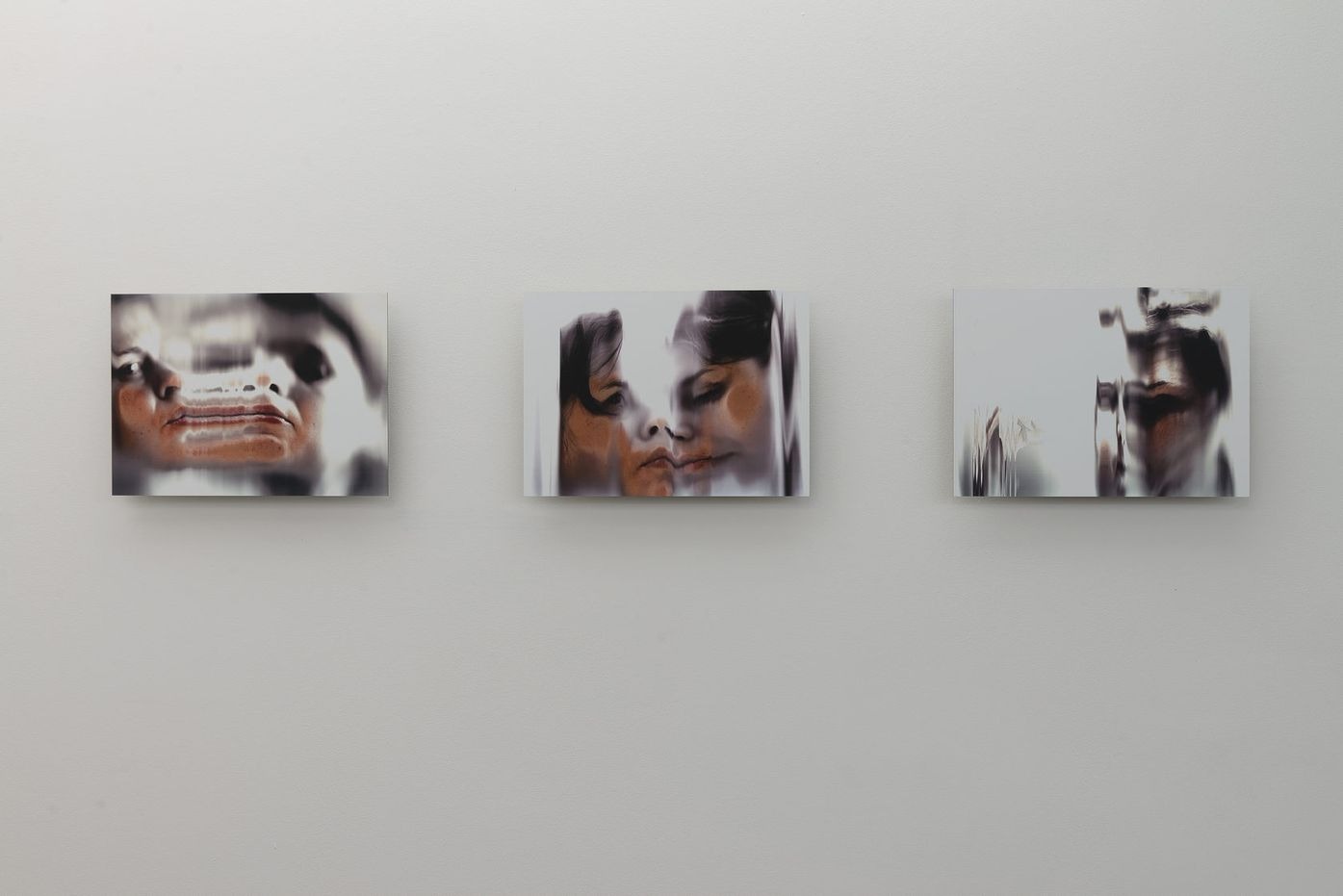
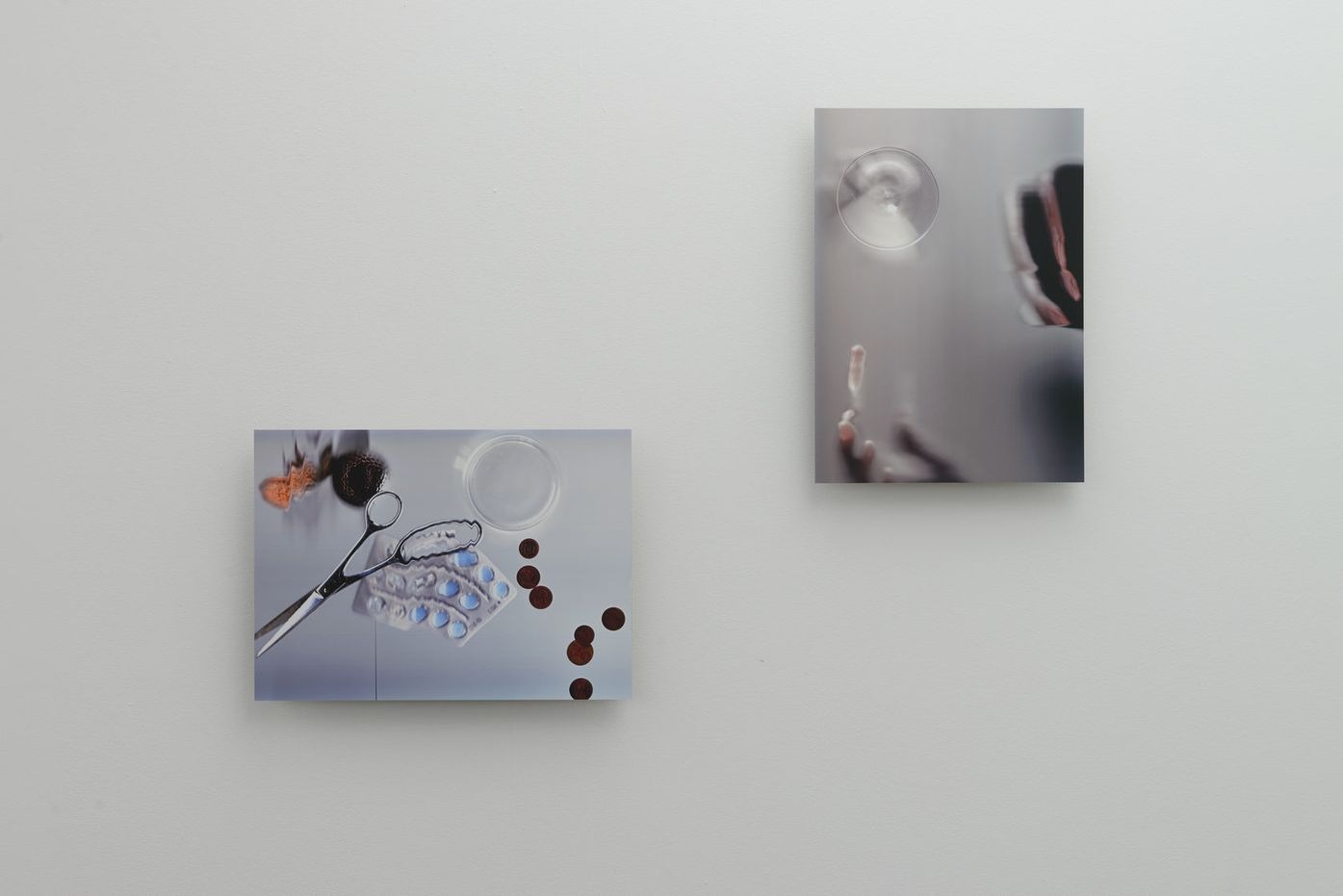
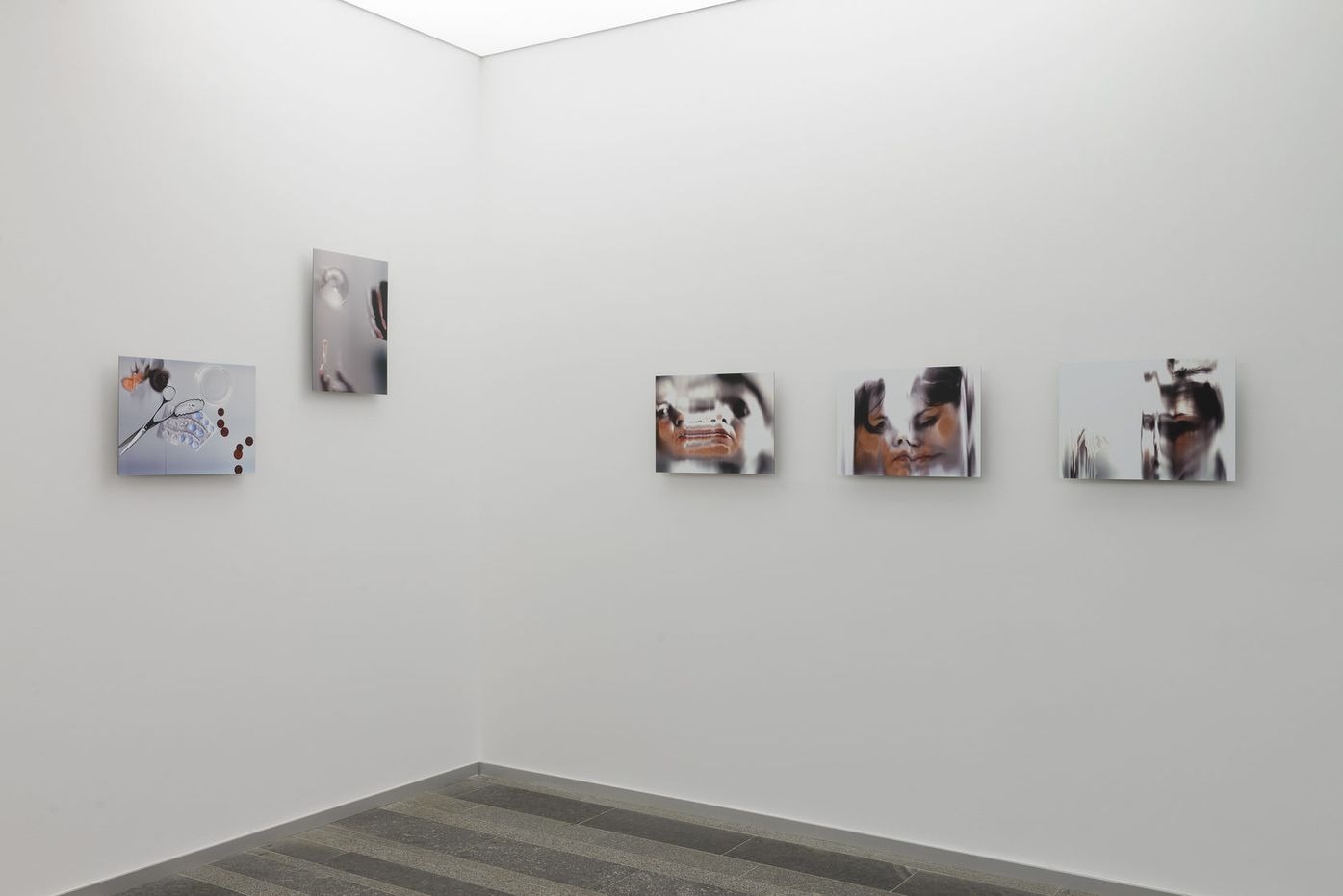
For the formation of Yana Bystrova’s creative personality, her participation in a squat in Furmannyi Lane in Moscow in the late 1980s was important, where she went following her husband, artist Kostyantyn Reunov, and artist friends Maryna Skugaryova and Oleh Tistol. There, Bystrova found herself among a powerful creative community where she had to assert her artistic and female identity.
The series “Planche de contacte (Contact Sheets)” is autobiographical. In it, Bystrova experiments with her own body, subjecting it to various deformations as if breaking herself into fragments. The images are full of fragility, uncertainty, disruption of inner balance, and reflections on the place of a woman artist. The work captures a situation of instability and search for orientation characteristic of the mid-1990s when the artist began such experiments, which she continues to this day.
Kateryna Yermolaieva
In One Breath, 2018
digital print, collage
Created on commission for PinchukArtCentre
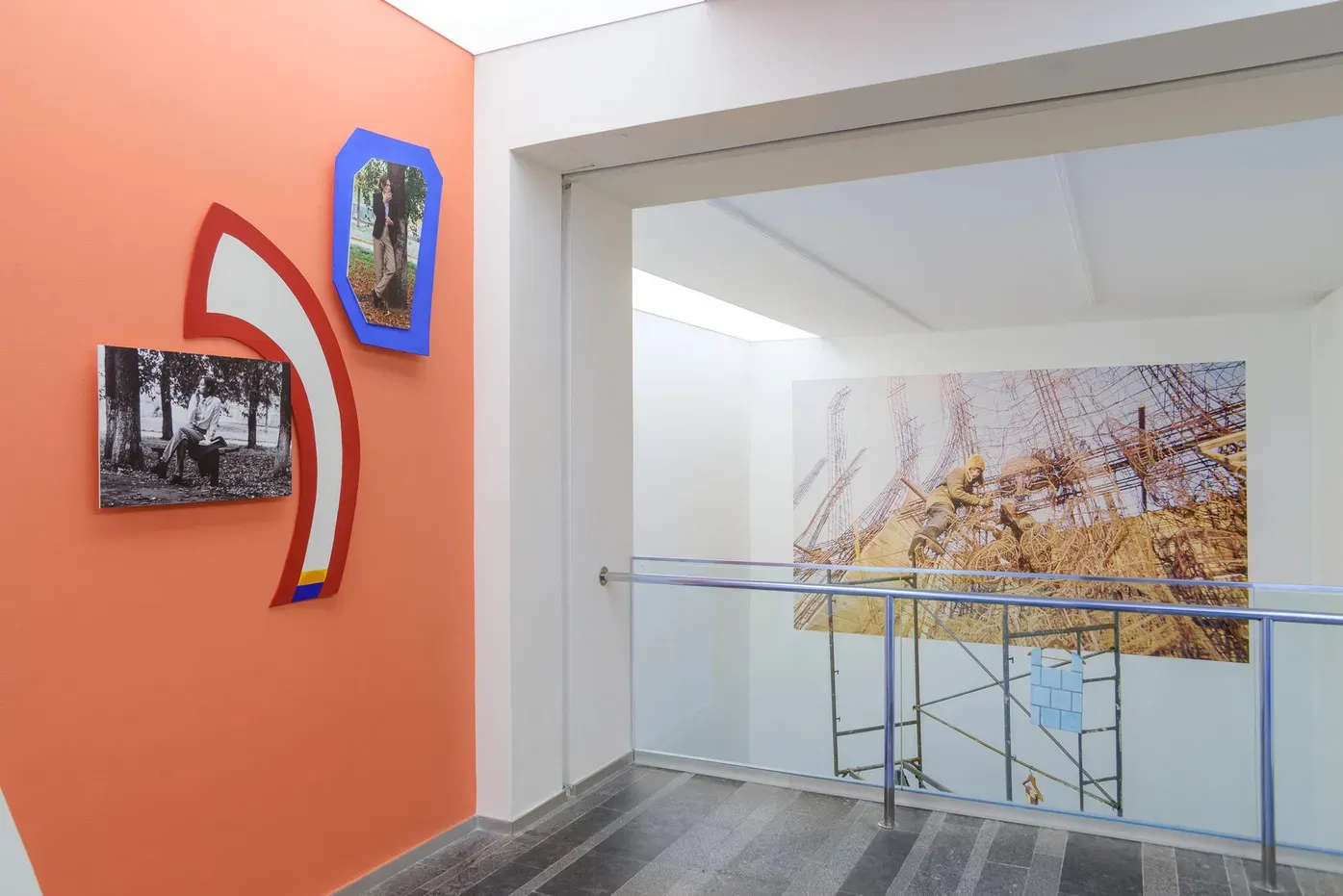
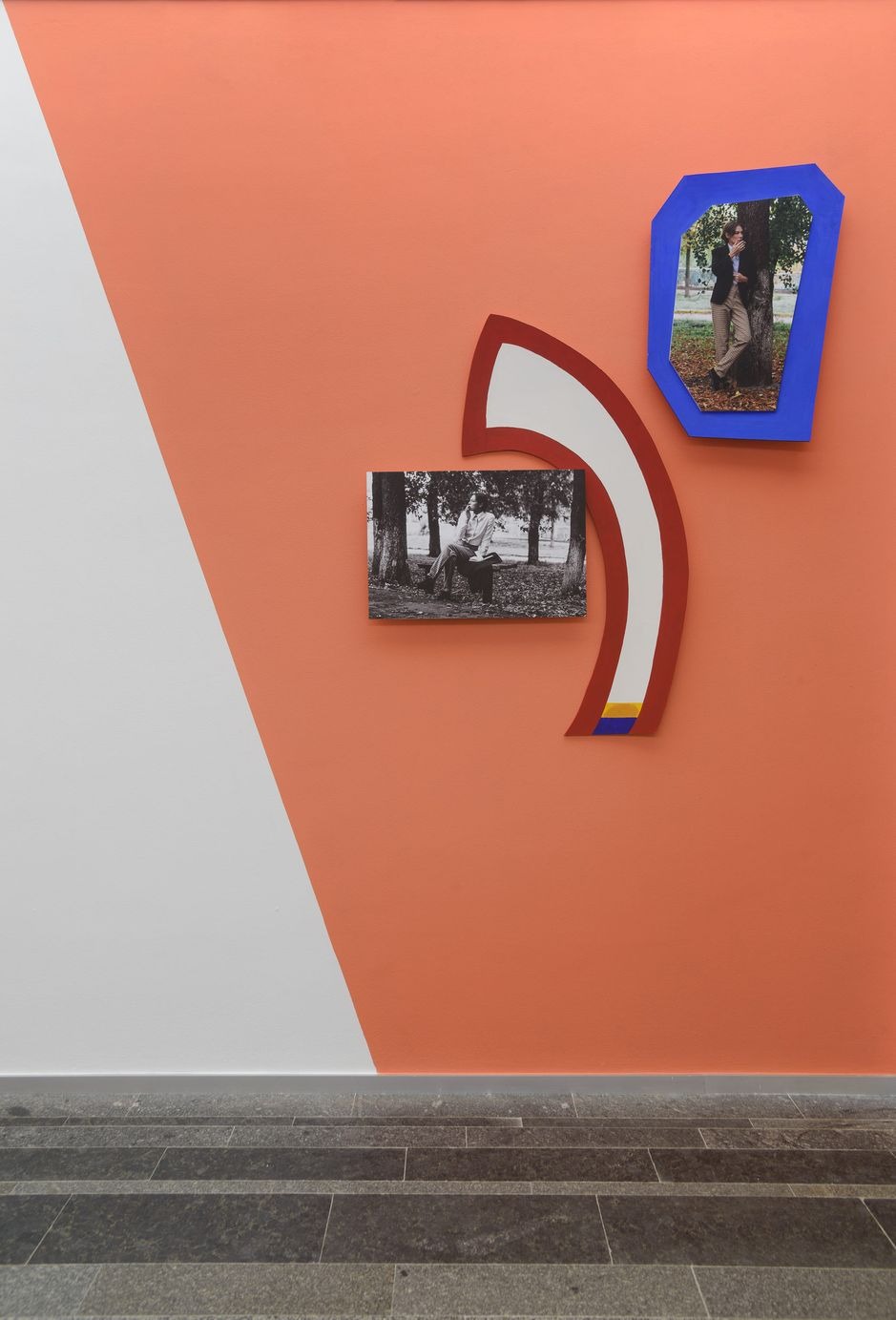
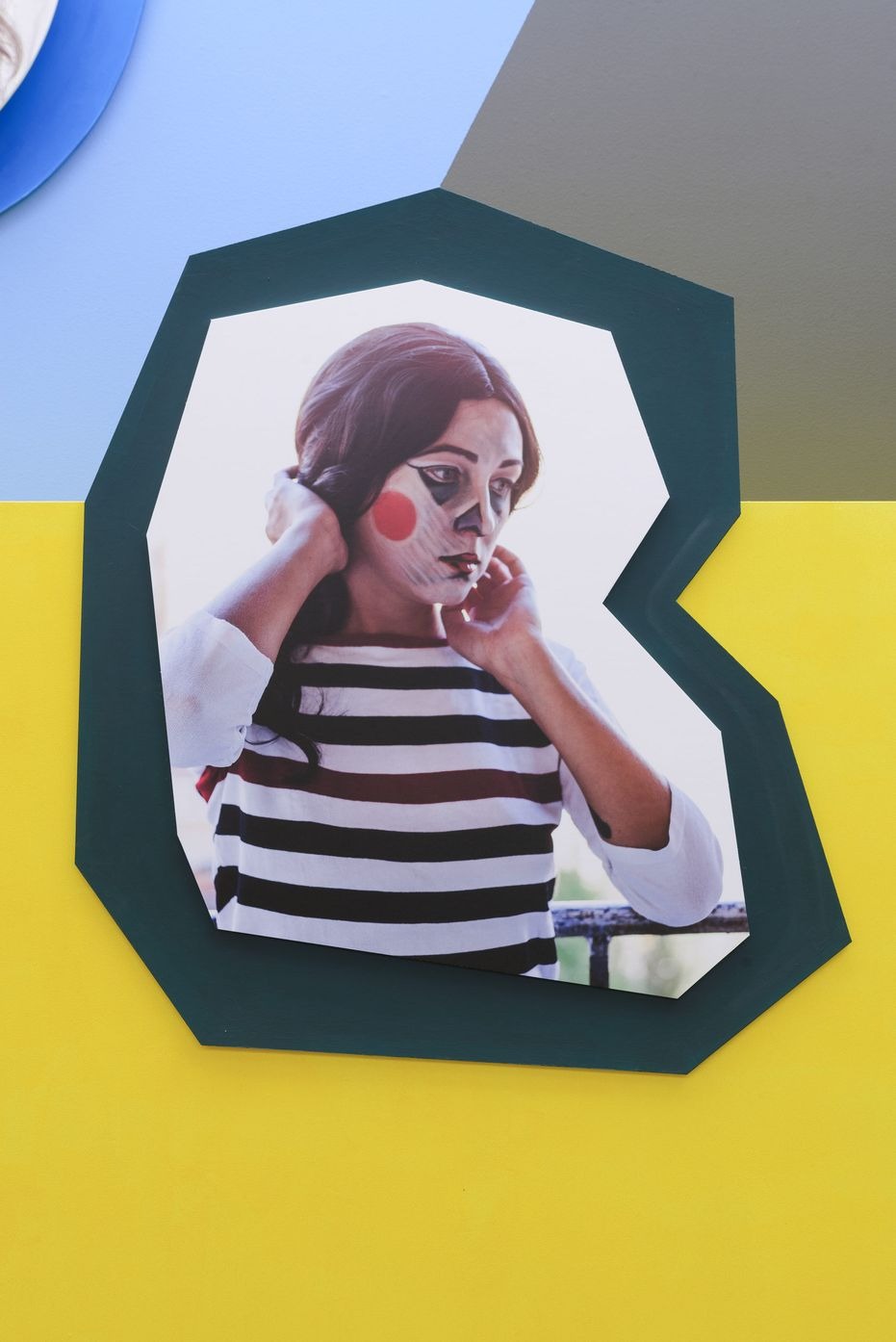
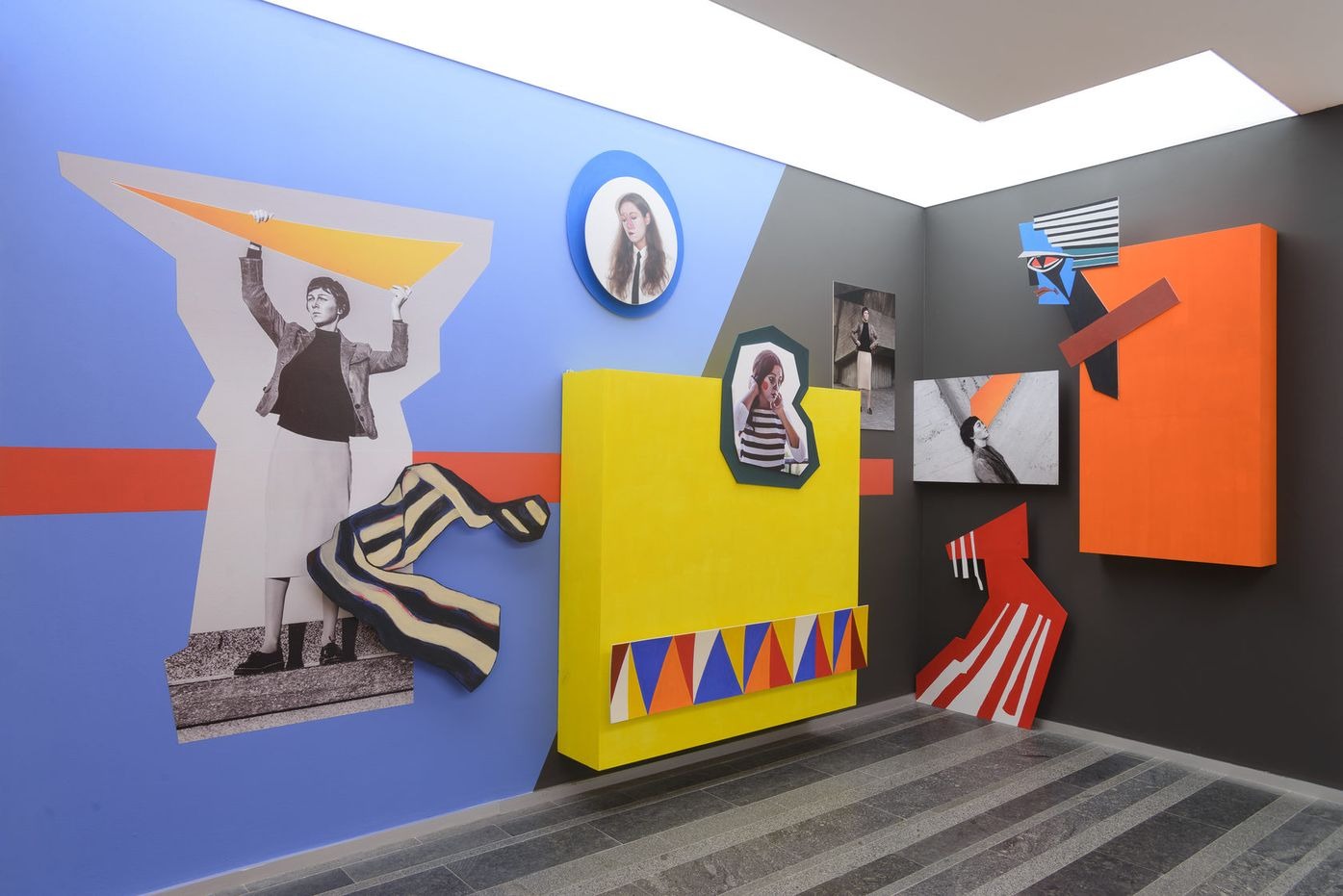
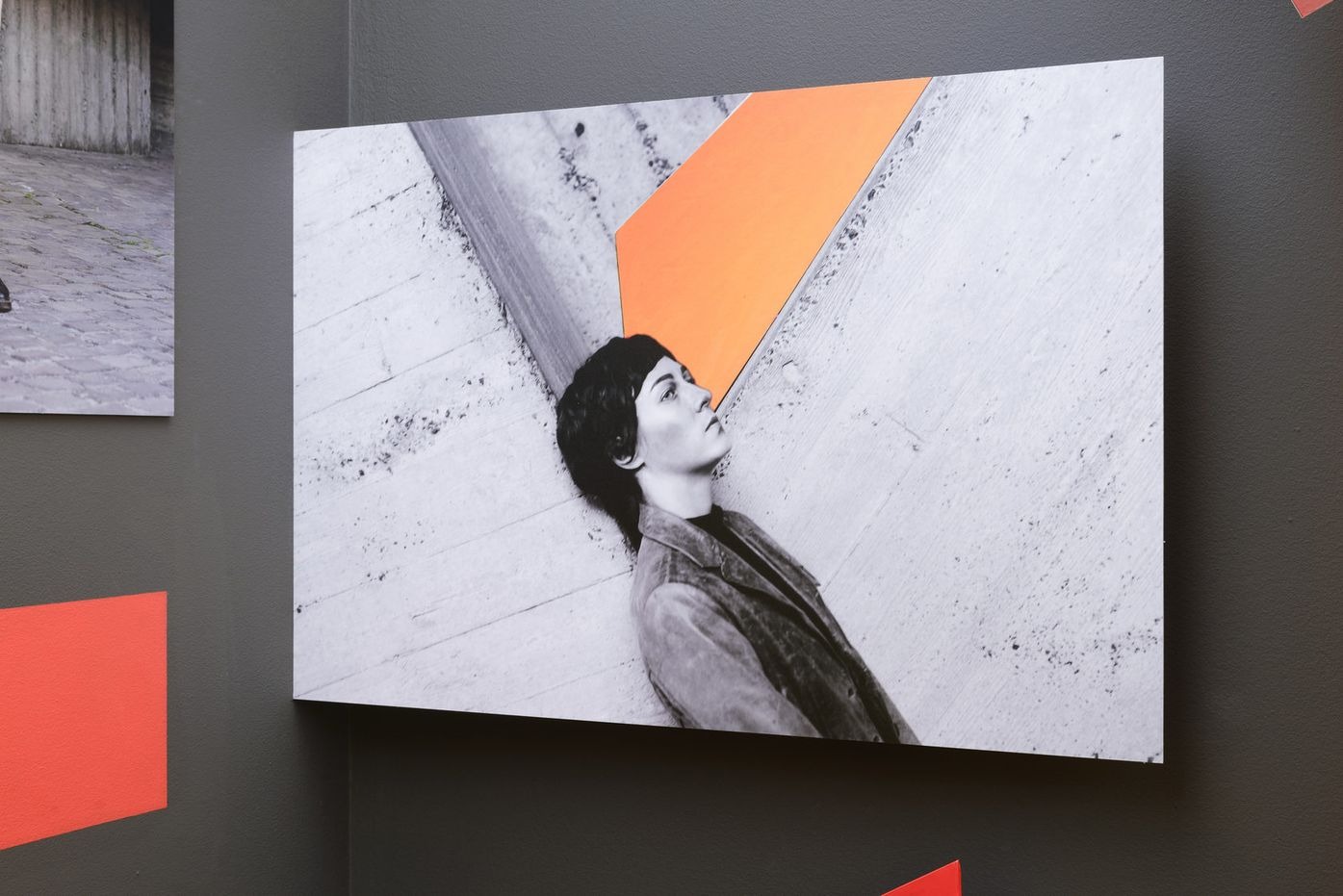
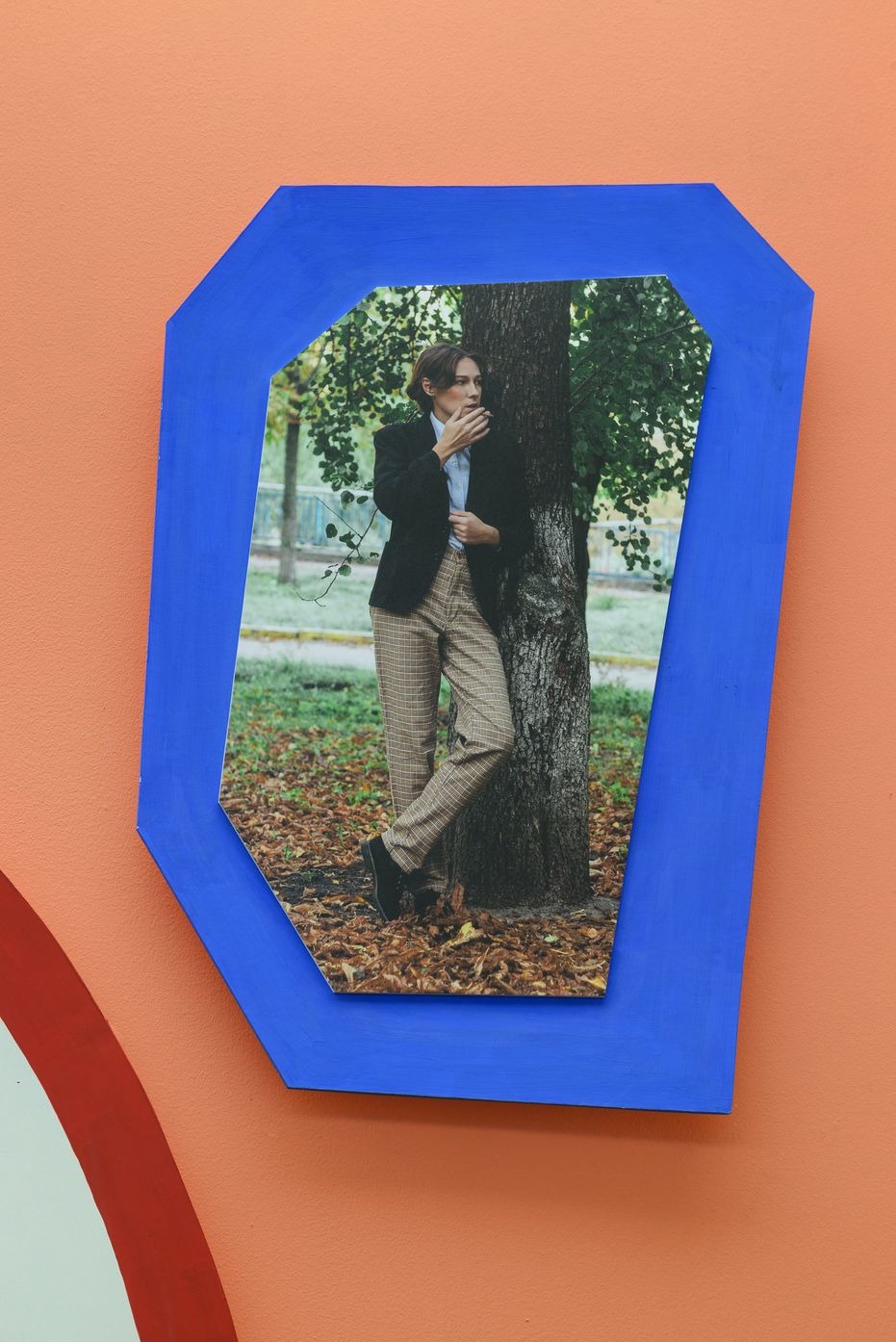
In her new work, Kateryna Yermolaieva reflects on art and culture of the 1960s–1970s through fashion, when external representation and behavioral models became one of the ways of self-expression and asserting individuality. The artist colors the space in the colors of fabrics popular in the USSR during destalinization and the emergence of the first Houses of Fashion.
In her characteristic manner of transformation and development of characters, Yermolaieva takes on the role of a woman from the 1960s–1970s. Borrowing elements from works by Alla Horska, Yelyzaveta Kremnytska, Margit Selska, and Lyudmyla Yastreb, she creates something like a spatial collage through which she embodies a generalized image of uncompromisingness and independence.
Vlada Ralko
From the series “Ghost of Freedom”, 2018
canvas, oil
Provided by the artist
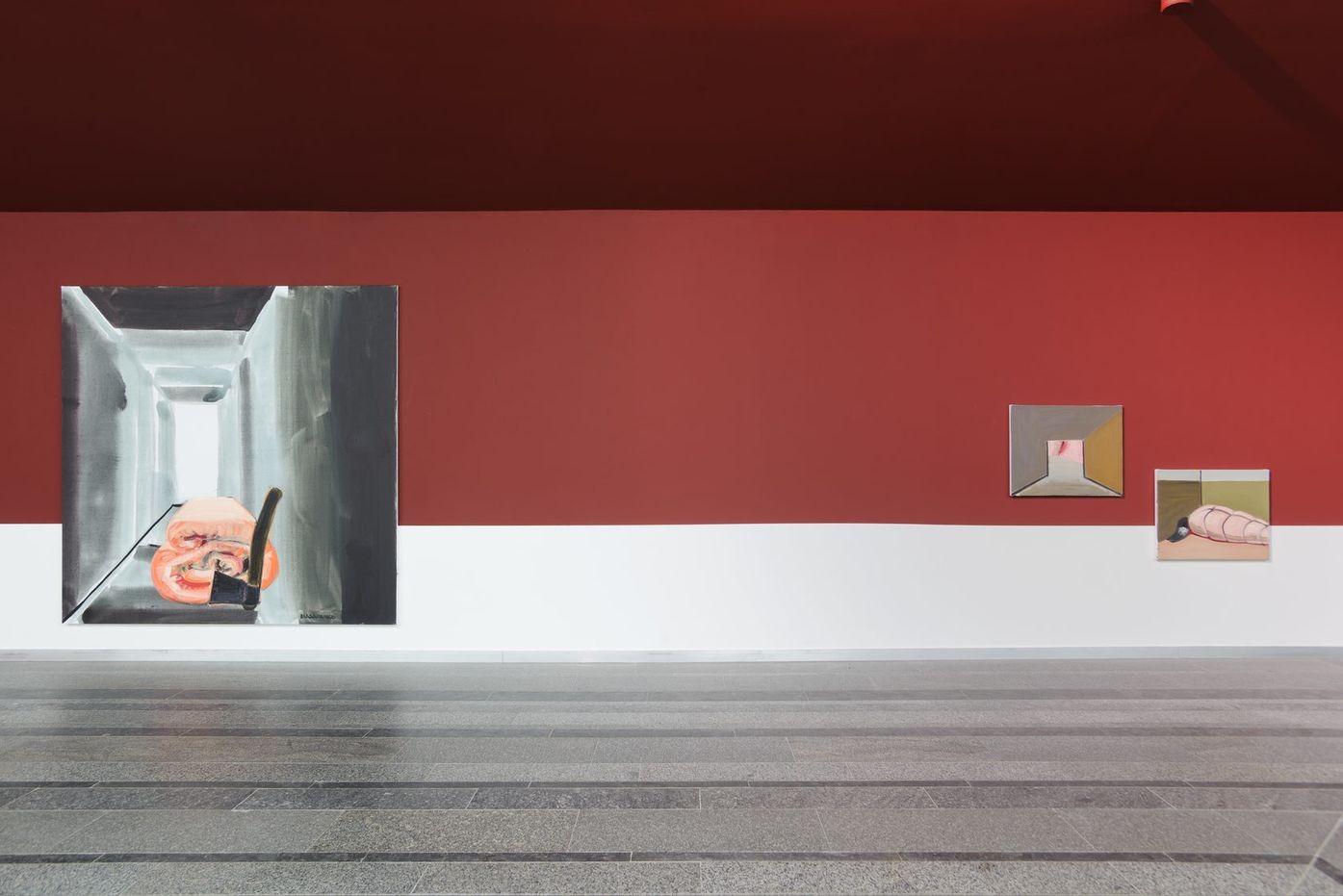
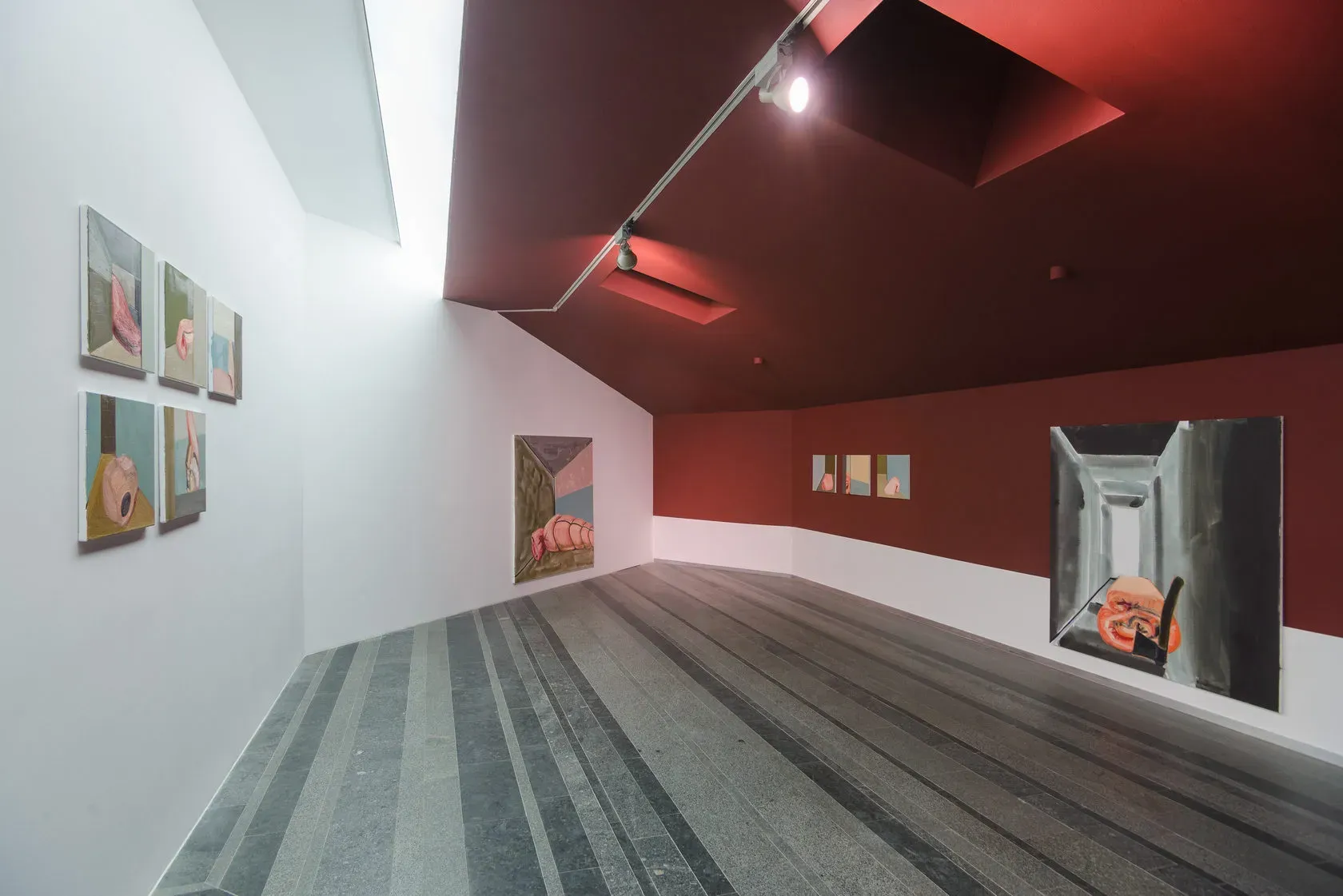
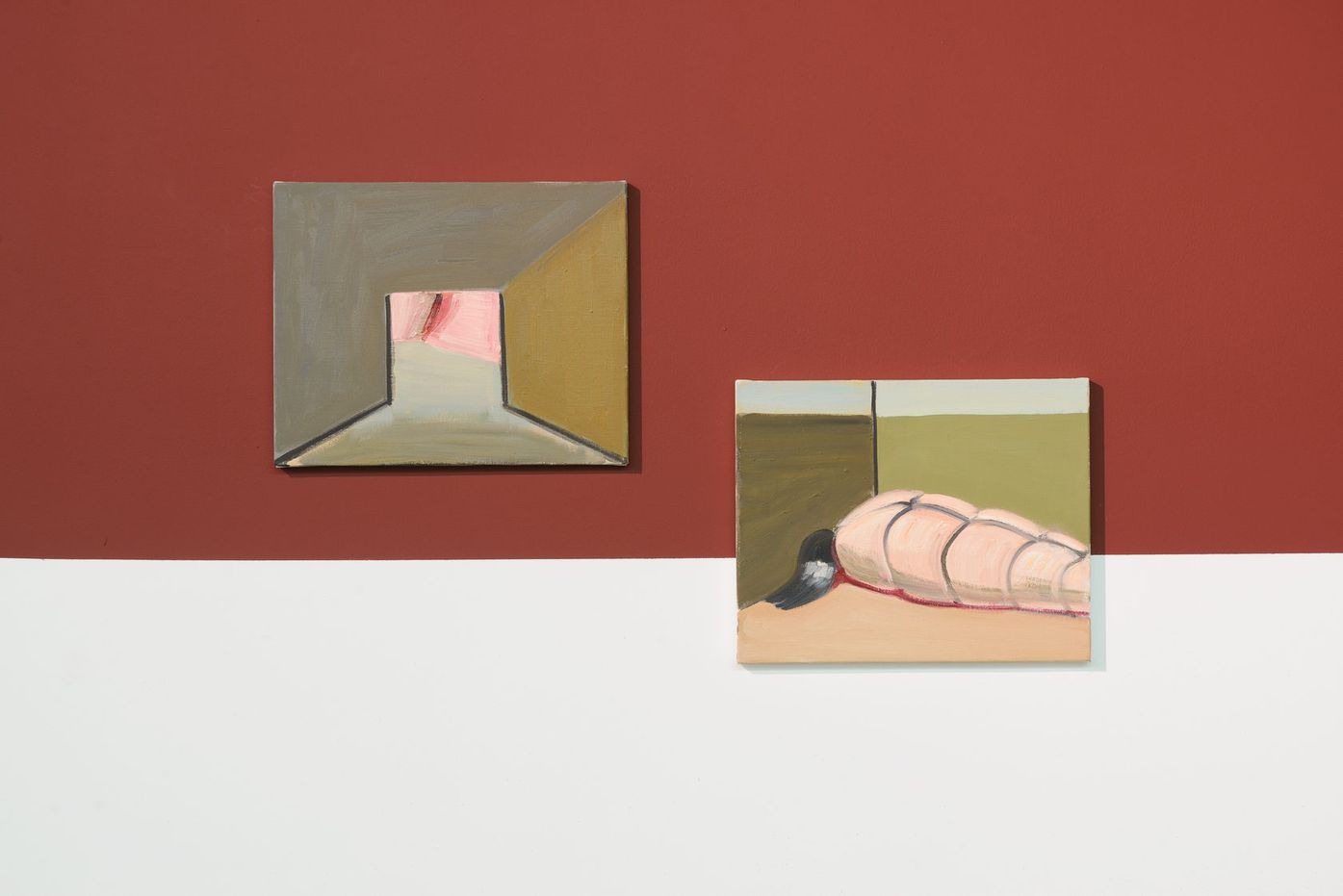
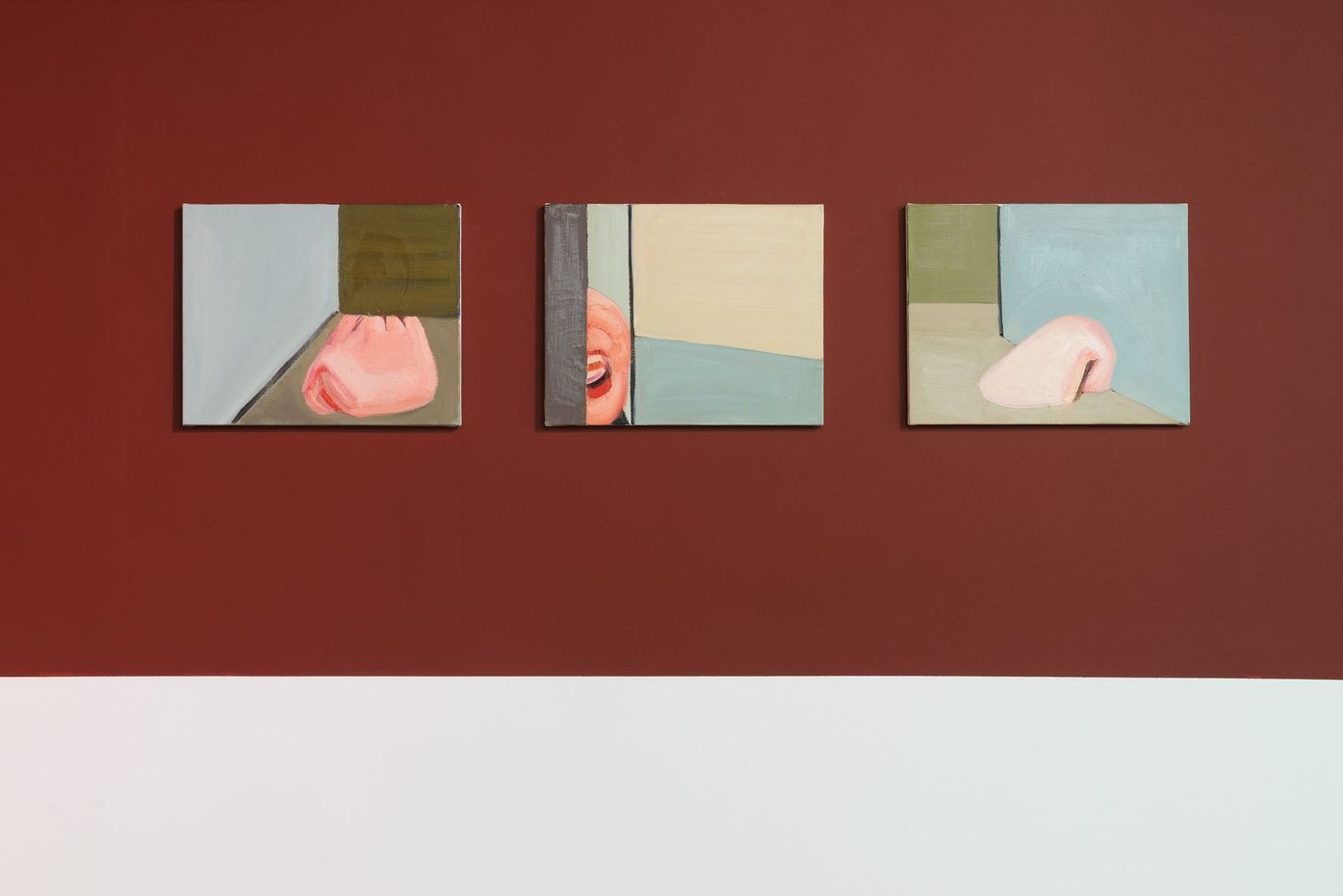
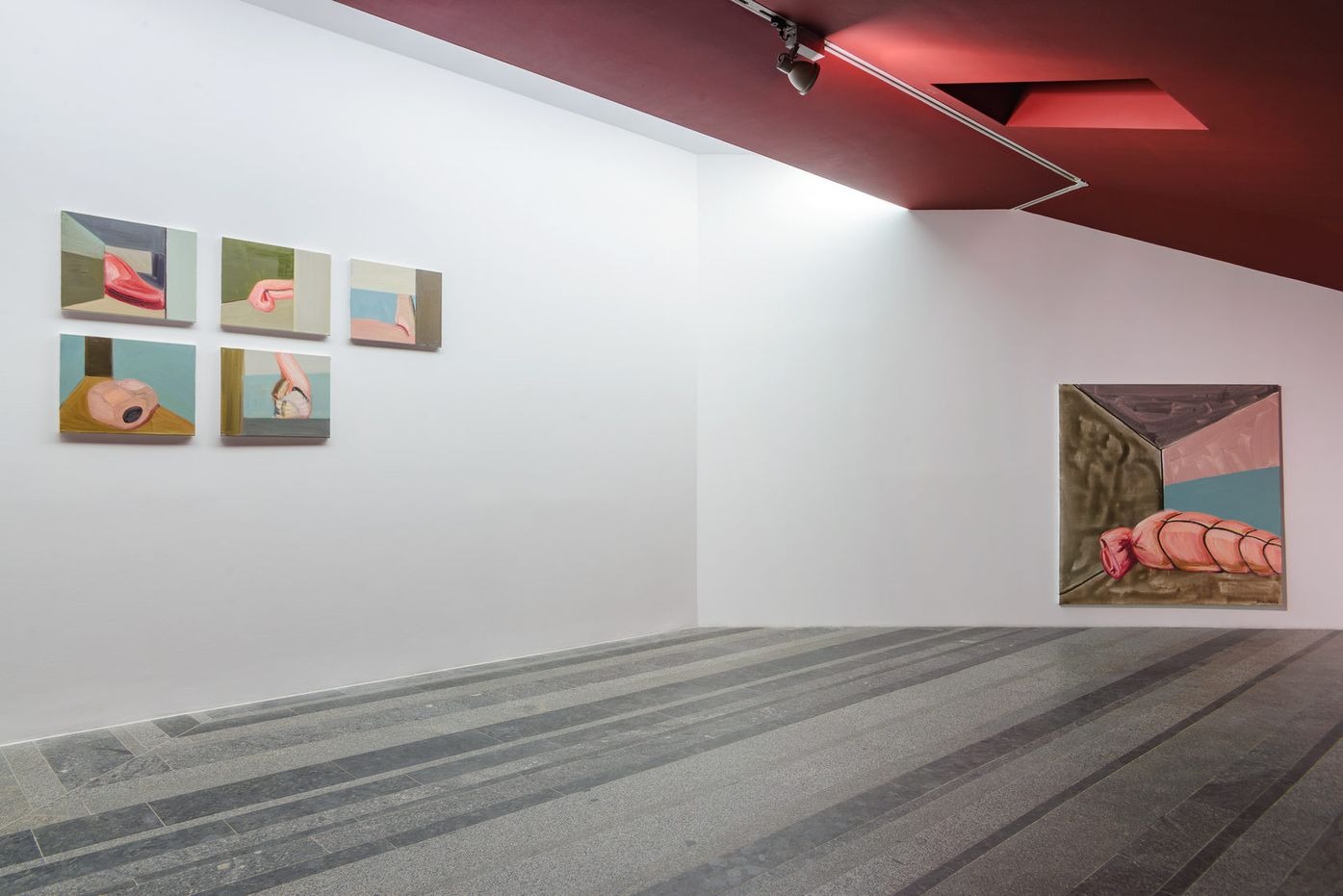
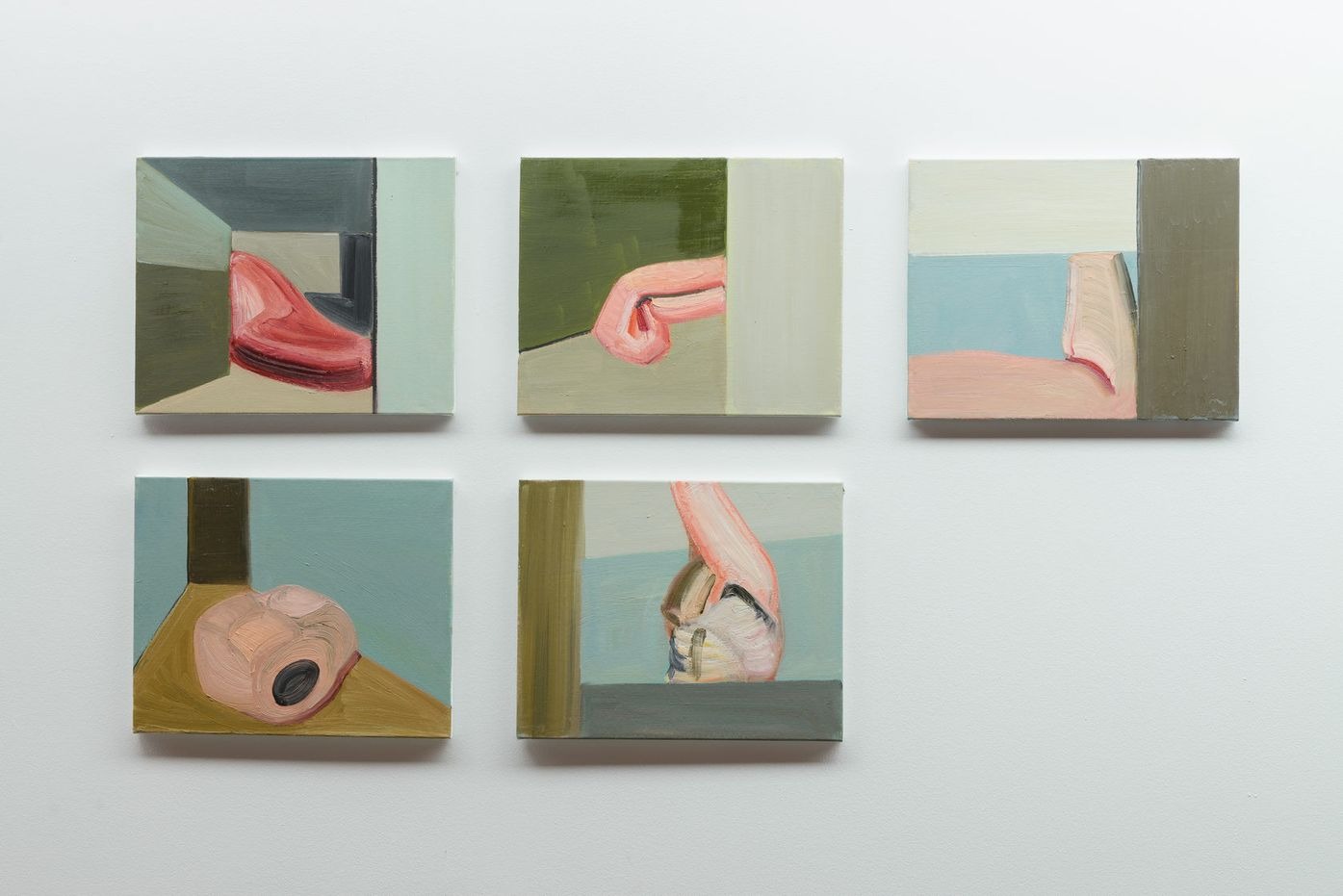
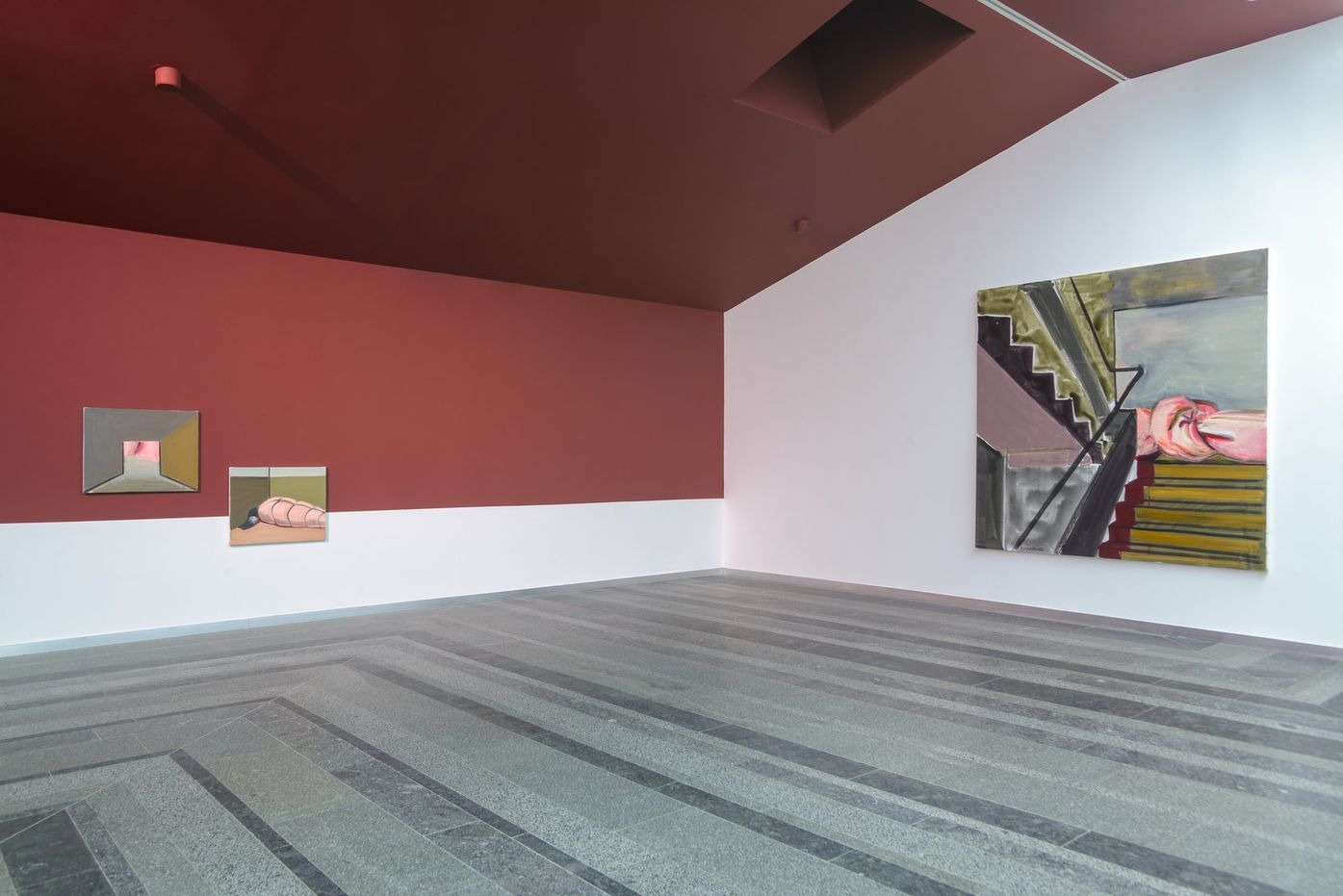
The hall presents a new series of works by Vlada Ralko titled “Ghost of Freedom.” In it, the artist depicts interiors of empty preserved buildings of an abandoned Kaniv tourist base, where she created this series. Ralko populates her canvases with anthropomorphic figures. The repressive space engulfs them, strangely transforming their bodies. In her practice, Ralko often raises the issue of regulating the human through submission to any systems. In this series, she interprets this “regulation” through the features and status of the feminine: “I can no longer deny that I considered the theme through the features and status of the feminine, which I, however, did not isolate separately but rather noted as an important marker of the human condition in general. The feminine, namely its special corporeality, imposed objectification, subordination, and immanence by society seem to me sometimes accurate metaphors for the marginal position of the human when it dares to ‘accept the system’s proposals’,” the artist admits in her text for the series.
Alina Kopytsia
Dollhouse, 2016
textile collage
Provided by the artist
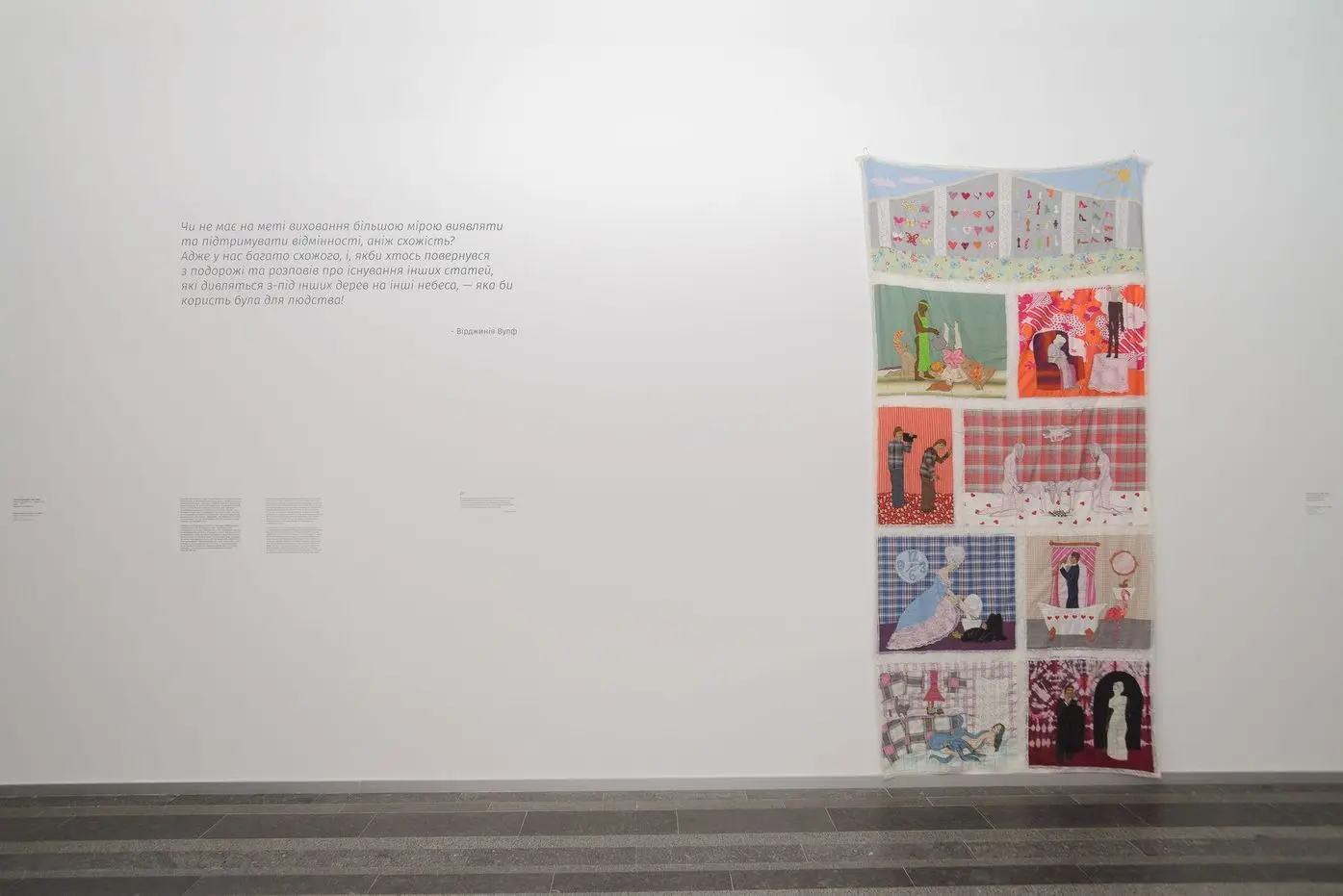
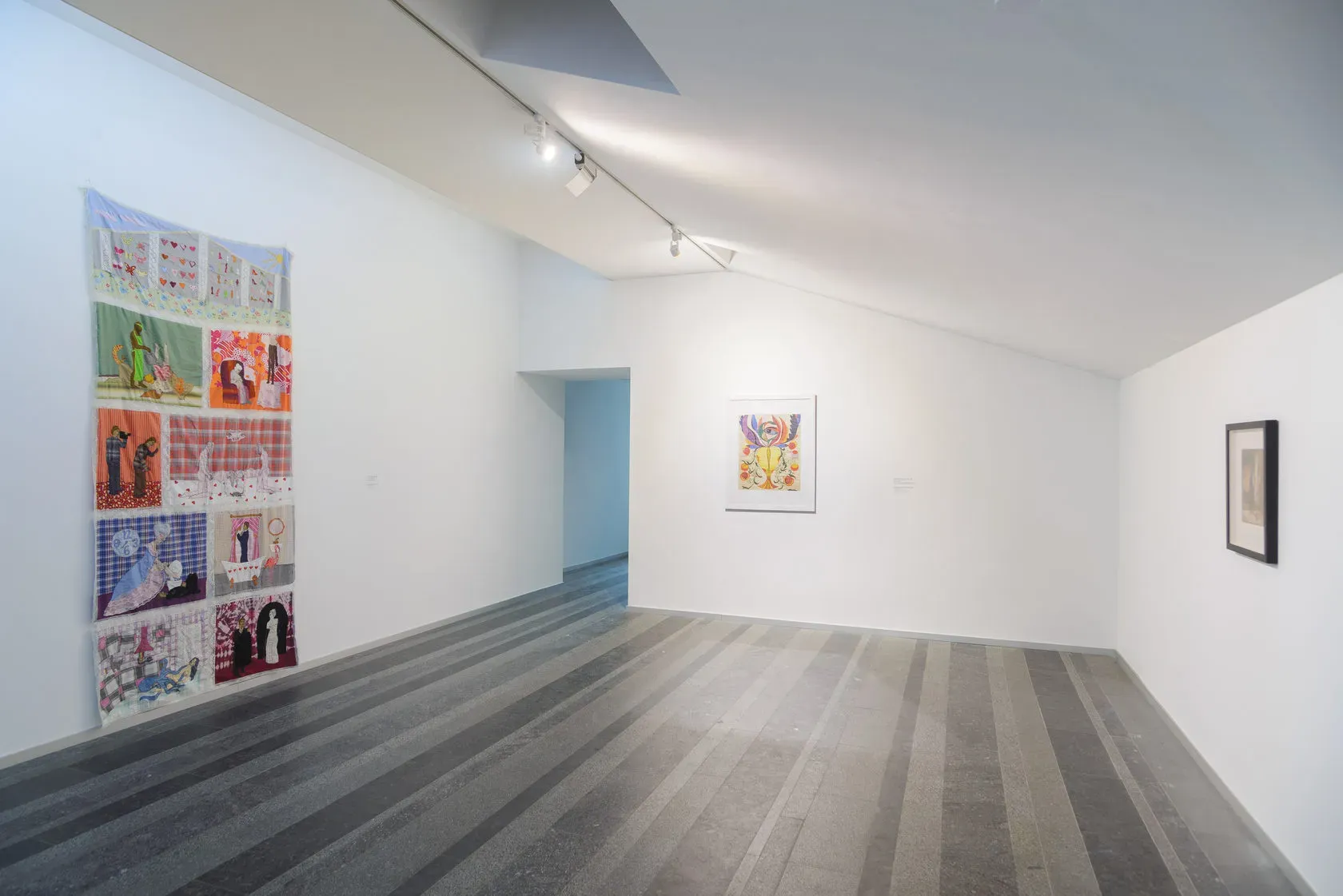
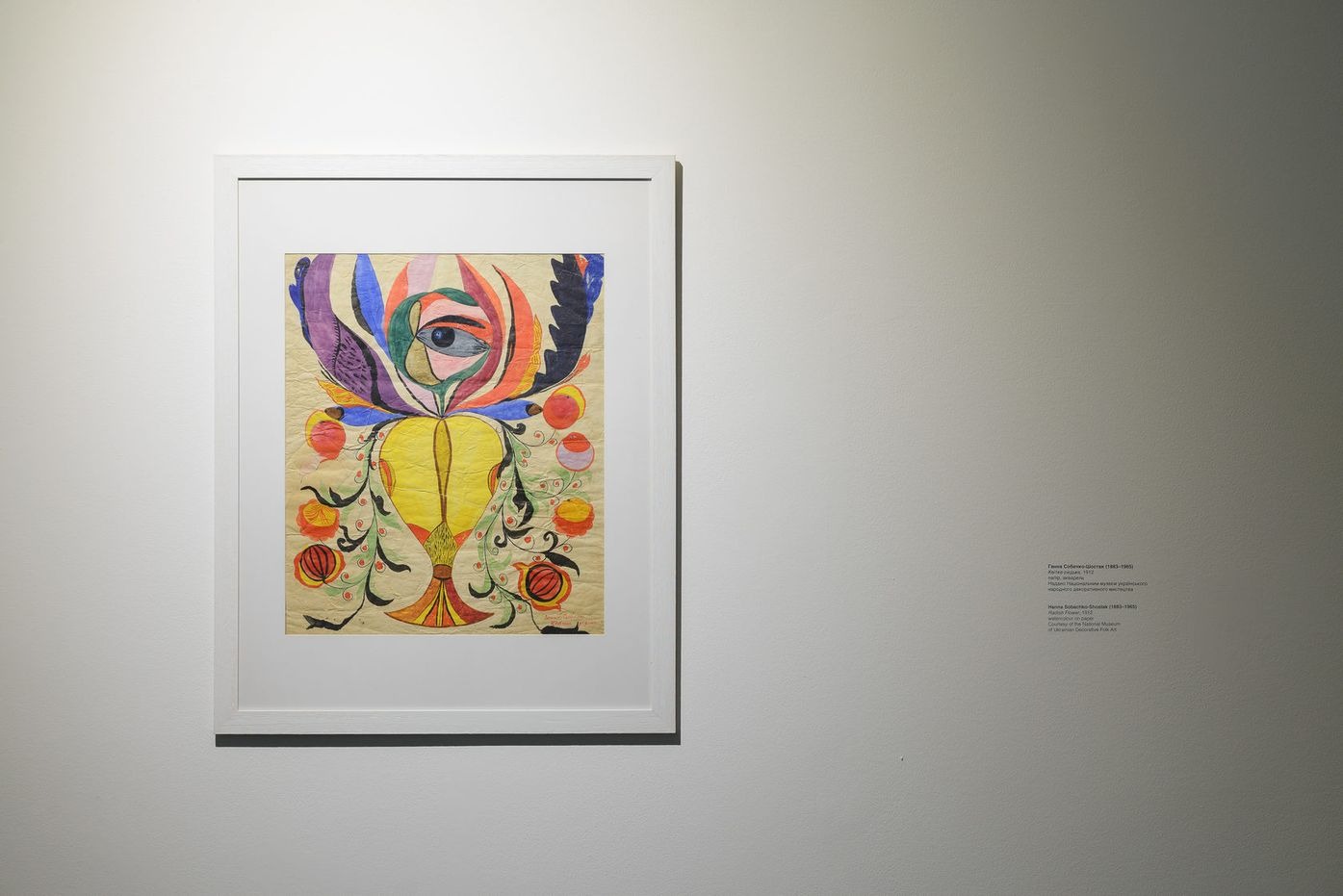
Hanna Sobachko-Shostak
Flower-Radish, 1912
paper, watercolor
Provided by the National Museum of Ukrainian Folk Decorative Art
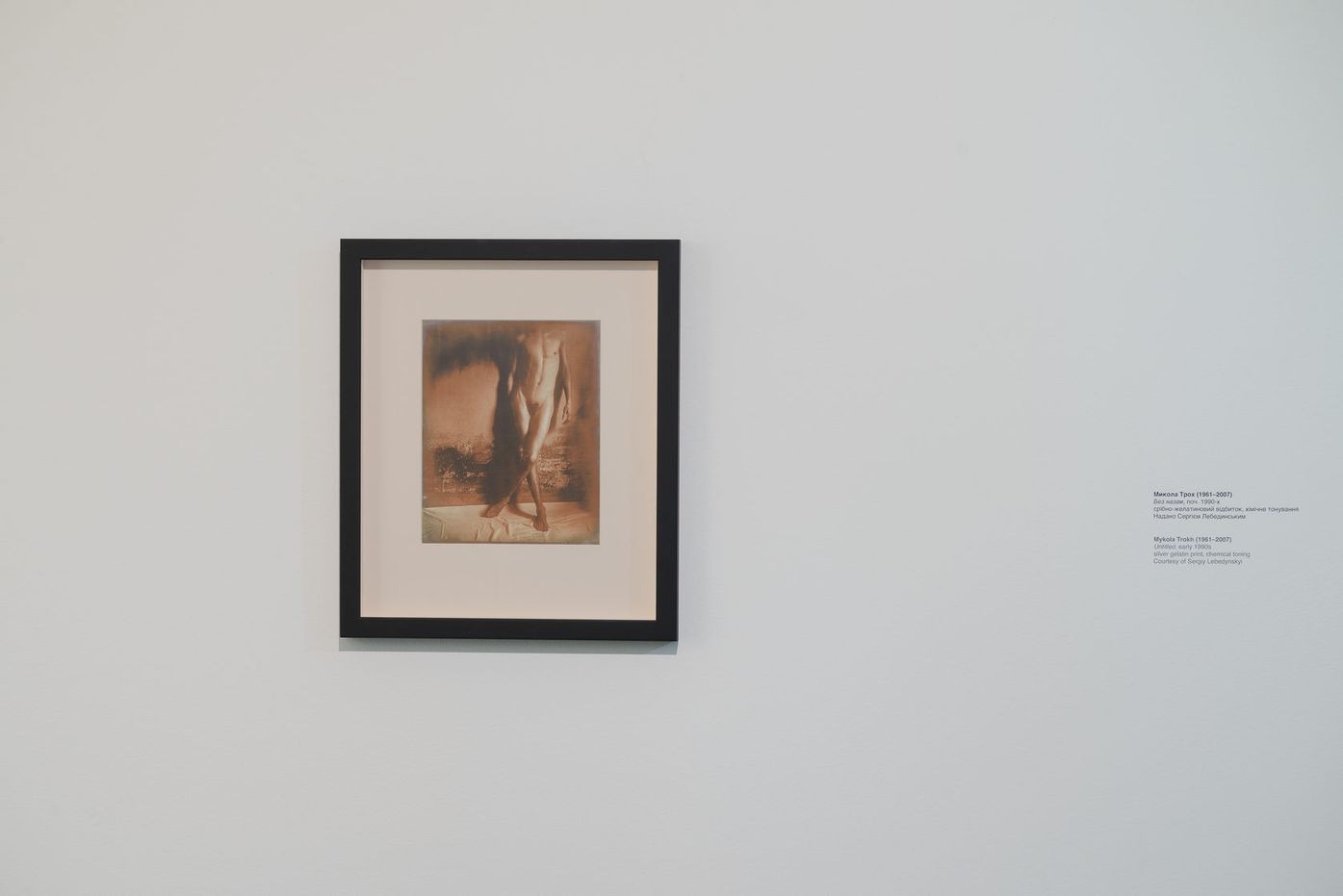
Mykola Trokh
Untitled, early 1990s
silver gelatin print, chemical toning
Provided by Serhiy Lebedynskyi
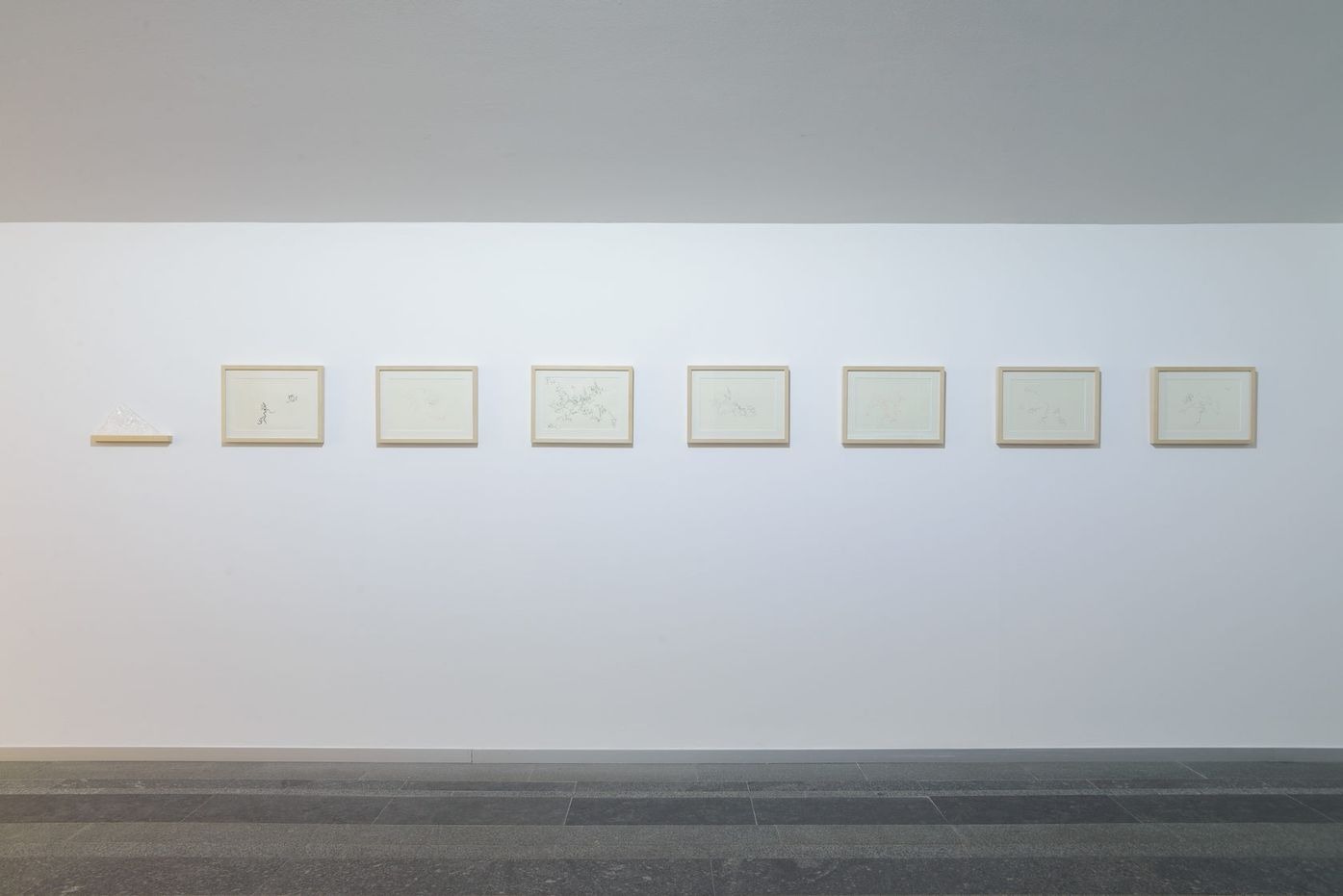
Anna Zvyahintseva
Ruler, 2018
reworked ruler, drawings created using the ruler
Provided by the artist
Oksana Kazmina
Secret. Girl and Boy, 2017
video, 13′ 6”
Provided by the artist
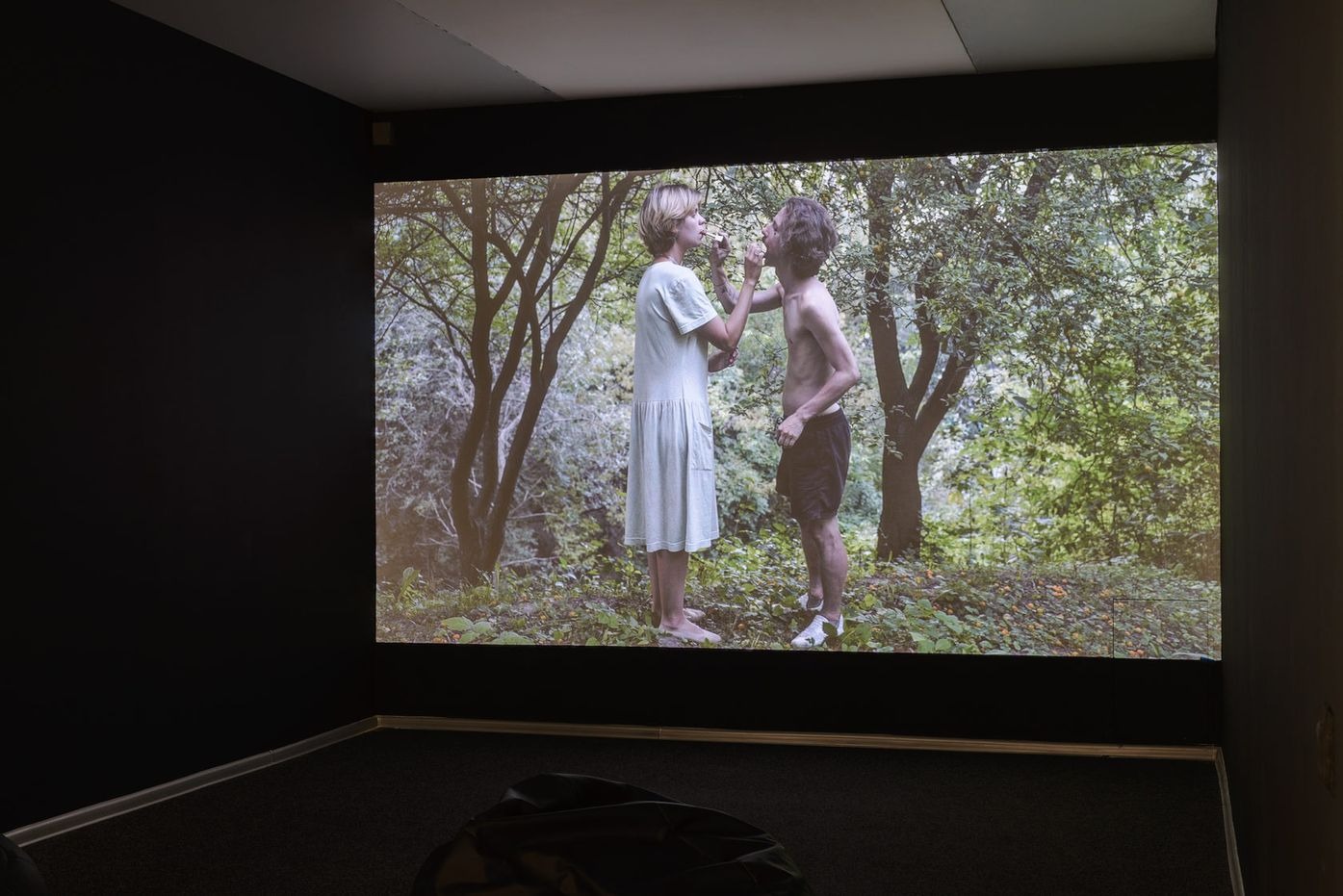
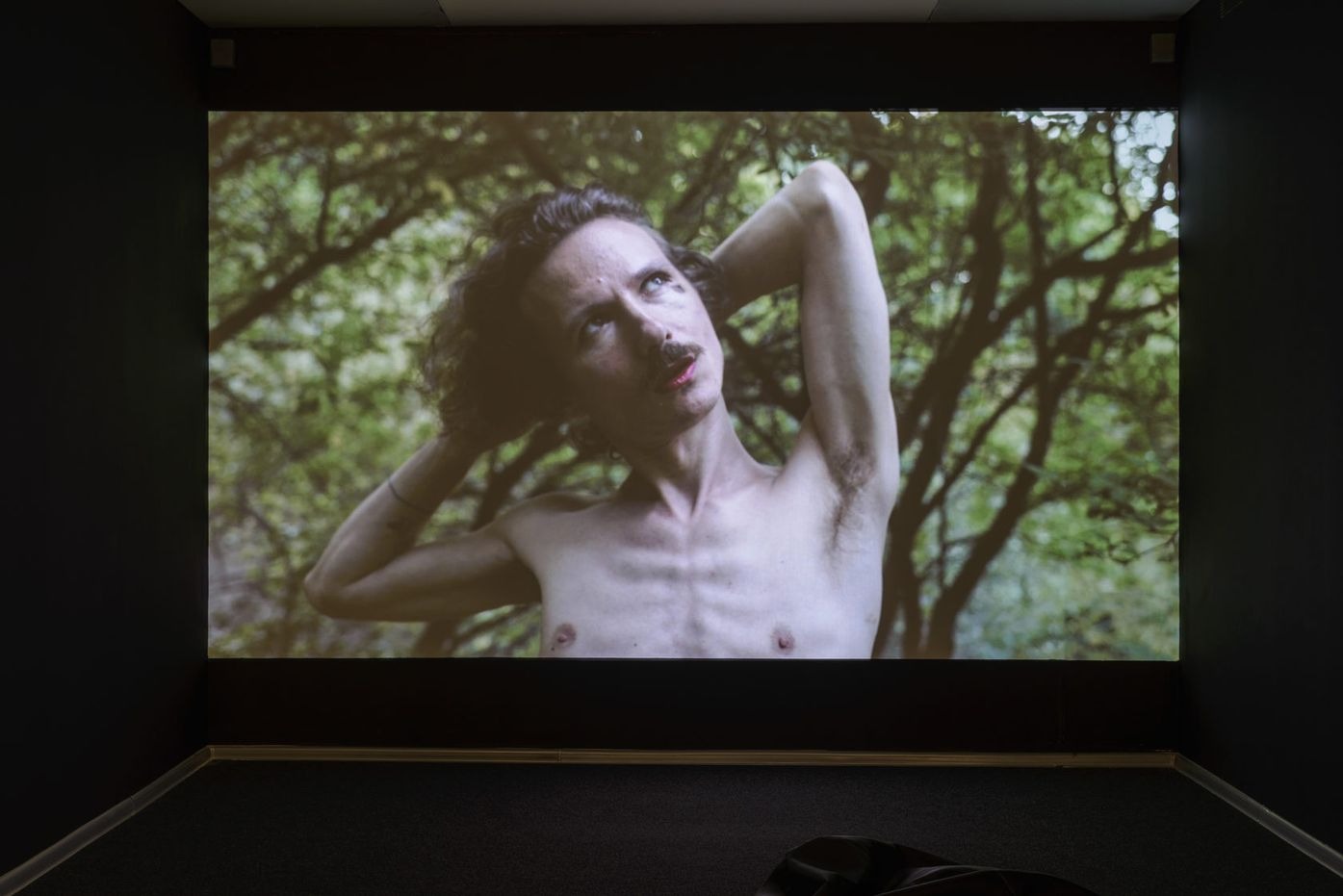
The key work in the hall is Oksana Kazmina’s video, in which the artist creates something like a paradise garden, wild, pristine, where its characters live — the Girl and the Boy. Playing and trying on different roles, like children who try to imitate adults, they intuitively and sensually explore the world and experience sexuality for the first time. Rhymes from children’s folklore recited by the characters, children’s “secrets” buried in the ground, appear as some of the first social constructs through which growing up and self-discovery occur. The “natural,” which conflicts with the “social,” here appears as a sphere of the sensual, the bodily, a sphere of freedom and non-involvement.
All the works in the hall are permeated with sensuality, freedom, uncertainty, and unpredictability. Free from clichés and stereotypes, they test the social and natural boundaries of gender. They are united by the theme of play: from the unconsciously erotic, intuitive in Hanna Sobachko-Shostak, metaphorical in Anna Zvyahintseva, to the openly sexual in Alina Kopytsia and the bodily in Mykola Trokh. Trokh’s photograph depicts a man hiding his genitals, emphasizing the androgyny of human nature. “The androgynous mind is one that responds to everything, absorbs everything, freely expresses its feelings,” wrote Virginia Woolf. The dialogue of the exhibited works reveals the idea of a “bodily” space — a nearly solitary uninvolved space of freedom and choice.
Vernissage