
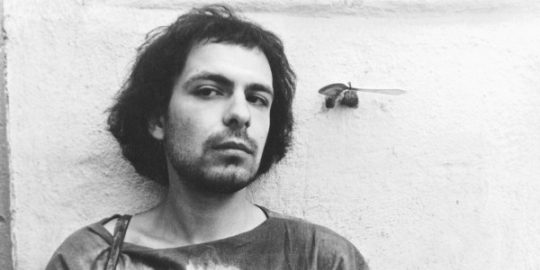
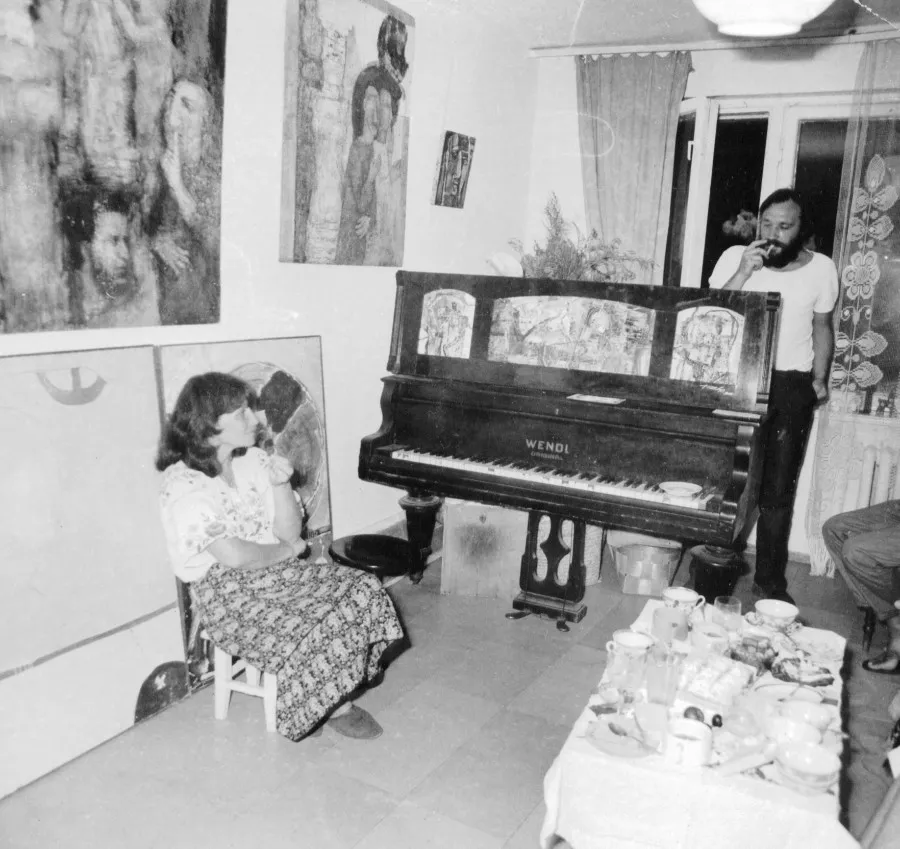
KORYDOR, together with the Research Platform of PinchukArtCentre, continues to publish texts somehow related to the history and artistic environment of the squat on Parizka Koomuna Street in Kyiv. This topic was the focus of the exhibition “Parkomuna. Place. Community. Phenomenon,” which ran at PinchukArtCentre from October 20, 2016, to January 15, 2017. The exhibition became the most important event in the activities of the Research Platform in 2016, and knowledge about this phenomenon and information about it are growing like a rhizome.
“Parizka Koomuna” is a local Kyiv phenomenon, but at the same time, part of the Odesa artistic scene also joined Parkomuna. Artists often traveled with their exhibitions to the West and to Moscow. The exhibition “Parkomuna. Place. Community. Phenomenon” began with Sergey Anufriev’s text “Kyiv as a Cultural Model” and ended with a mention of his joint exhibition with Oleksandr Hnylytsky “According to Plan,” in which the authors tried to comprehend two traditions: the pictorial Kyiv tradition and the verbal-discursive Moscow tradition.
The Research Platform invited Sergey Anufriev to talk about that time and the mutual influences of Kyiv, Odesa, and Moscow artistic traditions. The result was this story — “Kobzar Under the Pillow,” in which a “brief history of contemporary Ukrainian art” emerges through the prism of the unique personality of Sergey Anufriev himself.
The text is published according to the original within the framework of the Research Platform project of PinchukArtCentre.
The editorial board of KORYDOR does not share the views of the author.
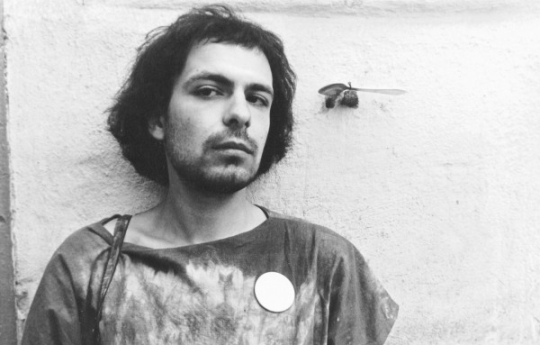
On my father’s side, I am a native Muscovite. My ancestors, Italian masons, built the Moscow Kremlin. It has stood for over five centuries because, according to legend, during the laying of the Taynitskaya Tower, a human sacrifice was made: usually, a chaste girl was bricked alive into the foundation.
Descendants of these famous builders still live in the German Quarter, on Basmannaya Street. My father Alexander grew up there. He studied at the Lavrushinsky Art School and at seventeen witnessed the 1957 Moscow Festival, which overturned his artistic worldview. Already a formed avant-gardist, he came to Odesa and entered the Odesa Art Institute, where he gathered youth around the banners of modernism. And most importantly — he met my mother.
My mother, originally from the Urals, came from an artistic family. She became my father’s muse and inspired the entire community of young Odesa nonconformists. At the same time, my parents maintained friendly relations with the Moscow and St. Petersburg alternative artistic circles.
Even before meeting my father, from the age of sixteen, my mother hung out with Odesa hipsters and danced rock and roll in the city garden with American sailors. For this, society condemned her: an article appeared in the newspaper “Komsomolskaya Pravda” aimed against bourgeois influence on Soviet youth.
At seventeen, my mother met a Czech man and married him. Moving to Prague, she quickly learned Czech and got a job as an announcer on Prague television, impressing viewers with her unusual beauty.
Returning to the USSR, she went to Moscow, where she easily joined the circle of advanced youth. She befriended jazzman Lyosha Kozlov, writer Vasily Aksyonov, dissidents Ginzburg and Amlinsky. She even had a brief romance with director Andrei Tarkovsky, so I had a chance to become his son.
My mother was preparing to enter the Moscow Polygraphic Institute. Everything was practically decided, but during a short visit to Odesa, she met my father, and mutual passion flared between them. When my mother was boarding the Moscow train, my father came to see her off. As soon as the train started moving, my mother jumped off the step, once again changing the trajectory of her life. Later, this trajectory changed many more times.
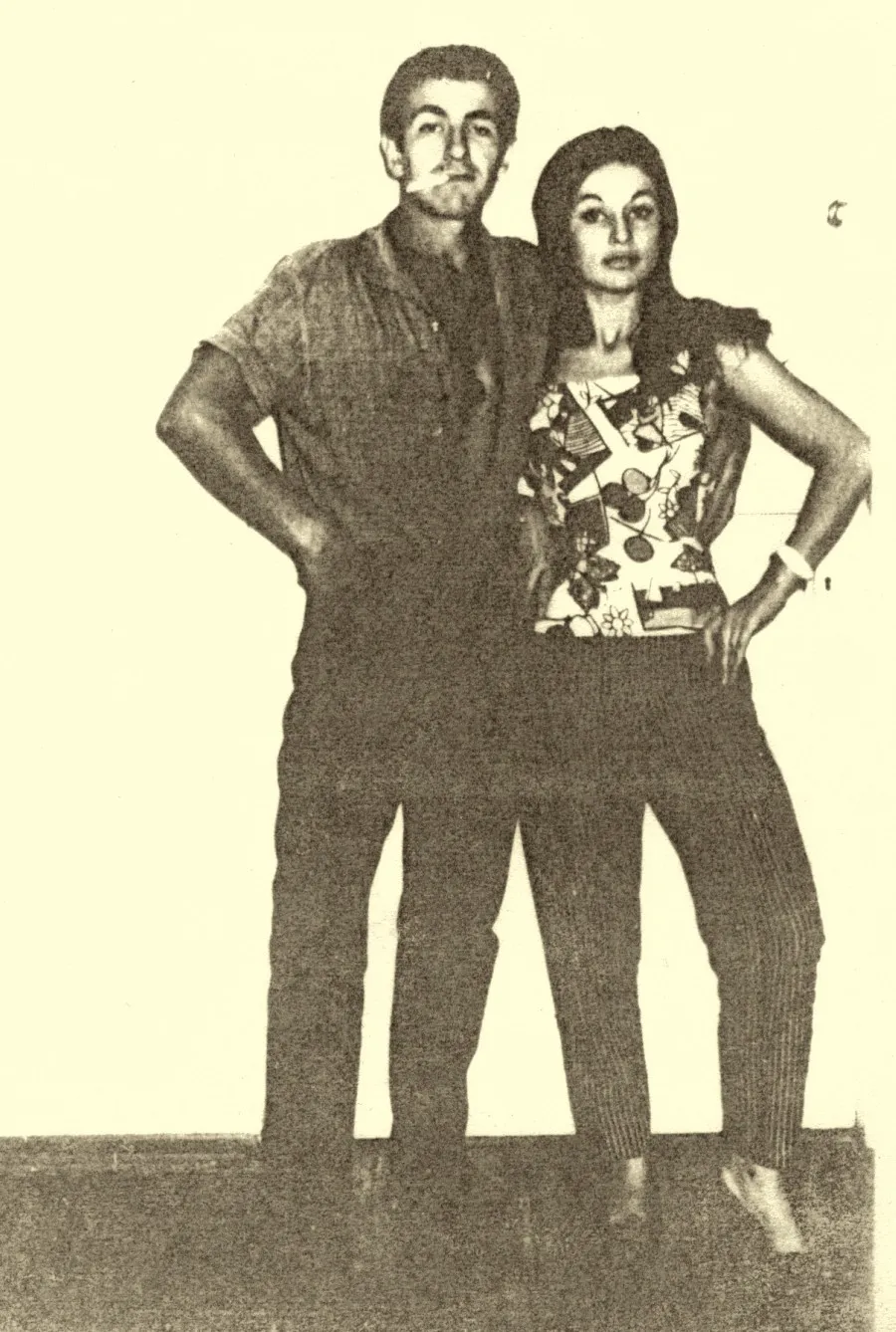
I was born in a maternity hospital near the sea and spent the first year of my life in a communal apartment room where life was bustling around the clock: smoke rose in columns, everyone painted and wrote poems together, argued hoarsely, walked in the rain, listened to jazz and rock recorded on “bones” — X-ray films. All this was part of the romance of those unusual years, so strikingly different from the rest of the Soviet era.
It was the only short period of Soviet life when everything was good. People met right on the street, doors had no locks, long tables stood in the yards where everyone ate together, and in the evenings they sang by the guitar and staged amateur performances.
But the screws gradually tightened, and my father, branded as a dissident, was not allowed to earn money. In 1965 we moved to Tashkent: my father hoped to study with avant-gardists who had settled there since the 1930s. However, the 1966 Tashkent earthquake destroyed these plans.
Before our eyes, our house fell into hell. After living a little in the Urals with my grandfather Georgy, an artist, we returned to Odesa, to my grandmother, in a communal apartment room on Frantsa Meringa Street. The family needed to be fed, there was no work, and out of despair, my father began to drink and soon left us.
Later, my mother met a young philosophy associate professor Yevhen Zharkov. He became my stepfather and gave me a classical education. He taught me English (he himself was a translator and translated Arnold Toynbee in ten years), ancient Greek and Latin, logic, chess, history, and philosophy — in short, everything that was not taught at school.
Our circle of nonconformist acquaintances was joined by Soviet philosophers — Levada, Pyatigorsky, Zinoviev, Mamardashvili. They came to us in Odesa and joined the specific practices of Odesa philosophers led by Avenir Uyomov.
These were city walks with mandatory stops at all the basements where local and Moldovan wine was poured for kopecks. Drinking promoted philosophical discussions, which often ended in fights with regulars of wine taverns. Besides philosophers, artists came to us — Yakovlev, Nemukhin, Plavinsky.
Joseph Brodsky was a close friend of our family. He lived with us when filming at the Odesa Film Studio and tenderly courted my mother. Walking with her on the beaches, he talked about ancient homosexuality, read Sappho and Catullus, and my mother gasped, pretending not to understand what lay behind these outpourings of intellect and soul.
Our friends also included the Isupov family from Kyiv, with whom I am still friends.
We traveled to Yerevan, to Igitian, who opened the Museum of Contemporary Art there back in 1970. From Sverdlovsk came the Ural avant-gardist Zhenya Malakhin, who lived in Odesa for a long time. He was the author of conceptual alphabets and the founder of the “noble movement”: he worked as a janitor and arranged his friends for this job.
In general, the alternative culture of the USSR was the only environment where everyone knew each other.
After graduating from the Pedagogical Institute in Odesa, my mother began teaching at the Architectural Institute and often traveled for internships to MARCHI, spending half a year in Moscow. There she met the circle of conceptualists — Kabakov, Pivovarov, Infante, the groups “Collective Actions” and “Nest,” as well as followers of Komar and Melamid.
In 1979, when I was fifteen, my mother brought from Moscow the first issue of the magazine “A-YA.” By that time, I was already fascinated by conceptual art, although I knew about it mostly from Western magazines, books, and catalogs that reached Odesa. The magazine “A-YA” was a real revelation for me, and I immediately went to Moscow to personally meet the masters of the Moscow conceptual school.
Thanks to my mother, this was very easy. I was a wunderkind and intellectual, enchanted everyone, and became “one of their own” in the conceptualist circle, like a “son of the regiment.”
At first, I lived in Volodya Naumets’s studio on Solyanka. He introduced me to many artists and musicians. Then I lived with Lyonya Talochkina, Yura Albert, Mykyta Alekseyev, who opened the first Soviet gallery “Apt-Art” in his one-room apartment.
I became a participant in apt-art exhibitions, and in the fourth issue of “A-YA,” my name already shone as a promising young conceptualist. When in 1983 Norton Dodge, an American collector of Russian contemporary art, organized in New York together with the Tupitsins the exhibition “Come Tomorrow — Be First,” I participated with works using the Ukrainian language.
Strangely, these conceptual series in Ukrainian, which made up my first solo exhibition at “Apt-Art,” are the only examples of Ukrainian conceptualism. No Ukrainian artist after me has worked with their native language.
Studying at an English-Ukrainian specialized school where all textbooks were in Ukrainian, I mastered this language perfectly and memorized Shevchenko’s “Kobzar,” placing it under my pillow before sleep.
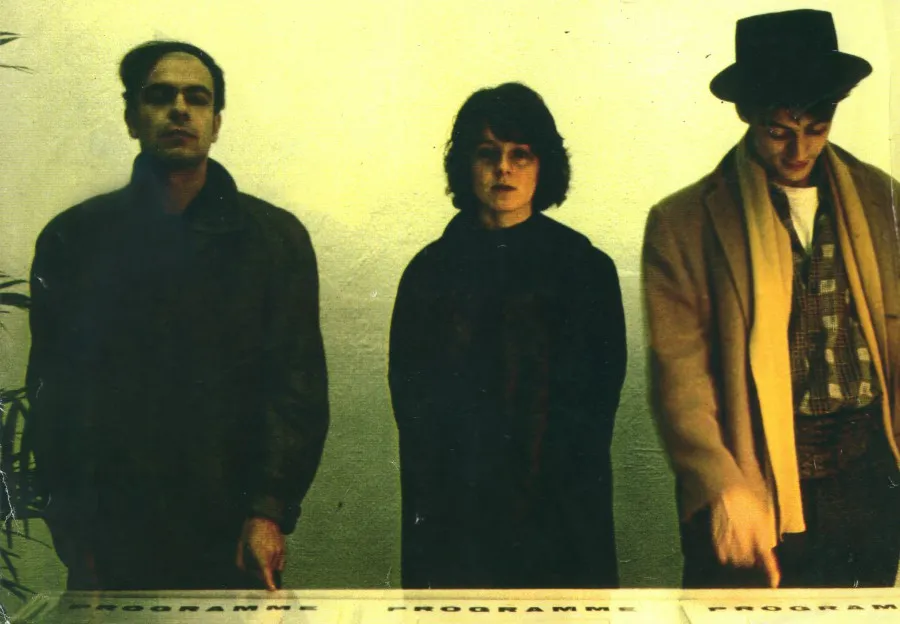
South Russian cul
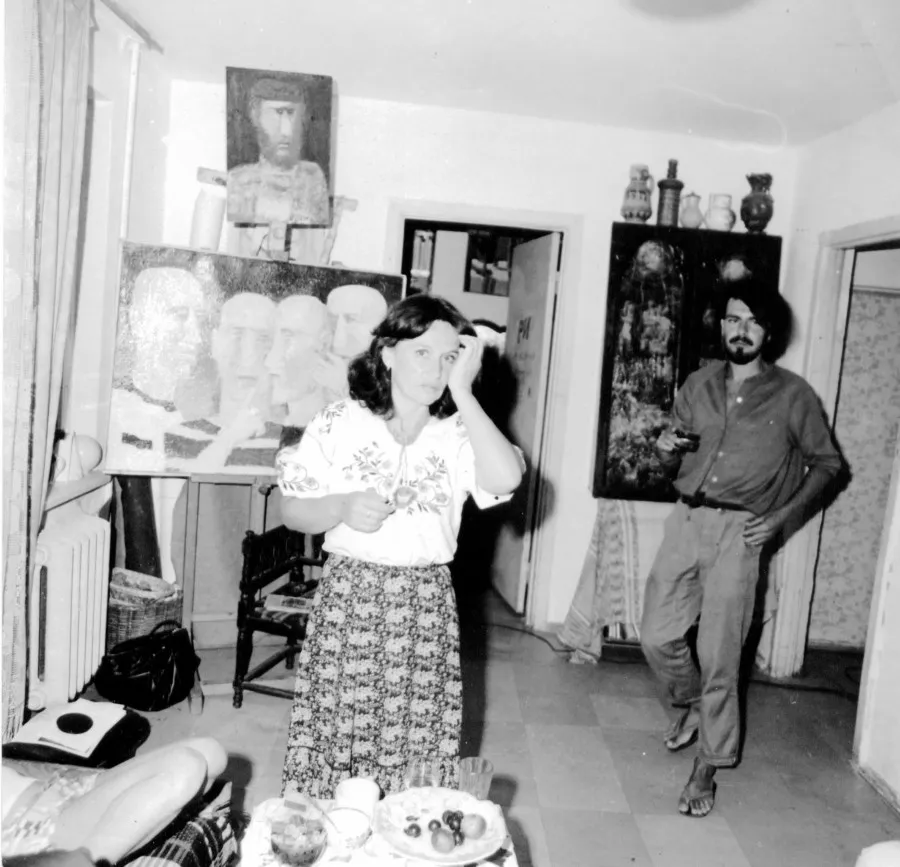
From time to time returning home to Odesa, I told my young friends about what was happening in Moscow art. Since our apartment had a salon and gallery where exhibitions were regularly held, I showed them some works by Moscow conceptualists.
Muscovites came to us in summer and got acquainted with Odesa youth. Such artists as Lyonya Voitsekhov or Lyosha Kotsievsky with Volodya Fedorov were already independently engaged in conceptualism. Under my influence, conceptual works began to be created by Yura Leiderman and Igor Chatskin, Andriy Marinyuk and Dima Nuzhin, Oleg Petrenko and Mila Skripkina, who formed the group “Perci,” Larisa Rezun, Lyosha Muzychenko, Sveta Martynchik, and Gosha Styopin. The latter, together with Dick Burgazli, Volodya Yeromenko, and Vitya Ratushny, founded the group “Babylon.”
The emergence of a whole movement prompted Mykyta Alekseyev to organize an exhibition of Odesa artists at “Apt-Art,” which was successful. Muscovites felt that from now on they were no longer alone in the cold Soviet space.
In Leningrad, Timur Novikov, together with Ivan Sotnikov, invented “zero art,” but it turned out to be a dead end due to its own nullity. Later, Timur captivated all his friends with fashionable American street art trends. The simplicity and accessibility of Ghering and Basquiat’s art, unburdened by intellectualism, appealed much more to the fashionable Leningrad youth than incomprehensible conceptualism.
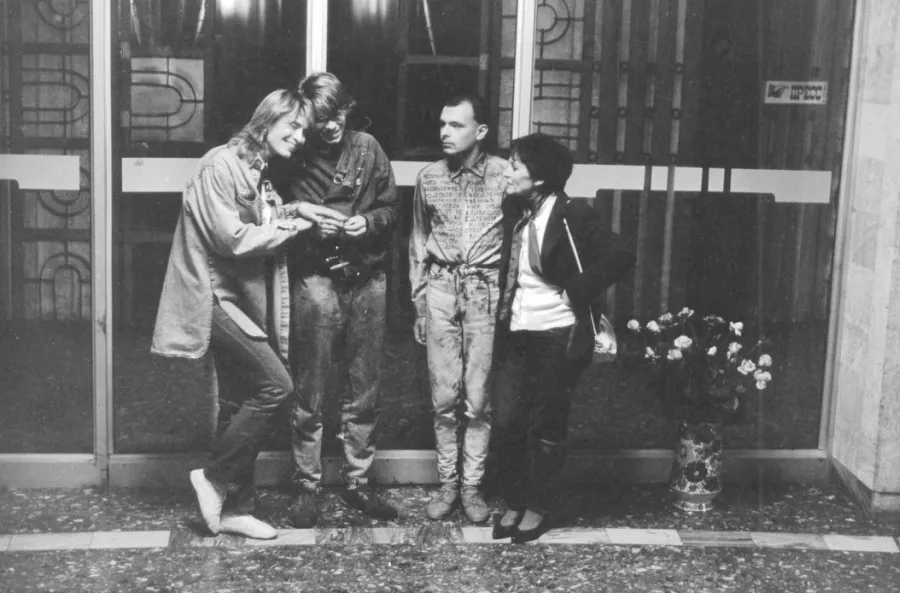
However, I was friends with Leningraders I met at “Apt-Art,” especially with Sergey Bugaev-Africa. Walking around Leningrad, we searched for abandoned empty apartments and found one on Fontanka, where Africa still lives.
I also communicated with Viktor Tsoi and the entire group “Kino” — Yuri Guryanov, Yuri Kasparyan. I am still friends with them, occasionally crossing paths between Odesa and St. Petersburg.
I was friends with the “Mitki” as well, but most of all with Sergey Kuryokhin. We were united by intellectualism and love of wisdom, philosophical discourse filtered through the prism of psychedelic consciousness inherent to both of us from the very beginning.
In many ways, I was Peter’s agent in Moscow: through me, psychedelic culture, freakdom, fashionable music — acid house, techno, and rave, club culture, stylish image, and other St. Petersburg trends that came to Peter from the incomparably closer West — spread in the capital.
Thanks to the use of the Ukrainian language, I can be considered the first Ukrainian conceptualist. At that time, there was no contemporary art or nonconformism in Kyiv at all.
Only with the beginning of perestroika, in 1985, Vasyl Tsagolov and Sashko Solovyov initiated the postmodernist discourse of Oliva. At the same time, the duo of Arsen Savadov and Yuriy Senchenko created a series of giant canvases that subtly and exquisitely revealed the problematics of expression, using the language of the Unconscious.
Their masterpiece “The Sorrow of Cleopatra” impressed the Moscow audience at the All-Union Youth Exhibition in 1987, after which the concept of “Ukrainian Transavantgarde” appeared.
However, there was no consistent development of contemporary art in Kyiv with changing paradigms, as happened in Moscow and Odesa. “Ukrainian Neobaroque” was invented and built on an empty space, surrounded by socialist realism of the most conservative kind.
Nevertheless, the “seeds of Oliva” gave wonderful shoots and produced geniuses of world scale — Sashko Hnylytsky and Oleg Holosiya, the “Kyiv Rimbaud,” who died at twenty-seven. It gave rise to a whole galaxy of artists: Lera Trubina and Max Mamsikov, Tistol and Reunov, Kavsanu and Eva Gershuni, Illia Chichkan, Yuri Solomka, Sashko Kharchenko, Kira Protsenko.
This tradition was inherited by the younger generation — in particular, Hnylytsky’s daughter Ksenia and Zhanna Kadyrova, who debuted at the famous exhibition “Bibikov Boulevard,” the best exhibition of 2002.
The story is this. In 2001–2002, I lived in Kyiv and initiated the “Bi-Bi” movement, which embodied the idea of contemporary Dadaism. After all, “dada” is a wooden horse, and today children play with gadgets: computers, smartphones, music equipment.
There is no opportunity here to tell in detail about the history of this movement, which ceased to exist after I left Kyiv for Moscow, where I began working as art director of the Gelman gallery and partially represented the “Bi-Bi” movement. However, it is worth noting that this is a typical example of cultural influence: a charismatic personality can single-handedly overturn the cultural consciousness of an entire city and bring new authors to the artistic stage.
Something similar happened in Odesa twenty years earlier. Moreover, Odesa conceptualism contained a much stronger charge of Dadaism and “Fluxus” than Moscow’s, which seemed more serious and monumental. Odesa art was lighter, more carnival, livelier, appealing to Odesa’s laughter culture and urban folklore, which never existed in Moscow.
A similar example of cultural influence — not from Moscow to Odesa, but vice versa — can be seen in the creation of the “Medical Hermeneutics” Inspection. This happened in 1987 when, at the suggestion of Dmytro Oleksandrovych Pryhov, I proposed to Pavlo Peppershtein, son of Viktor Pivovarov, to work together. We involved Odesa native Yuriy Leiderman — thus the group was formed.
Later, after Leiderman left the group, we appointed another Odesa native, Volodymyr Fedorov, as senior inspector. Thus, we preserved the transpersonal triangular structure of our creative union, in which ideas were born not individually but in the space between three thinking units.
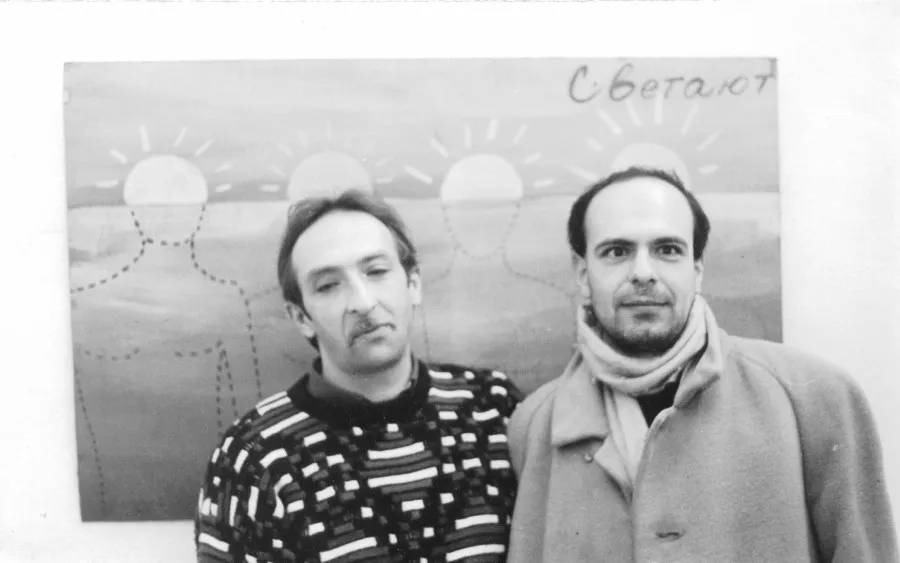
Another example of Moscow’s cultural influence on Leningrad is our joint activity with Sergey Bugaev-Africa, most vividly embodied in the projects “Krimania” and “Donaldstruction” (1989–1990).
Timur Novikov, himself extremely charismatic, did not succumb to my influence but influenced me. However, he expressed his respect by organizing a joint exhibition of my works and Qi Baishi’s works in the halls of the New Academy on Pushkinskaya, 10 (1995).
As for Kyiv, from the very beginning, I influenced the entire artistic environment thanks to warm friendship with most artists. This made it possible to start the “Bi-Bi” movement.
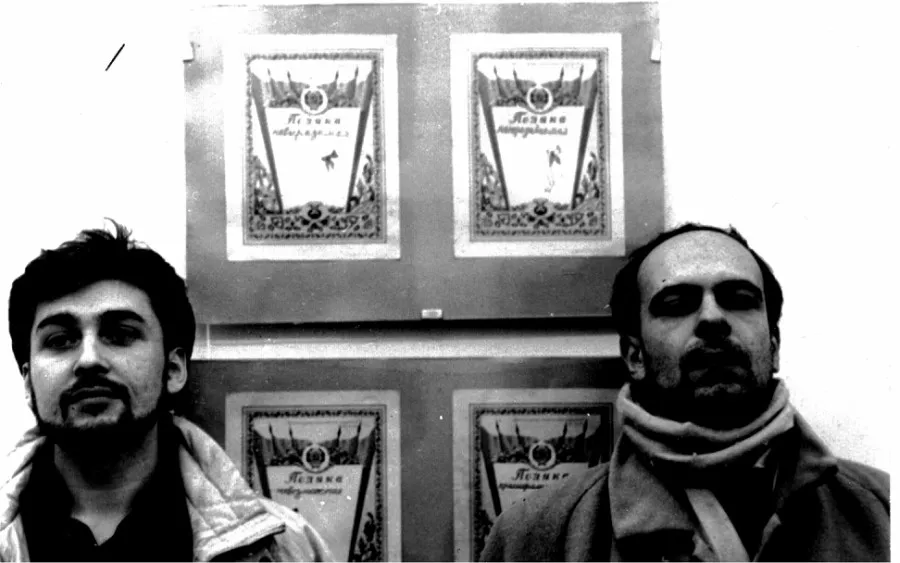
During the years of “Parizka Koomuna,” I lived in the squat at the Hnylytsky’s. And probably not without my influence, Hnylytsky abandoned the transavantgarde and turned toward the Unknown, creating a series of mysterious, mostly black-and-white canvases that spoke the language of the Unconscious.
In 1993, we held a joint exhibition in Moscow, at the gallery of the Avant-Gardists Club on Vostochnaya Street. His huge canvases contrasted with my small graphic works depicting mystical islands Penlay, Avalon, Thule, and others.
Between Two Fires
In 1995, at the “Blank-Art” gallery on Andriyivskyy Descent, I presented a personal project — the installation “The Problem of the Souvenir” with embroidered scrolls (embroidered shirts) hung on music stands.
Kyiv, having proposed its own version of contemporary art, began to actively influence Odesa. Especially since most Odesa conceptualists, following me, moved to Moscow and settled in the famous squat on Furmannyy Lane.
In 1987, conceptualist Liza Schmitz came there from West Berlin, bringing young Berlin artists with her. The result was the project “Art,” which initiated the integration of Soviet contemporary art into the international context.
After that, and especially after the collapse of the USSR, artists of all directions led by Moscow conceptualists rushed to the West, and many stayed there to live.
However, the expected influence on Western art did not occur. This was hindered by the inherent Western cultural colonialism. Western cultural figures considered our art only as one version of international contemporary art formed under Western influence. But this is essentially only half the truth.
Because our contemporary art was formed in completely different conditions — surrounded by socialist realism, in constant dialogue with official art and Soviet mass culture. With the help of irony in social art, it overcame agitprop and the pathos of Soviet ceremonial painting and monumental art.
Moreover, almost all conceptualists were simultaneously well-known and successful official artists. Such a schizoid split of consciousness was completely inaccessible and incomprehensible to Western artists, who openly and uncompromisingly protested against the establishment, the entertainment industry, mass culture, and kitsch.
The insurmountability of cultural differences caused by the different origins of contemporary art in the West and the USSR caused the so-called mirror effect of perception.
Mirrors in police stations, transparent from one side and reflective from the other, well illustrate the mutual perception of two cultures. We observe Western art directly, and the West, looking at Russian culture, sees only its own reflection — and nothing more.
Only by carefully studying Soviet art and recognizing the value of socialist realism can the West look beyond the “cultural iron curtain” and understand the uniqueness of our contemporary art. But unfortunately, due to the political situation today, this is impossible. As always, the West acts on the principle of “divide and rule.” This includes the situation with Russia and Ukraine, which, in the author’s opinion, were artificially divided and brought to a state of war.
In this regard, my personal position becomes increasingly problematic. After all, I am the only artist who simultaneously belongs to both Russian and Ukrainian contemporary art, and my contribution to the culture of both countries is equal. I have the status of a classic both in Russia and in Ukraine. Accordingly, the responsibility for ending the conflict lies with me. My charisma must serve politics, turning it into a cultural mission.
Only I have the right to oppose the political, and therefore cultural, situation by working on the integration of Russian and Ukrainian contemporary art. And only after the confrontation between these cultures ends will their integration into the international artistic context become possible.
My personal task as an author concerned with cultural influences is to prevent the “Chinese variant” of integrating our cultures and make them accessible and understandable to the international audience without any concessions, in all the beauty of their originality and uniqueness.
And only then will we be able to see international contemporary art as a space of mutual influences based on equality.
For this, it is necessary to change the vector of influence — from centrifugal to centripetal. Then, in world art, which is constantly enriched by various influences, an unprecedented flourishing will come.
But for this, it is necessary that the guns finally fall silent and the muses begin to speak.