
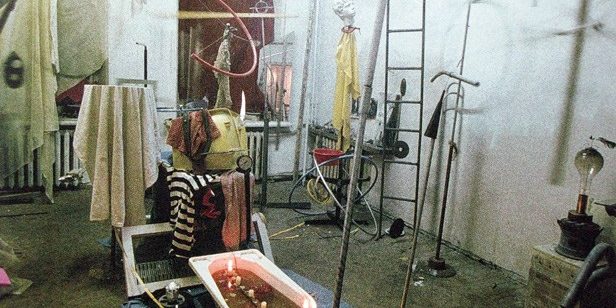
The article by Hlib Vysheslavskyi continues a series of publications within the cooperation framework of the PinchukArtCentre Research Platform and KORYDOR. Since the end of October, these publications have been related to the themes of the exhibition “Parkomuna. Place. Community. Phenomenon,” which will run at the PinchukArtCentre until January 15, 2017. This article outlines the history of the formation of squats in Moscow, Kyiv, then Leningrad, and certain artistic circles that formed there. The text presents a subjective view of an artist and art historian, a participant and witness of the processes that took place in the late Soviet space of the late 1980s – early 1990s.
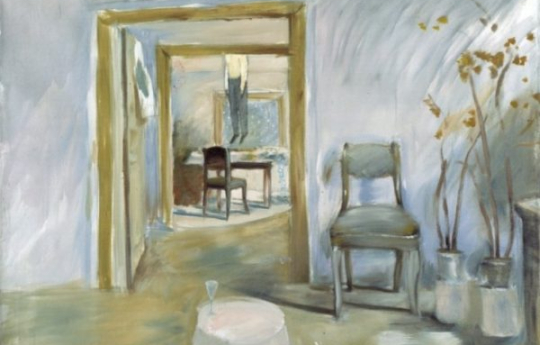
A squat is usually called a house temporarily occupied by residents who have no official rights to it. In the 1980s – early 1990s in Moscow, Leningrad, and later in Kyiv, squats played an important role in the development of an independent alternative artistic environment. The most important events of nonconformist art and art of the “perestroika” era took place in squats.
In Moscow, squats existed from the mid-1980s. Almost all of them are connected with the history of contemporary Ukrainian art, as artists of the Ukrainian diaspora lived and worked there. Many of them returned to Ukraine in the first half of the 1990s and enriched the local context with their experience — the marginal position of artists between several cultures gave them an informational advantage.
The first squat in the USSR was “Dytysadok” (1984–1986), located in an empty kindergarten building on Khokhlovsky Lane in Moscow. Herman Vinogradov, Oleksandr Ivanov, Andriy Royter, Oleksandr Hradoboyev, and Mykola Filatov, who moved from Lviv to Moscow in 1982, worked there. Many exhibitions and art actions took place at “Dytysadok” with the participation of artists from Moscow, Leningrad, Lviv, Odesa, Kyiv, and other cities. Besides the squat residents, exhibitions featured Iryna Nakhova (Moscow), Nataliya Abalakova (Moscow), Anatoliy Zhigalov (Moscow), Serhiy Myronenko (Moscow), Timur Novikov (Leningrad), Afrika (Leningrad), Oleh Kotelnikov (Leningrad), Ihor and Svitlana Kopystianski (Lviv), and many others. “Dytysadok” served as artists’ studios, exhibition halls, a literary club, a concert venue, and a space for avant-garde fashion shows. For example, concerts by Viktor Tsoi and Zhanna Aguzarova took place there, as well as the first screening of “parallel cinema.” The atmosphere of “Dytysadok” is partly recreated in the famous film by Serhiy Solovyov “Assa.”
Mykola Filatov recalled: “Before ‘Dytysadok,’ Nikita Alekseev organized unofficial exhibitions in the ‘apt-art’ gallery (apartment exhibitions). But the KGB ‘raided’ them — they were quickly dispersed, and some were drafted into the army. So we took over their baton. For a year or a little more, all the powerful contemporary artists were at our ‘Dytysadok’ — Afrika, Kuryokhin, Novikov, Zhuravlev… Many were attracted not only by the free space but also by the space of freedom. Sometimes it was even hard for us to orient ourselves because very different wonderful people intersected and communicated — ‘medgermenevty,’ Kabakov, even Timur Novikov himself…
We worked freely and selflessly. We were surrounded by talented artists who laid the foundation of contemporary Russian art. But it was a very short period. Then the boom began, the fashion for Russian art, the “Moscow” Sotheby’s, artists started looking for money and interests, where it was better for whom…” [1].
Participant of “Dytysadok” Herman Vinogradov says: “…friends of friends came. And since there were four different people — Kolya Filatov, me, Andriy Royter, and an artist from a completely different crowd, Lyosha Ivanov (he brought artists from the Bolshoi Theatre and even the Soviet cultural establishment) — people came to us through various leads and different ways. Royter, for example, brought Kabakov and Artemy Troitsky, Naumets, who had a studio nearby on Solyanka, brought ‘Petersburgers,’ Kolya (Filatov — H.V.) — the photorealists Bazilev, Sherstyuk, and his friends from Lviv, Anufriev — Odessans. Through Ivanov, theater artists and even the Soviet cultural establishment came to us. Acquainted art historians brought Western collectors and gallerists — Yoles, Phyllis Kind… We had everyone. In general, there was a very high level of creative atmosphere, I would say, a degree of genius. Moreover, we had as much space for exhibitions as no other squat later — neither at “Furmanniy,” nor at “Chistye Prudy,” nor at “Trekhprudny.” Imagine: a huge two-story mansion and a huge neglected garden. There they held actions, placed sculptures, relaxed, discussed, drank tea. Or drank tea, then vodka or cologne and went swimming in the Silver Pine Forest” [1].
One of the very famous squats of the “perestroika” era was “Furmanniy”: a shabby residential building on Furmanniy Lane in Moscow (existed from spring 1986 to winter 1989/1990). Sergey Myronenko, Vadim Zakharov, Yuriy Albert, Andriy Filippov, Kostyantyn Zvezdochetov, Sven Gundlach worked there. Artists from Ukraine also lived and created at “Furmanniy”: Kostyantyn Reunov, Yana Bystrova, Oleh Tistol, Maryna Skugaryova, Leonid Voitsekhov, Serhiy Anufriev, Ihor Chatskin, Yuriy Leiderman, Oleh Petrenko, Lyudmyla Skrypkina, Larysa Rezun-Zvezdochetova, and many others. Leonid Voitsekhov recalled: “There was life at Furmanniy — big exhibitions were held, some associations. There was the association “Hermitage,” which disbanded after three exhibitions at Belyaev’s, there was again the entire left front, there was a parallel life, very intense” [2].
Larysa Rezun-Zvezdochetova says: “No exhibitions were held at Furmanniy, just a crazy amount of work was done, and a crazy number of people came, about 10 different people daily, and very respectable people at that. Influential curators, museum directors. It was a very strange time” [3].
After the closure of the building on Furmanniy in December 1989, some artists (Leonid Voitsekhov, “Perci” — Lyudmyla Skrypkina, Oleh Petrenko, and others) founded a squat at Chistye Prudy in Moscow, which lasted until 1995. Leonid Voitsekhov’s studio housed the “ChP” gallery (1991–1992) curated by Farid Bogdalov, Georgiy Litichevskiy, and Viktor Miziano. Besides exhibitions of local artists, “ChP” hosted international exhibitions and solo projects by Franz West, Kharlampiy G. Oroshakov, and others.
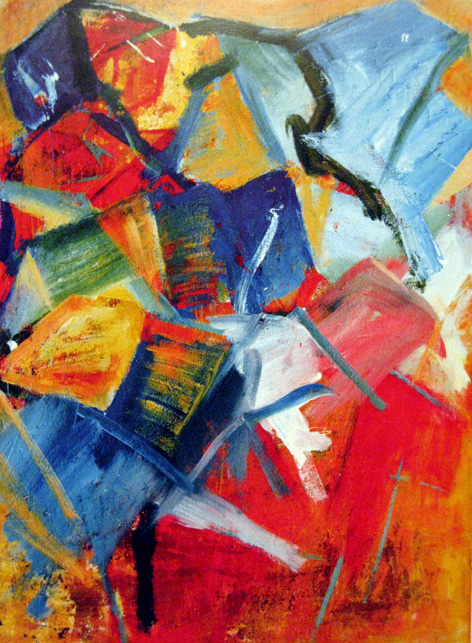
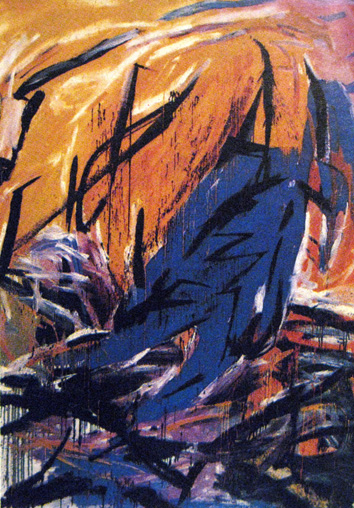
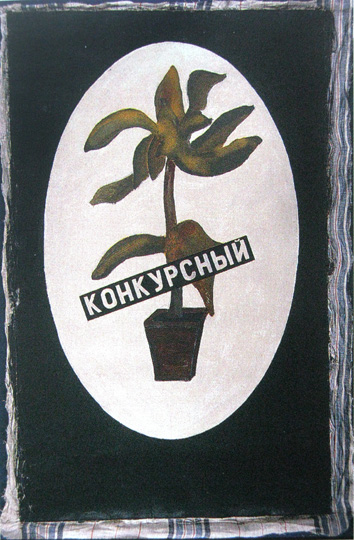
In 1989, artists occupied an abandoned 19th-century building on Banny Lane for studios before its demolition. This happened thanks to collector Nikolay Kornilov, who founded the “Nikor” gallery and the “Art of the Peoples of the World” association in the squat. Fortunately, the building stood for quite a long time until a fire occurred there in the fall of 1994. In the squat and adjacent lanes, artists created environments, performances, and engaged in land art. Among the squat residents were representatives of almost all peoples of the USSR, who came to Moscow seeking their fate: artists from Georgia, Armenia, Azerbaijan, Kazakhstan, Uzbekistan, Belarus, Ukraine. All had their views on art and vigorously defended them. For some time, artists from Italy and France worked here. There were also Kyiv artists — Vyacheslav Ilyashenko, Hlib Vysheslavskyi, Lyudmyla Kovalchuk, Olena Mariichuk, Halya Moskvytina, and others. Joint exhibitions involved artists from the squat on Pushkinskaya Street (Saint Petersburg) and the group “Club 1/1” (1989–1993; artists Oleksiy Oleksiyev, Tetyana Dober, Bohdan Mamonov, Anton Litvin, Hlib Vysheslavskyi, Petro Maslov, Tetyana Mashukova, Aladdin Harunov, Tetyana Azizova, Oleksiy Belyaev, Kyrylo Preobrazhensky, art historians Serhiy Kuskov, Nataliya Brylling). The club’s exhibitions and actions were characterized by an interest in postmodern juxtaposition of cultural archetypes of different times in a single exhibition space (exhibition “Vatican” (1993), stand at the Moscow fair “Art MIF–III” (1993), other exhibitions).
The squat at Trekhprudny Lane (1991–1994) significantly influenced the artistic life of the early 1990s. Against the background of artists of the “old” Moscow-Odesa composition of “Furmanniy” (many of whom moved to “Trekhprudny”), artists from Rostov-on-Don and Kyiv played an increasingly important role. From 1991 to 1993, the “Gallery at Trekhprudny” existed there, founded by Kostyantyn Reunov (Kyiv) and Avdey Ter-Oganyan (Rostov-on-Don). The gallery was also supervised by Valeriy Koshlyakov, Vadim Fishkin, and Illia Kitup. In 1991–1992, actions at the gallery took place every Thursday and had a great artistic resonance. These were radical in aesthetics and social content performances and environments that contained new at that time elements of interactive interaction with the audience, such as “Mercy” (1991) by Kostyantyn Reunov and Avdey Ter-Oganyan. Instead of objects, homeless people sat on the floor in the gallery and begged for alms. At the collective exhibition “Sea of Vodka” (1991), paintings depicting enlarged labels of vodka bottles were shown, and vodka was offered to visitors in unlimited quantities. During Reunov’s action “Luzga” (1991), the author asserted against the backdrop of readymades and images of fictional money: “I undertake to pay on demand the amount that this monetary sign symbolizes.” During the performance “Towards the Object” (1991) by Avdey Ter-Oganyan, the semi-naked artist continuously drank vodka until he fell to the floor and turned into an “object.”
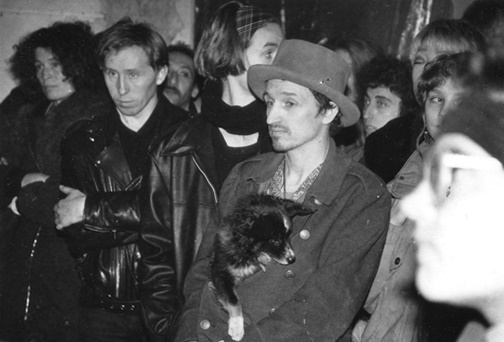
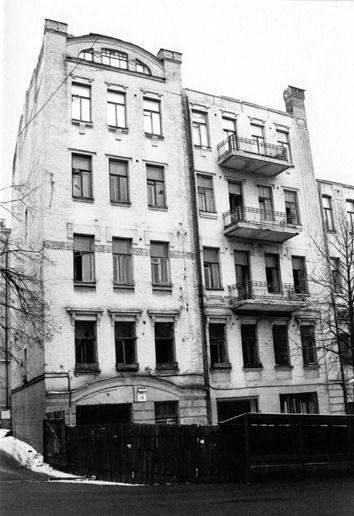
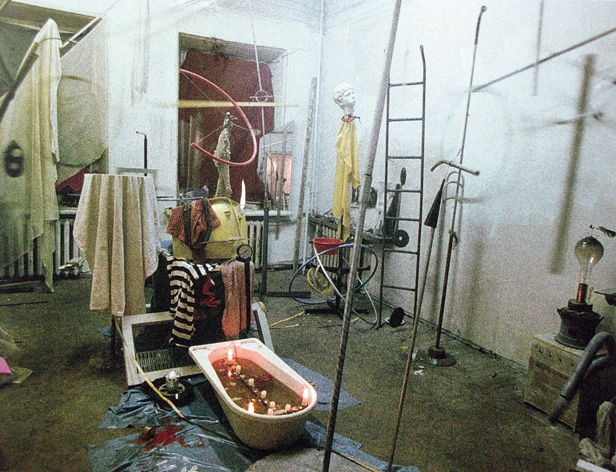
Artists from Trekhprudny organized exhibitions in other halls, for example, “For Cultural Recreation” (1990) at the Moscow gallery “Sadivnyky”: artists, in contrast to the politicization of television and social life, offered drawings depicting leisure — fishing, traveling, dancing, sleeping. In 1991, the exhibition was shown in Lviv at the Lenin Museum on the initiative of Yuriy Sokolov and under the joint curatorship of Sokolov and Avdey Ter-Oganyan. Many artists from Ukraine participated in exhibitions of the “Trekhprudny” circle, including Serhiy Anufriev, Volodymyr Fedorov, Ihor Kaminnyk, Pavlo Fomenko, Leonid Voitsekhov, Larysa Rezun-Zvezdochetova, Ihor Chatskin, Yana Bystrova, Kostyantyn Reunov, Maryna Skugaryova, Oleh Tistol, Oleksandr Kharchenko, and others.
Artistic life was no less active in the “Art Reserve on Petrovsky Boulevard” (1989–1996), founded by artist Petlyura (Oleksandr Lyashenko). The group “Pivnich,” Herman Vinogradov, Oleksiy Tyegin, Svyatoslav Ponomaryov, Pavlo Lila, Ala Alovna, Oleksandr Osadchiy, Serhiy Lysak, Tetyana Morozova, Hlib Vysheslavskyi, the group “La-re,” and others worked and participated in exhibitions there. The squat was located on a huge territory with multi-story 19th-century buildings and three adjacent courtyards. There was its own gallery, Herman Vinogradov’s museum, a bar with exclusively medical-operating equipment instead of glasses and forks, and a souvenir-object shop made from waste. Many artists from Ukraine also exhibited in the squat (Petlyura, Arystarkh Chernyshov, Rostyslav Yehorov, Hlib Vysheslavskyi, Serhiy Anufriev, etc.).
Among the exhibitions, actions, concerts, festivals, and performances that took place in the squat almost every evening, the largest festival “Local Time” (1993) is worth mentioning. According to the curators’ idea (Petlyura, Rostyslav Yehorov), it was a non-commercial alternative to “Art MIF–III.” The festival gathered artists from many CIS cities and various squats in Moscow and Saint Petersburg. The organizers tried to oppose the “mythical pro-Western commercialization and manipulated picture of art development,” actively promoted by Helman and other gallerists, with a “real, natural picture of art development,” which was also reflected in the festival’s name — “Local Time.” Indeed, the festival was an “alternative to the alternative,” gathering artists and groups who had not yet entered the circle of “gallery artists,” who, in turn, were an alternative to artists from the Artists’ Union.
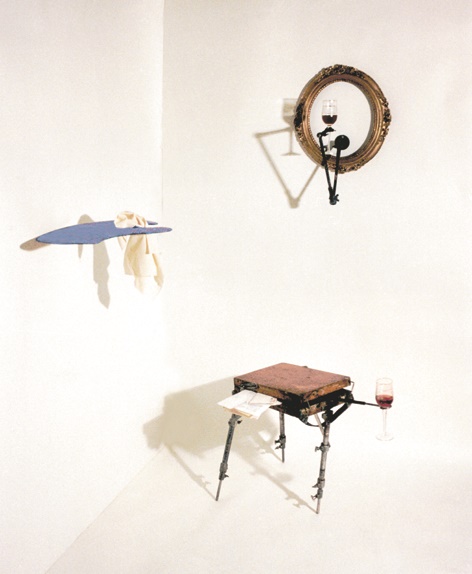
In 1991, Serhiy Anufriev created the art group “Oblachnaya Komissiya,” which in 1993 participated in the alternative Venice Biennale project “Damoska” from the “Sprovieri” gallery curated by Giancinto Di Pietrantonio (within the exhibition “Passaggio del Oriente”). The project featured artists Yuriy Leiderman, Oleksandr Maryeyev, Andriy Monastyrskiy, and others. Returning from Venice, the group worked and exhibited in the squat “Art Reserve on Petrovsky Boulevard.” Many joint projects and alternative fashion shows with German and Dutch artists were also held there. Despite the artists’ fame and the popularity of exhibitions in the squat, in 1996 the artists were evicted, and the buildings were demolished.
In most of the named squats where artists lived, a custom gradually developed to accept and, if possible, provide workspace for colleagues from other squats of different cities and countries. This custom is one of the important components that distinguished the alternative art community from other groups and communities of artists.
Most presentations of Ukrainian artists, representatives of contemporary art, in Moscow from 1988 to 1993 took place precisely in squats. Most often, these were environments, installations, performances with features of carnival eccentricity and shock. Compared to easel art exhibitions held in Ukrainian cities in the late 1980s – early 1990s (except for Lviv and Odesa), actions by the Ukrainian diaspora in Moscow were marked by more radical spatial experiments, taking into account the experience of neo-avant-garde and postmodernism. In working with space and in actionism, the Ukrainian diaspora was ahead of its provincial metropolis controlled by the Soviet authorities.
In Kyiv, the history of squats began in the summer of 1988. At the initiative of artists Oleksandr Klymenko and Serhiy Sviatchenko, studios were organized in a vacated building at 25 Ivan Franko Street. Artists from many Ukrainian cities worked there, including Oleksandr Hnylytskyi, Oleh Holosiy, Valeriya Trubina, Dmytro Kavsan, Leonid Vartivanov, Oleksandr Klymenko, Yuriy Solomko, Vasyl Tsagolov, Valentyn Popov, Hlib Vysheslavskyi, Oleksandr Lutskevych, Serhiy Sviatchenko, A. Yaksakov (Moscow), and others. It was a time of plein airs in Sedniv, “Youth Exhibitions,” and exhibitions organized by the Center for Contemporary Art “Soviart.” Thanks to the latter, we have two catalogs — “21 vzglyad” and “Ukrainian malARTstvo” — the first printed testimonies of changes in Ukrainian art. Almost the entire composition of artists and guests was presented at the exhibition “Flash” (painting, objects, installations, photo collages) at the House of Architects (curator Serhiy Sviatchenko). Of course, it cannot be said that the artists were jointly passionate about any style, working method, or creative technique. However, unity was felt in another — in acute personalization (as opposed to official collectivism), which sometimes turned into individualism, in a passionate desire to differ as much as possible from colleagues, to present their work in the press and exhibitions as widely and quickly as possible (unlike the usual indifference). Competitiveness was also common, which led to conflicts. It became especially acute later when economic competition arose, but this happened already in the squat at the new address.
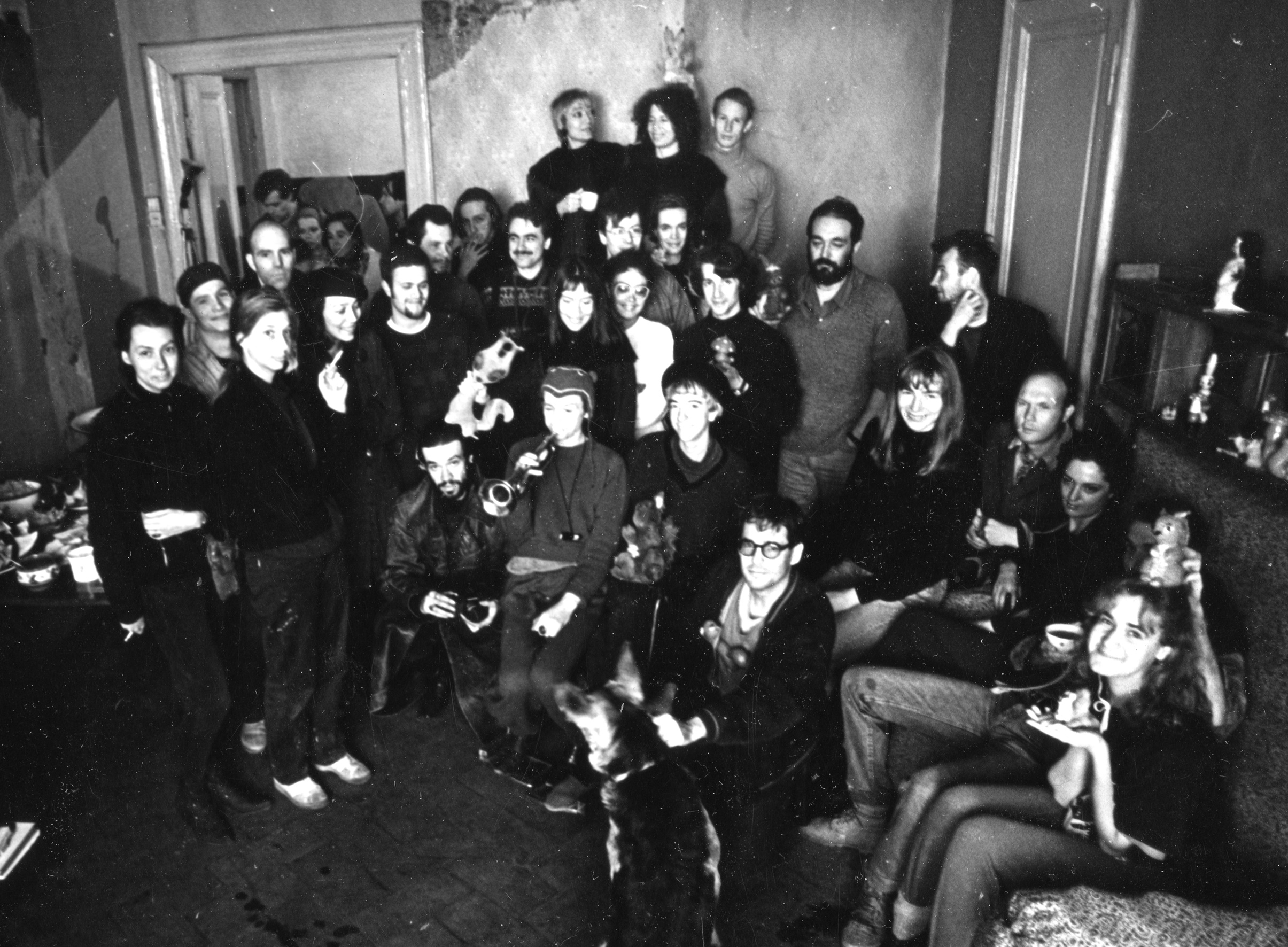
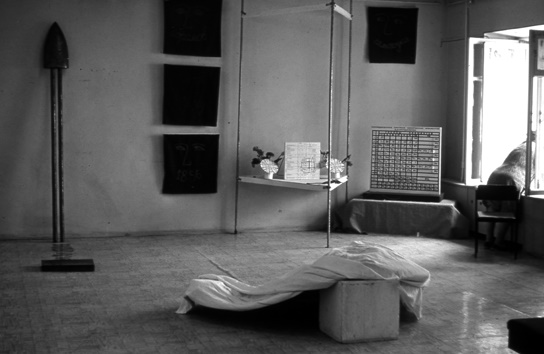
The studios on Franko Street did not last long, as in 1989 they moved to 18 Paris Commune Street (now Mykhailivska Street). The community’s composition changed significantly, and it was named “Paris Commune” (shortened to Parkom). The role of the group’s curator was taken by art historian Oleksandr Solovyov. Dmitro Kavsan, Leonid Vartivanov, Oleksandr Hnylytskyi, Oleh Holosiy, Valeriya Trubina, Oleksandr Klymenko, Yuriy Solomko, Vasyl Tsagolov, Valentyn Popov, Nataliya Filonenko, and others worked in the studios. Work and life in close proximity largely determined the artists’ common aesthetic preferences. As Oleg Sydor-Hibelinda wrote in the ironic “Obituary for the Commune,” “…the works of ‘P. k.’ are ideologically and stylistically close to Western European postmodernism. Painting and graphic works are characterized by subjectivism, citation. The retrospection of ‘P. k.’ is permeated with a spirit of cynical irony and nihilistic self-parody… [They are characterized by] extensive use of grotesque techniques, elements of play, motifs of twisted eroticism, attraction to death and mystical visions. Since the early 1990s, significant changes have occurred in the ideological and aesthetic views of the leading artists of ‘P. k.,’ which were actually expressed in the rejection of painting practice” (meaning the rejection of easel painting. — H.V.) [4].
At exhibitions organized by Oleksandr Solovyov with the support of the “UKV” gallery (director T. Krendelova) — “Shtil,” “Lito,” “Artists of the Paris Commune” — not only artists from the squat but also their colleagues from the “Ukrainian New Wave,” close to them in creative guidelines, exhibited.
At this time, artists of the “Ukrainian New Wave” actively assimilated the aesthetics of postmodernism, which was accepted in Kyiv in the variant of the Italian Transavantgarde. Fascination with the Transavantgarde was almost the only feature that united the squat artists then, already divided due to competitive struggle and tired of forced cohabitation in one building, which turned into a kind of large communal apartment. The Transavantgarde allowed artists not to abandon familiar materials (canvas, oil) and to play distantly with any theme — from socially critical to religious. From the heart’s sincerity, they only had to add emotional expression, which Moscow art historians Serhiy Kuskov, Andriy Kovalov, Volodymyr Levashov described with the terms “hot southern vitality” and “neo-Baroque hedonism.” Indeed, on the canvases of Serhiy Panich, Oleh Holosiy, Valentyn Rayevskyi, Les Podervianskyi, and the etchings of sculptor Oleksandr Sukholit, one can notice an “expressive fugue of rockers,” some “whirlwinds of forms,” and allegorical images that could appeal to Baroque. Thus, a beautiful theory arose, which has every right to exist, about the revival of Ukrainian Baroque traits in the work of “new wave” artists.
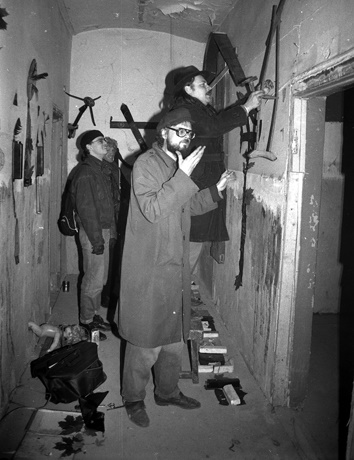
Unfortunately, the squat on Paris Commune Street was forcibly closed due to major repairs of the building, which began in 1994.
From 1992 to 1999, in a vacated building at 25 Velyka Zhytomyrska Street, at the initiative of Andriy Ziabliuk, art studios with a completely different composition of artists were located. In 1997, an exhibition hall opened there. The building was named by the abbreviation “BZh” — after the first letters of the street name. That same year, the Kyiv organization of artists “Bzh–Art” was legally registered as an alternative to the official Artists’ Union. Unlike Parkomuna, artists of very different aesthetic preferences lived, worked, and exhibited in “BZh.” Among them were Andriy and Olena Ziabliuk, Andriy Bludov, Ruslan Pushkash, Yuriy Kompanets, Eduard Belsky, Dmytro Korsun, Mykola Zhuravel, Mykhailo Shapovalenko, Nataliya Zozulia. Later, Andriy Levytskyi, Temo Svirieli, Badri Gubianuri, Borys Yehiazaryan, Viktor Lavnyi, Valeriy Shkarupa, Vladyslav Shereshevskyi, Ihor Prokofiev, Vadym Pravdokhin, Matviy Vaisberg, Ivan and Viktor Kyrychenko, Andriy Tsoi, Borys Shmatok, Yevhen Derevyanko, Serhiy Sulema, Yevhen Shchukin, Yuriy Solomko, Maksym Mamsikov, Petro Bevza, Oleksiy Lytvynenko, Oleh Fil, and others joined them. For some time, exhibitions were held on the first floor of the building, mostly of squat residents. The various artistic directions of the squat artists fully correspond to the state of Ukrainian artistic life at that time, in which many directions, movements, and associations coexisted. In 1999, the building on Velyka Zhytomyrska was closed for repairs, and most artists moved to rented premises of a former dormitory on Olehivska Street.
With the emergence of contemporary art centers, galleries, and festivals where exhibitions are held, the role of squats as centers for the development of alternative culture has diminished. Now artists’ squats are simply studios that do not at all resemble the places of secret boiling of nonconformism and fiery explosive experiments against the backdrop of the USSR’s collapse.