
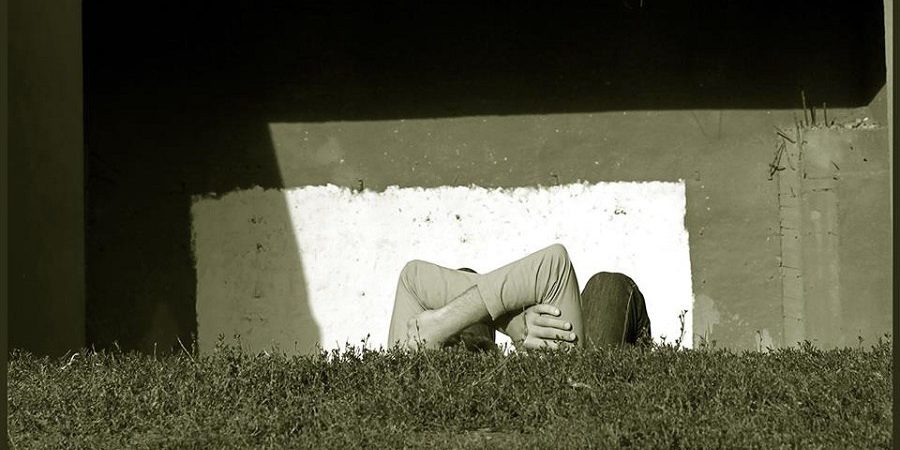
Serhiy Solonskyi is a Kharkiv photographer who belongs to the so-called second generation of the Kharkiv School of Photography. His works from the 1990s were repeatedly exhibited in Ukraine and abroad. From 1994 to 1996, he was part of the “Rapid Response Group” (Serhiy Bratkov, Borys Mykhailov, Serhiy Solonskyi). Ihor Manko, in a conversation with Serhiy Solonskyi, tried to recreate the history of events and figures of that time related to photography in Kharkiv.
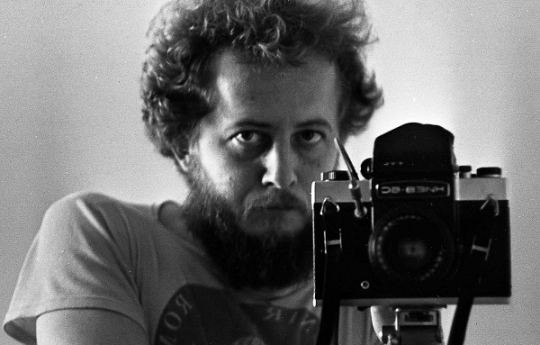
Ihor Manko: Serhiy, let’s start from the very beginning: how did you start doing photography, how did this idea come about?
Serhiy Solonskyi: Like most people, starting from childhood. I was lucky in this sense because my grandfather Philip was a professional photographer — since the late 19th century. From an early age, I had to be in a real professional lab, in a village, playing with films, bellows, wooden cameras. But at school age, I didn’t think I would become a professional photographer myself.
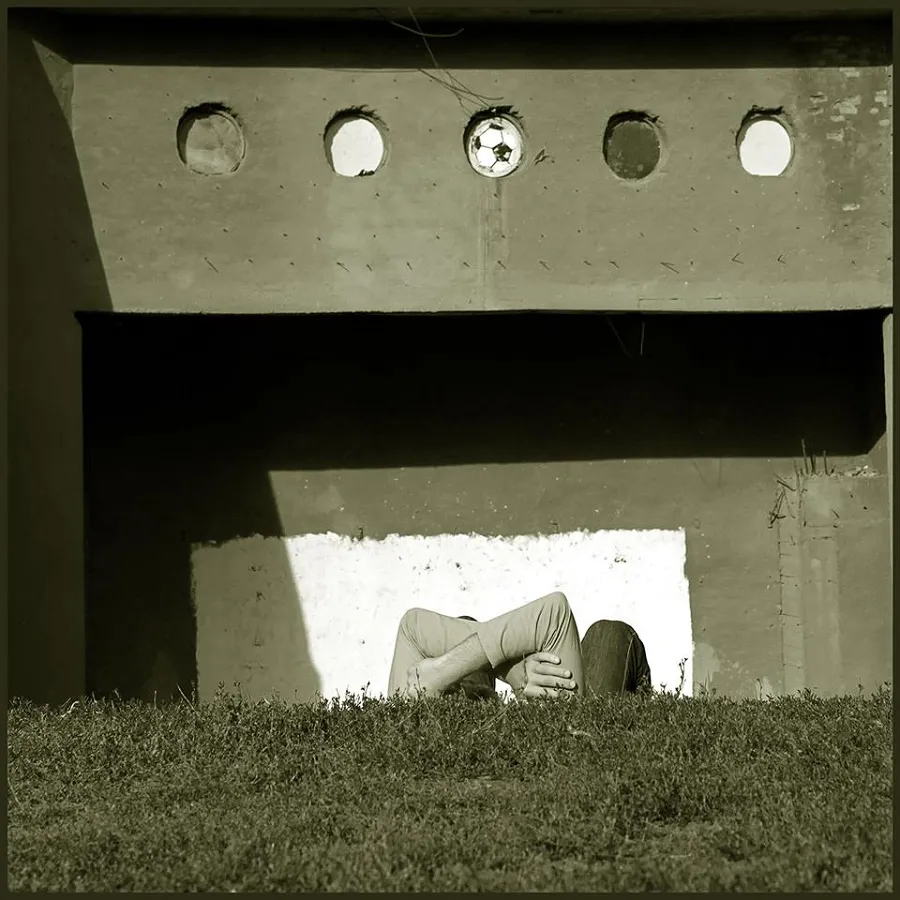
I. M.: Could you tell us more about your unique grandfather who professionally did photography since the late 19th century?
S. S.: It was a photo studio in the village of Osypenko (then Novospasivka) near Berdyansk, the technologies were the same: my grandfather took so-called visiting portraits on cardboard, with embossing and stamps — family photos, wedding photos — I once tried to restore them. The studio had a lab. As a close relative, I was allowed to be there, I could immerse myself in that atmosphere if I wanted, but no one else. He really was unique — my grandfather once sold a cow to buy a Zeiss lens!
Then I got my own camera, a “Smena”, a bunch of spoiled film, and then everything was traditional. For a long time, I was interested exclusively in chemistry, and I approached photography from time to time. I seriously started photography when I entered university — there was a very good studio, a cinema photo lab.
I. M.: You said “chemistry” — are you a chemist by education?
S. S.: I was almost a chemist — three courses, exactly as much as needed to do photography.
I. M.: How did you end up on the Kharkiv art scene in the 1980s?
S. S.: I seriously started photography in 1981 — it was a kind of professional-apprenticeship period until 1986: I didn’t intersect with anyone, no exhibitions, just constant work at night, working on improving skills, purely technical methods, photographic possibilities, experiments with films, chemicals. I accidentally got to a photographers’ meeting at the House of Amateur Creativity with the then “head of photographers” Vitya Zilberberg, met recognized Kharkiv masters — Oleg Malevany, Sasha Suprun. Until that moment, I had no idea how people would react to what I was doing.
It was a pure experiment for me because I was quite dissatisfied with my own photos, and I was familiar with artistic photography only from some random magazines… And when I first showed my photographic experiments, it turned out they interested Suprun, for example, which actually supported me. I took creativity more seriously when in 1986–1987 something started to come out of these experiments, and I participated in several exhibitions, received some awards, which was a serious stimulus for further work. You could say that 1987, when there was an exhibition at the Student Palace, was the beginning of my work in the photographic community.
I. M.: Vladimir Starko claims he was the first to exhibit you at the Builders’ Palace of Culture — back in 1986, when he started working there in the photo studio instead of Gena Maslov, the exhibition had works by Andriy Hladkyi, yours, and they immediately closed that exhibition…
S. S.: There were also works by Kolya Shtok, Roma Pyatkovka. Roma had only one, but a very strange photo, so it was memorable. I had attics, some interiors there, they wouldn’t close because of me.
I. M.: Starko doesn’t remember why they closed it. He says he came, saw some works removed, only ropes cut left. He was fired after that, and the creative base of the “Derzhprom” group (we gathered at Maslov’s studio) was thus covered.
S. S.: Hladkyi had photos of windows, window openings. Yes, there was such an exhibition, although I can lie a lot about dates because my archive is really a mess. When people demand dating of photos from me, I try to lie equally to everyone, but I can’t recall anything exactly, everything is approximate, I didn’t write it down. It’s good that digital photography has metadata. And all my boxes with films needed to be labeled somehow, but that didn’t occur to me then.
I. M.: You didn’t think about history then, that’s true. Your first photograph?
S. S.: I can’t say exactly. My first experiments… I shot on a large camera, on large-format sheet film, and once I photographed — very well for those times, I think — my old boots. When I brought it to the exhibition, I didn’t understand how it would look, and at that exhibition no one even talked about concept, they just exhibited everything the authors brought. And Suprun offended me. He still doesn’t know because he didn’t say it to me but to Zilberberg. He said, “these boots will trample the whole exhibition”! Sasha — Oleksandr Danylovych — probably doesn’t remember this, but I remember, I got obsessed.
I. M.: Well, that’s a compliment from a master!
S. S.: I understand that now, but at that time, trying to do aesthetic photography and suddenly such a verdict from a master — painful! The boots didn’t survive, unfortunately. From that exhibition, I remember Misha Zemlyany participated for the only time in my memory, a very good cinematographer who died in a plane crash with our Kharkiv aircraft designers in Iran in the 1990s, remember? Misha had just graduated from the Karpenko-Kary Institute, where Pavlov also studied. He gave me a push then in montage photography, showed some possibilities. In a sense, he was one of my two teachers — along with Kharkiv artist and friend Misha Kvitka, who taught me composition. Yes, at that exhibition there were already Suprun’s “Convallarias” — a work that later became almost world-famous.
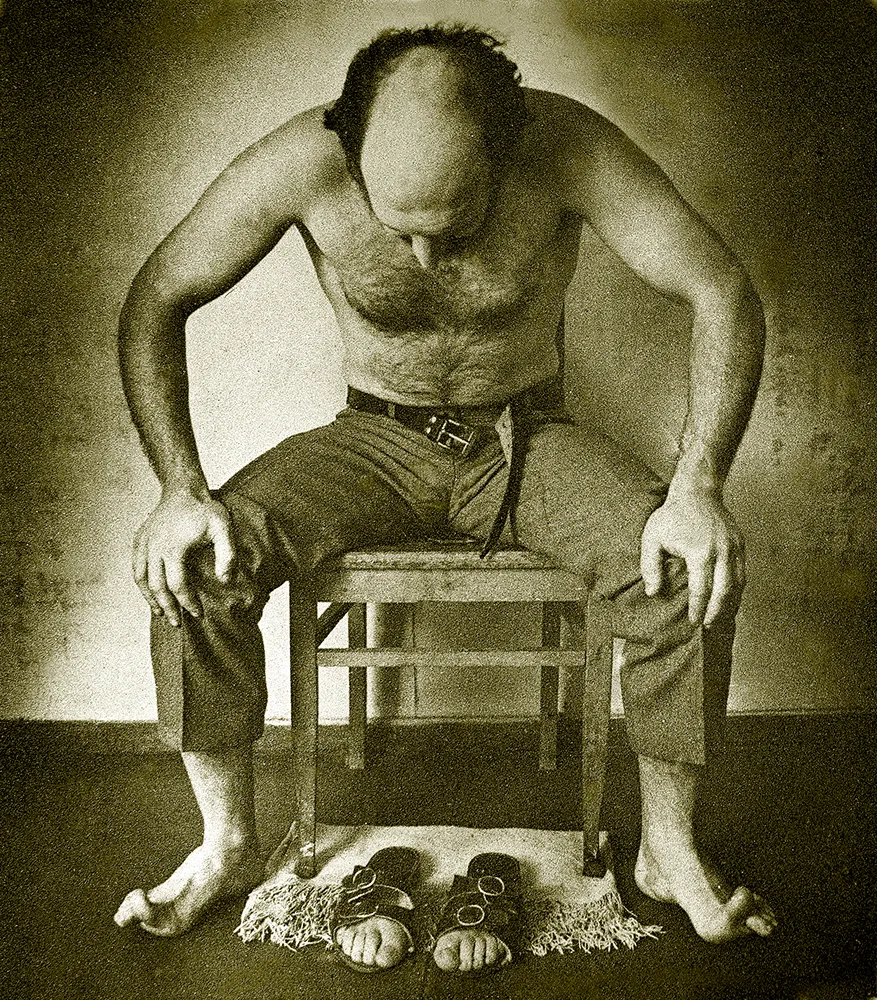
I. M.: Yes, now let’s recall the F-87 exhibition.
S. S.: I was asked many times about this exhibition because it was really a landmark Kharkiv event, the first. Misha Pedan was exclusively engaged in it, gathered the company and gathered — all Kharkiv photography was represented, the first and only time. I remember where the exhibition was held, where all participants were located, it stuck with me — that hall of the Student Palace. We, the “aesthetes”, were given a central place in the middle, behind me were Mykhailov’s “Luriki”, it was the first time he exhibited “Luriki”, these works shocked everyone. Even photographers were barely ready for this before.
Pedan had a work — a nude with an old woman on the shoulder in the aesthetics of the Krakow “Venus”. Everyone loved the Polish “Venus” for the naked girls. Malevany was with his compositions — as he said, landscapes through squinting eyelashes. I have very good visual memory. Once I told Mykhailov: “Borya, do you want me to tell you what you had at the exhibition at the House of Scientists in 1983? You had a sunset on the river and a composition with a horse walking.” That was Borya, and Yura Rupin printed it for him.
I. M.: And what were your works?
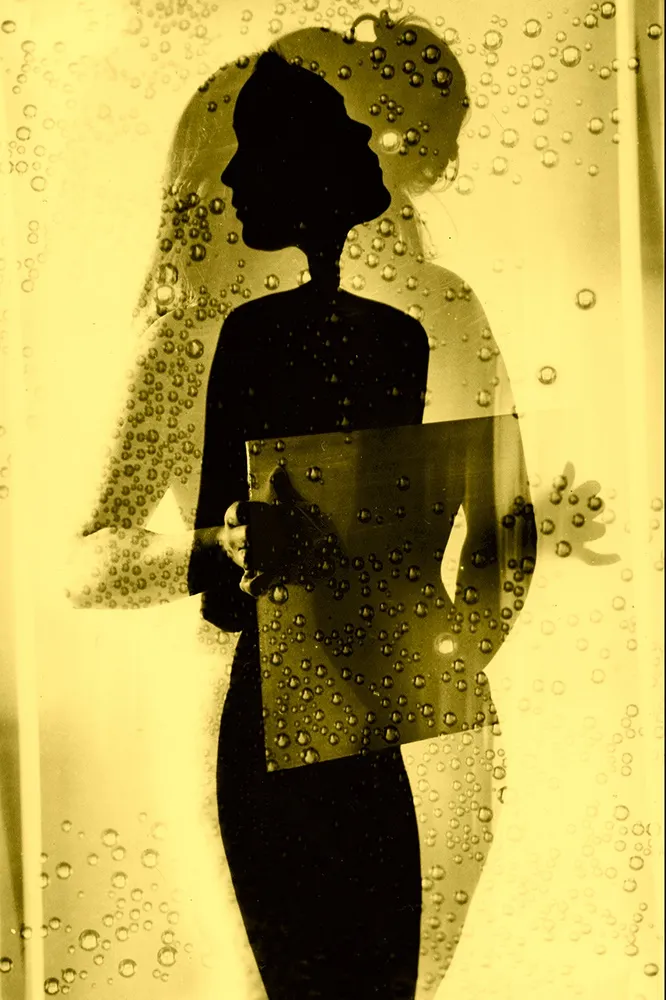
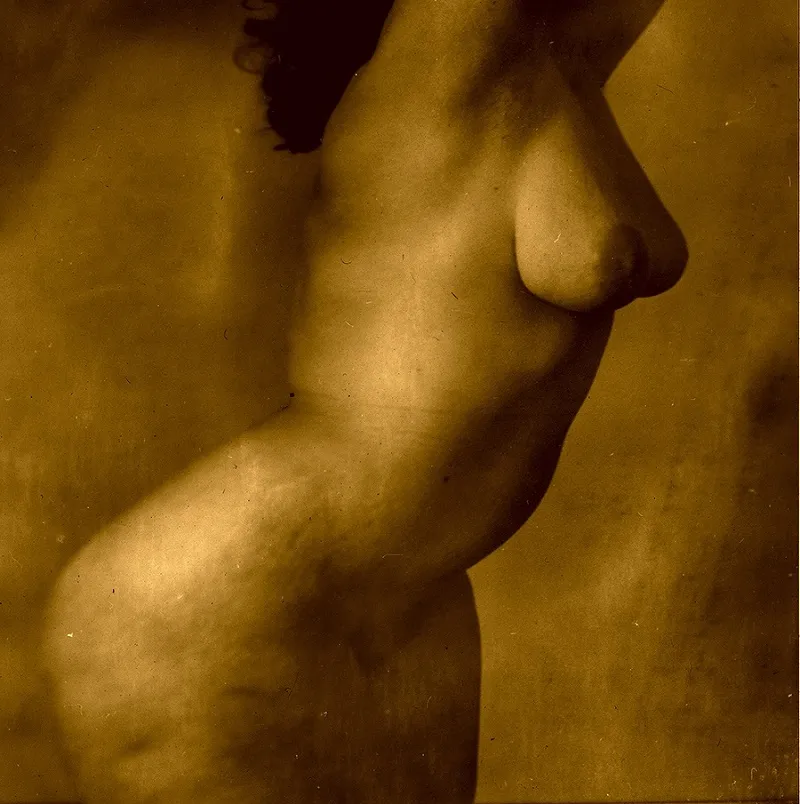
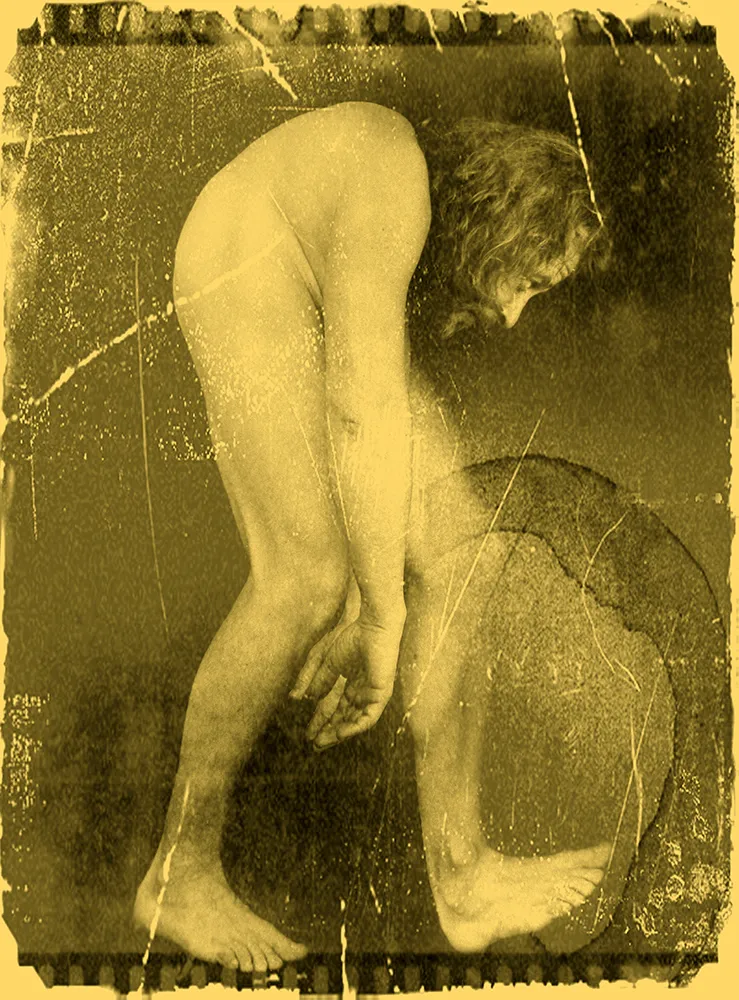
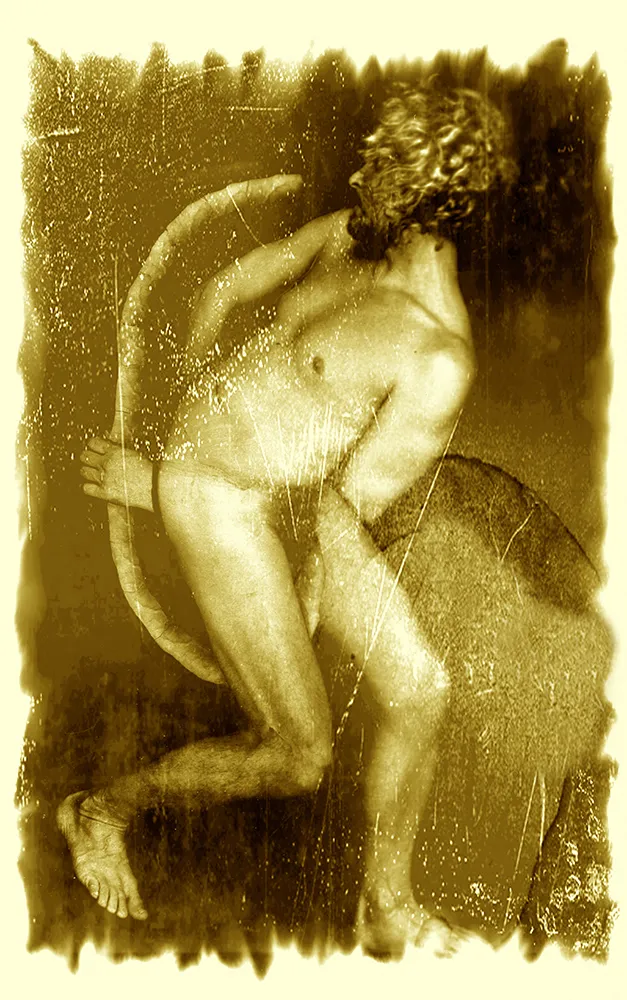
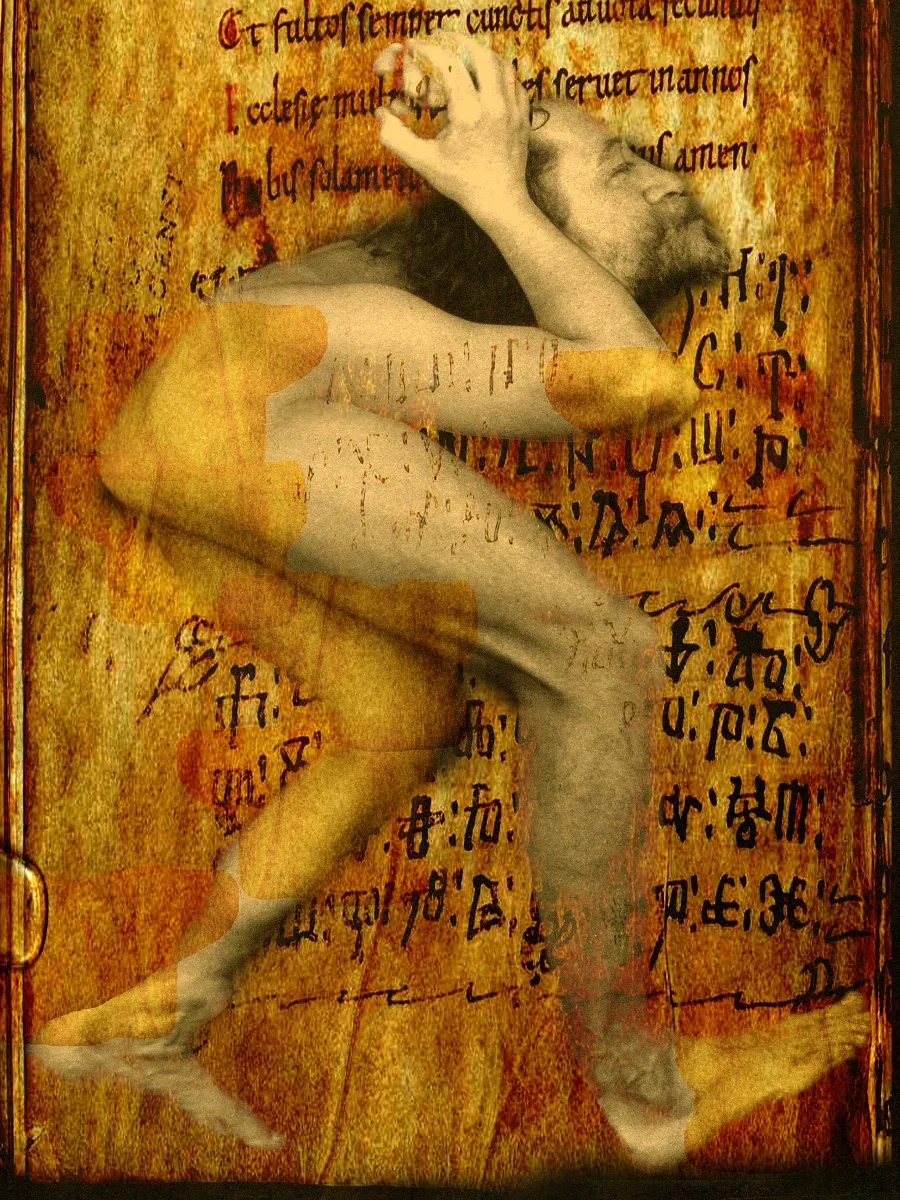
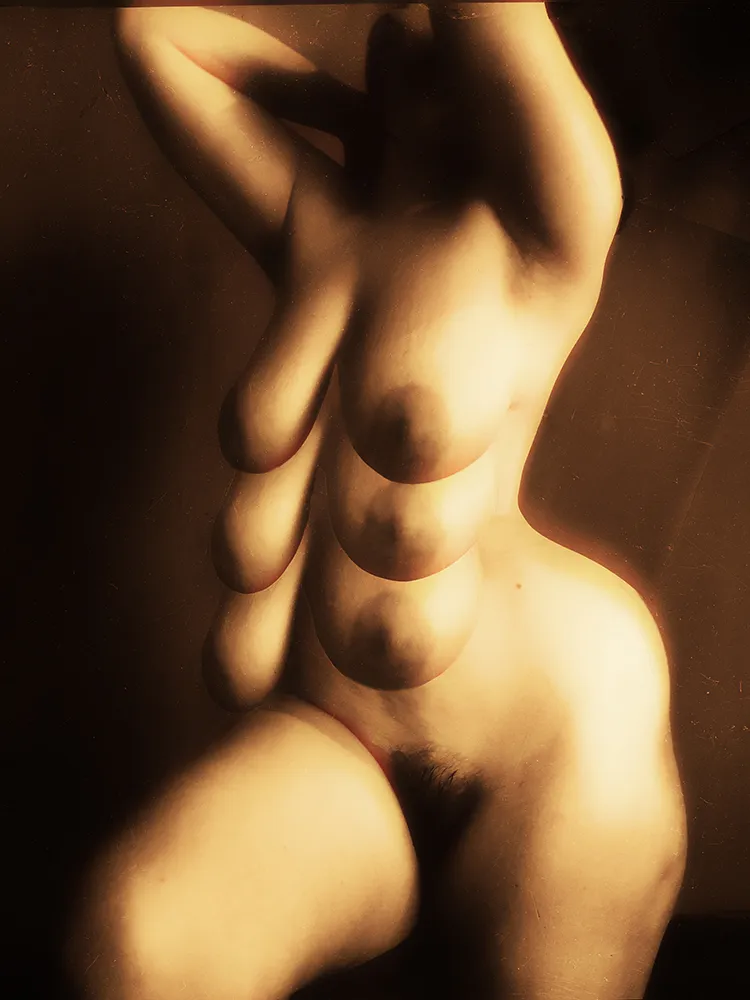
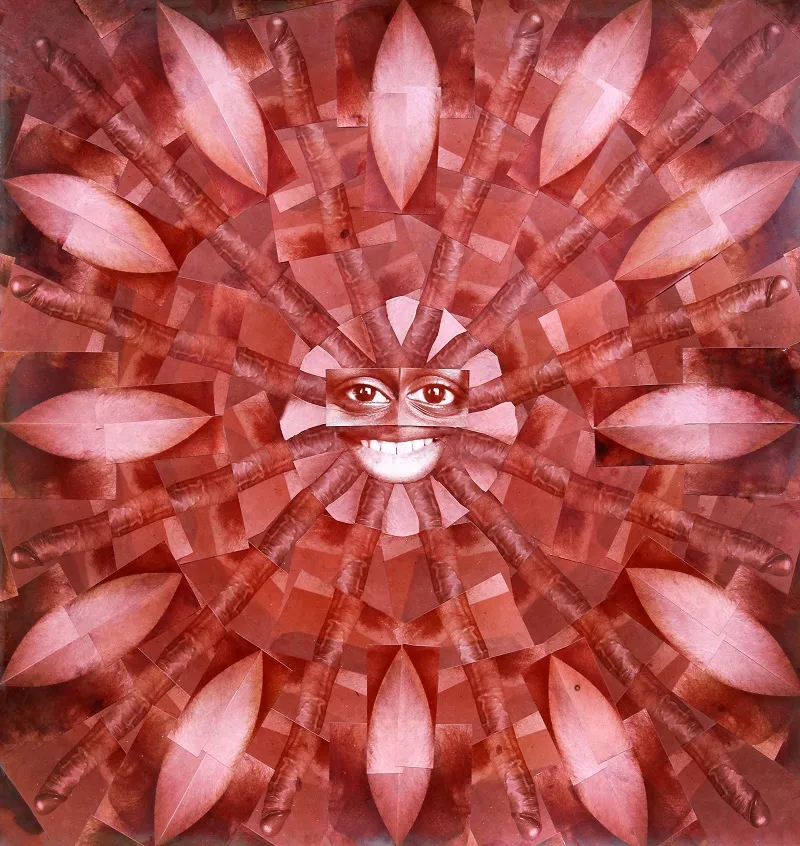
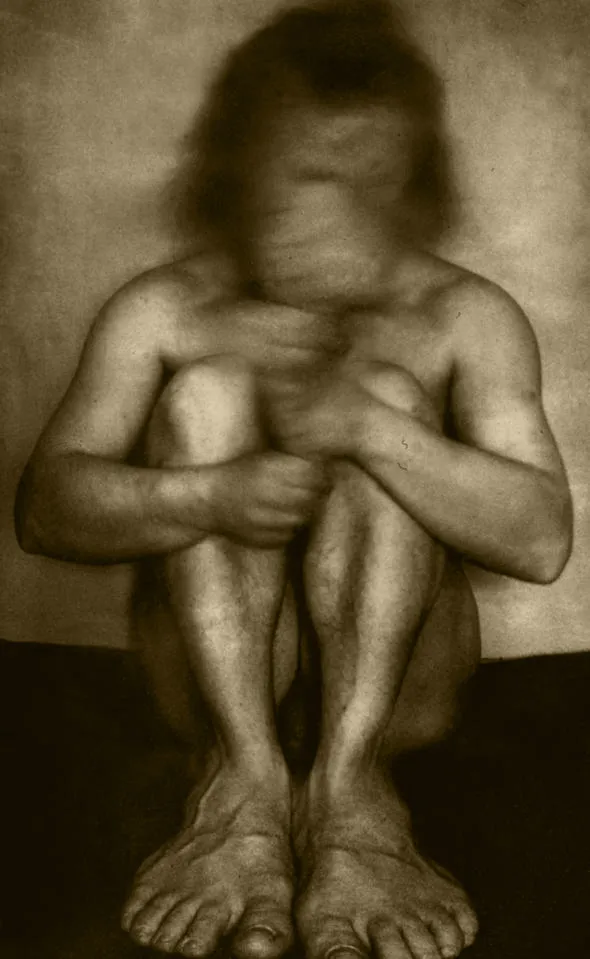
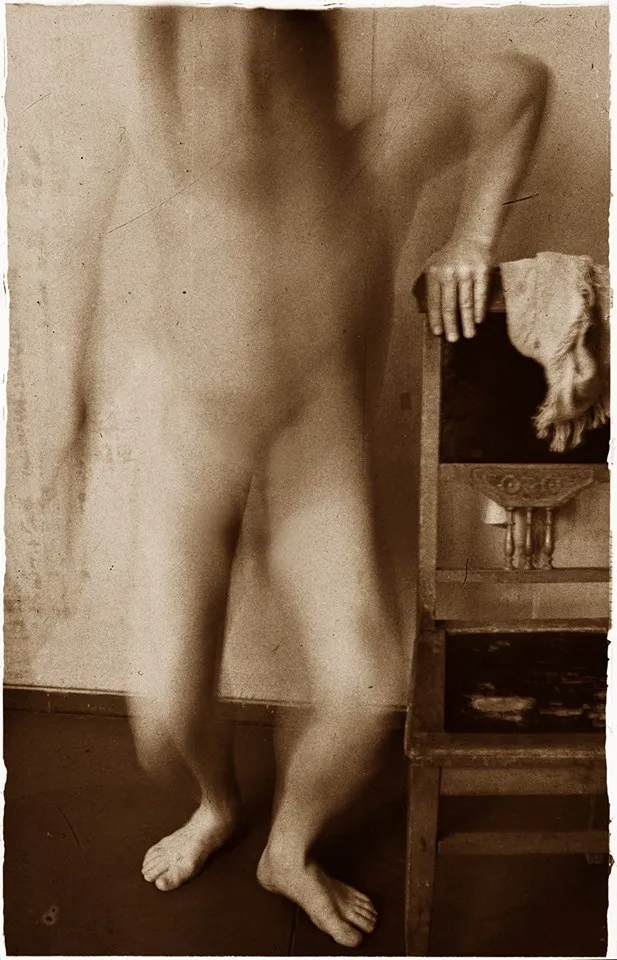
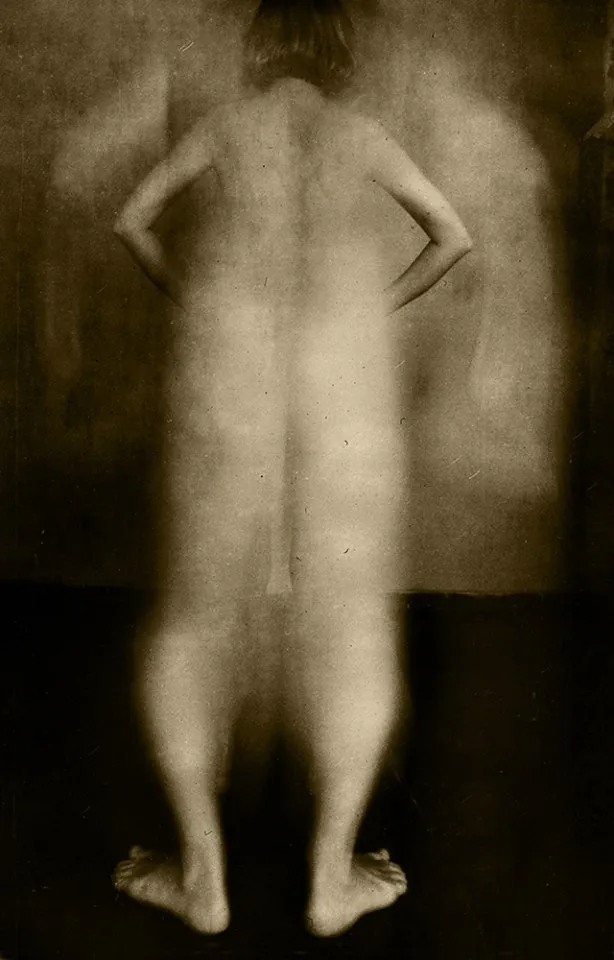
S. S.: They were collages. One of them was the most striking, which I still like — “Double Act”, a “sandwich” of three negatives, there was another torso, also a collage, later used for posters. There was another photo — for some reason, I worked on it for a very long time, also a collage. It wasn’t even a photo: everything was built on “killing” the photo — trying to improve a bad shot by manipulation. My favorite artist was René Magritte, from Belgian surrealists, I liked his approach to visualizing metaphors — blind love, a faceless person… I made such collages à la Magritte then.
I. M.: Do you remember how they closed that exhibition?
S. S.: I suspect the formal reason for closing the exhibition was nude bodies, there were some explicit nudes — I think by Mykhailov. Not mine, mine were innocent. Then many inspectors came from the KGB, from the city Komsomol committee, someone from our group called the editorial office in Moscow at the “Komsomolskaya Pravda”. A correspondent came, questioned everyone, even an article about the closure appeared in the newspaper, after which the exhibition was reopened.
I. M.: They reopened and immediately closed again “for technical reasons.”
S. S.: Yes, they found more serious reasons. The article may still be in my archives. I don’t remember the content, but there was a large photo of Andriy Shumilin from the Kharkiv rock club — such a hairy nonconformist sitting.
I. M.: Maybe Shumilin called. Who was the photographer?
S. S.: Serhiy Podkoritov. He was very proud of it, showed the newspaper to everyone.
I. M.: Now let’s talk about your iconic works: about “Bestiary” and “Phallog heraldry”. How did it start, why did you move in this direction?
S. S.: It’s hard to say where it started. For some reason, I liked doing collage, although now I prefer pure photography. Technically, making collages was difficult in pre-computer times — the technology was developed over years, there were many nuances, and when you mastered the technique, you wanted to apply it, of course.
I. M.: I know there were two standard technologies: the Baltics cut masks and printed, and in Kharkiv they glued the layout and reproduced.
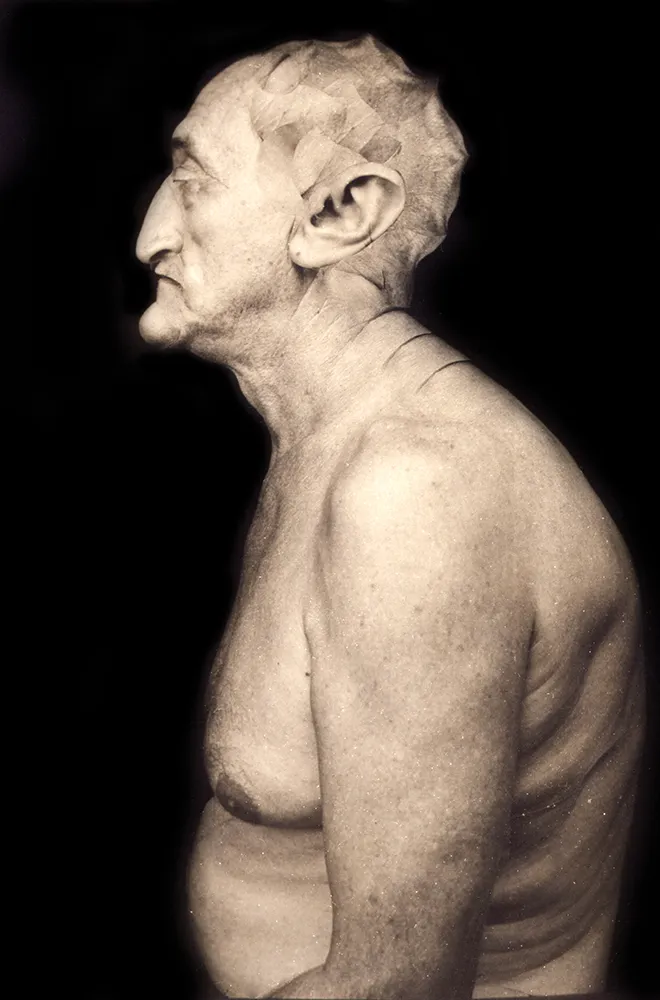
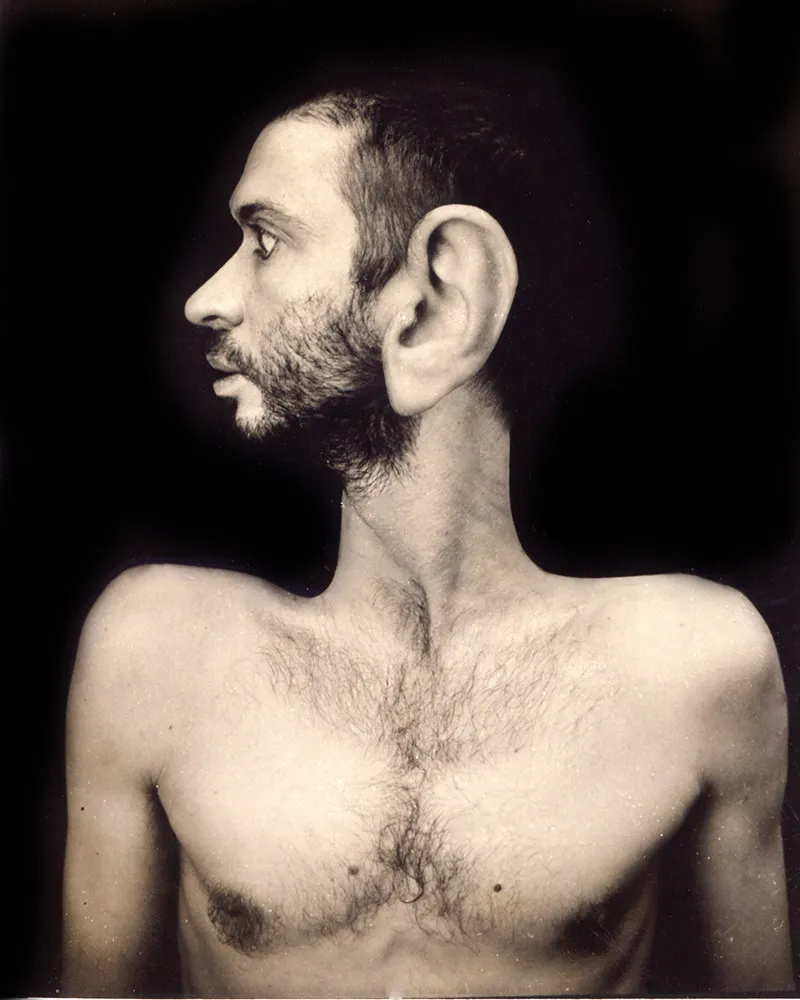
S. S.: The Baltic technology is better called “montage” — masks under the enlarger, also a very complex procedure, usually a thankless task because the effort is disproportionate to the result. Mykhailov had montages in this technique then. Now if you look at them, they are not very interesting. Paper collage is also not easy to do. Now it’s done in one day with a computer, but then it took a lot of time, glued on tablets one meter by one meter. The idea of “Bestiary” before the computer appeared, I invented how to make a cartoon from photos. One photo is glued on a tablet (remember Borya Mykhailov’s portrait?), and another, completely identical photo, is cut into small parts. These parts are placed on the one on the tablet, and you can move these parts on top and shoot animation. That is, the possibility to change the image and make something like collage caricatures. It was very labor-intensive work, I would never take it up now. That’s how the first portraits from “Bestiary” came out.
Then I had the idea to make modular collages — a simple move like building a house: you invent one module, like a brick, and from it you lay out the image. My big series “Phallog heraldry”, exhibited at the “Up-Down” gallery — all works were made from one module. And the idea was advanced — to return the phallic meaning to known symbols.
I did collage for so long that everyone got tired of it, and when my works were printed in serious publications, publishers had to write that it was done without Photoshop. When I made the first collage with a black woman (and the first weak computers appeared), Misha Pedan told Bob Mykhailov: “Cool, but a computer can already do this!” So when magazines started writing that it was done without a computer, without Photoshop, I realized that’s enough, it’s completely pointless now.
I. M.: Let’s talk about the “Up-Down” gallery now. It opened with your exhibition!
S. S.: Yes, we joked that it opened with Solonskyi’s exhibition and closed with Solonskyi’s exhibition — the installation “All my wives were virgins” (the installation was made for the “Blood Analysis” exhibition on Andriyivskyi in the Blanka gallery in the late 1990s). Then we got a nice place. Bratkov’s studio was turned into a gallery by our joint efforts.
I. M.: Well, I took very little part in the renovation.
S. S.: But I was always there, I lived nearby. Bratkov, Ihor Chursin and I broke walls, painted. At the exhibition, about twenty of my photos hung — what could be shown at that time only with difficulty. Fortunately, Pyatkovka shot a video then, it’s now spreading on Facebook. Grisha Okun from Germany sent it to me. It’s very pleasant and unexpected after many years to see so many wonderful faces, young, beautiful! Many people were at the opening. We arranged a performance — seated naked musicians from the “Kazma-Kazma” band at the entrance. Our acquaintances, young businessmen, gave us money, so much for those times that it was enough for champagne and even pineapples! In 1992! Now, if you come to an exhibition even in a very good gallery, they’ll pour you sour wine. After the opening, they brought a touring dancer-improviser from the Netherlands to the exhibition, and he made a dance interpretation of each work, danced each photo. Unfortunately, history did not preserve the dancer’s name.
I. M.: Who influenced you in Kharkiv photography, your formation?
S. S.: It started in the mid-80s when I began to attend those rare Kharkiv exhibitions. The first exhibition I got to in Kharkiv was the “Vremya” group exhibition at the House of Scientists. Suprun, Malevany, Borya Mykhailov, Rupin. I got into such a powerful atmosphere, among people who mainly did aesthetic photography, collages. There was practically no social photography at that exhibition, except maybe Sitnichenko’s works. Even Borya Mykhailov had that funny photo I mentioned — double exposure with a horse against the sunset over the river. In the “sandwich technique”, as they liked to do then. Borya would definitely disown it now. There were montages by Oleg Malevany, his famous “Freska” with Mykhailov as a model, the “Gravity” series, and Yura Rupin — naked ladies on cobblestones, generally pure aesthetics, what I liked.
It was similar to photos in hard-to-access Polish photography magazines: whatever you could see influenced you. Suprun’s collages, of course, Malevany’s “Gravity”, which everyone liked then. Our masters took half my life — forced me to do collage, though I could have shot “pure” photography. Now, when I see how people actively use Photoshop manipulations, it annoys me terribly, I think it spoils photography. It took me half a lifetime to understand this. So Suprun, Malevany, Zhenya Pavlov influenced me.
I. M.: We, being in the same crowd, in the same cafe, felt quite different influences. For me, Mykhailov and Sitnichenko would be first.
S. S.: I practically didn’t see Borya Mykhailov’s works then, we weren’t even close acquaintances. I wasn’t familiar with Sitnichenko at all, and I don’t remember any of his photos. I only remember him walking on Sumska Street in a hat and with a cane, much later. But Kharkiv influenced me, of course. Imagine, a person comes from a village, gets to such a cool exhibition in Kharkiv, where people do such unexpected, modernist things. Before that, you only saw “Soviet Photo” — worker, collective farmer, and here you see completely different art.
I. M.: And who was influenced by Serhiy Solonskyi’s work?
S. S.: You can’t ask that question like that. I know I didn’t influence anyone, and my contacts with young people are very limited, practically accidental.
I was often invited to give lectures, conduct master classes — “teach us.” I’m pleased when people like what I shoot, but this is a field where it’s absolutely impossible to teach. What I could teach is no longer needed by anyone. When I imagined chemical processes at the molecular level, what and why happens with the image, I could teach that. When it’s in a computer, where Photoshop replaced chemistry and physics of the process — Photoshop is available to everyone. That’s about the visual technique. As for content, I can’t explain why I reacted to this image and not that one. It depends on what you read in your life, what music you listened to, who you befriended — things that create your worldview and perception, but have no direct relation to photography. If a person likes the image I made, then they don’t need to be taught because they already know. You can teach how to use light, you can teach composition.
I. M.: Well, that’s not entirely true. About eight years ago, Vadik Trykoz, whom I once taught English, came to me, bringing Serhiy Lebedynskyi — they hadn’t even called themselves the “Shylo” group yet — and said: “Serhiy Solonskyi told us you’re also a photographer, we brought works to show.” So don’t be shy.
S. S.: Yes, guys came who work in Germany, Austria, shoot with Leicas and print on Ilford, showed their works. I never pressure anyone and never did. You see, I’m not interested in how it’s done, digital or analog photography, if I’m not interested in the image itself, that’s a secondary question for me. I went through the whole analog photography school, my whole life was in the lab, since I had to do it professionally, I know both. I was at their exhibitions two or three times. Good, active guys, I like them. I often like what Krasnoshchok does, but there’s always a question — why does a person of a completely different generation work with periods, that is, nostalgically for times they didn’t live through? I still think a photographer should be in their own time. But — interesting. And it’s always interesting what they will do next, what they will move on to. Do you have that feeling?
I. M.: You know, I have many thoughts about “Shylo” — I also want them to change, take the next step, and Lebedynskyi seems to have started it judging by what I saw in Odessa in spring. But this is your interview, not mine. Please continue.
S. S.: Maybe now it’s such a period when there’s a crisis everywhere, or maybe I’m an old bore, but before you come to an exhibition and always see something you want to steal, it touches you and you think like in youth: why didn’t you do it? Now you come — nothing. Nothing touches me. I blame myself, my crisis.
I. M.: Since you started talking about crisis, I’ll ask you a question I often ask myself. I have a feeling of crisis in the current state of photography, connected with the appearance of an incredible number of new possibilities. I mean the appearance of digital photography, Photoshop or similar post-processing programs. You already said that if before it took a huge amount of work to make a collage, now a program can do it. Or attitude to color: in the 1980s we said: here is Rupin’s most accurate color transfer, Malevany’s most saturated colors. Now you set the white balance correctly — here’s color reproduction, move the slider — here’s saturation. Black-and-white photography also seems artificial. Please talk about this.
S. S.: In the 70s–80s, it was about overcoming material resistance, mastering the craft. It took a person 10–15 years to become a professional. Only after that, some who mastered the craft enough could do high-level work, do art. How could you love color after these torments, when after a huge amount of time spent you saw this color, dirty, terrible — what could attract in it?
When Malevany bought that “Sibachrome” for crazy money and printed from slides, it was still somewhat similar, but it wasn’t about art, it was about craft. Rupin and Malevany were compared then — can you do that? Can you make a sharp photo? That was mostly the end — what should be taken for granted. Modern technologies solved this problem.
And black-and-white photography for most consumers immediately becomes vintage. Although I think it’s wrong because a photographer should control what he can control. A photographer’s possibilities are very limited. How can you control color if you don’t work in a studio? I shoot some composition, work on it, and suddenly — a piece of blue sky! It’s absolutely irrelevant! And when you convert to monochrome, everything falls into place.
I. M.: Don’t you find that monochrome itself in digital shooting is also somewhat a forbidden technique? Before it was forced monochrome of black-and-white film, now it’s imposed.
S. S.: No, why? New technologies, new materials appear to be used. Contemporary art uses them, no one forbids it, on the contrary, it becomes almost the essence of contemporary art — to use all new possibilities. You can switch a digital camera to black-and-white shooting and shoot as before. You shoot in color because it gives you additional possibilities: if you need color — you have color, if you don’t need it, you can easily get rid of it. The main thing is a good photo, how it’s made is secondary.
The crisis problem in photography is the feeling that photographic language has exhausted itself, or something, I don’t know, I haven’t answered this question for myself either. Such a terrible amount of information, such an informational noise has arisen that now the main problem is choice: from this mountain, from this pile of garbage it’s simply difficult to select something. If before time was spent on some complex manual work, now it goes to staring at the computer and selecting.
Students often come to me: “Can you look?” I say, okay, just select the images you want to talk about. I don’t know any other way to advise you. Once a lady came: “Did you select?” — “Yes,” and laid out 300 photos. Three hundred! I haven’t made that many works in my whole life! That’s the difference between the current generation and ours. I’m quite a professional person, I’m used to working with photography so that I have enough analytical and pedagogical strength to analyze a maximum of ten photos. There is information. One photo can have as much information as a whole thick book. And about the crisis — it’s rather individual, everyone has their own.
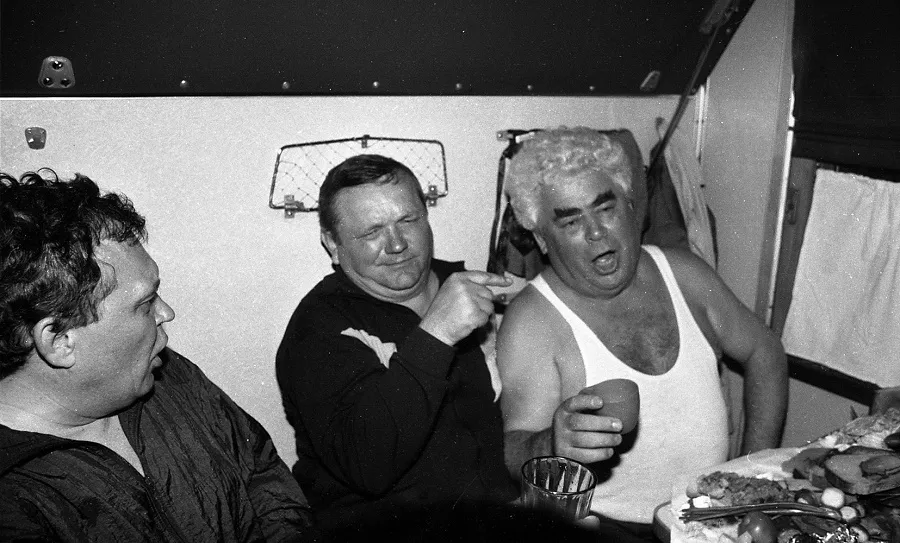
I. M.: Let’s talk about the lesser-known part of your works, social photography.
S. S.: This part of the work always depended on circumstances. I was lucky to get into situations like in “Moonshiners” or “Let’s Drink” — and you just have to react correctly to the object and press the shutter button in time. This is not aesthetic photography in a studio where I can organize everything. Social photography — mine, at least, I consider it more valuable than all my other works because it’s a subculture, closed groups where random outsiders are not allowed, and you can’t always shoot. When you get on a train, in a reserved seat car with bosses going to a meeting who arranged a grand drinking party — you can’t invent that, you just had to react correctly and document it. I like these photos and will always like them because they are alive and not invented.
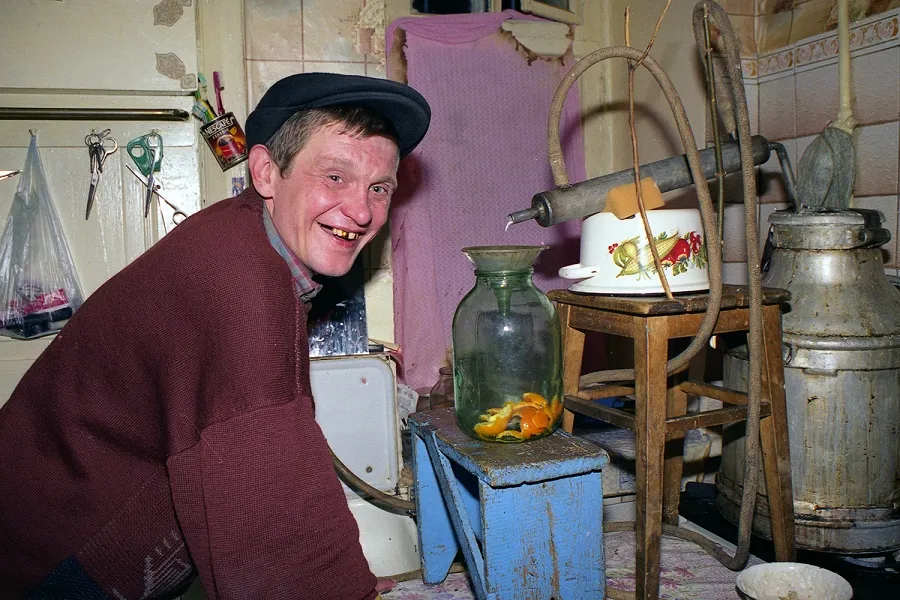
I. M.: Tell us more about the “Moonshiners” series, please.
S. S.: In my yard in central Kharkiv, there was a place where moonshine was made. Different types gathered there, bandits, thieves, as I was told later. There was one wonderful man, one of the characters in this story, who often approached when I was reading a book in the yard. He would come up and ask: “What are you reading, what is it about? Do you have 50 kopecks?” I always gave him “for a hangover.” The most interesting story is connected with the character who stands near the moonshine apparatus in my photo. I barely got him an expensive German catalog, which he got thanks to this picture, and he was so happy that he drank even more than usual because he felt like a star. And when he barely got out of the binge, his first thought when he came to me was: “So you’re making money on me!” I had to explain that it was an international exhibition, and these catalogs were distributed all over the world — to Japan, South America, everywhere, and it’s quite possible that tomorrow a helicopter will land from the sky, and someone from Hollywood, seeing you in the catalog, will say: “Here! This character is exactly what I need for a movie!” He thought: “Really? Well, then give me another hundred grams.”
I. M.: And about your latest works. You now post many new works on Facebook, almost in street photo style. What are you looking for wandering the streets of Kharkiv?
S. S.: Honestly, it’s just therapy. When you walk without a camera, you don’t notice what’s happening around, on the contrary, you immerse yourself in yourself. But when you have a camera in your hands, everything is completely different: you look at what’s happening around, look for a frame and completely immerse yourself in what’s happening around, forgetting about problems. I just walk and react to what’s happening around: something I liked — I shot it, “stopped the moment,” hoping this mosaic will form something whole. And with a lucky coincidence, something comes together. I’ve been doing this for only a few months and don’t yet know how to classify what comes out. But by the reaction of qualified professional people — curators, art historians — I felt it’s right. Especially against the background of what is happening now in photography, against the already mentioned feeling of exhaustion of photographic language, the continuous “smartness” in galleries — an attempt at an honest reaction to the surrounding world, perhaps the most alive thing there is.
I. M.: Slyusaryov and Tarnovetsky come to my mind when I look at your latest works. These authors influenced me a lot back in the 1980s. And you unexpectedly fit into this aesthetic.
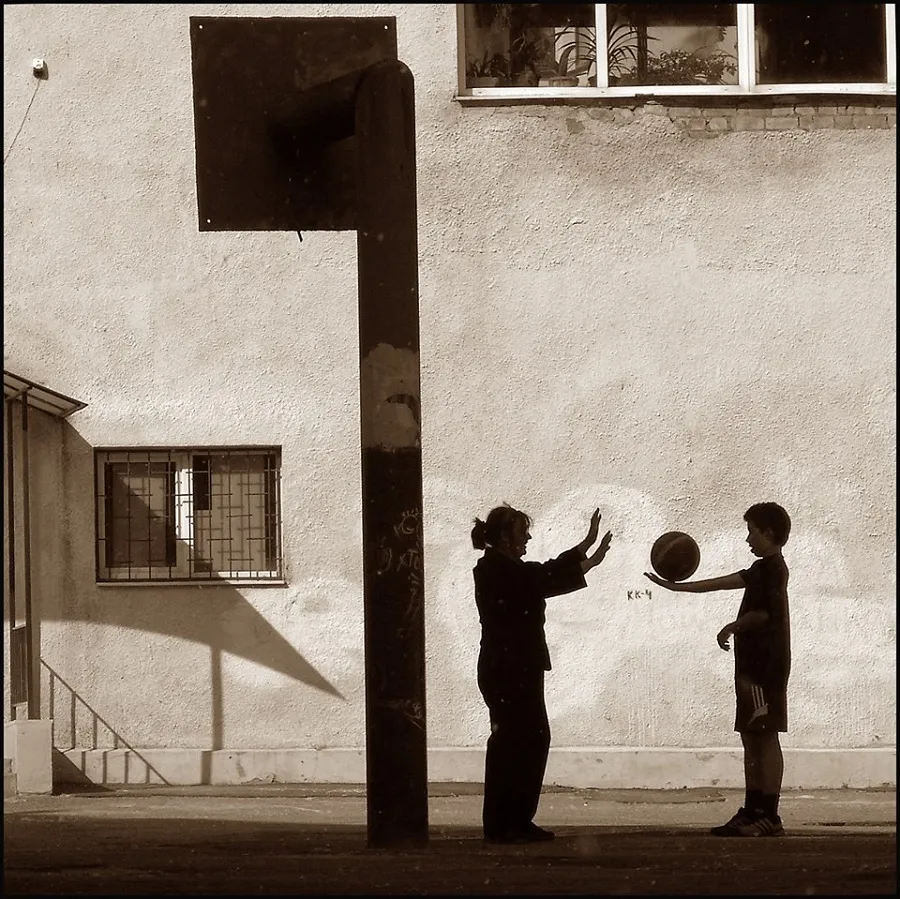
S. S.: Yes, you come out of one tradition and get into another. I saw few works by Slyusaryov, but I remembered everything I saw. Slyusaryov is pleasure from the accuracy of composition and its balance. I recently felt that I see, I got this confidence, I didn’t have it before. When you know it has to be exactly like this — exactly such a composition, where I can’t change anything, all details, all nuances are in their place.
I. M.: And the last question. What happened to that Zeiss lens that cost a whole cow?
S. S.: A mysterious fate. The studio camera for which it was intended was exchanged by one of my grandfather’s heirs for a Kyiv 6S, but, according to my brother, with a different lens!