
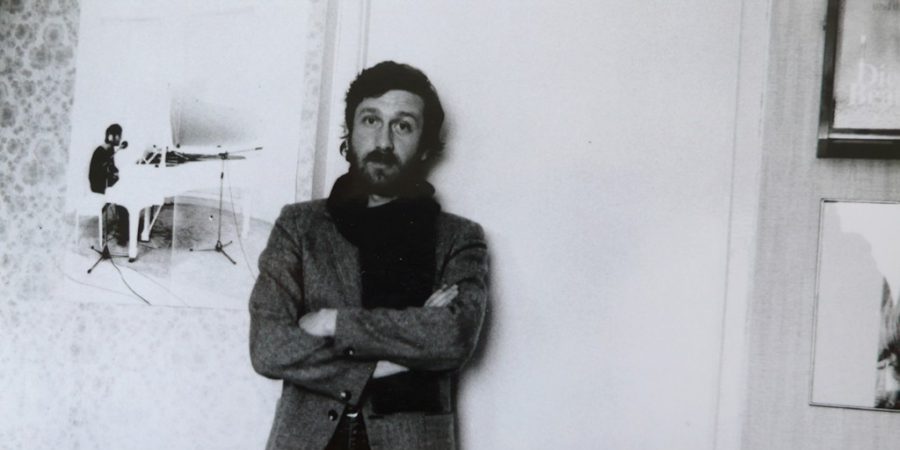
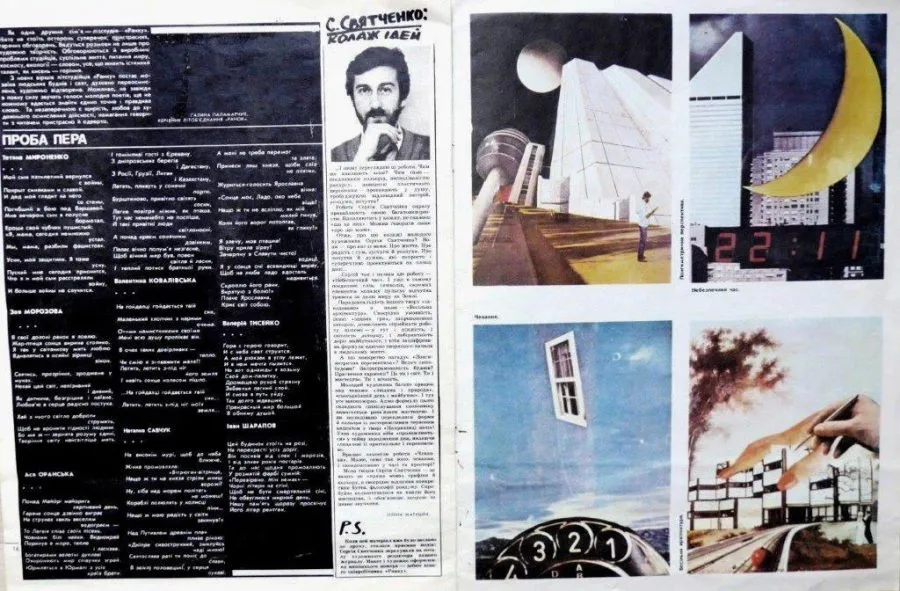
In 1986, Serhii Sviatchenko was invited to the position of art editor of the Komsomol youth magazine “Ranok,” where he worked for several years. His name is also associated with the first exhibitions of contemporary art in Kyiv. Among them is the exhibition “Kyiv — Tallinn” (1987) at the Polytechnic Institute, which is still remembered in artistic circles as one of the brightest events of the late 1980s.
Today, Sviatchenko is one of the most sought-after artists in Denmark. He is a member of the Danish Artists and Graphic Designers Association (BKF), laureate of the international Yellow Pencil Award 2007 (London). Serhii Sviatchenko was born in Kharkiv in 1952. In 1975, he graduated from the Kharkiv Architectural and Construction Institute. Architect and artist. He defended his PhD thesis in architecture at the Kyiv Engineering and Construction Institute. Since 1990, he has lived and worked in Denmark. His collages and paintings have been exhibited in Denmark, Germany, Italy, Austria, France, the United Kingdom, Canada, and the USA.
As part of the Research Platform’s work, Kateryna Yakovlenko spoke with Serhii Sviatchenko about the pivotal 1980s and contemporary art.
Kateryna Yakovlenko: We began our research primarily with the creative biographies of Kyiv artists who were forming in the late 1980s. You come from a family of Kharkiv intellectuals. I’m curious, what was the context of Kharkiv in the late 1980s, and how different was it from Kyiv?
Serhii Sviatchenko: I moved from Kharkiv to Kyiv in 1983 and enrolled in postgraduate studies at the Kyiv Engineering and Construction Institute to write a dissertation on architecture. So I cannot confidently speak about the socio-political situation in Kharkiv and its differences from Kyiv. However, I assume that until 1986, both Kharkiv and Kyiv experienced a “dead season.” (In 1972, Kharkiv photographers created the group “Chas,” which included Anatolii Makienko, Oleg Malovanyi, Boris Mikhailov, Yevhen Pavlov, Yurii Rupin, Oleksandr Suprun, Hennadii Tubalev, and Oleksandr Sitnichenko. — Ed.) When in November 1988 we, together with “Soviart,” brought the first Soviet-American exhibition to the Kharkiv Art Museum, it was like an atomic bomb explosion that shook all levels of the city’s cultural life — from party leadership and media to the museum’s management. I note that it was already 1988, when practically everything was allowed — even the installation of two flags, American and Soviet, at the exhibition entrance.
K. Y.: Did Kharkiv as a city influence your artistic practice?
S. S.: Kharkiv is unique in its own way. Its architecture, structure and planning, streets, parks, the river in the center, the student atmosphere — all of this is distinctive. I was born, grew up, matured, and received my education here. It was in Kharkiv that I first saw Andrei Tarkovsky’s film “Mirror” — in a small cinema at the Builders’ House. The film’s structure, its aesthetics, and expressive symbolism penetrated so deeply into my consciousness and emotional sphere that it became a kind of spark, an aesthetic inspiration for all my subsequent creativity. But the most important factor in my formation as an artist and my further creativity, of course, was my family.
I grew up and was shaped in the family of architect, professor Yevhen Adrianovych Sviatchenko, a corresponding member of the Academy of Architecture of Ukraine. My father headed the Department of Architecture at the Kharkiv National Academy of Urban Economy and was an excellent artist. Our home was filled with countless watercolors and paintings of his, brought from student practices in various corners of the Soviet Union. When he returned, my mother and I, carefully stepping over the works laid out on the floor, examined them, discussed, and chose the best. His works are still kept in my collection and in the collections of my children. These discussions taught me a lot and remained etched in my memory for a long time.
My father took me to museums, guided and inspired me, taught me to appreciate classical painting. The Kharkiv Museum holds one of the best collections of Peredvizhniki in the country, and we often visited it. At home, there was also a large library on art and architecture, which contained books about Russian and Ukrainian avant-garde and constructivism. My father lectured on these topics.
A significant role in shaping my artistic worldview was played by the teachers of the architectural faculty of KhISI: professor, academician of architecture Viktor Antonov and professor Yosyp Kravets, who taught painting and drawing. I communicated closely with Viktor Leonidovych Antonov, who was a consultant for my scientific work. He was a close friend of Andrei Tarkovsky and organized screenings of his films “Mirror” and “Stalker” in Kharkiv when the director’s work was practically banned in Ukraine.
We talked a lot on the phone and also took long walks in the Park of Culture. During these walks, Antonov taught me to see the inseparable connection with nature, to understand how open and closed spaces — both in nature and architecture — affect a person. The idea of the kinship of architecture and art is one of the most important keys to understanding all my work. Professor Antonov saw a special embodiment of this idea in the works of Michelangelo and Le Corbusier, who reached the heights of mastery in combining two arts — architecture and painting.
K. Y.: How did your artistic practice begin in Kyiv?
S. S.: In 1985, already living in Kyiv, I completed the third chapter of my dissertation and was preparing to finish the work. I worked in various libraries of the Soviet Union, collecting materials, including the library of the Ukrainian branch of the All-Union Scientific Research Institute of Technical Aesthetics (VNDITE), which was then located near the Kyiv Circus. Despite the general backwardness of the Soviet system, the institute’s management was quite progressive: significant attention was paid to the development of technical design in the USSR, which implied certain ideological relaxations. Therefore, in the library, one could find various Western publications — books and thick magazines that were impossible to see in ordinary scientific libraries.
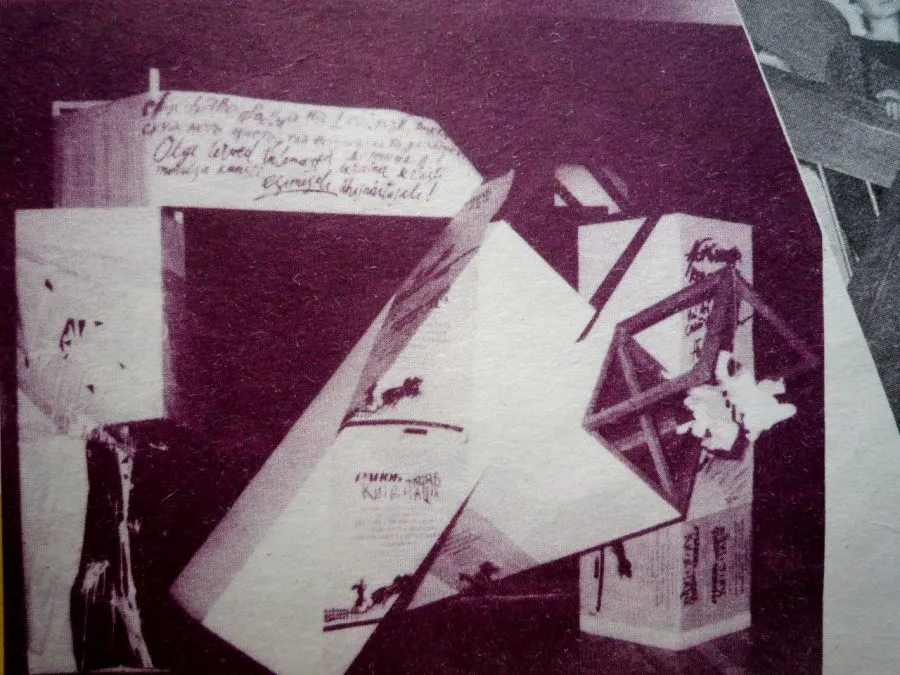
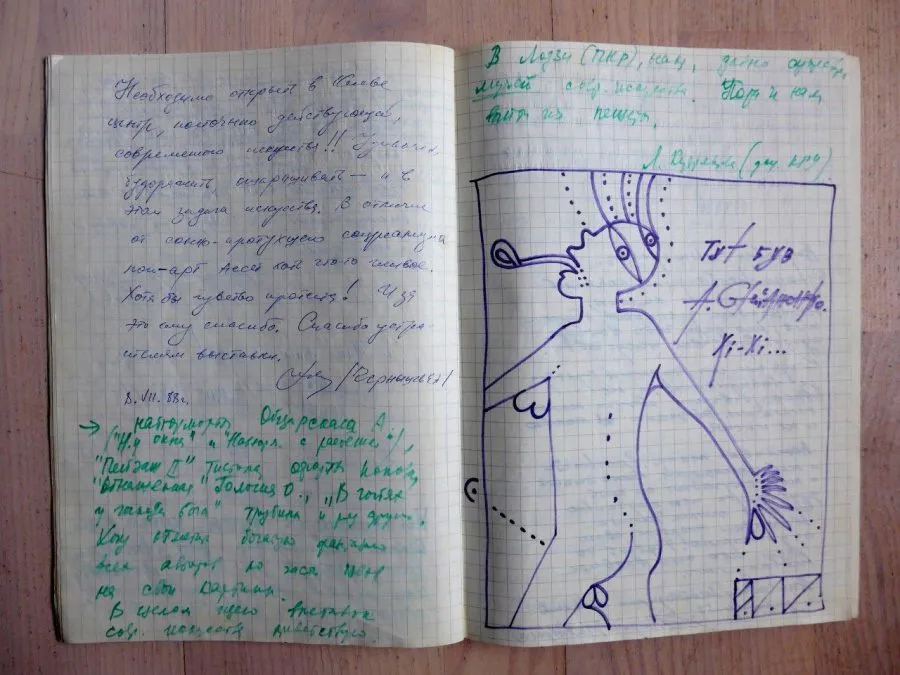
Knowing that I worked with collage, which in this environment was considered an extremely interesting and progressive form of artistic creativity, the institute’s management offered me to organize an exhibition of my works. I continued creating collages while working on my dissertation. The exhibition space, organization, and design of the exposition were prepared at a high level. According to my sketches, I was helped to build a wooden spatial structure at the entrance to the exhibition, reminiscent of Alexander Rodchenko’s constructions of the 1920s. The frames and design of the works were financed by my close friend, collector Valentyn Vasylovych Suslov, in whose collection some of my works from that time are now kept. The exhibition was titled “Serhii Sviatchenko. Collage.” I even have a guestbook — a wonderful historical document of that era.
K. Y.: Tell us about your work at the magazine “Ranok.” What did it mean to be an art editor of a youth magazine during perestroika and glasnost?
S. S.: I got the job at “Ranok” thanks to my collages. The changes that began in the country unexpectedly opened up opportunities for artists to freely, without censorship, show and sell their works. One morning, on the day of Kyiv Day celebrations, my wife Olena and I took a place on Andriyivskyi Descent. At that time, I thought that no one except close friends and acquaintances would buy my collages. Before perestroika, I had accumulated over a hundred works. Imagine our joy when people began to approach, inquire, ask questions, and even buy them!
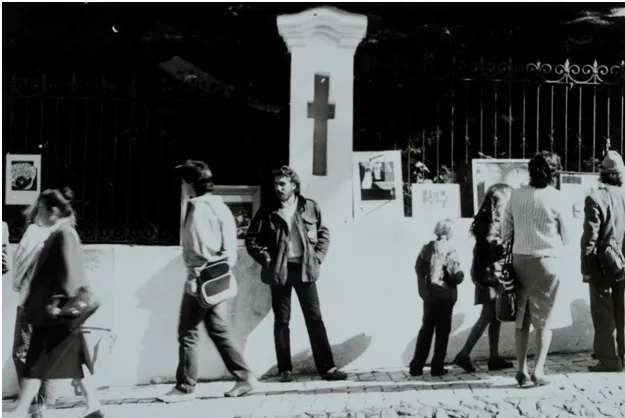
One day, on the same Andriyivskyi Descent, a man approached me, introduced himself as Oleksandr Rushchak, the chief editor of the youth magazine “Ranok,” and said: “I really like your thinking and your works. I offer you the position of art editor of the magazine. No prohibitions, no censorship — do whatever you want.”
I radically changed the layout of the magazine “Ranok,” involved young artists and photographers in the work, expressed new ideas and conveyed new information through design. Thus, I involuntarily found myself among the most active ideologists and organizers of “perestroika culture” in the country. Having broad powers to publish materials about cultural processes in the magazine and attending various cultural events of that time, I decided to unite young artists whose creativity was close to me and seemed radically new for the second half of the 1980s around myself and the magazine.
To some extent, we took on the functions of the state in the field of culture and decided ourselves how to organize exhibitions of contemporary art, independently selecting participants and curators. For example, communicating with Viktor Khamatov, the leader of the theatrical and musical “Youth Crossroads” — a festival held in Kyiv for three years starting in 1986 — we decided to include exhibitions of young artists in its program. Essentially, I was their organizer: first working with them at “Ranok,” and later at the Center for Contemporary Art “Soviart.” (Ed.)
From the very beginning of working at the magazine, we actively cooperated with the youth section of the Union of Artists of the Ukrainian SSR, its head Tiberiy Silvashi — a talented artist and an extremely pleasant person to communicate with — as well as with Oleksandr Solovyov. Tiberiy worked a lot in the union and was always willing to help us and participate in organizing the first exhibitions.
K. Y.: In 1987, you organized for the first time the contemporary art exhibition “Kyiv — Tallinn,” where you showed works by artists who now occupy an important place in art. Why did the Kyiv press almost ignore this exhibition?
S. S.: We met with Viktor Khamatov and began discussing how to hold a large exhibition of contemporary art in Kyiv within the framework of “Youth Crossroads,” to show the works of the most interesting young artists, create an unusual design of the exposition, and at the same time make sure that the exhibition would not be closed the next day.
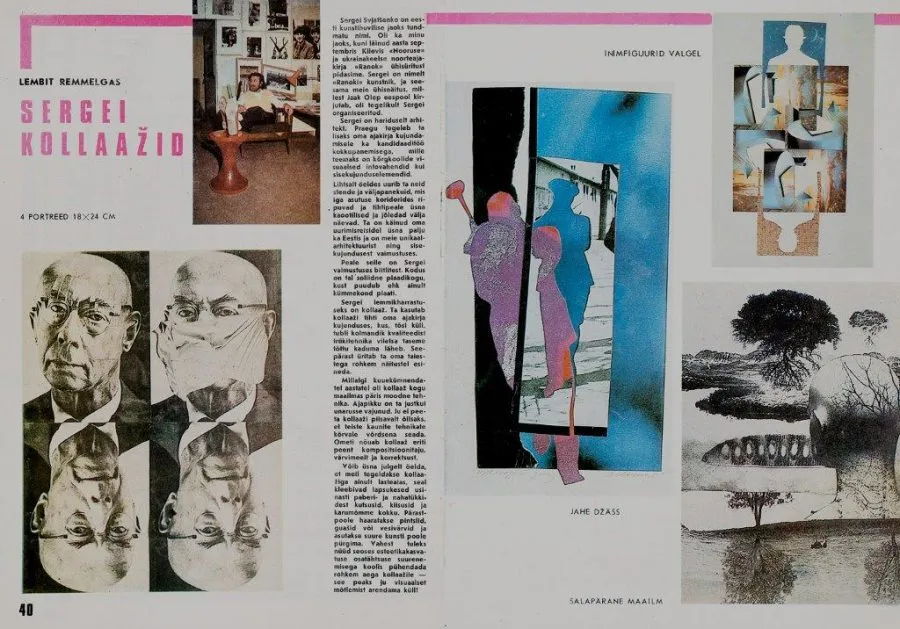
I proposed to go to Tallinn and negotiate cooperation between the youth magazine of the Central Committee of the Komsomol “Ranok” and an Estonian publication of the same status. I often visited Tallinn when collecting materials for my dissertation, knew the city well, and was aware of the level of development of contemporary art there. In the Soviet Union, the Baltic republics, especially Estonia, stood out for their openness to new things, primarily in art and culture. This was reflected in the quality and originality of the works. In Tallinn, we found the appropriate magazine — “Noorus.” Its art editor and my colleague was Lembit Remmelgas, an artist who had his own opinion on any issue.
Khamatov liked this idea. Together with Lembit, we visited studios, met artists, and quite quickly selected the most interesting ones. In Tallinn’s artistic circles, these names were already well known, so everyone immediately agreed to participate in the exhibition.
In Kyiv, among the participants were, as far as I recall, Oleg Tistol, Kostyantyn Reunov, Maryna Skugaryova, Oleksandr Hnylytskyi, Hlib Vysheslavskyi, Anatolii Stepanenko, Oleksandr Babak, and many others. Works by Valeriia Trubina, Oleg Holosiiv, and Yana Bystrova were also exhibited. (Ed.)
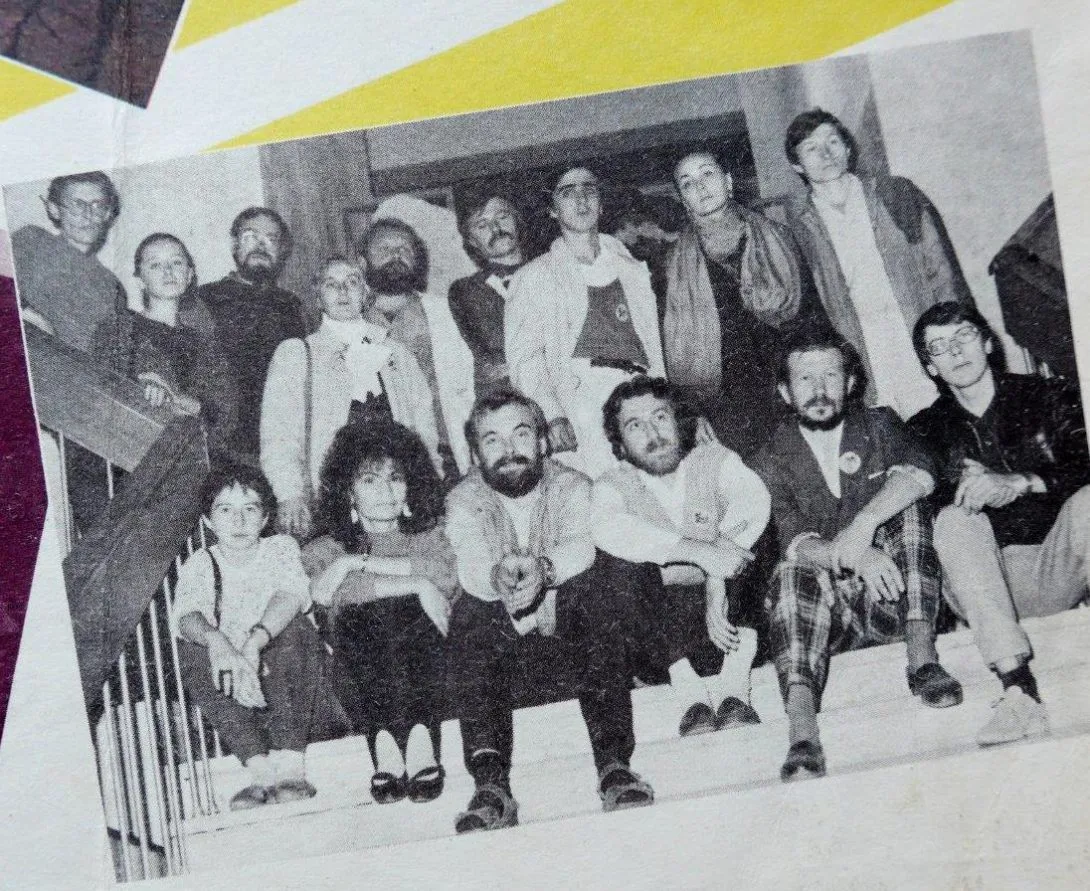
The exhibition went wonderfully. During its operation, we organized a discussion “We and Time,” in which many artists participated. The atmosphere and dynamics of the speeches were impressive. We all aspired to conquer new heights. Posters “Ranok + Noorus” were hung all over Kyiv, and all participants received special badges with the emblem of YC (“Youth Crossroads”) and various awards.
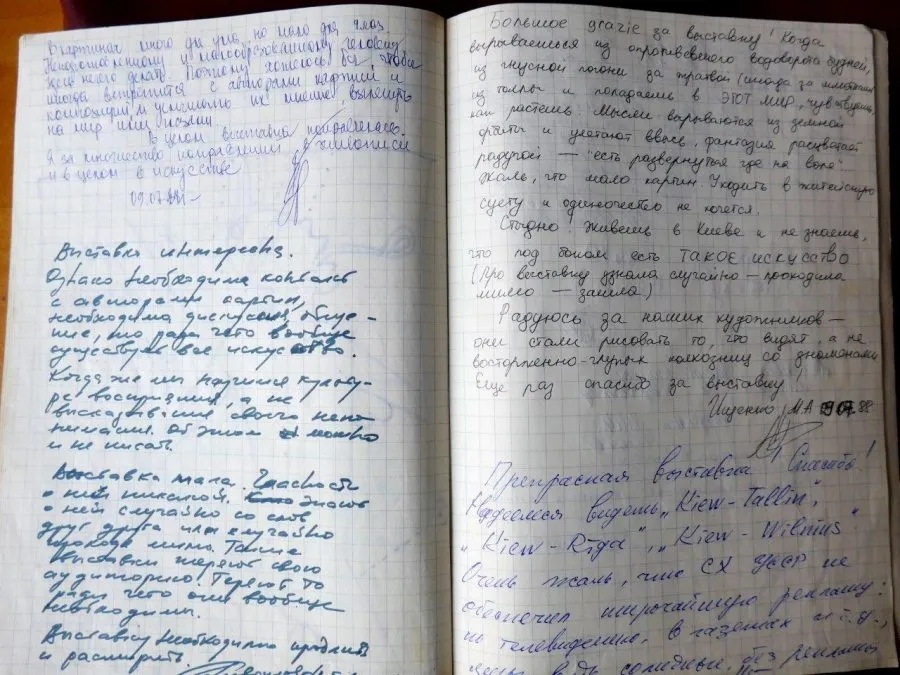
The Polytechnic Institute, in whose premises the exhibition was held, hospitably welcomed us, and many people visited it. I have a guestbook where, among other things, there is a note: “There are people who talk about glasnost, and there are those who work, do the job. Such an exhibition has never been in Kyiv, and a few years ago, one could not even dream of such. Thanks to the organizers! Well done! Signed. Kyiv.”
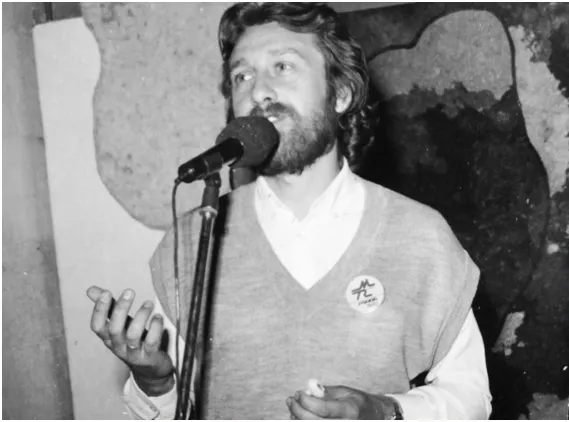
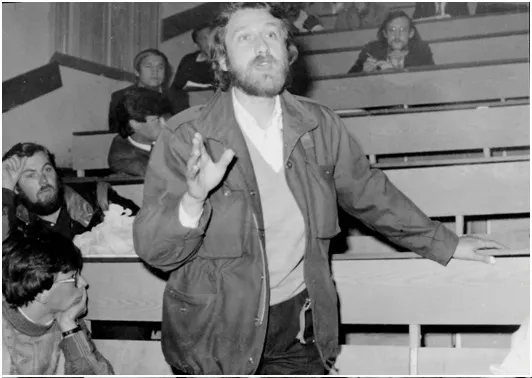
Unfortunately, there was no reaction from official Kyiv. Newspapers lacked publications, and there was no professional criticism. In 1987, it was difficult to predict how prolonged the perestroika period would be. Therefore, official structures waited and preferred to “not notice” the exhibition.
The main thing it proved: there is contemporary art in Kyiv that can and should be shown and discussed as a separate phenomenon. The artists who participated in this first project now constitute an important and active part of Ukrainian contemporary art.
K. Y.: The entrance to the exposition was complemented by architectural elements. Was this your decision as the organizer and architect of the exhibition, or did it arise from its concept?
S. S.: We aimed to make the exhibition memorable and achieve this simultaneously by visual and substantive means without spending many resources. We succeeded. Numerous visitors — as evidenced by the guestbook — positively perceived the exhibition, noting its unusual design and atmosphere. We also created musical accompaniment using a piece by one of the contemporary Estonian composers.
We thought through the concept of the exhibition, its architectural and planning solution, directions of viewers’ movement, and placement of works. We decided to alternate works of Estonian and Ukrainian artists to, on the one hand, show the differences between artistic styles, and on the other, emphasize that this was a joint project in which artists united and worked together. I designed the architectural structure at the entrance, and my Estonian colleague Remmelgas suggested complementing the spatial composition with texts in Estonian and Ukrainian and exhibition posters.
K. Y.: How did your work as an exhibition organizer develop further? How did you select artists and review works?
S. S.: The success of the exhibition at the Polytechnic Institute convinced the editorial board of “Ranok” of the correctness of the chosen course: the magazine could indeed become a mouthpiece of perestroika in Ukraine. A large article by Olena Matushek about the exhibition with numerous photographs was published in it. Soon we continued cooperation with the Baltic republics. The next project was an exhibition of Lithuanian artists organized jointly with the magazine “Nemunas.”
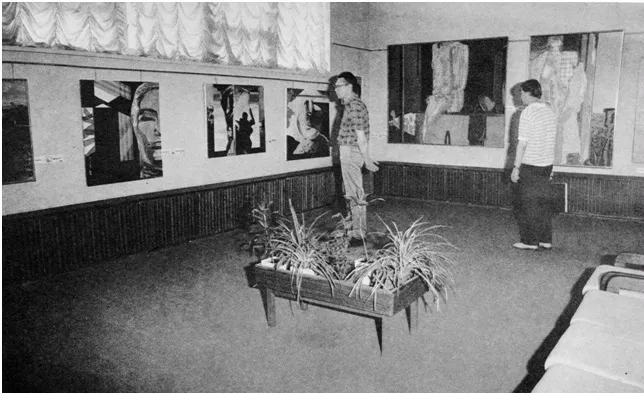
Thanks to the efforts, understanding of our tasks, and openness to cooperation of Yevhen Solonin, whom we met at the exhibition at the Polytechnic Institute, we reached the level of official cooperation. If I am not mistaken, he then headed the exhibition hall of the Union of Artists on Volodymyrska Street. Tiberiy Silvashi, who headed the youth section of the Union of Artists of Ukraine, also played an important role. The magazine “Ranok,” on the one hand, and the youth section of the Union of Artists, on the other, confirmed a shared interest in the new development of fine arts in the country.
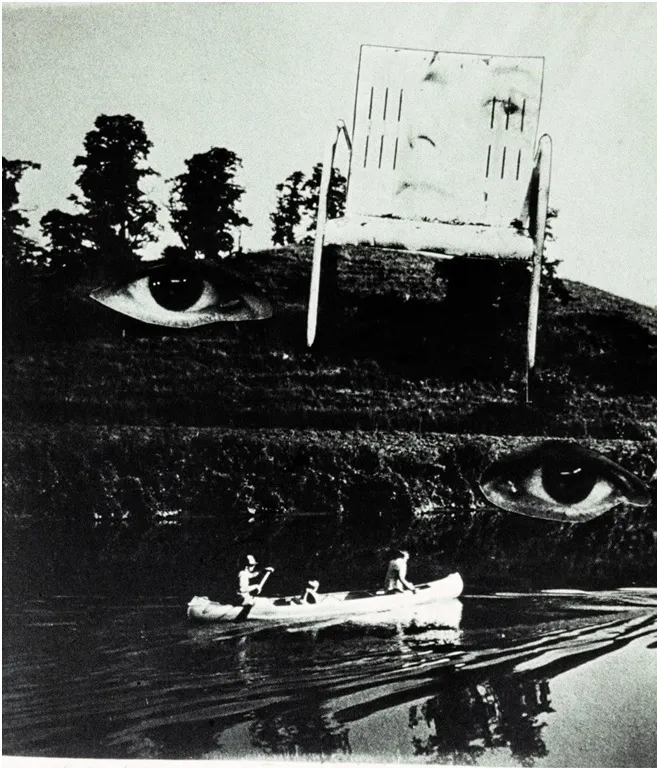
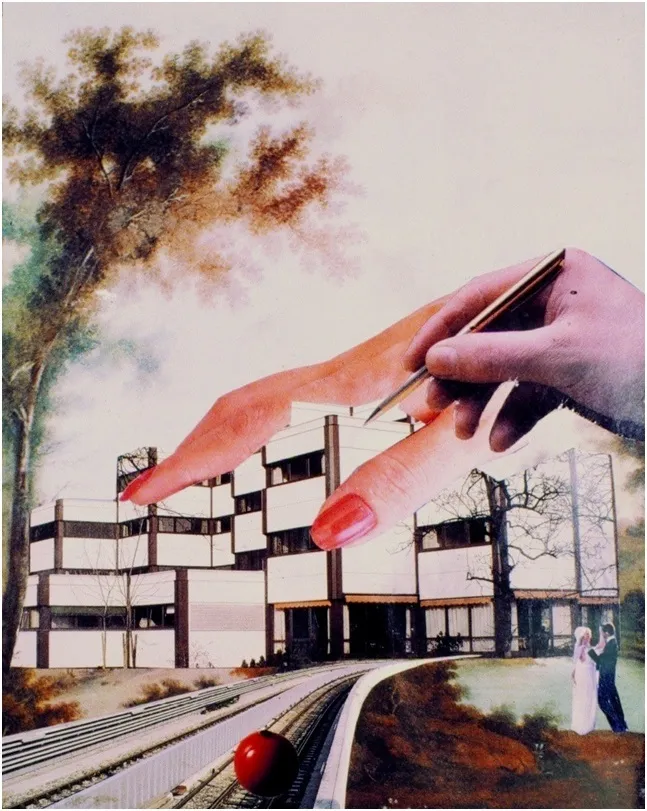
By that time, Kyiv artists Oleg Tistol and Kostyantyn Reunov had already finalized the manifesto “The Willful Edge of National Post-Eclecticism” and participated in the exhibition with new works. We also showed works by Fedor Tetianych, Oleg Holosiiv, and other artists. Then I first presented my “collage painting” and the collage series “Mysterious World.”
Together with Lithuanian artists, Mykola Trokh — then a novice photographer experimenting with the medium, who later became one of the brightest figures of Ukrainian contemporary photography — and Oleg Holosiiv, we transformed a large window on Volodymyrska Street side into a giant painted installation. Fedor Tetianych arranged a stunning sound performance with tin cans.
Now you understand that he was a genius of performance, an avant-gardist in everything, a talented artist, and an interesting interlocutor. And most importantly — his actions were entirely international. The costumes he created by hand always stood out with original style and innovative design.
The dynamics of the exhibition resembled the atmosphere of the avant-garde of the 1920s. The musical accompaniment was provided by Kaunas composers Vidmantas Bartulis and Faustas Latėnas. Unfortunately, the exhibition lasted only 14 days because we were given a small “window” between scheduled expositions. However, we gladly agreed even to such a short term.
In the guestbook about the exhibition, there was a note: “Such an exhibition is an event. People rarely see such, hence misunderstanding, sometimes complete rejection. We ourselves rob ourselves by rejecting the unfamiliar, even if not always perfect. A big request to continue (underlined twice, exclamation mark). Two weeks is not a term for such works.” The reviews also mentioned the need to create a gallery of contemporary art.
The next was the first Soviet-American exhibition “Creating the World of Art Together.” It was organized by the American company Global Concept and the Center for Contemporary Art “Soviart” in cooperation with the youth section of the Union of Artists of Ukraine. The solemn opening took place on October 1, 1988, in the exhibition hall of the Union of Artists at Volodymyrska Street, 51/53. The hall could not accommodate all those willing: people stood near the entrance and around the building.
I attended many openings of various exhibitions but never before felt or saw such interest, mutual understanding, and joy. Everyone rejoiced at Gorbachev’s glasnost — the opportunity to organize and open such exhibitions, write and speak frankly without looking back at censorship.
Special promotional materials were prepared for the opening: catalog, poster, badges, and much more. I developed the “Soviart” logo and T-shirt design. They were printed and made in America. The T-shirts arrived only a few hours before the opening — delayed at customs. They were of excellent quality: dense cotton, red and black colors, high-quality print, the inscription “Made in USA.”
All preparation for the exhibition, including the installation of paintings and visual design, was carried out jointly by Soviet and American artists. Participants worked side by side for several days, creating an unusual atmosphere of friendship and mutual understanding for us at that time. Immediately at the entrance, visitors were greeted by a large wall with a poster installation, completed by the joining of two flags — American and Soviet.
The exhibition was successful. Probably, there was no newspaper or magazine that did not write about this event, including Moscow publications “Iskusstvo” and “Decorative Art of the USSR.” The official English-language magazine “Ukraine” published a large review of the exhibition, placing Oleksandr Roitburd’s work on the back cover.
Participants included Roman Zhuk from Ivano-Frankivsk, Jurate Mikolaityte from Vilnius, Dmytro Kantorov and Vadim Zakharov from Moscow, Diana Olson from San Francisco, Kostyantyn Reunov, Oleg Tistol, Oleksandr Hnylytskyi and I from Kyiv, Louis Biket from Lexington, Ivars Poikans from Riga, Oleksandr Roitburd from Odesa, Mati Karmin from Tallinn, Denis Doran from Dallas, Pavlo Kerestey from Uzhhorod, Robert Lee Foster from Fort Lee, and Joy Michelina Sentofanti from New Mexico. The American curators were John Taska and James Hughes. After Kyiv, the exhibition was shown in many cities of Ukraine, as well as in Tbilisi, Georgia.
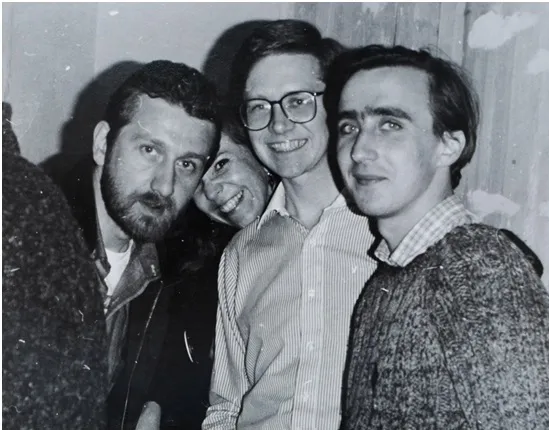
Next, we organized the exhibition “21 Views. Young Contemporary Ukrainian Artists,” which was shown in Denmark. Participants whose works had already been exhibited at the Polytechnic Institute joined Pavlo Makov, Oleksandr Sukholit, Leonid Vartivanov, Yurii Solomko, Oleksandr and Serhii Zhivotkov, and others.
By that time, a protocol on cultural cooperation between Kyiv and the Danish city of Odense had already been signed. In April 1989, the first official art exhibition of Ukrainian artists opened in the Odense City Hall. It was successful: the Danish press wrote a lot about it, and TV broadcasts were aired.
Then we were already discussing the details of the next large-scale exhibition “Ukrainian SmallART (60–80s),” where we planned to present alternative Ukrainian art of the previous three decades — both mature masters of the 1960s–1970s and young artists in the new context of perestroika. The exhibition opened on January 23, 1990, in Kyiv, in the premises of the Chamber of Commerce and Industry of the Ukrainian SSR. A luxurious catalog printed in Denmark was prepared for it, and later the exposition was shown in Odense and Copenhagen. I participated in the project with my latest painting series and the work “Joy Beyond the Mountains.”
The Odense municipality decided to offer art critics and exhibition visitors to choose the best work among those presented. To my surprise, they chose mine. I was offered to spend three months in Denmark as a guest artist and was provided with a studio. On October 6, 1990, I arrived in Denmark with a roll of canvases and a bag in hand, and the next day I turned 38.
I often wondered why the Odense municipality’s cultural department chose my work then. After all, this decision determined my future life. In 1993, the Danish parliament made an exceptional decision: “Based on exhibitions and works created by Ukrainian artist Serhii Sviatchenko during three years of his activity, as well as considering his close ties with artistic circles and contribution to the country’s cultural life, to grant him and his family the right to permanent residence and work.”
Having lived here for many years, learning the language, culture, and traditions of artistic life, the history of abstract painting in Denmark, its styles and directions, I came to the conclusion: Danes interested in art mostly perceive works stylistically close to the painting of the avant-garde “Cobra” movement (1948–1951), led by Danish artist Asger Jorn, as interesting, understandable, and worthy of attention.
Immediately after the success of the project “Ukrainian SmallART (60–80s),” we organized the exhibition “7+7” — seven Danish and seven Soviet artists. A wonderful catalog was prepared for it. Among the participants were Valentyn Rayevskyi, Serhii Panych, and Tiberiy Silvashi from Kyiv, and the Danish part was curated by artist Jan Jensen. I find it hard to recall all participants. It was an atmosphere of mutual understanding and cooperation, very similar to that which prevailed during the Soviet-American exhibition.
The last in the list of exhibitions I organized and prepared was “Flash. New Generation of Ukrainian Art.” It took place in the House of Architects’ Union in Kyiv in June–July 1990. Its feature was that the exposition covered the entire building — all floors and even the meeting hall. Classical interiors contrasted effectively with large-format paintings and installations by artists. A catalog was printed for the exhibition.
Participants included Vartivanov, Vysheslavskyi, Holosiiv, Kavsian, Klymenko, Lutskevych, Makoviichuk, Reunov, Skugaryova, Sukholit, Tistol, Trubina, Kharchenko, and Tsaholov. By that time, the names of all these talented artists were well known in Kyiv. They formed a kind of community where everyone knew each other and followed each other’s creativity, so selecting participants for Kyiv projects was easy and pleasant.
I also participated in the architectural and graphic design of all exhibitions and catalogs, developing their design. This allowed me to control printing and exposition — extremely important components of the projects. At that time, every artist, especially young, dreamed of seeing their works printed in a catalog and exhibited abroad. This dream seemed unattainable to me.
K. Y.: How did your cooperation with “Soviart” develop further?
S. S.: After the success of exhibitions in the Baltic republics, we began discussing with Viktor Khamatov the possibilities of a more professional approach to organizing exhibitions. First of all, we aimed to maximally support young artists: organize group exhibitions abroad, prepare and print quality catalogs.
We also planned to hold seminars, discussions, and other informational events dedicated to various directions of contemporary art, invite curators, artists, and other cultural figures to participate. Another goal was to create our own exhibition space and collection.
I remember bringing Viktor a text with the formulation of the center’s tasks and goals. He reviewed it, made a few comments — thus the first Center for Contemporary Art “Soviart” in the country was established, and I became its first artistic director and curator. We also planned to show exhibitions in other cities of Ukraine and abroad.
At that time, “Soviart” was a very mobile organization. All its participants worked as one coordinated team and solved all tasks together: from organizing exhibitions to promoting them, although we still did not fully understand how to do it. In the Soviet Union, this was not taught. We worked extremely hard, with enthusiasm and without counting time. During my work at “Soviart,” we organized many interesting and necessary exhibitions.
We were young and independent of directives and instructions. Everything happened for the first time, and we had to overcome colossal difficulties — from control by state bodies to direct bans on our projects.