
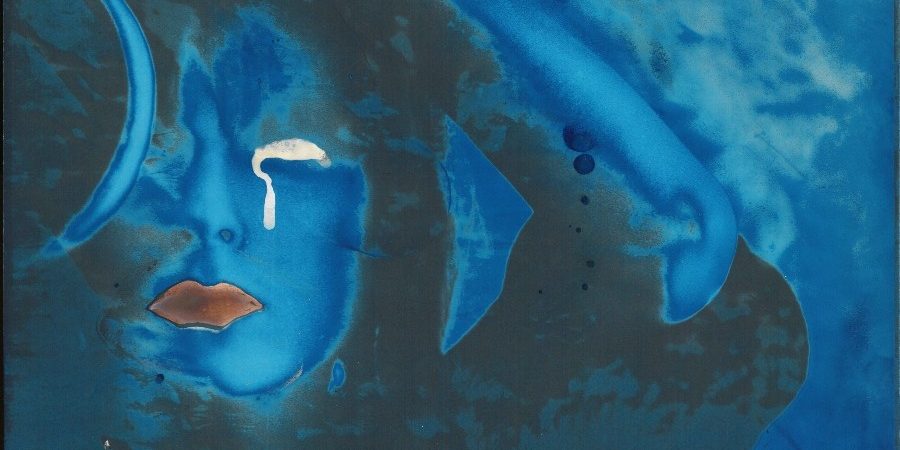
Not so often does time preserve unofficial chronicles and keep them for history. And the bright artistic, underground, and party life of Soviet cities in the 1970s–1980s was carefully hidden from watchful nomenclature eyes. But the faces of Lviv’s cult personalities of those years are familiar to us thanks to the unique portrait gallery of Mykhailo Frantsuzov. Among other things, Mykhailo Frantsuzov was the founder and leader of the photographic association of the 1980s “Vezha,” which became an integral part of Lviv’s cultural environment, a witness to events, and one of the vivid representatives of late Soviet experimental and unofficial photography.
What Soviet photo clubs lived by and what unofficial photography was like, about artistic photography techniques and the “Ukrainian circle” (“украинское кольцо”) Mykhailo Frantsuzov told in an interview with Halyna Hleba.
Halyna Hleba: Mykhailo, what were you doing in the 1980s?
Mykhailo Frantsuzov: I was loafing around, that suited me better.
H. H.: But you were shooting too. Your father was professionally engaged in photography.
M. F: He was. But he dealt strictly with technical photography, dedicating his whole life to it.
H. H.: … and you had a rare opportunity at that time to have access to equipment, chemicals, and a laboratory.
M. F.: Yes, yes, in that regard I could calmly “play,” experiment. And later I even got a workshop.
H. H.: Okay, let’s start differently. When did you start photography?
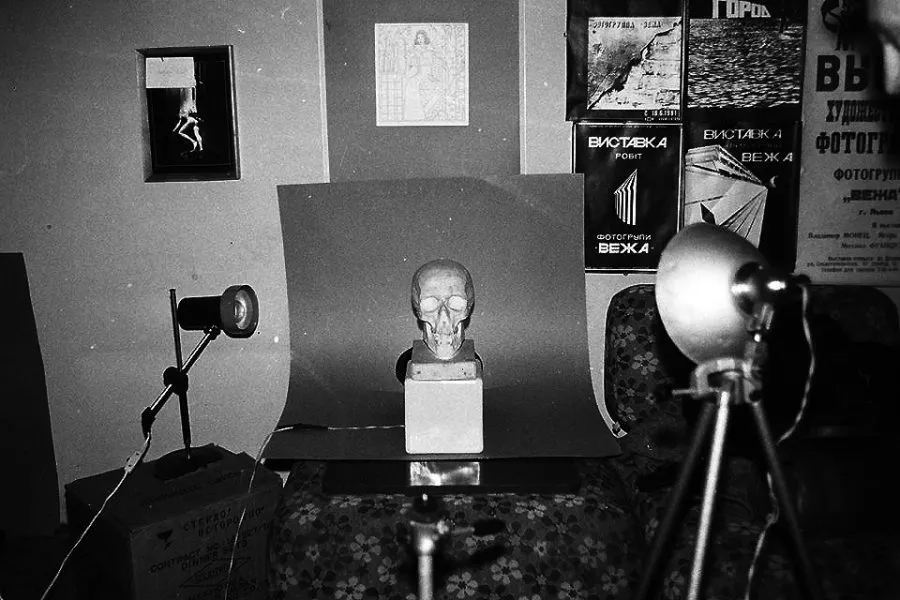
M. F.: Somewhere in the first year of architecture (Faculty of Architecture of Lviv Polytechnic Institute, years of study 1975–1979. 一 H. H.). Before studying, I was not interested in photography at all. To be honest, I didn’t consider it serious. My father, who had been shooting all his life, was before my eyes, and in that image, this activity did not attract me at all. But my good, close, and inquisitive childhood friend Yasha Prepelytsky was engaged in a bit of everything, including photography. He ran to my father for materials, advice. It was through Yasha’s passion for photography that I got involved too.
So, Yasha was in the photo club “Semaphore” — one of the photo clubs at the Railway Workers’ House “Roks.” And what did they show there? Typical “achievements” in amateur photography. And what was the club’s goal? To involve photo enthusiasts, gather them together, observe them, and conduct some educational work. I wanted to shoot too. Dad had a choice of cameras, I loaded film, went for a “click” not far from Lviv. At the next meeting, having selected the best shots, I showed them at the club. And it turned out that among these club guys I immediately took very good positions, even took some place in their internal competition. That encouraged me to shoot more.
H. H.: What was remarkable about the photo club for you if at the moment of coming there you were already a strong participant and there was no one really to learn from?
M. F.: Well, I did it for myself, not for others, and started from afar: I took literature, though scarce, but read, actively shot, got some magazines, got acquainted with photographic achievements, and took it all in. A few years passed like this, but the maximum the photo club did thanks to the leader Volodymyr Anatoliyovych Shcherbovych was exchanging photo works, group exhibitions with other clubs in Ukraine. He was the initiator of the so-called “Ukrainian circle.” Leaders of similar photo clubs across the country corresponded and “in a circle” sent mini-exhibitions for mutual acquaintance. On his initiative, we actively exchanged with Zaporizhzhia, Kharkiv, Odessa.
H. H.: And in Kharkiv, with which photo club did you exchange?
M. F.: I don’t remember now. But I knew the names… I rather remember the famous names, memorable shots of Vitaliy Butyrin [1], Rimanus Dikhavyčius [2]. Butyrin was very interesting to me because he actively intervened in the positive process. He literally collaged “printed” the sun, a different sky into the shot, did all these tonal transmissions.
So, returning to the photo club. Being an active participant, I quickly found ideological understanding with some guys. These were guys deeply interested in the latest achievements in photography. Some were already teaching photography courses at universities, there was such at the Polytechnic Institute.
H. H.: So a full comprehensive photography course with history and technology?
M. F.: Yes. Graphic artists had a photography course, lab assistants taught it — Oleg Verbytsky and Volodymyr Monets. Photo reporters who had already seemingly realized themselves professionally came to us in deputy positions, “demobilized,” “old-timers” from reportage.
H. H.: Please recall some names.
M. F.: From the “old-timers,” I remember Borys Kryshtum, a correspondent of some local newspaper, now in Israel. Then there was Volodya Dubas, who shot for our “Komsomolka” — it was called “Zirka” (“Star”). Iutin, of course, Lyosha Iutin, he was a photo reporter for a military newspaper. But he rarely appeared in the photo club, and unfortunately, I communicated with him too little. And I remember the unforgettable Vasyl Vasylovych Pylypyuk. Then he came to us just as Vasya.
H. H.: Were all the photographers you named members of the “Semaphore” photo club?
M. F.: Yes, besides them, there were very weak guys who just came to kill time. But those who were closely interested in photography later tried to really earn a living with it.
H. H.: What common interests in photography united you with other club members?
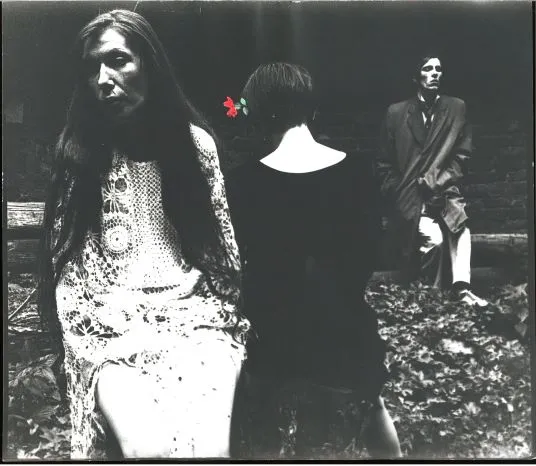
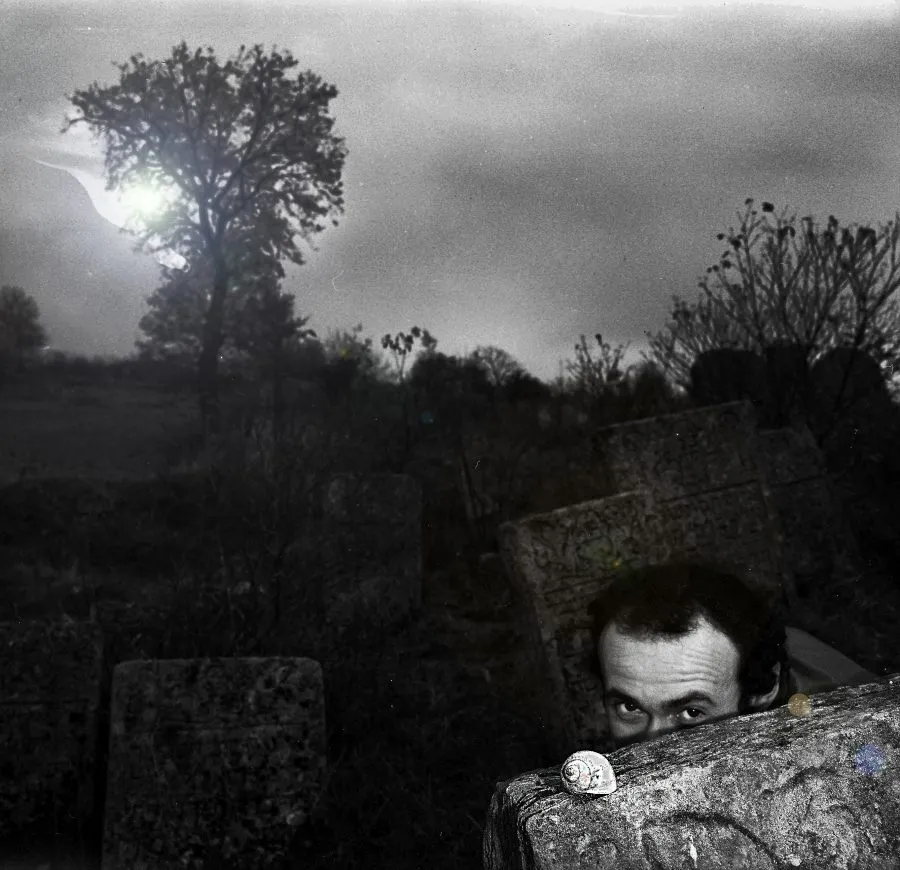
M. F.: First of all, I was impressed by tonal glazing in photography, which was very well conveyed by exemplary black-and-white photography. Such shots introduced a mystical atmosphere. From the very beginning, I sought in photography the possibility to capture not the moment but the state of the moment. And I quickly realized that there is a division that defines the author’s eye. There is reportage photography, whose adherent was Henri Cartier-Bresson with the “decisive moment.” And there was another great one, and for me, he became a model for many years until today — Josef Sudek. Sudek was truly unique; he could convey the state of everything he shot, whether a garden, a photo studio in the center of Prague, or even his “heap” (a workshop cluttered with garbage, papers, glass). He did it in such a way that it evoked indescribable feelings in the viewer. Gradually, I found my own way, and many guys inside the club shared their photographic discoveries, so new “models” for imitation appeared for us. For example, Spanish photographers, from whom we first noticed the introduced “grain enhancement” in photography as a graphic technique, which we all previously considered a defect. After all, our eye was tuned to reflect reality, and fine-grain photography brought us closer to reality — it conveyed details. But the Spaniards had everything the other way around.
H. H.: And did you exchange shots with Lithuanians then?
M. F.: They were already, to put it mildly, “head and shoulders above,” or even all three. We saw their works, examined them, they sent them to us, but regarding sending our works back to them — hardly.
Gradually, the composition in the photo club split. Our circle of photographers inside the club already wanted deeper analysis, growth. And that meant we needed to separate (“otpochkovat’sya” – translator’s note). But what next? Gather somewhere in an apartment? We already wanted official status, to declare ourselves prestigiously as a new creative formation, to exhibit. We asked to be under the patronage of the youth section of the Union of Architects, since some of us, the separated ones, had architectural education and could claim some space precisely in this Union.
The planets and sympathies aligned just enough that Andriy Novakivskyi, then head of the youth section at the Union of Architects, allocated us in the Union building — a historical monument “Porkhovaya Tower” in the remodeled part of the old city’s defensive complex — a huge conference hall on the third floor for our space.
H. H.: What year was this and who were among those who separated (“otpochkovalysya” – translator’s note)?
M. F.: It was 1980. Participants were your humble servant, Volodymyr Monets, then Oleg Verbytsky, Volodya Lerner, Felix Seltser, aaIhor Melnychuk, and Ihor Yukhymovych. That’s all.
H. H.: You united into the group “Vezha” named after the place where you lived. Did you have a concept of activity, maybe manifestos?
M. F.: For us, the key was to work creatively, not just exist. And regularly, once every six months, to hold a report exhibition. We were given the opportunity, provided a hall. Then there were participations in exhibitions, foreign competitions. Each of us sought our focus in photography: some were interested in reportage shooting, others in sports, and there were those like me who wanted avant-garde experimental searches in photography.
H. H.: Soviet photo clubs had a tradition of marking participants’ works when photographs toured the “club circle.” Each club had its own stamps with various symbols. Now these stamps establish the provenance of authentic works of many cult photographers throughout the former USSR. What stamp did the group “Vezha” have, how to recognize you among others?
M. F.: We signed as the photo group “Vezha,” and the imprint was the author of the specific shot.
H. H.: Regarding avant-garde searches in the system of strict socialist realism, did the ideological situation in the country influence your practice?
M. F.: A more specific question.
H. H: I’ll explain. Many artists and photographers of Soviet Ukraine recall the time of ideological control and pressure in the 1970s–1980s. According to them, they understood that they either had to do something atypical “into the drawer” or go into public confrontation with the authorities. Was such polarity felt in Lviv in those years?
M. F.: Well, how to say. Either I did not feel it, or I unconsciously made conclusions even before making actions.
H. H.: So you had no fears or concerns?
M. F.: No, of course not. I did practically everything I wanted. But maybe I didn’t advertise it so widely. I showed among my circle, we learned from each other.
For example, we were all interested in participating in competitions then: winning or an award in a nomination flattered the ego — that’s true. But I quickly learned the competition criteria and more or less understood which shots would pass the selection, you see? Thus, it was possible to predict in advance and send a deliberately winning work there. At first, we used this trick, but then it wasn’t enough for me. Once we decided to collect works for a competition, I don’t remember which country, and without much thought, I sent a photo where my father-in-law, then head of the Union of Artists, was shirtless to the waist.
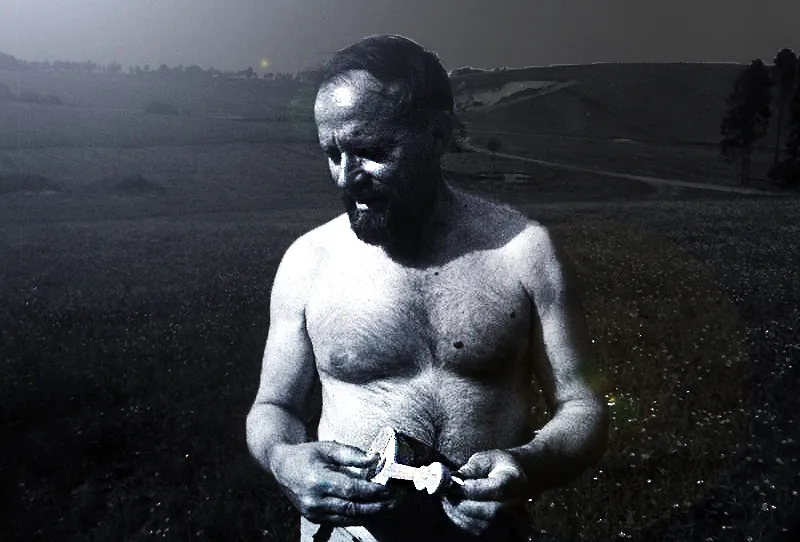
H. H.: Describe the image, the plot.
M. F.: We were on a walk, he took a child’s balalaika from my daughter and played with it. That’s the shot. After some time, he came and said that he was called to the “Oblit” (they were responsible for permission for works to leave the USSR) and scolded, saying, what is this, Yosyp Antonovych, how can they send you abroad like this? They say people will see and think that the head of the Union of Artists here is half-naked playing the balalaika, and naked girls are dancing around him? Not good, Yosyp Antonovych.
Of course, the work was withdrawn. Probably after that, they started watching more closely.
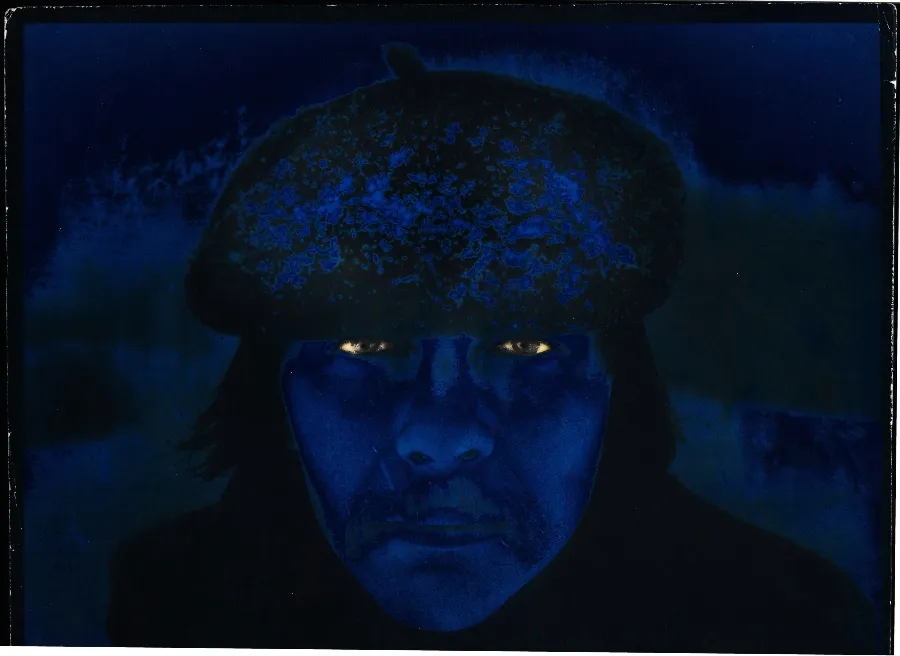
Then I made a series about Lviv: cityscape with reflections in mirrors, shop windows, puddles, immersed in blue toning and printed in a small format. Everything in that series was good: the matte paper perfectly conveyed the gradation of halftones, and the blue toning, by its nature, very advantageously enhanced contrast — light became silky, and shadow — velvety. Nothing criminal, what dissent here? But this series received a review saying I “look at the world through blue glasses” with an explanation that I look at the surrounding reality through the eyes of a blind person and that all this is not about the Soviet city. I didn’t mark this for myself, but the leadership of the Union of Architects did. In the complaint, I was supposedly suspected of formalism.
H. H.: What year was this?
M. F.: It was the 1984 exhibition. It was closed.
H. H.: About this case, Bohdan Shumilovych wrote in one of his texts that the then ideological officials noticed your apolitical stance, which became the reason for closing the exhibition?
M. F.: Most likely, yes. A quorum was convened regarding me, everyone sat headed by the chairman. There was a signal to which, naturally, they had to react as always. I was removed from the so-called group leadership, although my leadership was, by and large, absolutely formal. It reached the point of absurdity that someone, I think it was even Shuliar, said: “Look who is in their group — Lerner, Seltser, Monets, Yukhymovych — all Jews…” Absurd: Yukhymovych is an absolute Galician, Monets is also Galician, and their leader is Frantsuzov. Well, stupidity!
H. H.: And how did photographers who did not work directly as reporters earn a living?
M. F.: I was lucky in this regard. I was first sent to a design bureau, then worked at the Art-Production Combine of the Art Fund of the Ukrainian SSR, in the design department.
H. H: Did they pay well there or was official employment necessary during the hunt for Soviet freeloaders?
M. F.: I didn’t particularly stress about earnings, but it certainly ensured my carelessness. And thanks to the Art Combine, I got a workshop, which was difficult at that time. I had a basement room, two enlargers, and I didn’t leave it. Occasionally I brought friends to show off my achievements. And I tinkered for my pleasure.
H. H.: Did the group dissolve after you were removed?
M. F.: Exhibitions immediately became more difficult. But “Vezha” lasted until 1987, until my first trip to Moscow. I went to enter the operator’s course, and then the group dissolved.
And by that time, I was already infected with cinema. One frame did not satisfy me; I wanted a story with a prehistory and continuation. I began to issue works as triptychs, series, even installed plots, staged. I was meticulous with each frame, so partly what I was accused of was true — form was important. And there was formalism, but definitely not in the series that was lynched.
H. H.: You applied to Moscow but entered Kyiv?
M. F.: Yes, I was not accepted in Moscow. But here I was immediately taken to the second year of Karpenko-Kary. It all ended, of course, sadly. This was the collapse of the Union, 1990, I was to graduate, defend, but there was a complete failure with films, 12 films were closed at Dovzhenko. I really worried about this, the video era was anticipated. Because before, they shot on film, which fascinated me, impressed by the materiality, the film fabric. And the dominance of video was depressing — reality aggressively emerged in it, and there was no atmosphere. Very harsh, cold television. Film always left room for imagination, left ambiguity.
H. H.: Returning to the 1980s–1990s, it is also worth saying that besides your artistic interests in photography, you also became a kind of documentarian of the party and events of Lviv of those years. At least most of the chronicle photos are yours.
M. F.: … and the lion’s share of these shots, unfortunately, went into oblivion. I certainly clicked, but by myself, just honing my skills and never aimed to capture an event, preserve it in history. After all, I am not a reporter. Aksinin [3] (Oleksandr. 一 H. H.) was sometimes in the frame, Zamkovskyi [4] Sashko, Dido [5] (Andriy Sahaidakovskyi. 一 H. H.) and many others. But doing photography, I always believed that each shot must be artistic, and I did not give special importance to these random, party, chronicle shots, did not monitor their preservation. And everyday turmoil took them away.
H. H.: Mykhailo, the technology of your photography remained a mystery to me. Because it is not color in the usual sense of color shooting, which was a great and inaccessible luxury in Soviet times, but deliberately and authorially processed with color. But there were many options to work with the shot, up to decorating with aniline dyes, actively practiced by photographers from Kharkiv. Why did you choose monochrome toning for yourself?
M. F.: Photography itself has visual weight; it is not worth departing from it. And color has mood. Pure color has pure emotion. At that time, “toning” suited me precisely because, by its visual properties, this technology preserves photographic quality but gives it the desired tint.
And “solarization,” on the contrary, for obvious reasons, was not a close technology for me. It changes the photograph, but its insidiousness is that you still won’t come to graphics as such with its help. Of course, you can try to challenge the newly created [photo]graphic image, but usually, you won’t do better. I decided for myself that this is not my path, that the matter of photography itself disappears in this way.
H. H.: Tell us about the “toning” technology. What do the process and result look like?
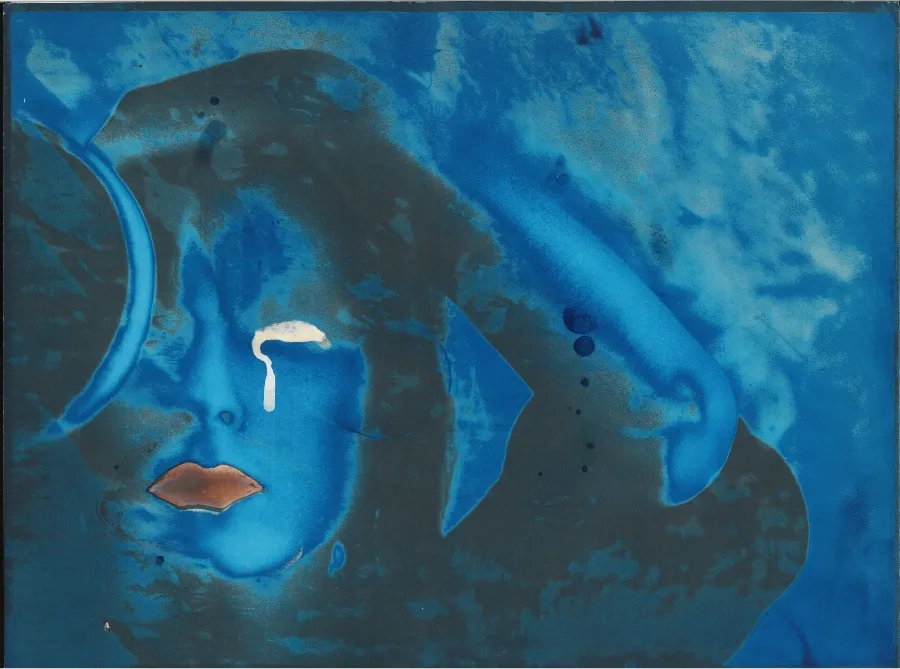
M. F.: It is a physico-chemical process applied to photography. Replacement of silver bromide salt, which has a black tint from the very beginning, with another salt with a different color accordingly. The simplest to obtain was ocher tone, sepia (silver iodide, bromide). Many of my old prints are just like that. I tried almost all colors; equipment was nearby, and as you rightly noted earlier, all possibilities. So the trials went: blue, red, yellow colors. I first improved in monochrome, then began to combine them.
H. H.: Do color series exist in a single copy?
M. F.: Yes, of course. It couldn’t be otherwise. By the toning technology, it is work with a print. It is not a positive or negative from which you can print more. Toning is one. There was a time when this bothered me in the technology.
H. H.: Were you attracted by the reproducibility of photography?
M. F: I wanted cinematography. Gradually, the frame ceased to be an end in itself for me; it became a tool — as support, as raw material. I first worked with the positive process. And what is the positive process? Printing from a negative on paper, direct printing, without interventions. I always wanted to move away from this literalness; it is like the dull reality that surrounded us then. After all, I am not a chronicler, not a journalist, so I was always interested in giving or enhancing the mood of the shot, emphasizing the moment. Even today my photography is like that, but I do it with a color camera and Photoshop, not analog and processing as before.
H. H.: Your “color” photography has visual mystifications. Did you deliberately construct an emotional story inside the frame?
M. F.: Yes, I then sought to give reality an element of mysticism. Today I shoot differently. But in positive printing, this possibility of artistry was the most important. It reached the point that I was even arrogantly confident that I could make an interesting shot from any ordinary shot: slightly correct, compose somewhere — and voila. This confidence passed, but the understanding remained that composition is almost 80% of success.
I considered many of my successful shots defective for a long time. Today I look at them differently.
Photographs for publication provided by the author