
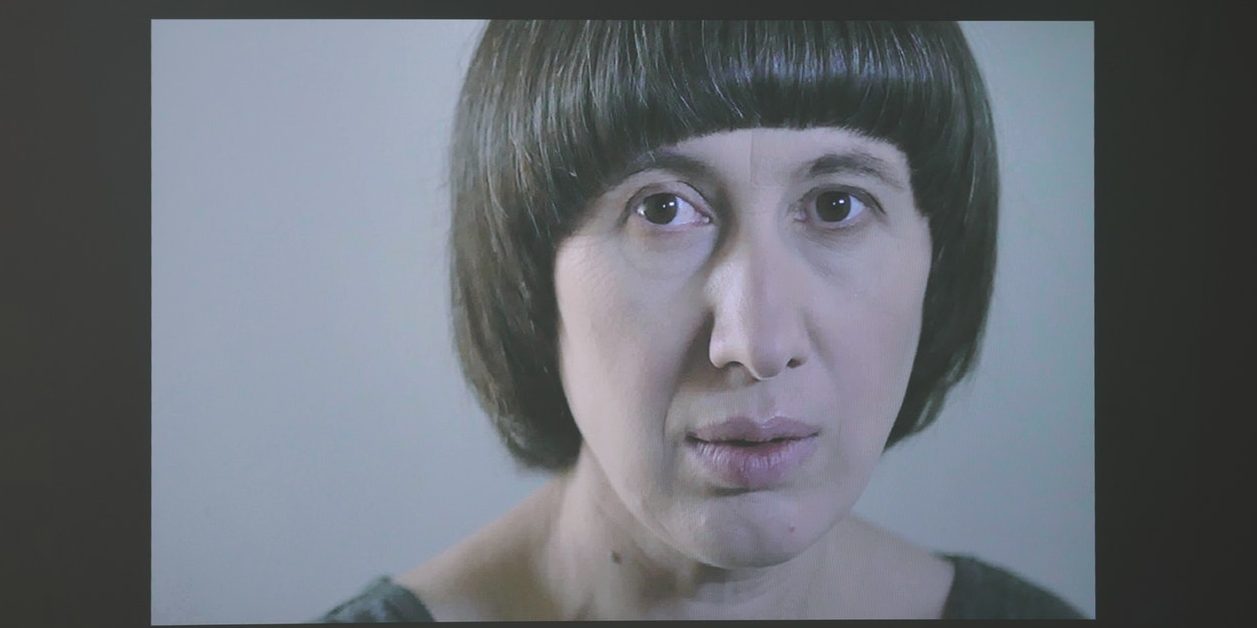
Part of the exhibition “My Space” at PinchukArtCentre was the work “44” by Ukrainian artist and performer Alevtina Kahidze, dedicated to reproductive violence against women. Kateryna Yakovlenko spoke with her about the freedom of choice men and women have regarding childbirth and whether a woman’s body can be her own space.
Alevtina Kahidze, 44 years old. Artist-performer. Born in Donetsk region in a Ukrainian-Georgian family. Studied at NAOMA (National Academy of Fine Arts and Architecture) and the Jan van Eyck Academy (Maastricht, Netherlands). Laureate of the Malevich Prize for Ukrainian artists (2008). Co-founder of a private residency for foreign artists in the village of Muzychi, where she lives and works.
Artist Alevtina Kahidze explores issues of identity, physical and symbolic violence, and “women’s history.” It is from her performance “Only for Men, or The Betrothed, Appear to Me in the Mirror” (2006), created with the support of the Soros Center for Contemporary Art in Kyiv, that critic and philosopher Tamara Zlobina begins the count of Ukrainian feminist art. Today, Kahidze is better known for her works related to war: in them, she describes the everyday life of territories under occupation.
In her new work “44,” the artist addresses an equally acute topic for Ukrainian society: reproductive violence. The video and drawings from the series can be seen at the “My Space” exhibition at PinchukArtCentre until January 6, 2019.
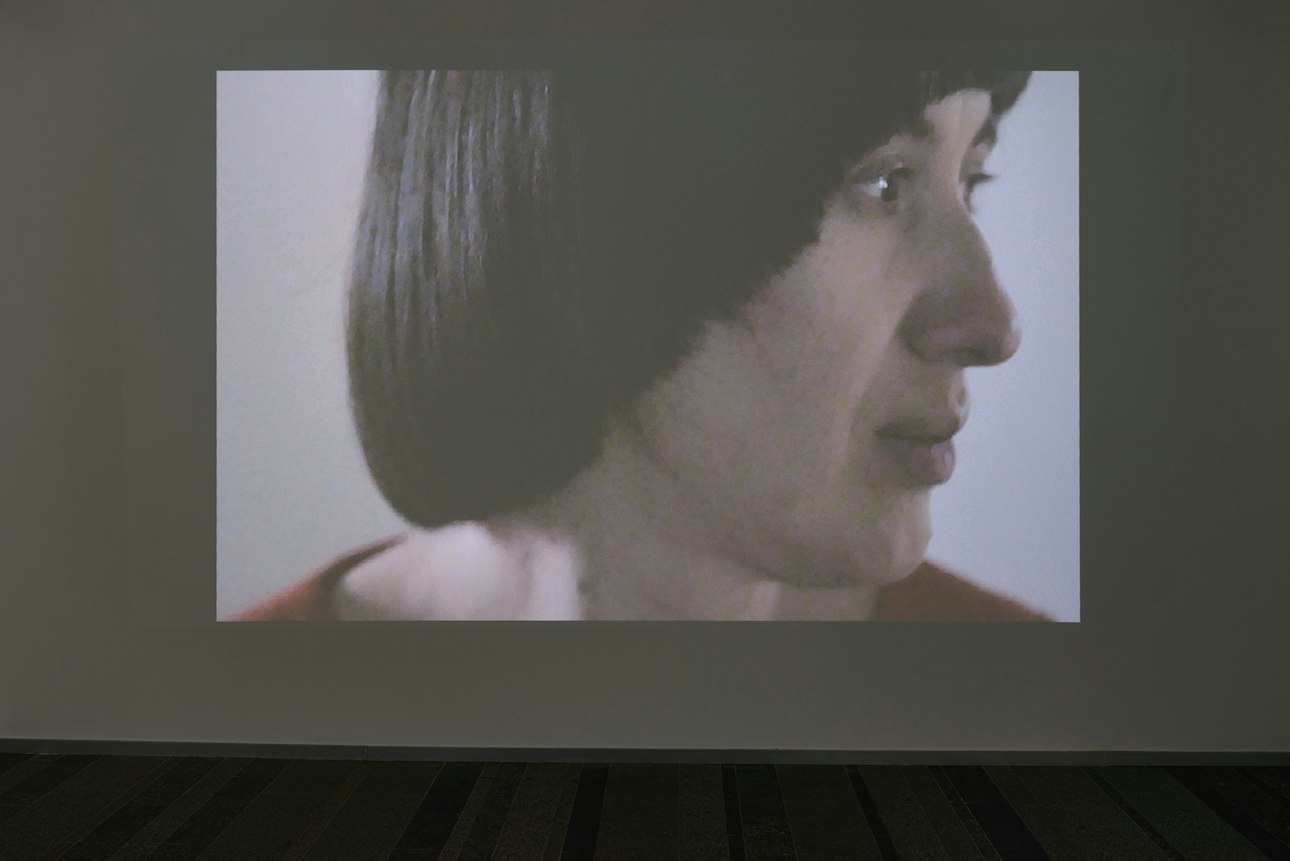
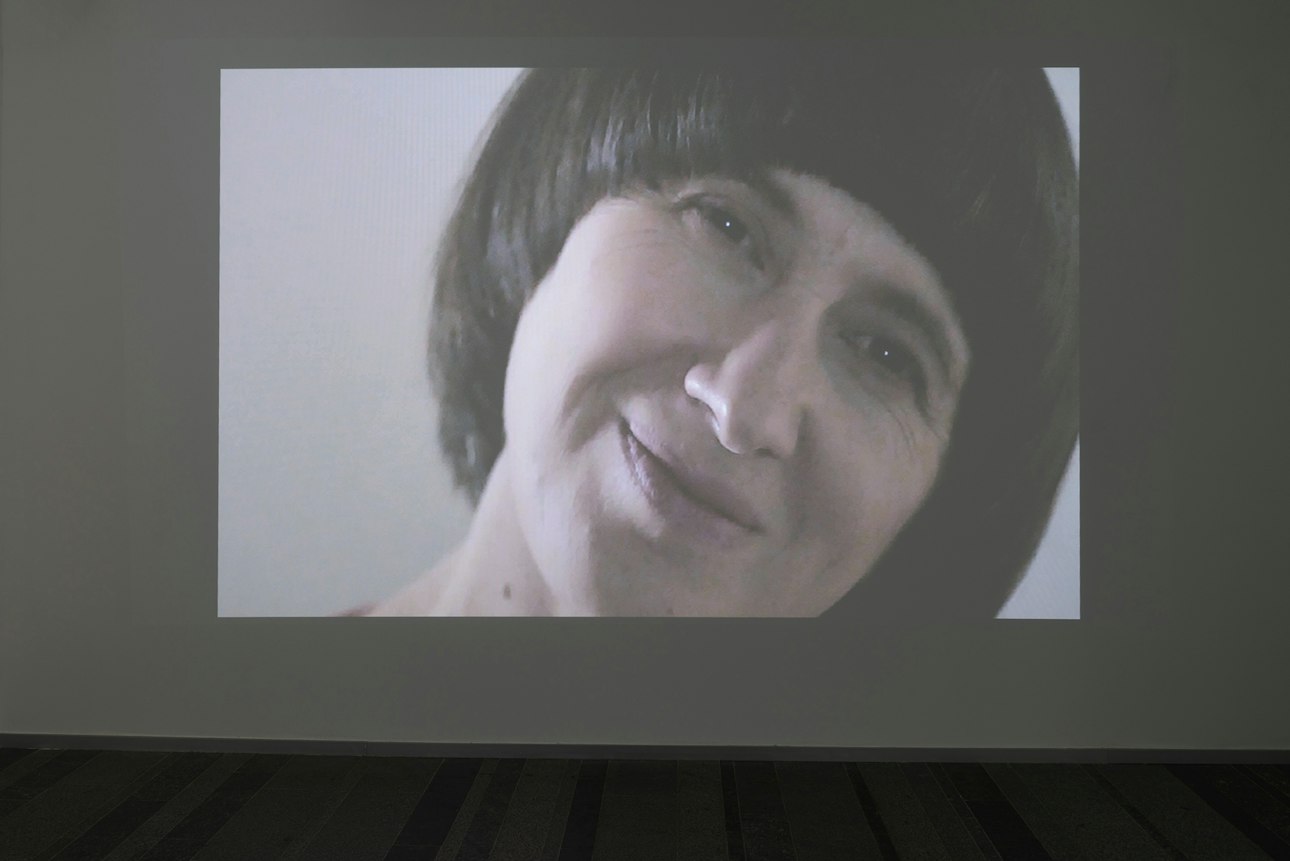
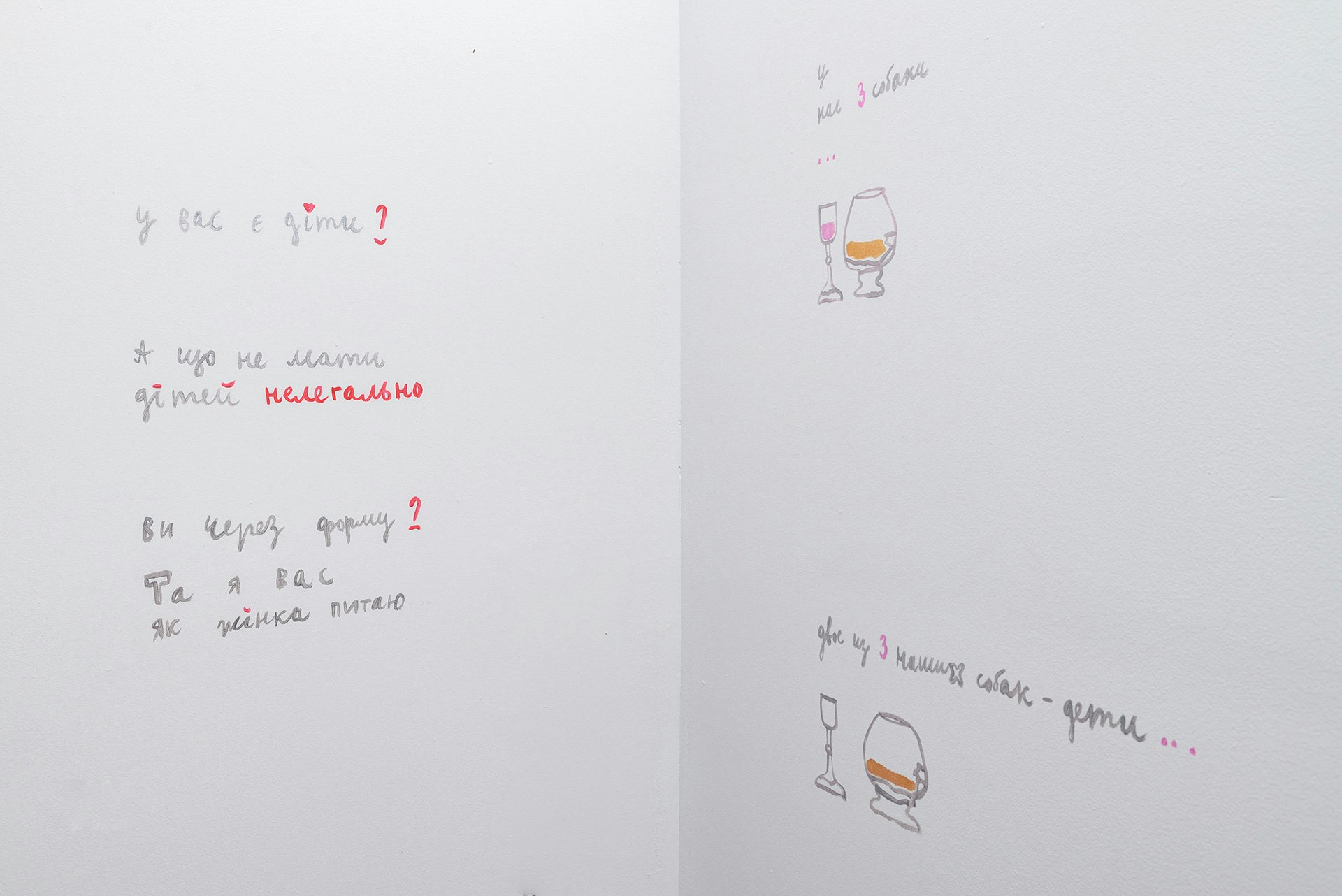
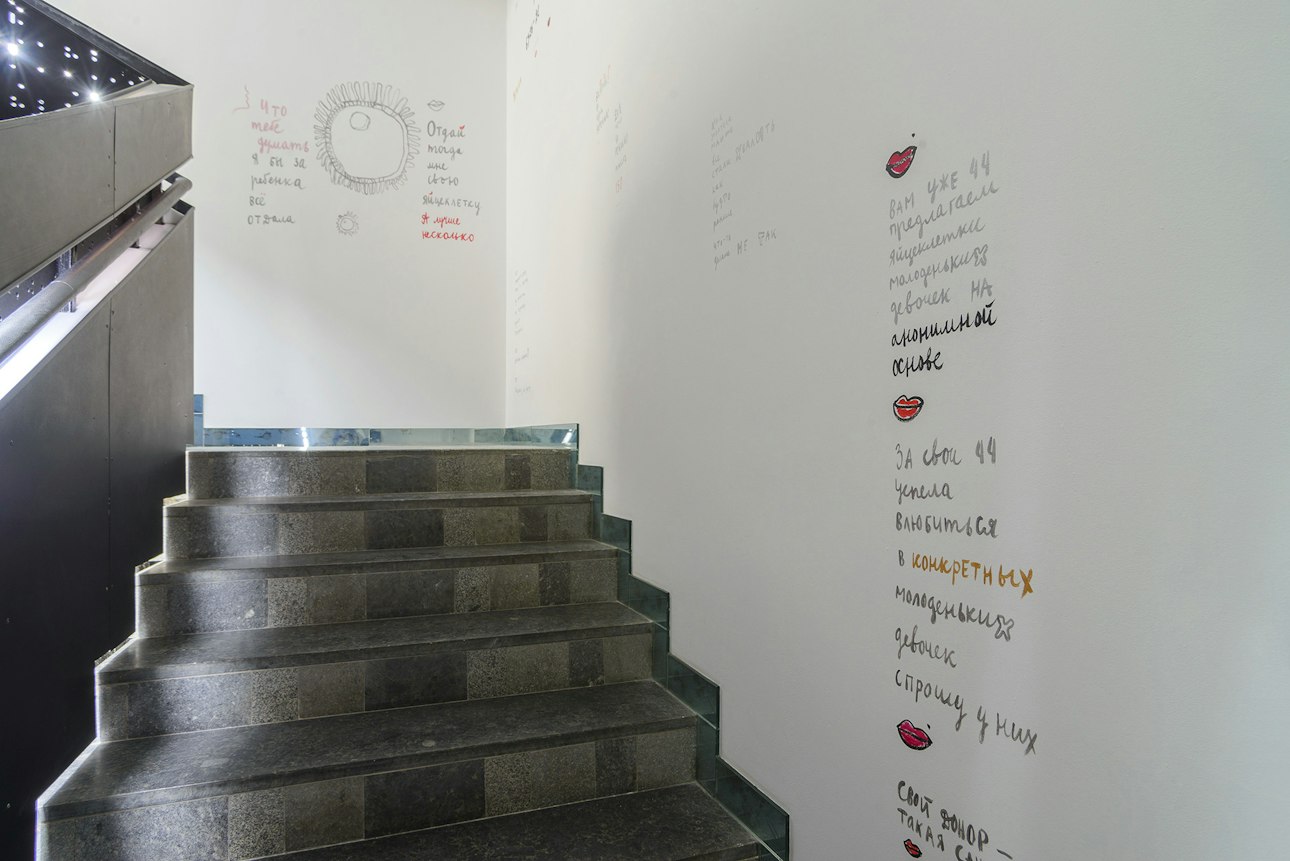
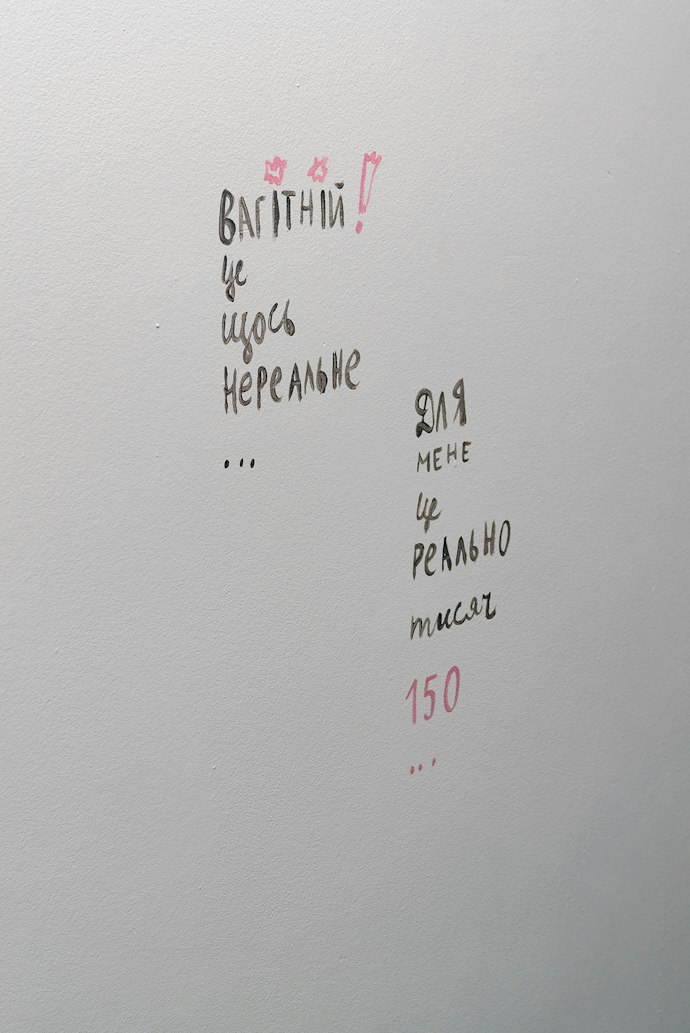
The video performance is built on 44 “no” answers that Kahidze gives to the question “Do you have children?” This theme continues in the drawings. Phrases like “It’s easier to get the ‘Golden Lion’ than to give birth to a child” are placed on the institution’s walls and seem to ‘violently’ haunt the viewer as they leave the exhibition.
In many of your works, you play the role of a daughter, but now for the first time you spoke about accepting the hypothetical role of a mother. How did the idea for a work about reproductive violence arise?
I hadn’t paid attention to reproductive violence before. But at some point, this topic emerged—perhaps related to my personal development or, as is fashionable to say now, timing.
It is difficult for a woman to answer the question “to become a mother or not?” when there are so many voices around convincing her of the correctness of one option or another. For each woman, this question sounds differently—depending on why she does not have children: she cannot give birth due to health reasons, or she doubts, or fears, or does not want to. In the first case, the pressure does not lessen because she is told: adopt!
We can also address this question to a man who is physically unable to give birth, but there are not as many disputes and social pressures around fatherhood as there are around motherhood.
Reproductive violence is one of the most complex problems, and it is unresolved even in the most progressive societies. Taking responsibility for a small being is difficult for anyone.
I noted for myself: for many children, it is not flawless love but flawless power. If a woman does not feel important and irreplaceable in any other sphere, a child will give her this opportunity. This is an important aspect that I do not explore in my work “44” but note as one of the voices of reproductive violence: become a mother, and you will get this power—you will “realize yourself.”
The art world is patriarchal and demands constant production of works. It is harder for a female artist, a mother-artist, to fit into this system and to meet its demands.
I agree—you already have no time for anything, and if you become a mother, you will have to work even more to be able to entrust your child to someone temporarily in order to work. This is the drama of today’s world or an undisclosed meaning: a woman cannot raise a child alone. Of course, there are voices of women saying: everything is possible! But you never know how much you can develop your practical way of motherhood without having been in it. A child is a risk.
In your video—44 answers recorded with different intonations. You try on the roles of heroines with different stories. How difficult was it to try on each role?
I am a performer, and performers have a memory of intonations, their own and others’. I used this ability in the video. It was not difficult—not as difficult as when the video at PinchukArtCentre became public.
The shooting took one day; we were experimenting rather than filming according to a script. There was only the idea—many “no” answers to the question “Do you have children?” You could say that I tried on the “heroines with different stories,” but it is also a rehearsal of one woman saying the word “no.”
Art is a privilege of artists: they can work through any of their problems by means of art to free themselves from them. I am not saying that art is only art therapy, but it has this component. There is also the intervention of the researcher-person who complicates everything, including more than just the self-therapeutic function in the work.
If you become a mother, you will have to work even more to be able to entrust your child to someone temporarily in order to work.
At the “My Space” exhibition, your work concludes the political hall and begins the story about the sensual, about personal experience. At the same time, reproductive violence is a strong political lever, especially in our country, where stay-at-home mothers become a separate political audience, a necessary electorate. Is this social criticism embedded in your work?
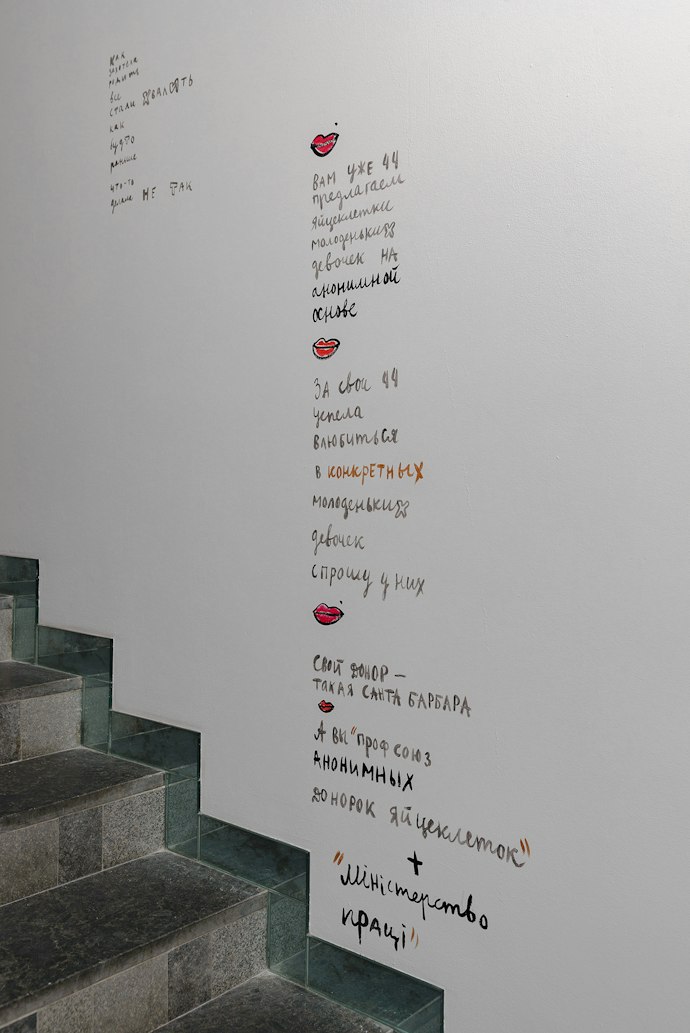
The texts I decided to complement the video with, I call comics about violence that comes from women and is directed at women. Men are absent in these conversations, but they, men, appear as an echo along with a whole tangle of other social problems.
For example, in one dialogue, the heroine suggests donor eggs from anonymous women. She wonders why this is done anonymously and allows the thought of a “familiar” donor. But she is told that there will be problems in the future: “A familiar donor is like ‘Santa Barbara’!” The heroine says: “Are you a union of anonymous egg donors or the Ministry of Labor?” I invented this “sharp” woman who immediately points out problems in another area closely related to reproductive violence. Studying the policies of reproductive medicine clinics, it is impossible not to notice that for women donors, the difficult and risky procedure of egg donation is their only income.
I also thought about why male politicians and other men—people who, as practice shows, are less involved in the process of childbirth and child-rearing—are so eager for women to give birth. But I have not yet found a clear sign of reproductive violence from such men. The work “44” is about a woman: about how much she can allow herself to be “responsible” as different women, and about the fact that there is little room today for this freedom of choice.
I think reproductive violence against men in countries like ours may be even more dominant. After all, it is not customary here for a man to not want a child.
I have met only two men in Ukraine who calmly said they did not want children. At that moment, they scared me, but later I realized they are strong personalities since they can say this easily.
My Georgian relatives laughed at these questions. For them, a man saying he does not want children means he finally raises the question of children: to have or not to have? And they added: they have not met Georgian men who do not want children. So it is not surprising that I have never seen men with strollers in Georgia. We have few of those either. I remember when I first came to Sweden, it struck me that men there walk with strollers.
When I first came to Sweden, it struck me that men there walk with strollers.
Returning to the video: who is your audience, whom are you addressing?
It is a conversation with myself, but at the same time with everyone—perhaps even with children. But children ask questions differently. The daughter of my friends recently asked me: “Are you a mom?” I said: “No!” And she said: “You should be by now, you are already 30 or 40!” It made me laugh. Of course, I asked her: “Why?” And she said: “I don’t know, you should, that’s all!”
Why video and text? After all, you could have performed everything live for the audience?
A camera was definitely needed here. When I filmed my work “I Can Be a Girl with Blue Eyes,” I wore colored lenses and remembered how sensitive the camera is: you blink—and the picture comes alive.
When I was asked so many times about children and I answered “no,” I tried to remember how I said it. Once I reconstructed my answers in front of a mirror, trying to recall the intonations. With directors Katya Hornostay and Nikon Romanchenko (they are the authors of this video, I am the idea author and performer), I did the same in front of the camera. I remember that with Katya and Nikon we wrote on paper all the emotions I wanted to express. The video has many long takes where practically all emotions are in one shot.
You have a separate studio where you have been hosting residencies for several years. But if we talk about a broader understanding of this term, what is your space?
I give my studio for residency, and it does not belong to me two months a year. For me, this is an interesting practice—to give up my own space.
The video was shot not in the studio but in my house, against the wall of the largest room. It was important where to shoot: I was scared of the idea of going to some unknown studio for filming. I thought about that wall because “painted” light is on it—a light rectangle of paint. When the real light from the windows disappears, the light spot remains, and it seems the lamp is on.
Even if “my space” exists, you cannot fully control it. The body itself can be that “my space,” but if we talk about it in the context of the work “44,” it definitely does not belong to the woman. Ideally, the whole world should be that “my space.” But it doesn’t work out.
Why do you speak Russian in your work?
See: where is this “my space”? Where you can speak Russian and not worry that someone will feel uncomfortable about it? In what language should I have made this work? On the one hand, I speak to myself, and if I spoke Ukrainian, it would not be true. Maybe no one would feel the substitution that it is a learned language, not native. But it would be an additional level of control for me, an additional difficulty, but I am already talking about things that are difficult to talk about.
If I were a lawyer defending my own work before the still unadopted law 5670-d, I would argue that for me the work is about intonations and body language, and words make up only 5% of the video or less. Even so: Ukrainian in the video is the language of my body, and Russian is only the word “no.”
- Photographs provided by PinchukArtCentre © 2018