
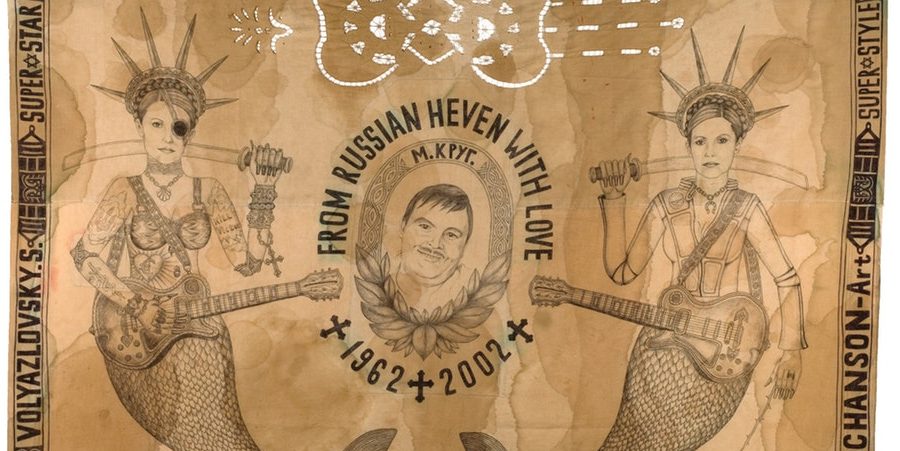
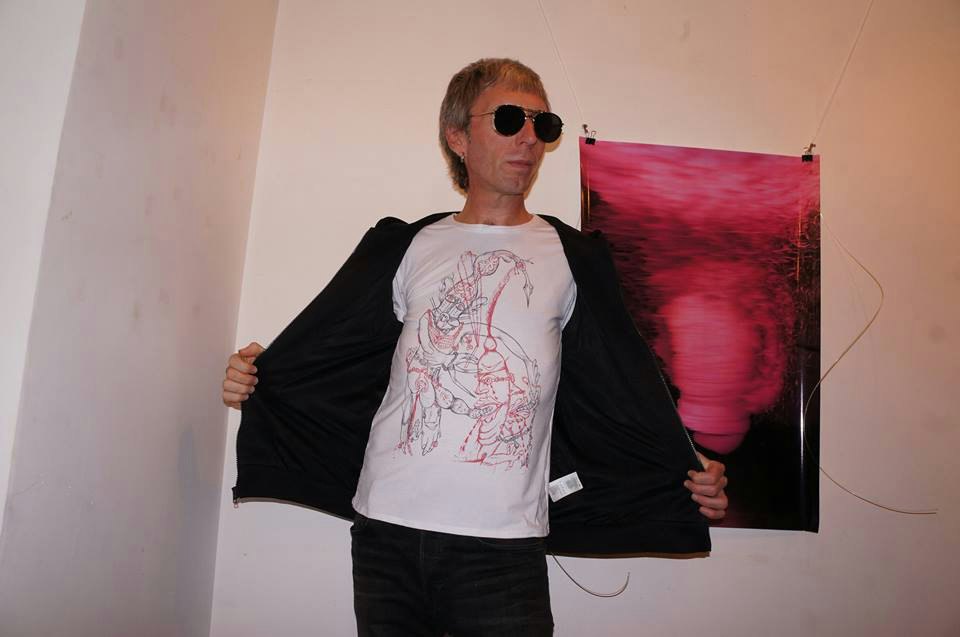
On November 3, an exhibition of Stas Volyazlovsky opened at the Museum of Contemporary Art in Odessa. He himself did not live to see this moment — Volyazlovsky died on January 8, 2018, in his native Kherson. Art historian Halyna Hleba talks about the artist who subtly mocked the surrounding reality and gave us penis art, chanson art, and kherson art.
You can’t surprise anyone with a penis in art, but there are those who turn the form into a style. Thus, Stas Volyazlovsky gave us penis art, chanson art, and kherson art (from the word “Kherson”). He depicted penises, vaginas, sexual acts, notorious political figures as prison tattoos, accumulations of ornamental symbolism, and himself. Recognizing Volyazlovsky’s art is easy: it is always visually expressive, and its leading theme is everyday kitsch that turns into sarcasm.
More hell
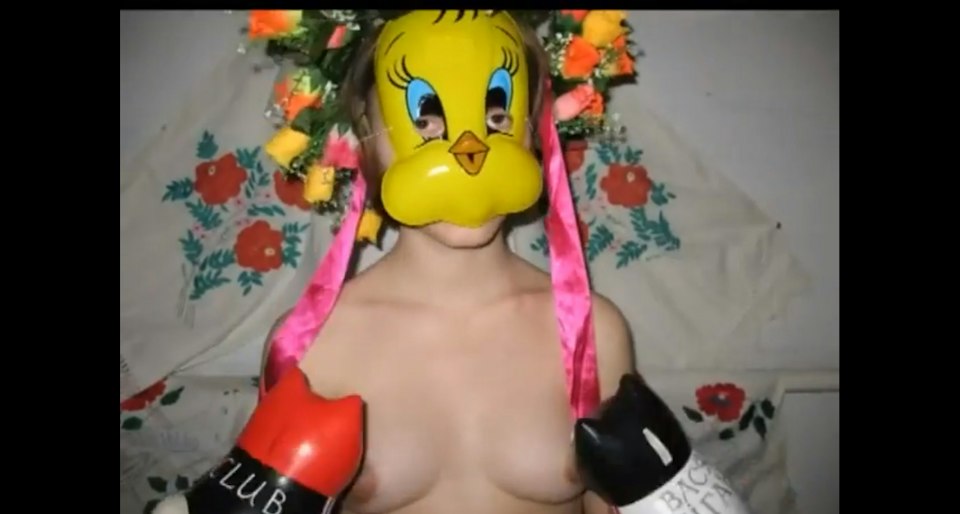
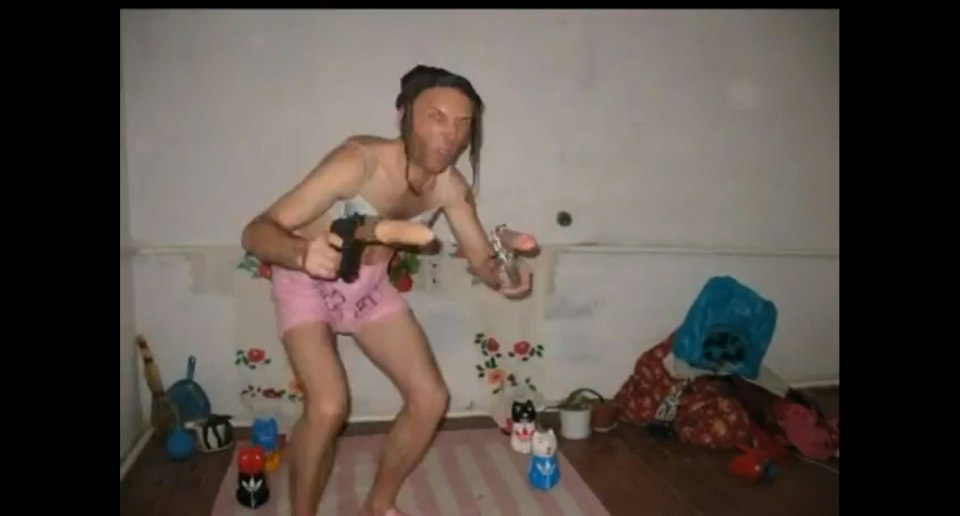
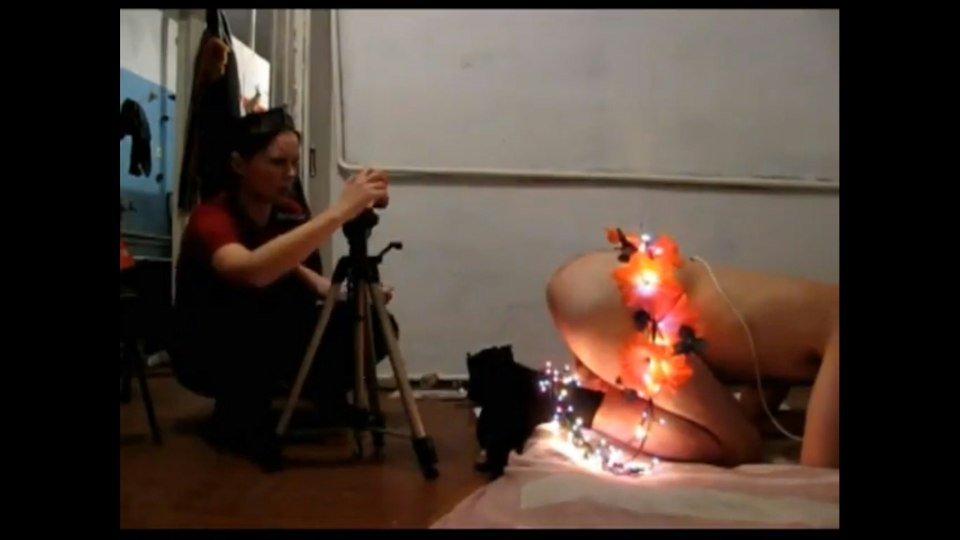
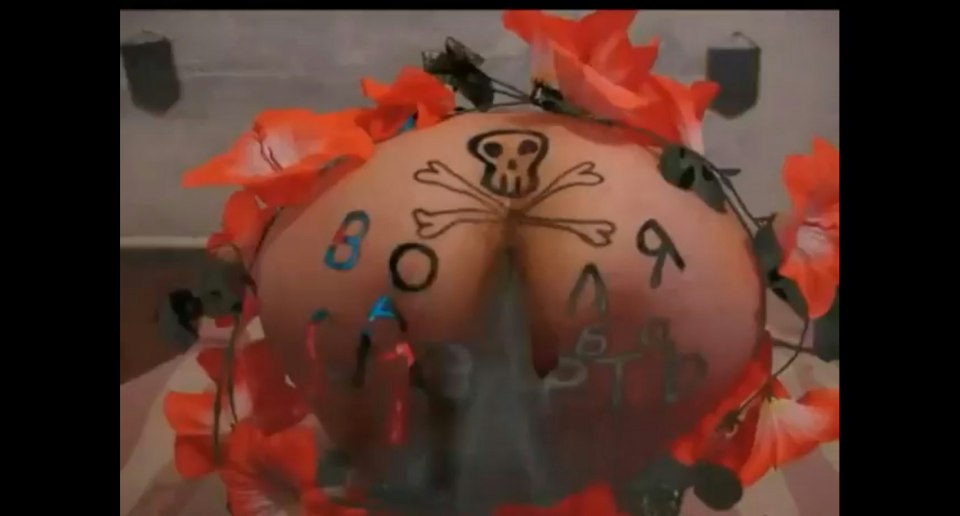
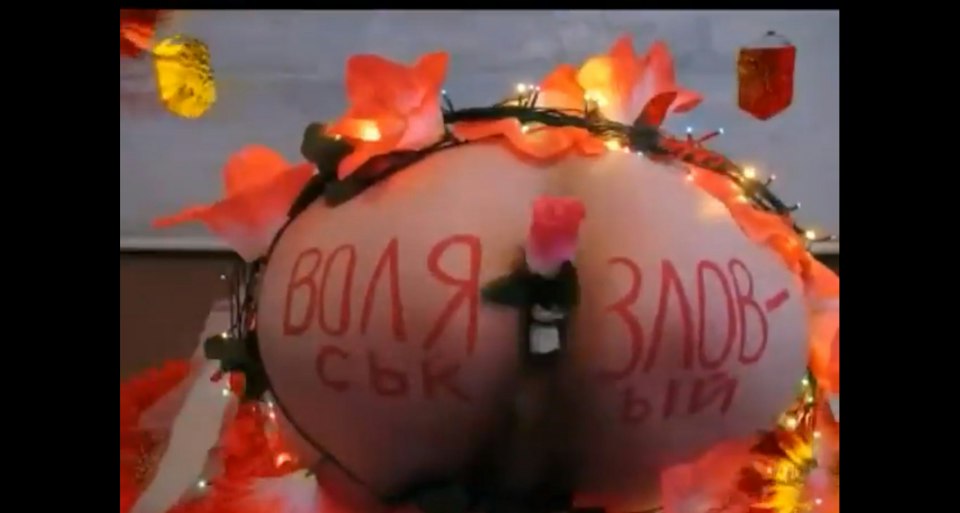
On the screen — a young couple. A naked man — the artist himself — is crouching, his butt decorated with artificial flowers and garlands. The woman by the camera is the faithful co-author, operator, and prop master of the artist, his third wife Yulia. “F*cking contemporary art! How it f*cking pisses me off, b*tch,” Stas swears, but the shooting continues.
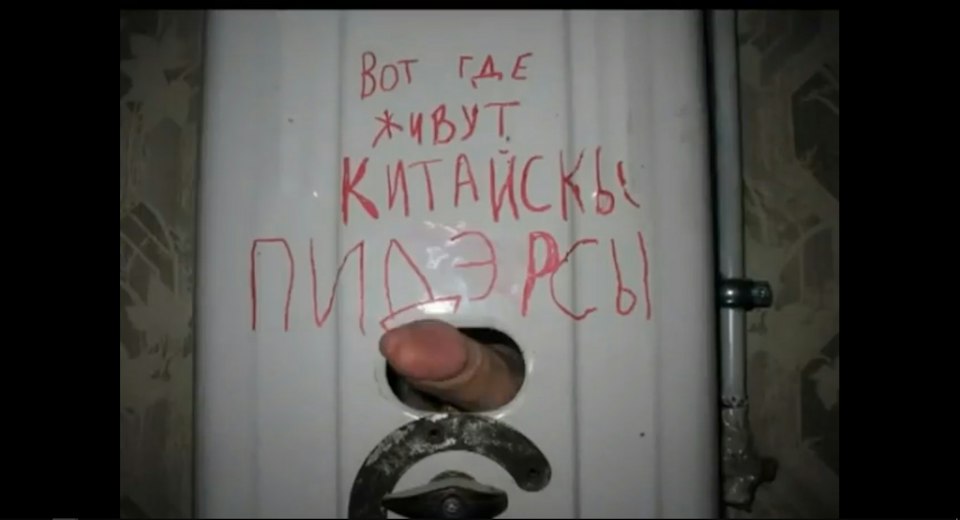
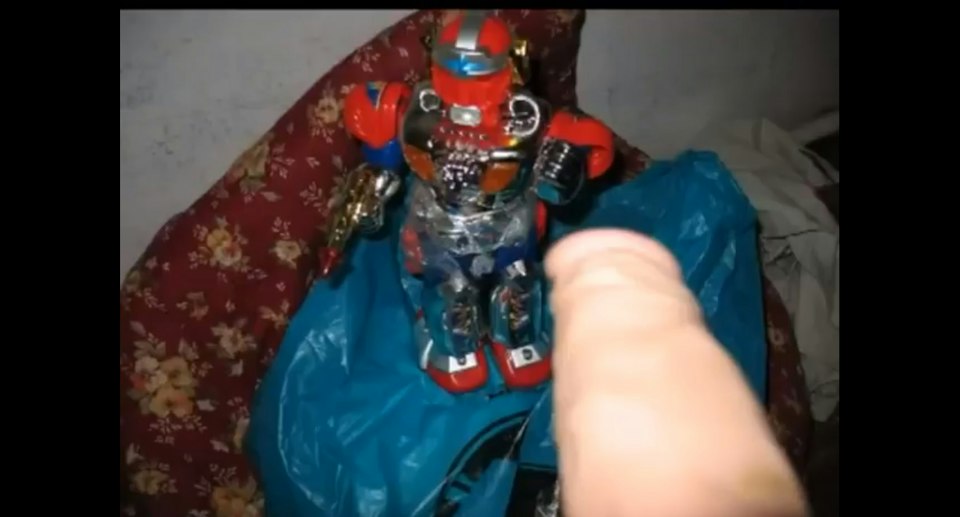
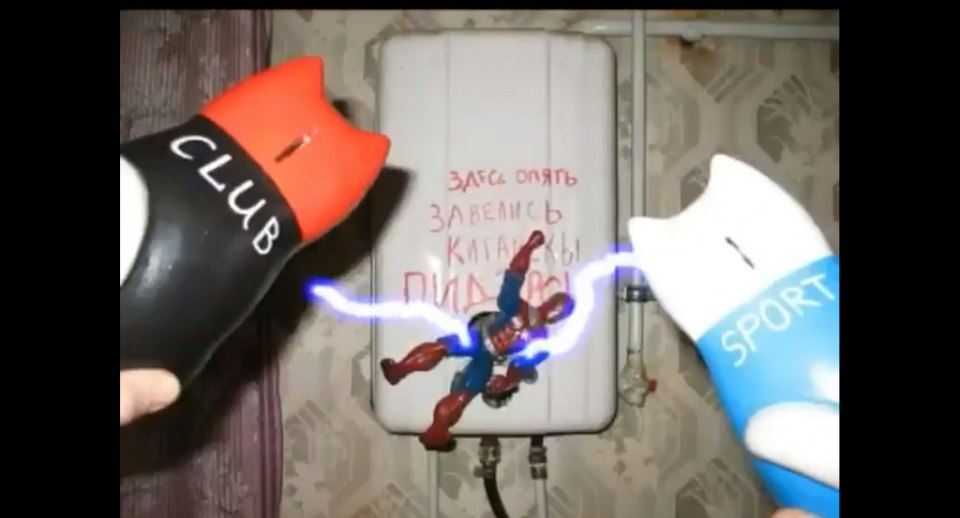
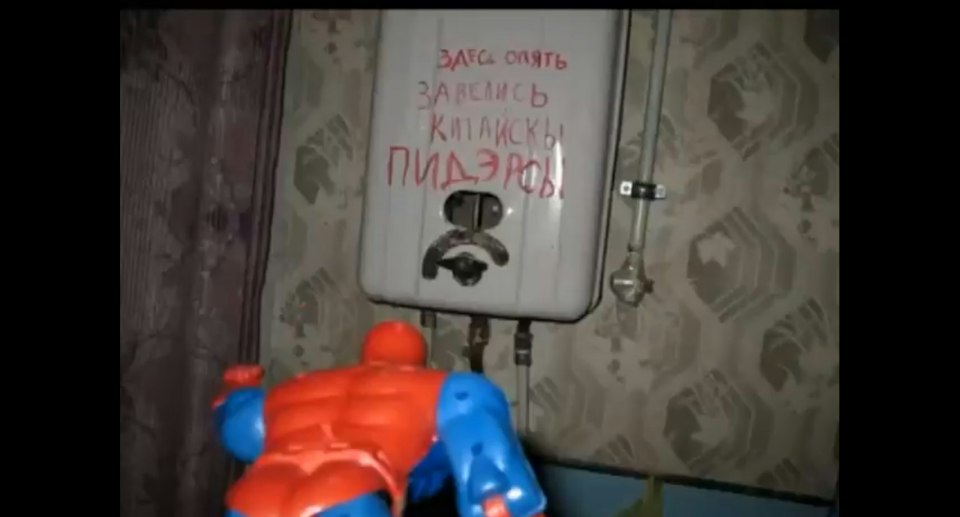
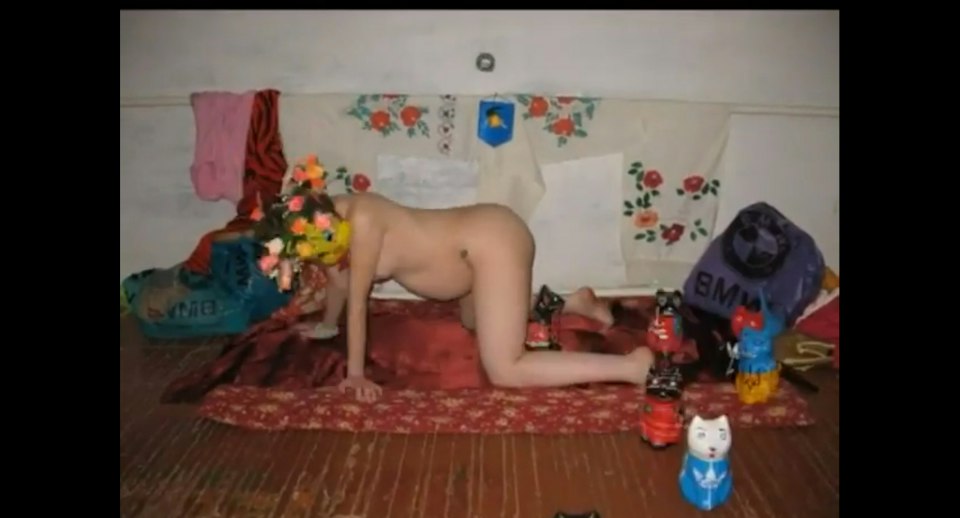
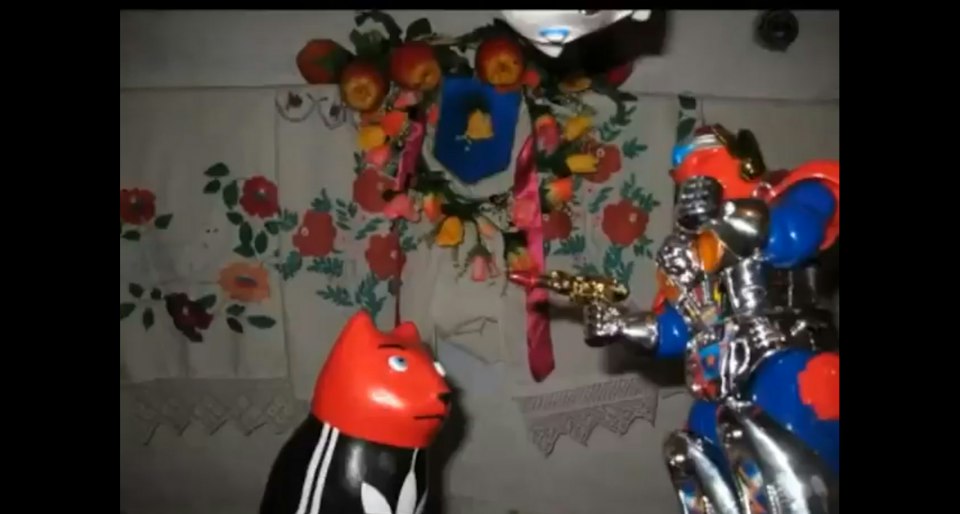
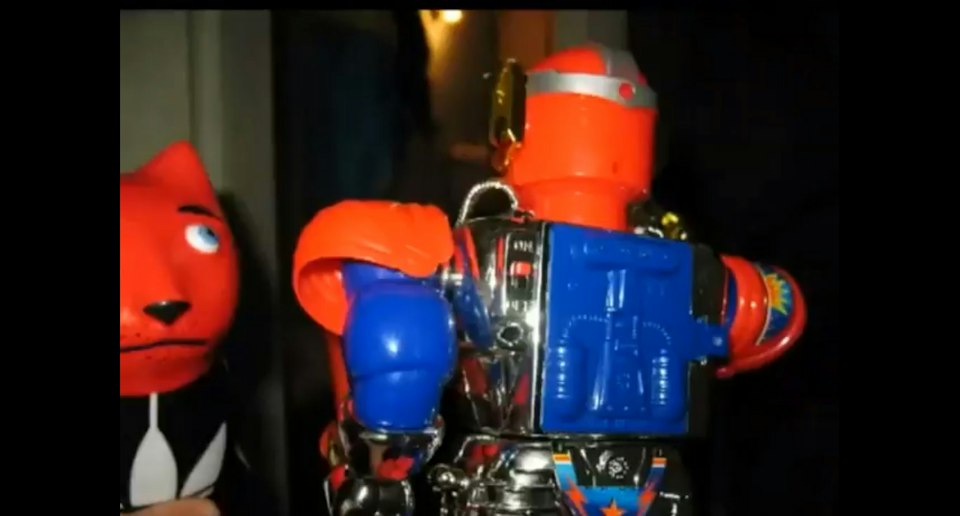
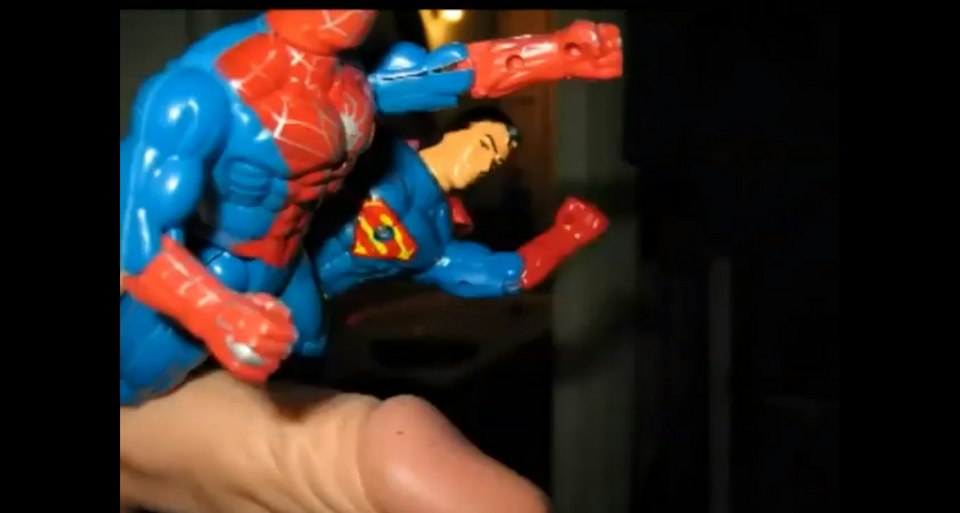
For the next seven minutes, the screen will show a close-up of the artist’s anus in a halo of lights and with “vampire” teeth — sometimes shyly covered with an artificial rose. Then — a flying dildo, ladybugs in a gas column, Superman hovering, a young pregnant virgin in a wreath — all accompanied by readings of Taras Shevchenko’s poems and folk songs. And, most importantly, — many Chinese souvenir cats. Because the title of this work is “Cats against Chinese piderci” (“Cats against Chinese crap.” — Editor’s note). Since 2010, it has been in the collection of the Arsenal Gallery in Bialystok, Poland.
“F*cking contemporary art! How it f*cking pisses me off, b*tch,” Stas swears, but continues working.
Volyazlovsky was able to verbally and visually gather the grotesqueness of provincial everyday life — from talentless outdoor advertising to homophobia — into a coherent, vivid artistic work. His art is fueled by phenomena that contradict common sense and concentrated petty-bourgeois thinking.
Fairy tales for adults
Volyazlovsky was more a poet than an artist — he could articulate himself much more vividly than any art historian or critic. His texts are not overloaded with conceptuality, artificiality, or complexity: they are pompous but extremely understandable to any reader.
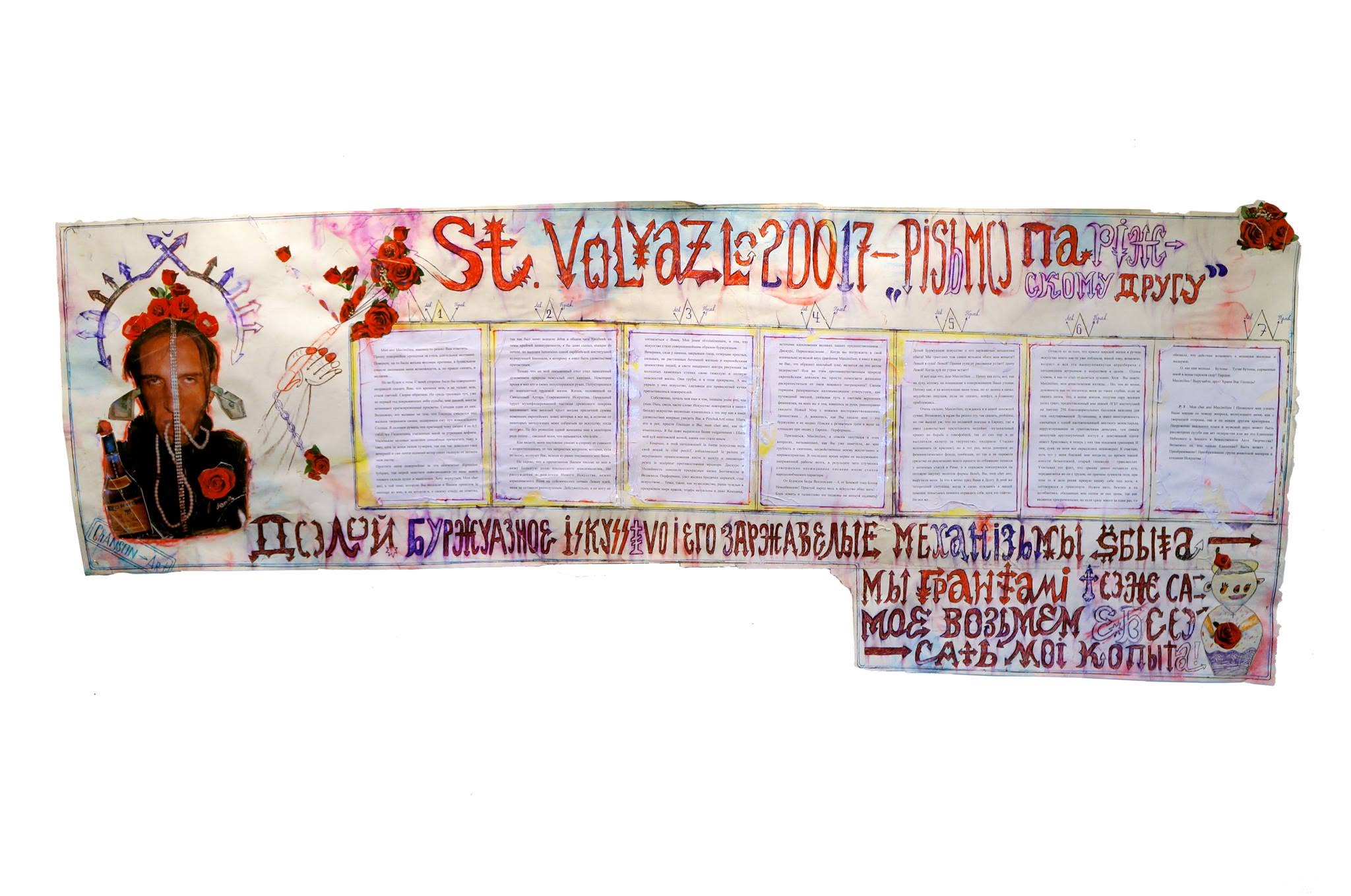
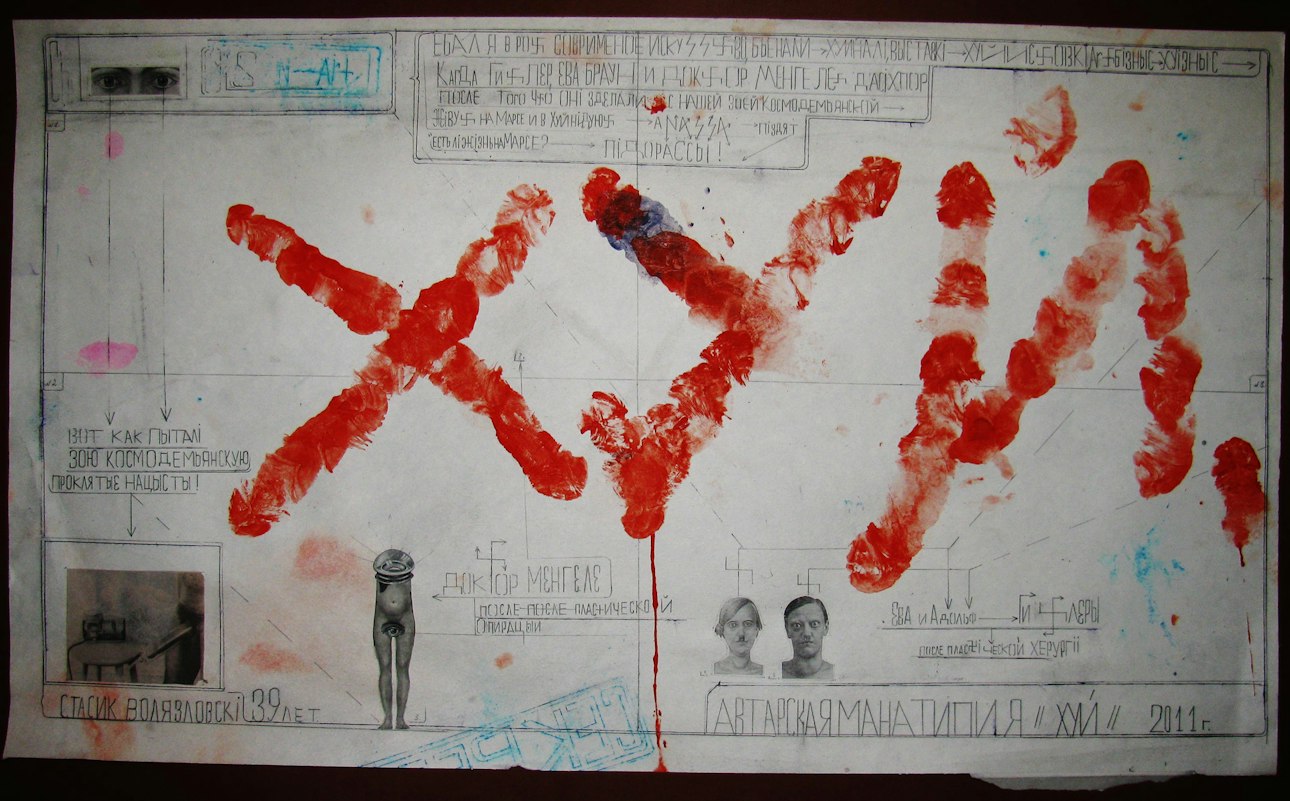
The author’s sarcastic video works, which exploit the aesthetics of the disgusting, are poetic too. And the “rags” — drawings with a ballpoint pen on worn pillowcases, sheets, tablecloths, aprons. And many works on paper, cycles of “reports” and “wall newspapers.” And the male gop-glem group “Rapani.” And bright and naturalistic photo projects. All the provincial poetics of Volyazlovsky united in his poems, which abound with profanity.
He wrote essays and fairy tales for adults — and in them, Volyazlovsky was always extremely honest and serious. But in private life, his seriousness and responsibility, the “confusion with today’s art market and art in general,” could drive the artist to deep despair.
Poor art
Stas lived all his life in Kherson. His lineage, according to him, was “murky” — a mix of Ossetian nobility and Kherson power. And his surname is entirely Western Ukrainian. “My mother says that in our family there were janitors and nobles. And sometimes one or the other comes through me.” Volyazlovsky’s education was unfinished 10th grade. Then he taught ceramics to troubled teenagers for nine years, while also sculpting himself, decorating works with stylized images of homosexual acts.
While Kyiv lived with political and criminal passions, Kherson lived with everyday ones. But even in a small provincial city in the south of the country, there was a life-giving environment: an underground music and poetry scene in the early 1990s and the Cultural Development Center “TOTEM,” which created video art at the turn of the 1990s–2000s.
At the end of the 1990s, people with whom Volyazlovsky spent his youth left Kherson, but in his life appeared Vyacheslav Mashnitsky, who showed Volyazlovsky’s first solo exhibitions in the early 2000s, and artist Yuriy Solomko. Fifteen years later, Stas Volyazlovsky admitted: “Looking at my works, Yura said they ‘fall apart into parts’ and reminded him of drawings by schizophrenics. And then I realized: in my creativity, I am always afraid of something, always leaving something unsaid. And if my drawings really are like those of schizophrenics, then, in principle, I can relax, because, as Ilf and Petrov said, ‘one comrade went to the madhouse to curse the Soviet government.’”
In fact, Volyazlovsky, an incredibly distrustful and anxious person, was initially broken by criticism. But very quickly he reassembled his art — thus his first “rags” appeared. He borrowed the idea of drawing with a ballpoint pen on fabric from the prison “mark” — poetic letters “from the zone,” which prisoners sent to relatives as a reminder of themselves and a sign of repentance. Gradually, painting the rags became dominant in Volyazlovsky’s work. And suddenly — the embodiment of Kherson’s poor art.
In fact, Volyazlovsky, an incredibly distrustful and anxious person, was initially broken by criticism.
We f*ck like before
In the 2000s, Volyazlovsky collaborated with Moscow gallerist Volodymyr Ovcharenko and simultaneously with the Dnipropetrovsk magazine “NASH.” The artist tasted commercial success and became one of the rising stars of the post-Soviet art scene. Then — a new Kherson collaboration, the project “Rapani.” A “domestic male gay gop-glem duet” ironically fought homophobia, using its fears, clichés, and prejudices. Over five years, “Rapani” shot several home videos and recorded the CD album “We are not roosters!” (“Мы не петухи!”), which immediately became a collectible rarity.
A “domestic male gay gop-glem duet” ironically fought homophobia, using its fears, clichés, and prejudices.
In any initiative, Volyazlovsky criticized society for its flaws, the art community for its impotence, and himself for weakness of spirit. And he did all this through art. In the Ukrainian and broader Eastern European context, he was symptomatic in his position, works, and above all the image of the artist in art.
But despite the brutality of the imagery, the baseness of the plots, and artistic filthiness, Volyazlovsky was deservedly favored: laureate of the Kazimir Malevich Prize, participant of the main project of the 3rd Moscow Biennale at the GARAGE Center for Contemporary Art, resident of the BIRUCHIY contemporary art symposium, longtime participant of Ukrainian and international residencies and exhibitions. Art Basel Miami Beach (USA), Frieze Art Fair (UK), Art Basel (Switzerland), Armory Show (USA, New York), Art Moscow (Russia) — all welcomed him.
In one of his autobiographies, Stas wrote that he dreamed of becoming a classic of Ukrainian art during his lifetime. Almost a year after his passing, it has become possible and necessary to talk about him — to remember him not only as a close friend but above all as an extraordinary personality. As an artist who, as he wished, took his place in the history of Ukrainian art during his lifetime, although he did not have time to realize and feel it.
— You know, I was very surprised when I found signs that I supposedly invented — in the works of primitive tribes. And they had a damn meaningful sense 10,000 years ago. I also made a simple conclusion: the human brain works the same as 10,000 years ago and now.
— So evolution has not affected us at all?
— What evolution? We f*ck the same as before. And if something happens — we’ll go to the caves. We fear death — constantly inventing new religions. In this sense, humans should envy dogs: they live shortly, of course, but at least they don’t think about their mortality.
“What evolution? We f*ck the same as before.”