
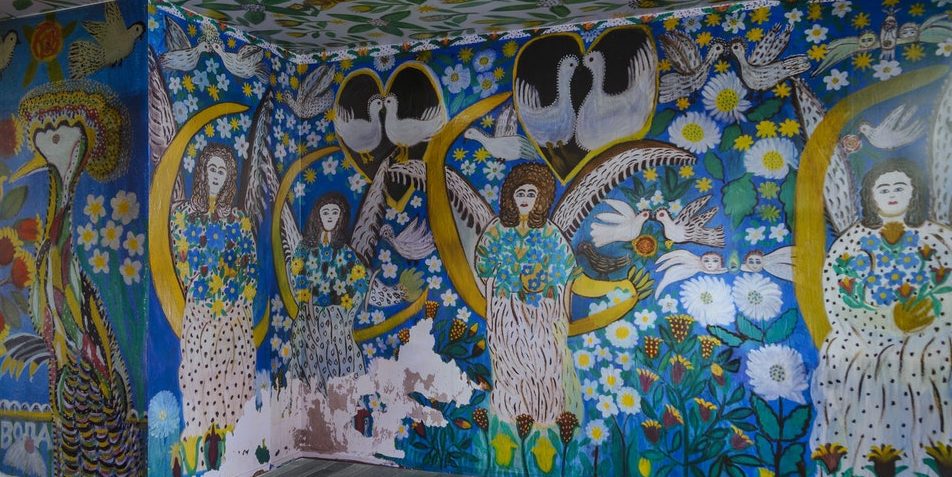
Polina Raiko lived her entire life in the Kherson region and only began painting in her mature years. Her home became the canvas on which fantastic animals and biblical characters came to life. Curator Tetyana Kochubynska talks about the work of the self-taught artist who transformed her home into a work of art.
If someone had ever told Polina Raiko that the windows of her room would overlook Bessarabskaya Square in the center of Kyiv, she would hardly have believed it. It is unknown: if the artist had not died in 2004, would she have agreed to recreate the paintings of her house in a trendy art gallery? Would she have painted the exhibition space herself, demanded a fee, or even forbidden the use of her art? Be that as it may, the exhibition “Own Space” at PinchukArtCentre begins with the recreation of the paintings from Polina Raiko’s house. They are a kind of metaphor for a secret but free inner world.
Raiko became famous thanks to the paintings with which she completely covered seven small rooms of a private house in the Kherson region. In the last two decades, the artist has actively conquered the media space: TV channels make reports about her, and on the initiative of Boris Yegiazaryan, a documentary film “Paradise” (director Nadiya Koshman) was made about her. The awareness of her legacy as an artistic phenomenon is connected with the Kherson Center for Cultural Development “Totem” and the artist Vyacheslav Mashnytsky, who created the Kherson Regional Charitable Foundation named after Polina Raiko.
All these actions led to the fact that the woman’s house began to be visited as a pilgrimage site. However, during the artist’s lifetime, neighbors avoided her home: Raiko’s activities did not fit into the standardized semi-rural order. To those who knew her, she seemed strange, half-mad — for example, because she spent her pension on buying paints.
New meaning
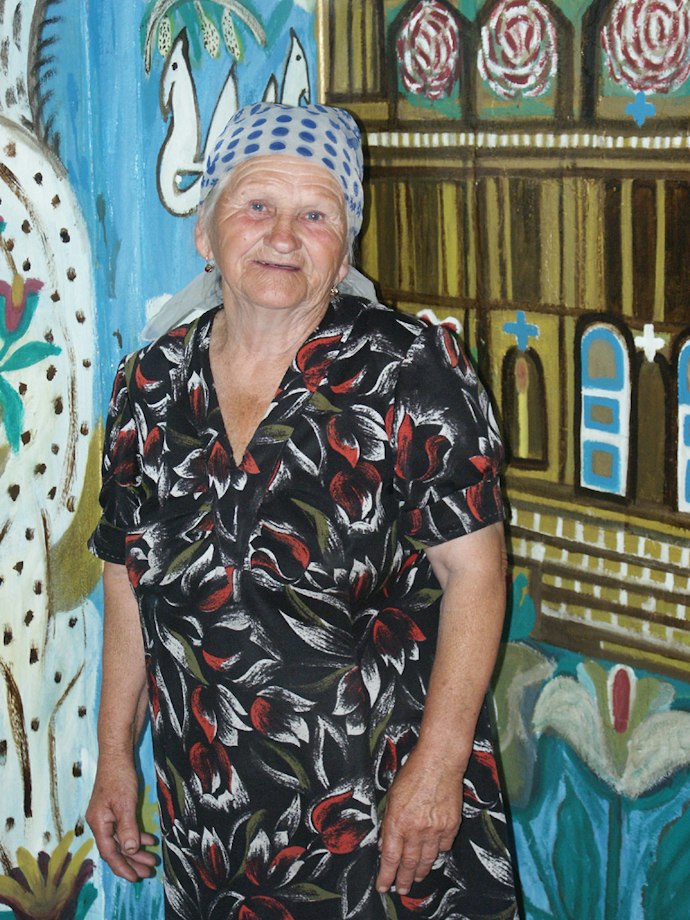
Polina Raiko is an ordinary woman. She was born in 1928 in the small town of Tsyurupynsk (now Oleshky) in the Kherson region, and until the late 1990s her life was no different from that of her neighbors: work on a collective farm and in the garden, household chores, a husband, and two children.
Polina Raiko began to paint due to a personal tragedy. She lost her husband, her daughter died in a car accident, and her son went to prison. This dramatic coincidence of circumstances gave an outlet to chthonic energy — the emptiness that formed was filled with creativity.
Thus, Raiko began to paint the walls of her own house. Completely “writing down” the rooms, she seemed to cleanse and redefine her own space. There is something of a magical ritual in the process of painting, when loss helps to fill one’s own life with meaning.
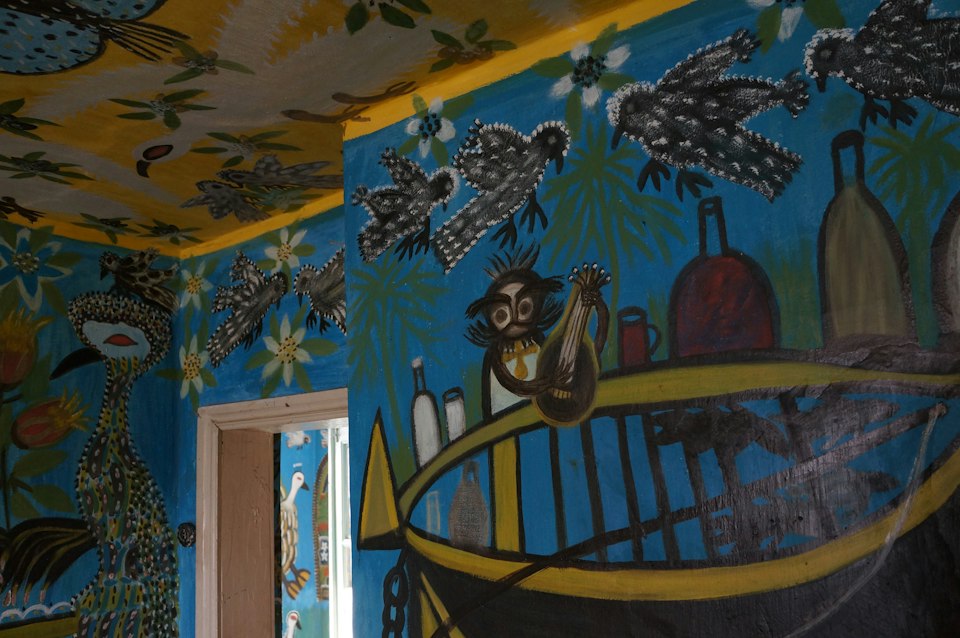
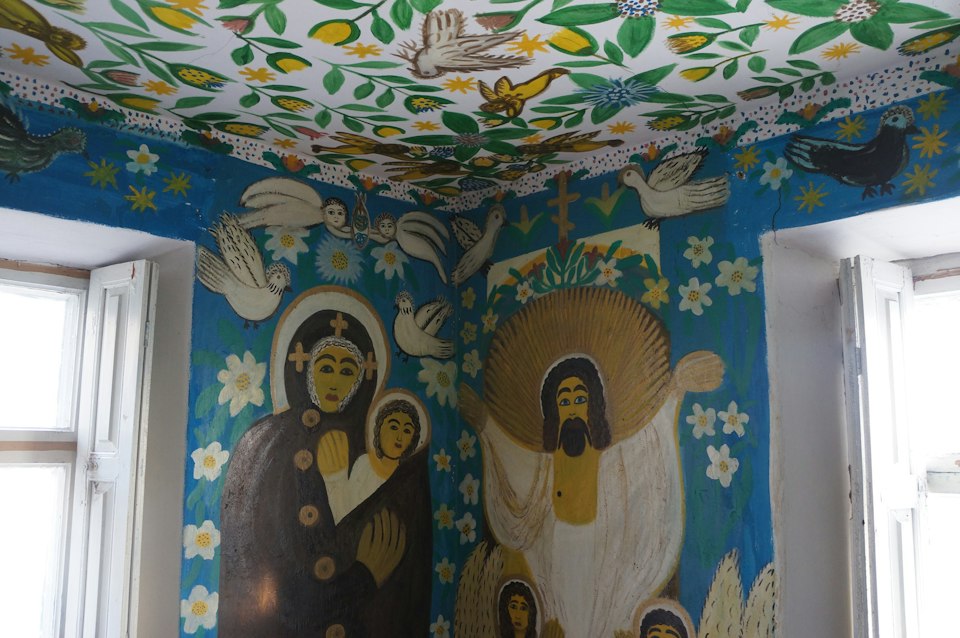
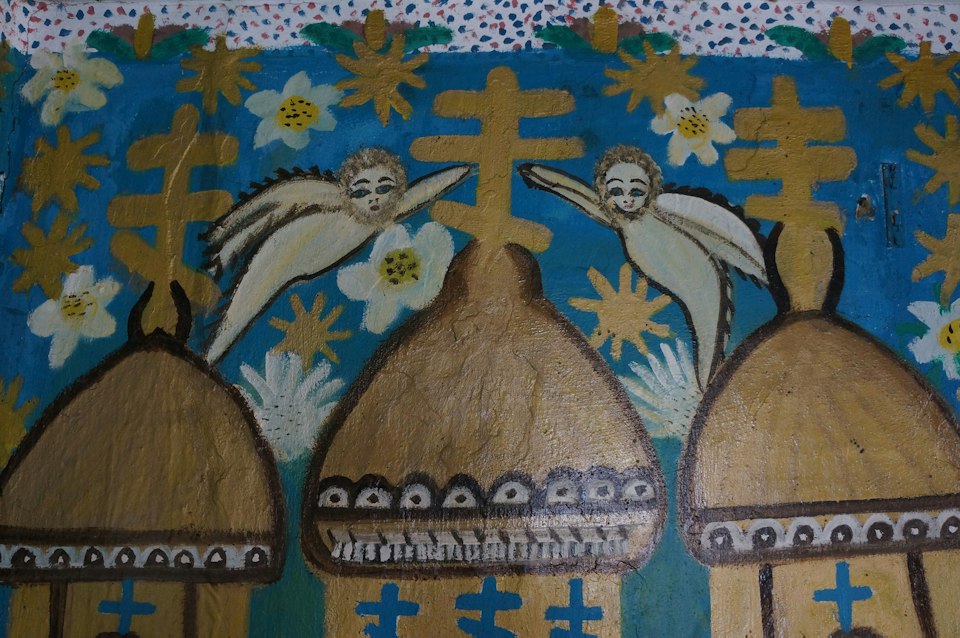
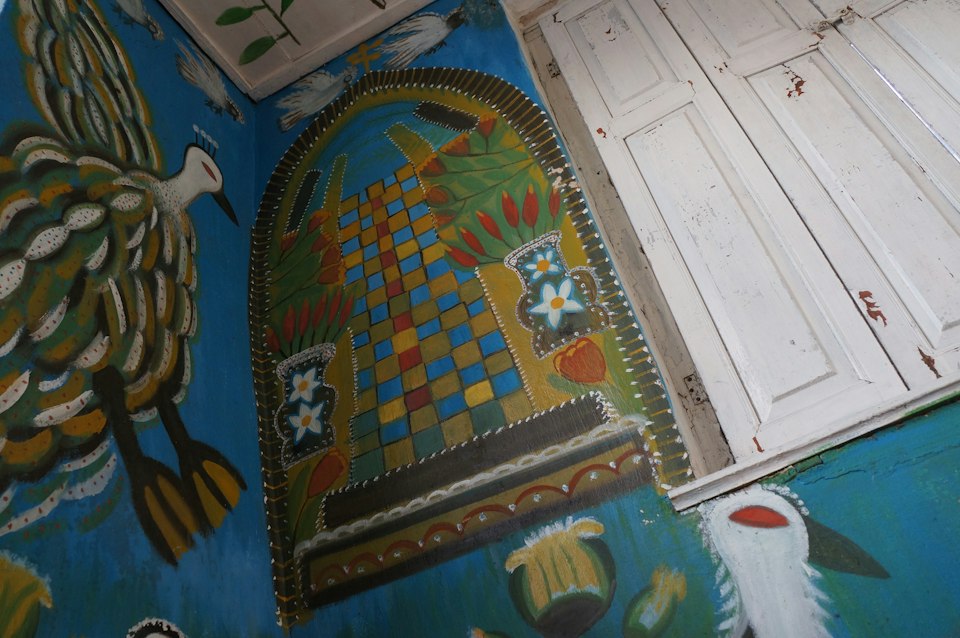
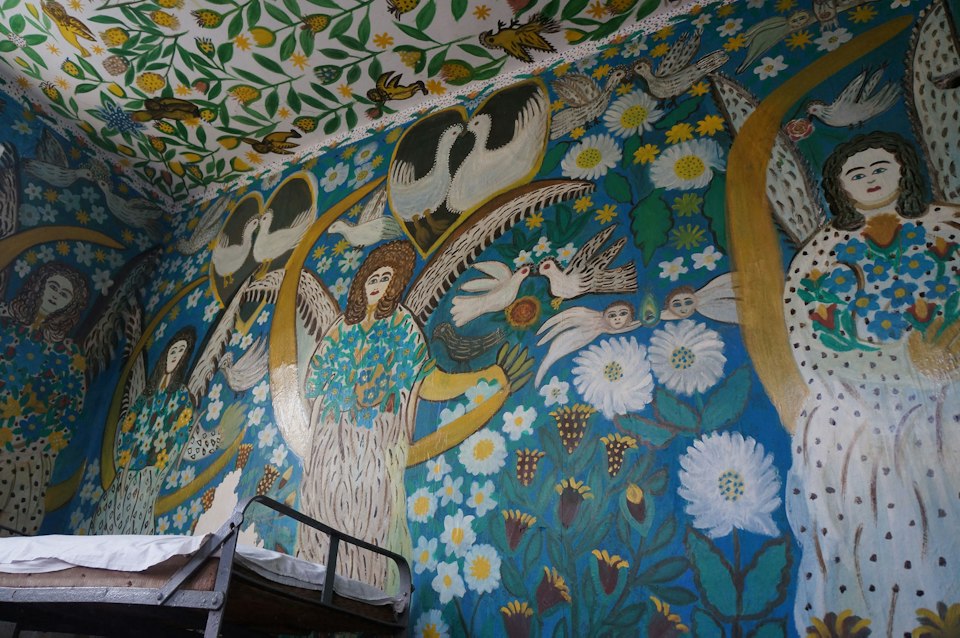
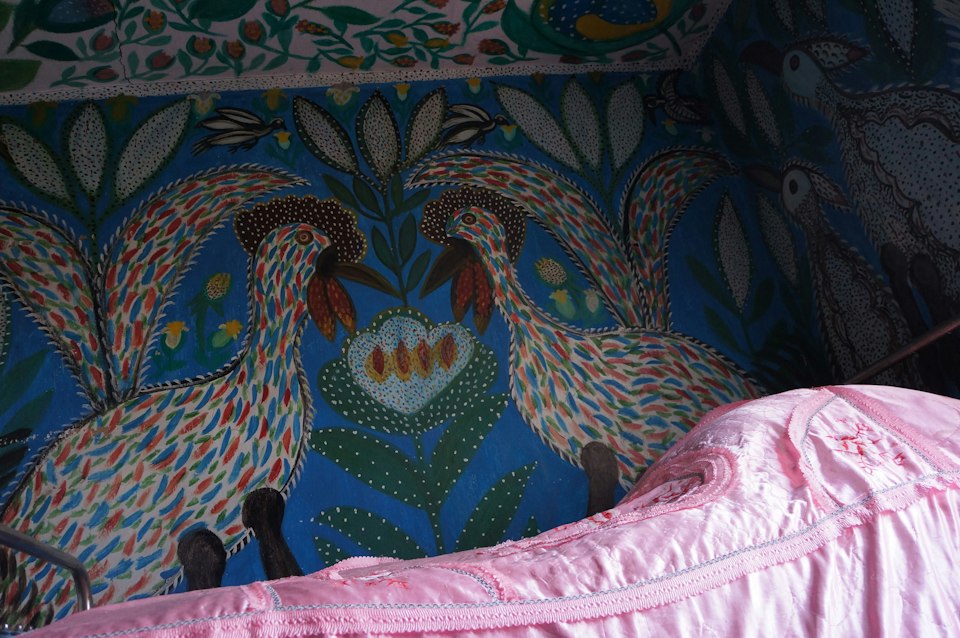
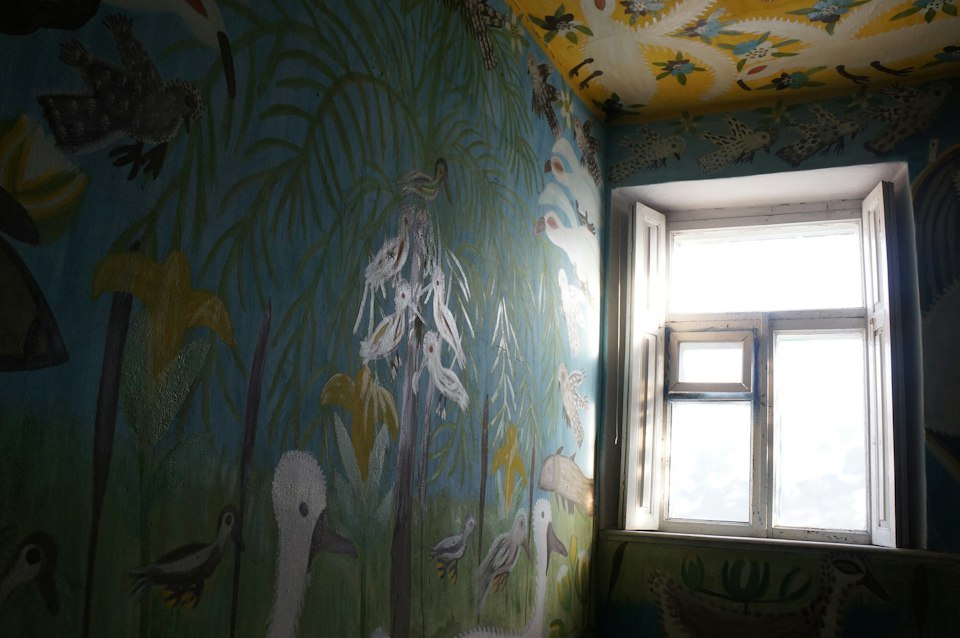
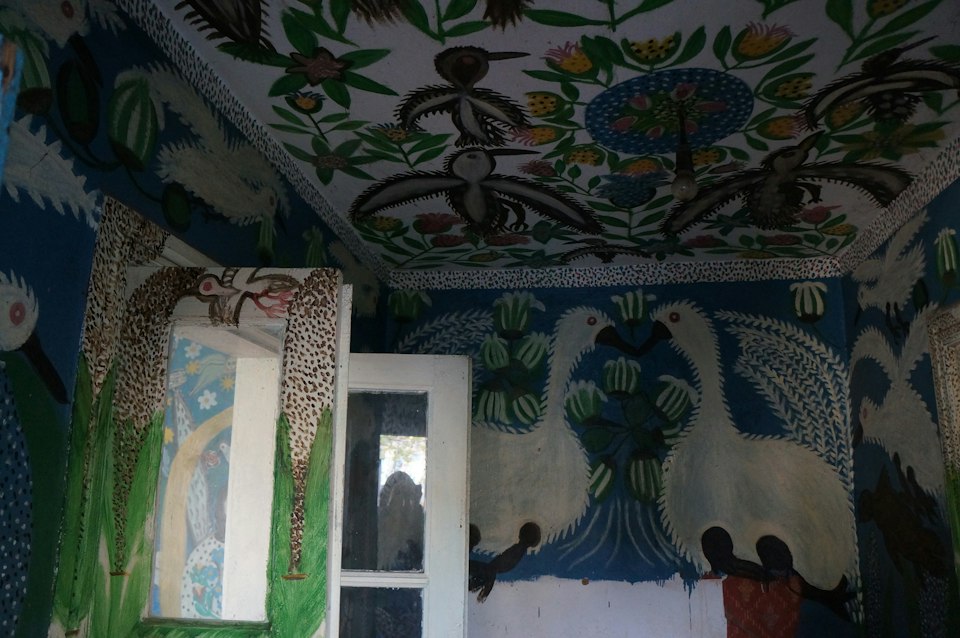
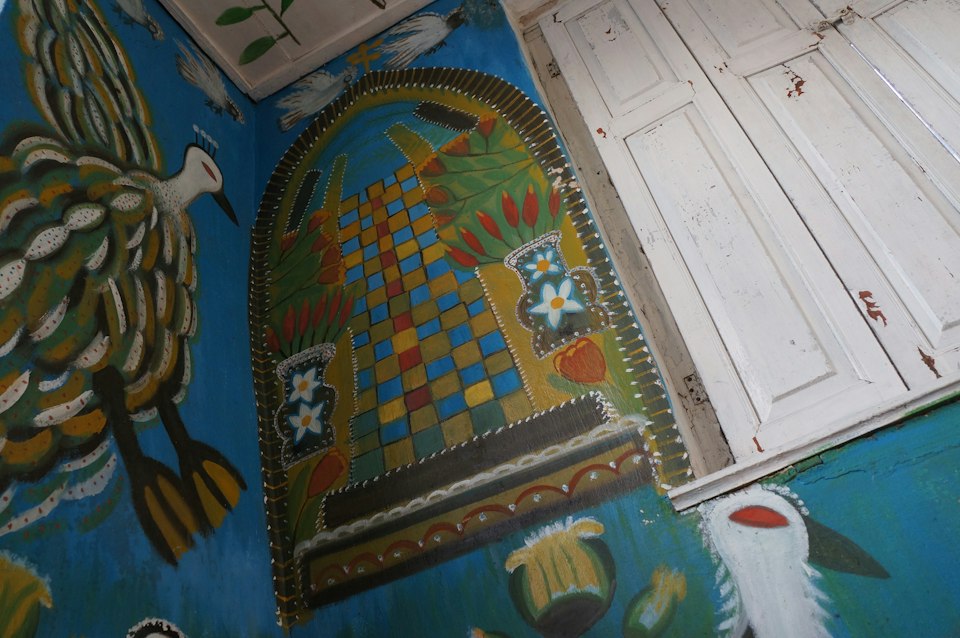
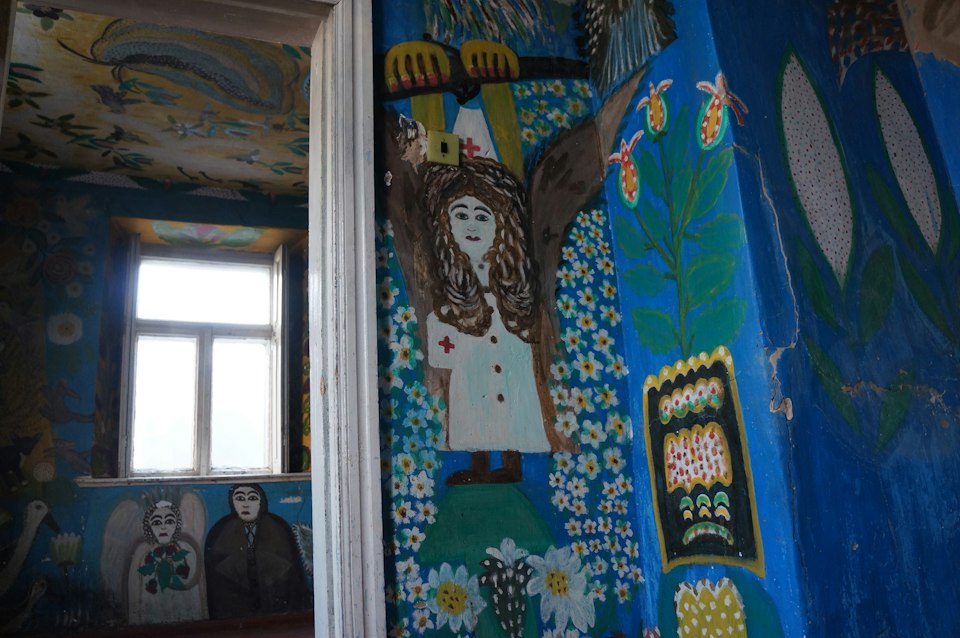
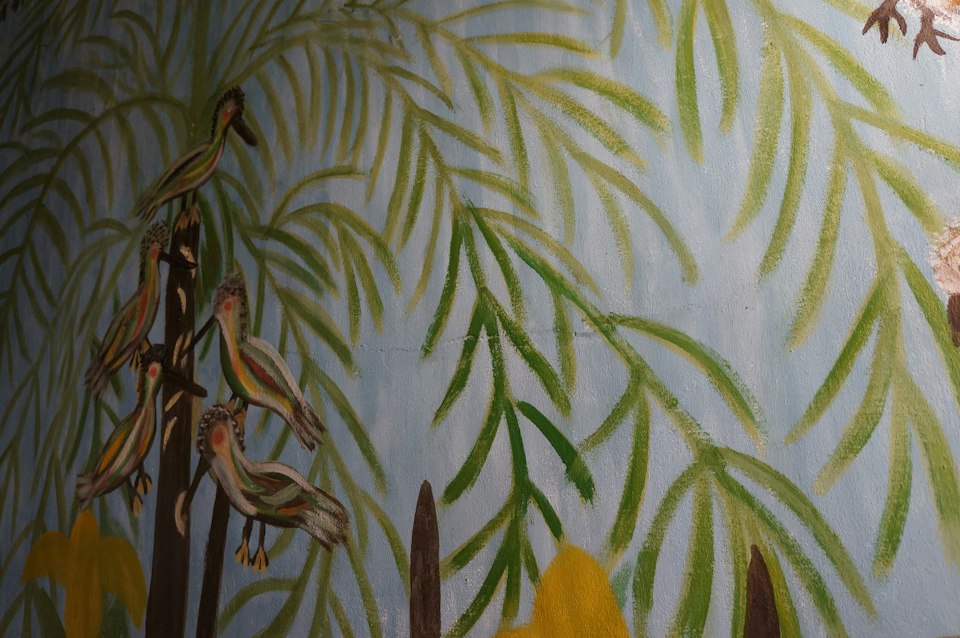
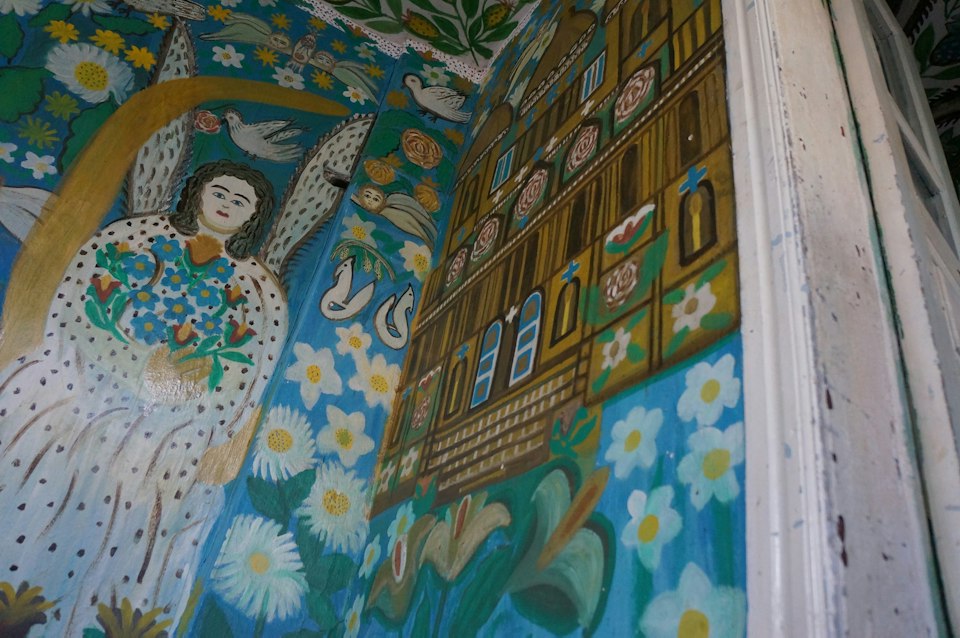
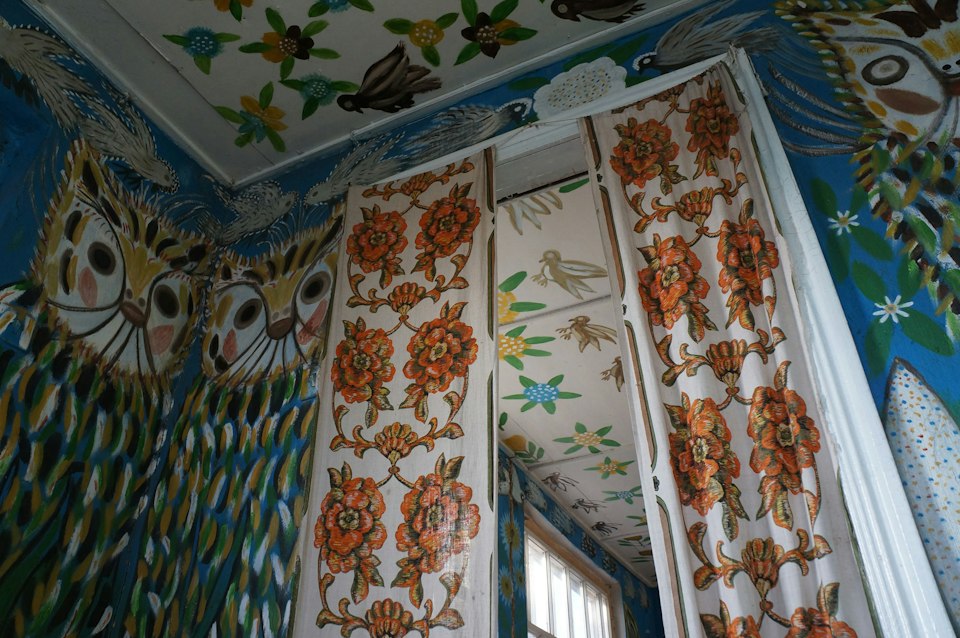
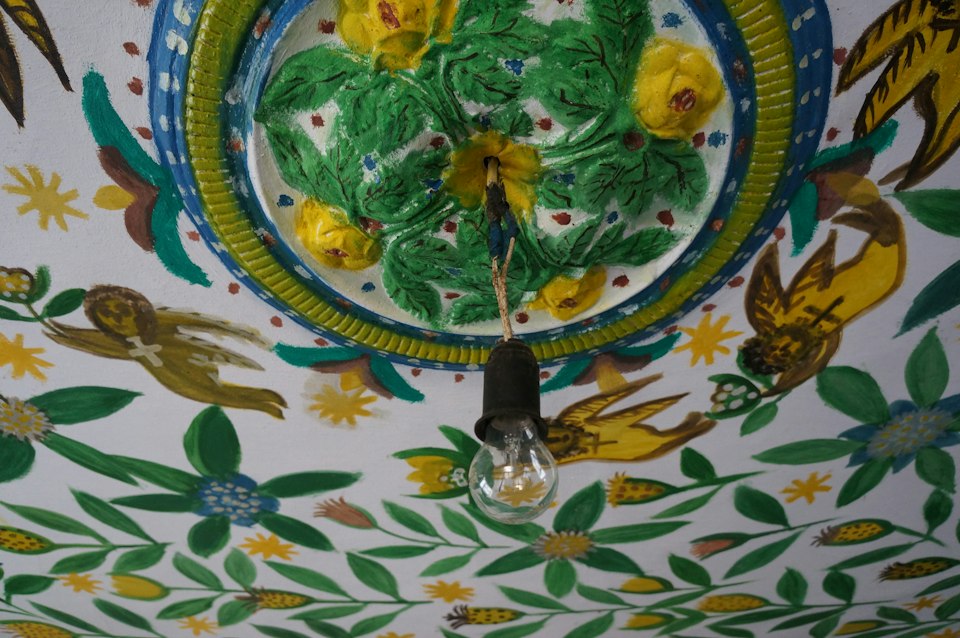
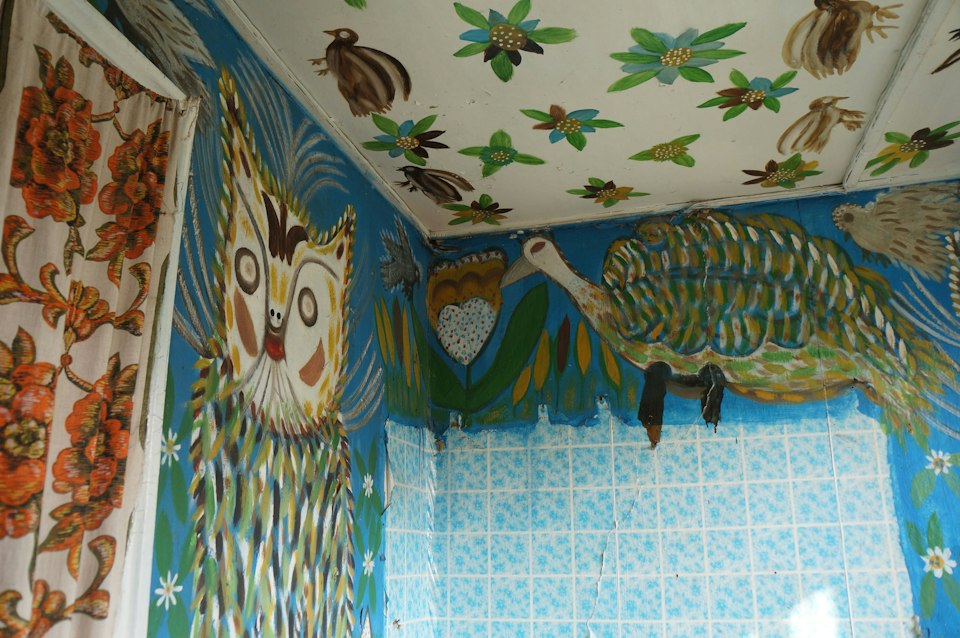
In her house, Polina Raiko painted almost everything possible: ceilings, walls, stove, switches, wires.
Not only fantastic animals
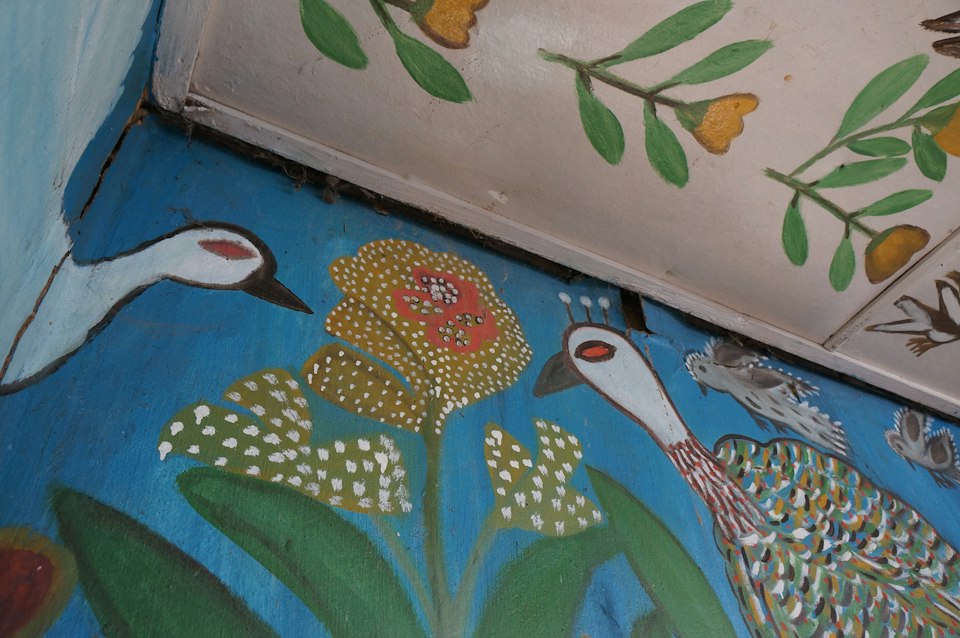
In Raiko’s paintings, several motifs can be distinguished, which at first glance seem like amazing fantasy plots. But these images are primarily connected with lived experience and reflect the artist’s reflections on the earthly and otherworldly worlds.
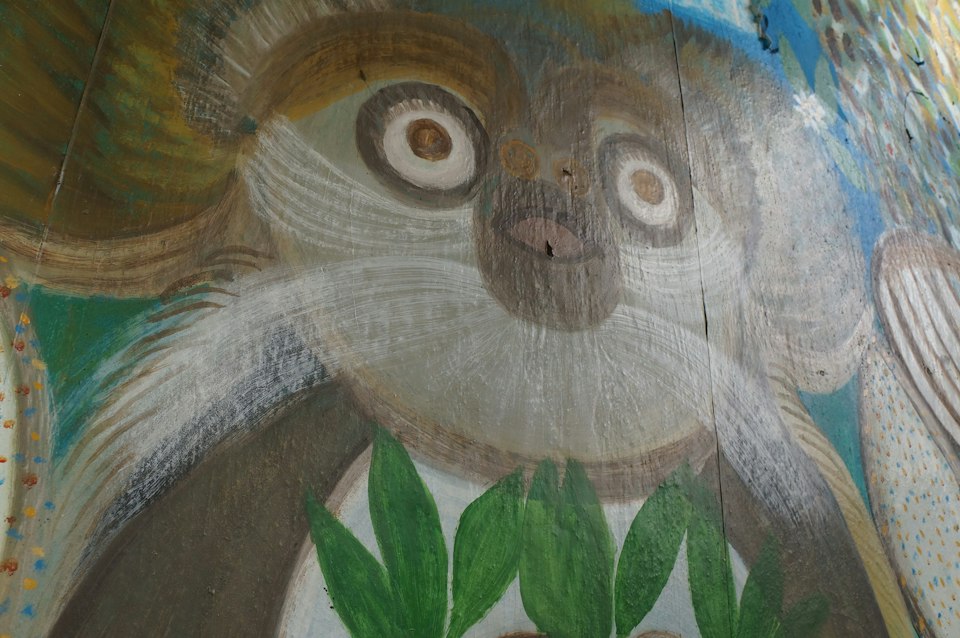
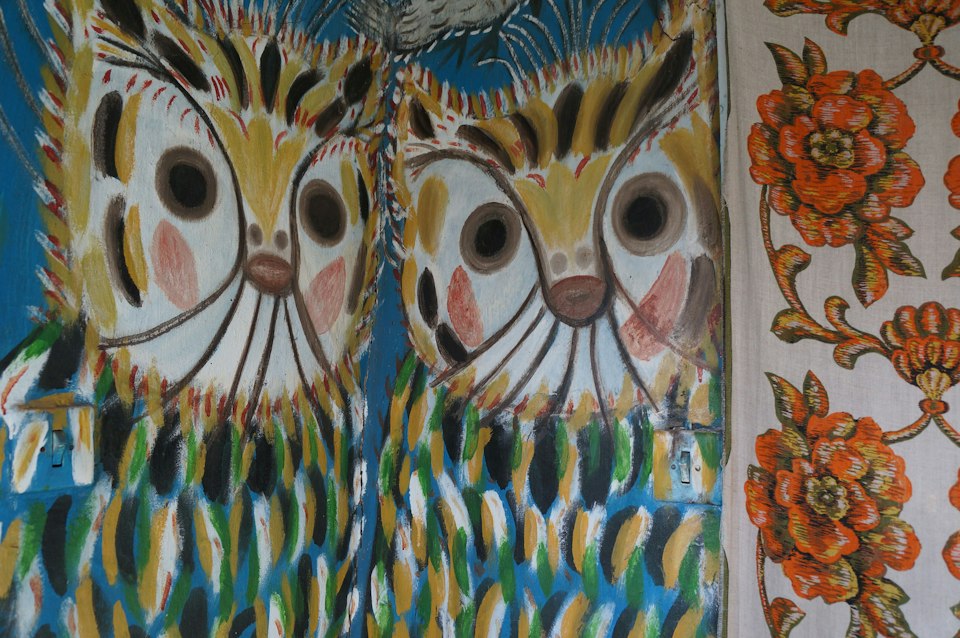
Portraits of sisters, a composition based on a wedding photo, a husband in the other world where Raiko “prepared” alcoholic drinks and a new fishing rod for him, which he was going to buy. These “lives” of Polina are interspersed with images of semi-fantastic animals: powerful leopards guarding peace in the house, birds, amazing fish resembling coelacanths.
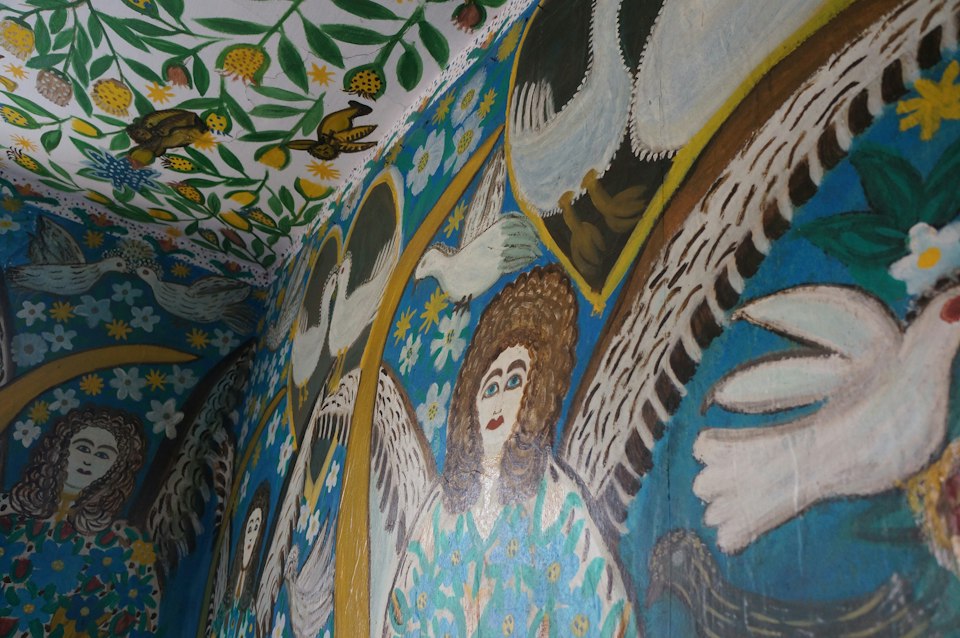
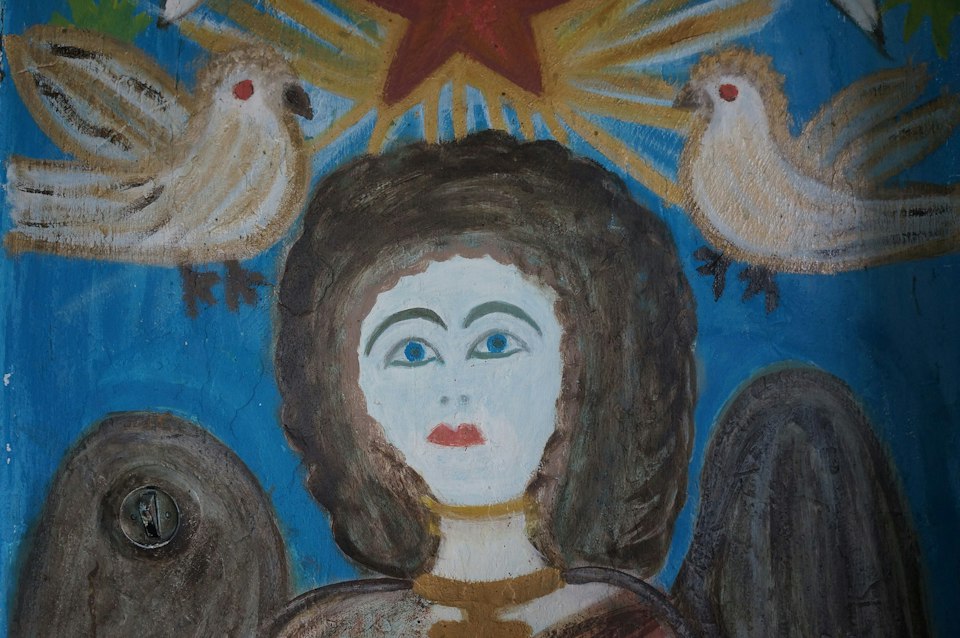
At the same time, the dreamlike world is permeated with real Soviet symbolism and the suffering images of World War II. For example, the image of an angel is completed with a red star among white doves — a symbol of peace and the Holy Spirit. One can see the image of a nurse or a woman in military uniform: from behind them grow hands holding a rifle. The inscriptions accompanying the composition — “1941—1945” and “9 MAY” — testify to the personal trauma of the war that the artist experienced in her youth. All this is adjacent to images of a temple (probably a local church), the Virgin Mary with a baby. A huge number of crosses and red stars, lush vegetation — all on a dense celestial background that sets the overall color tone in the house paintings — represent the holistic life experience of one person.
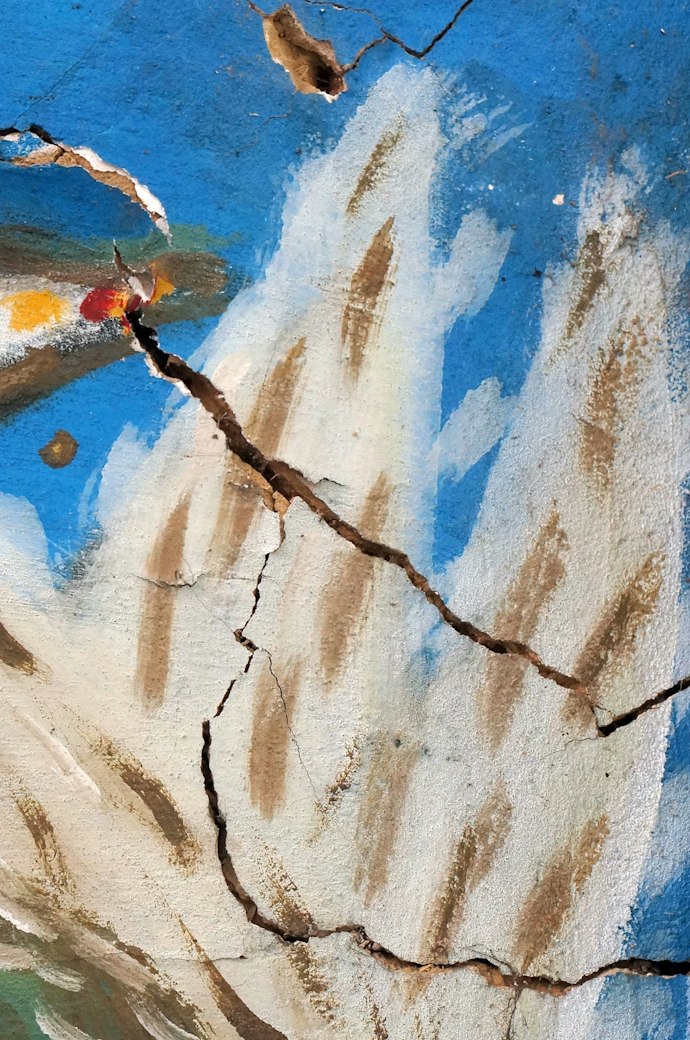
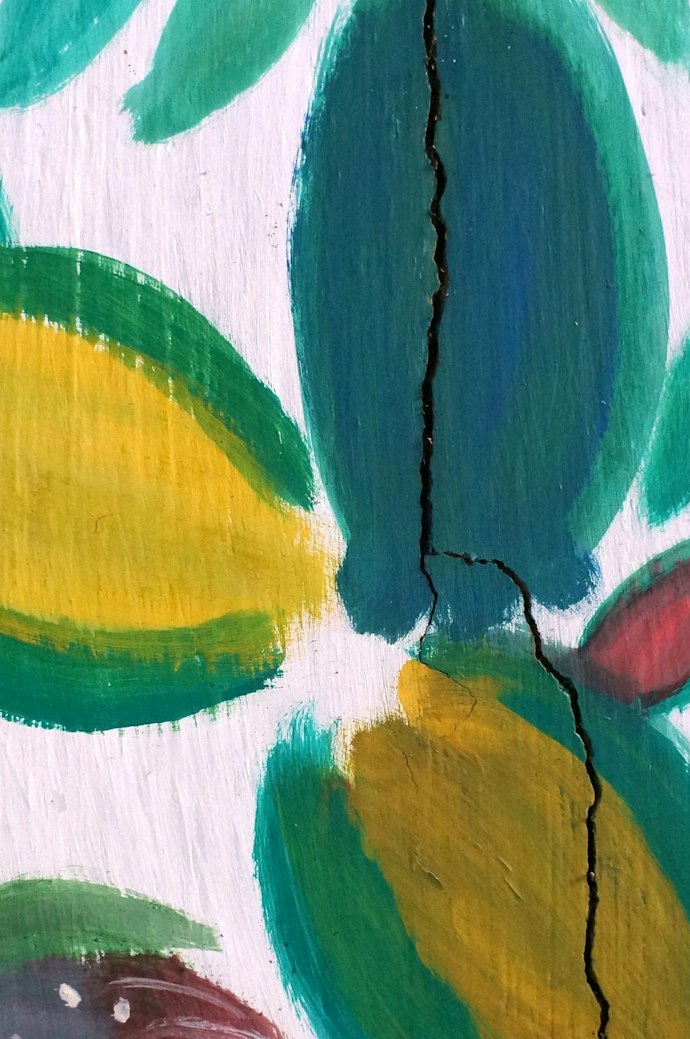
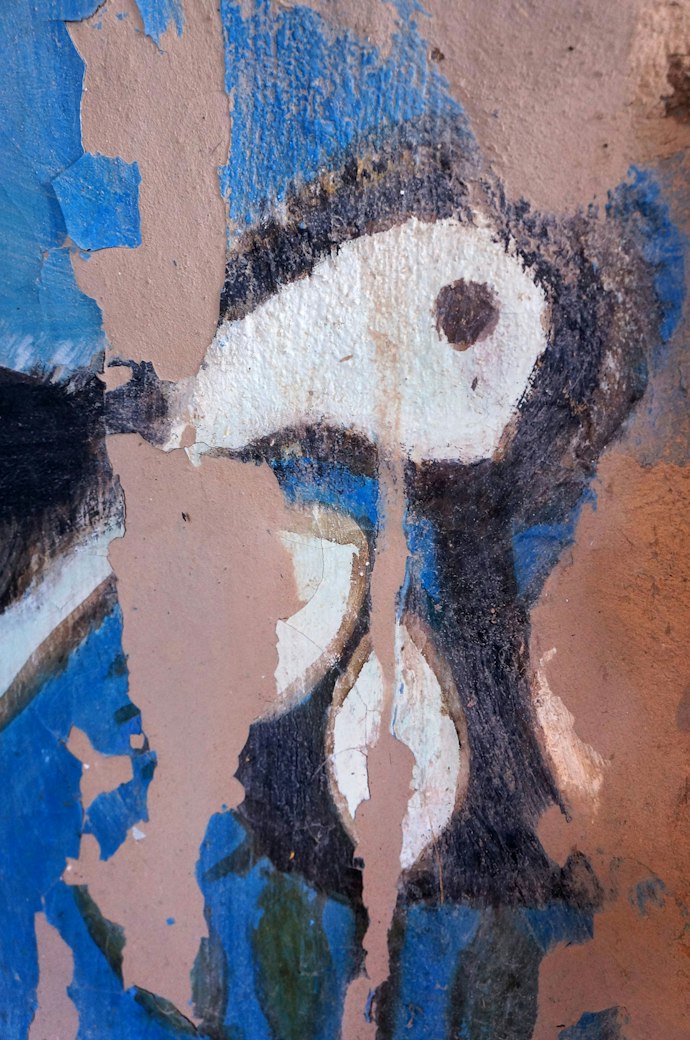
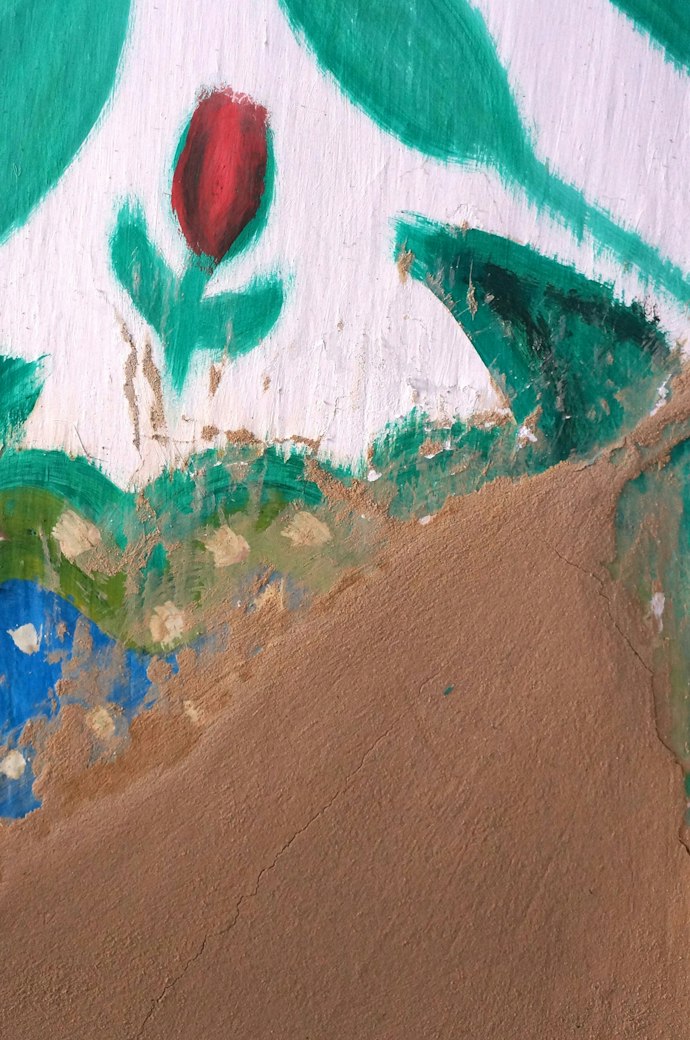
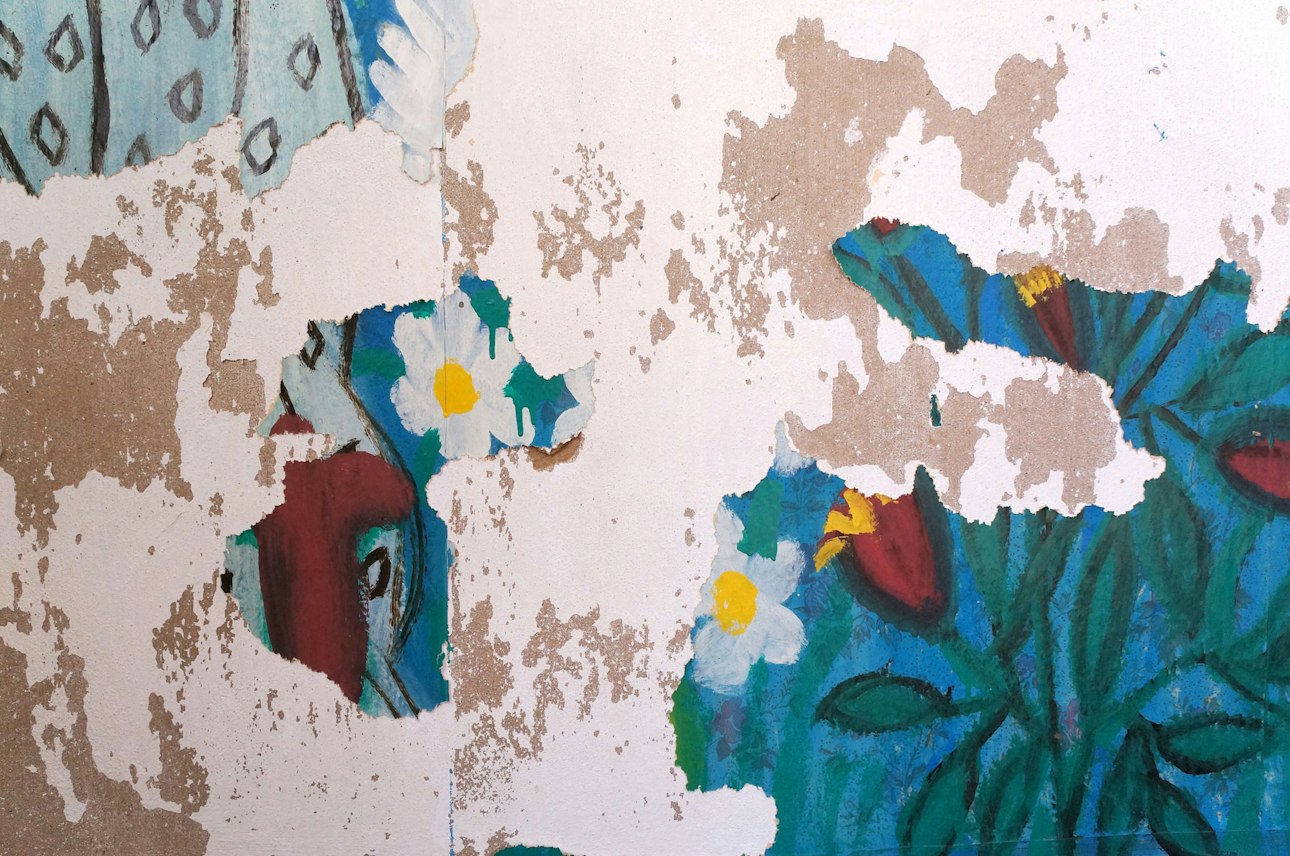
A woman who never studied painting anywhere created her own “iconography.” The placement of certain plots was related to the location of rooms in the house. For example, from the open bedroom door, one can see a painting depicting Raiko’s wedding; the entrance to the bedroom is covered by leopard-birds — guardians and protectors; near the stove, a small black dog is painted, and above the hearth — a belligerent kite. Almost every composition in the rooms has a kind of talisman in the form of pairs of storks, swans, doves.
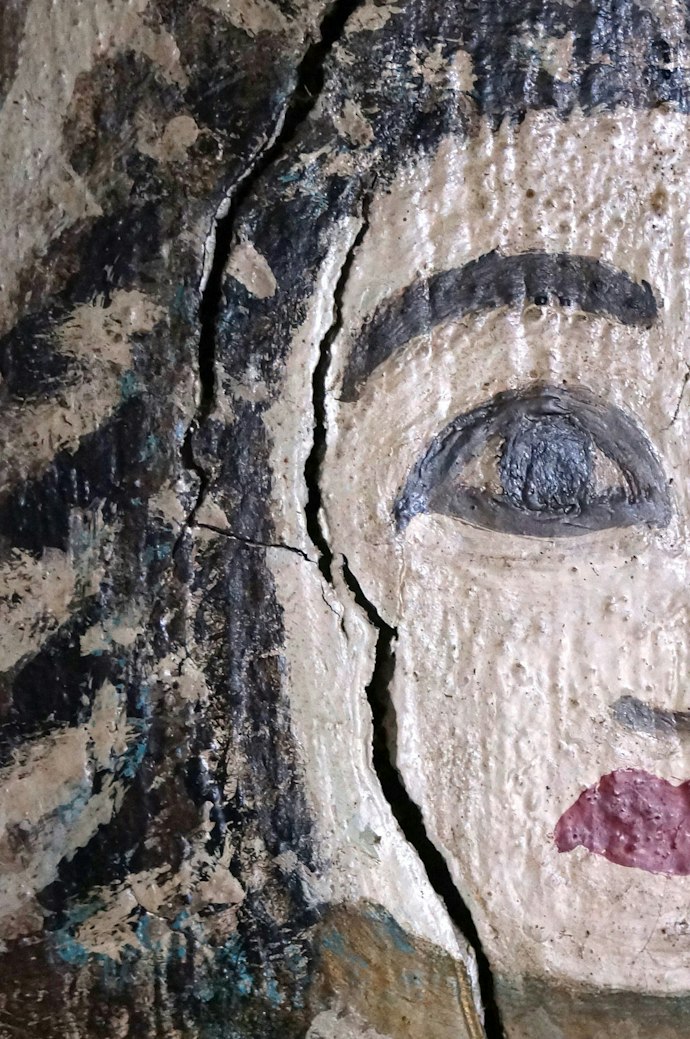
The female image is a recurring theme — sisters, the Virgin Mary, a woman captain. They all have deep blue eyes full of sorrow. Or maybe we, knowing Raiko’s tragic fate, artificially attribute suffering to these paintings.
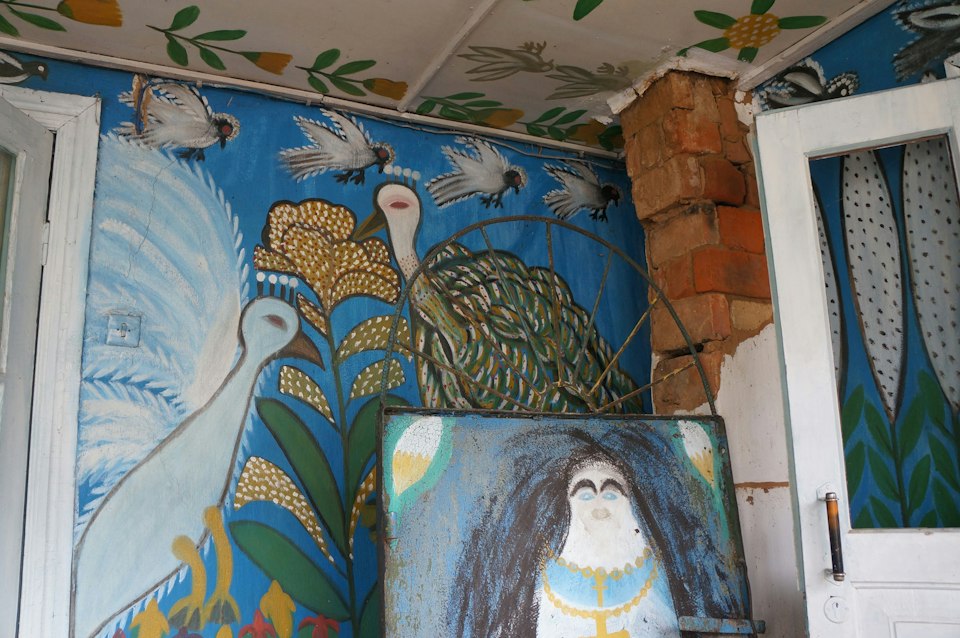
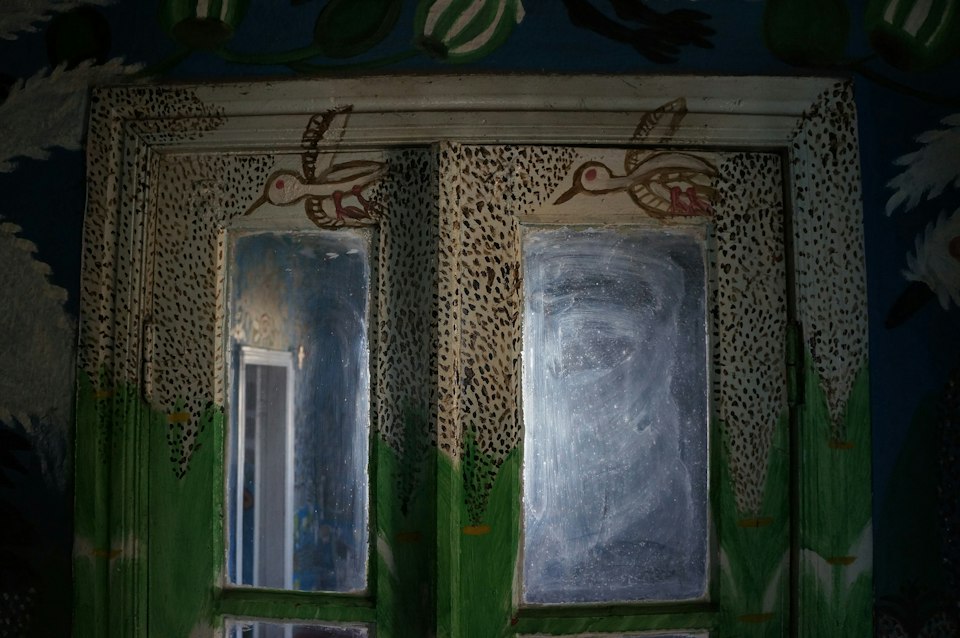
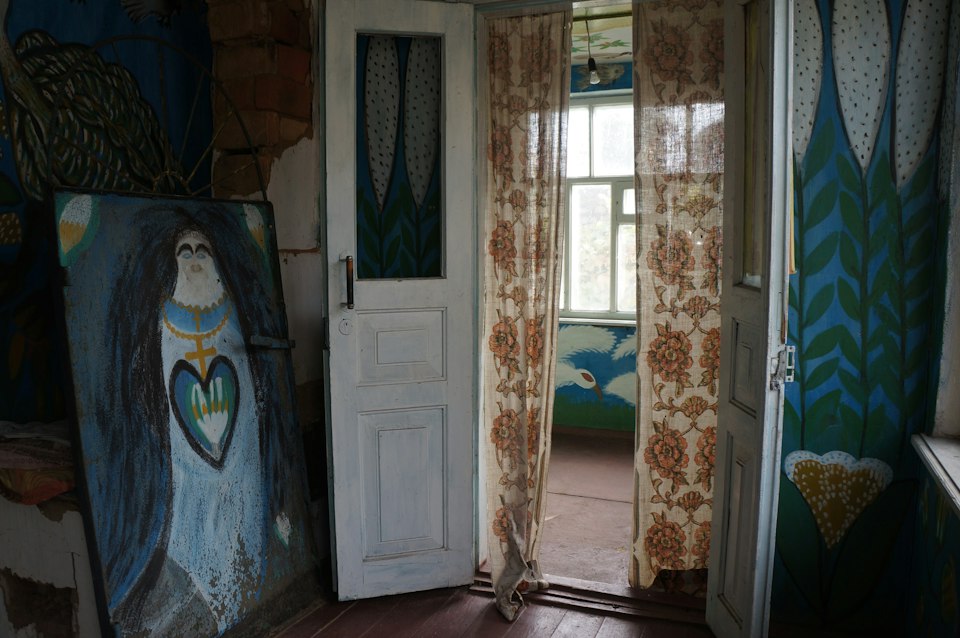
Polina Raiko’s legacy is somewhat close to Art Brut (“raw art”) by Jean Dubuffet — the art of madmen and self-taught artists driven by an irrational beginning and free from academic barriers. The work of this artist is a total indivisible experience. In Raiko’s house near Kherson or at the exhibition at PinchukArtCentre, her works touch with genuine sincerity, intuition, and irrationality that arose from tragic experience.
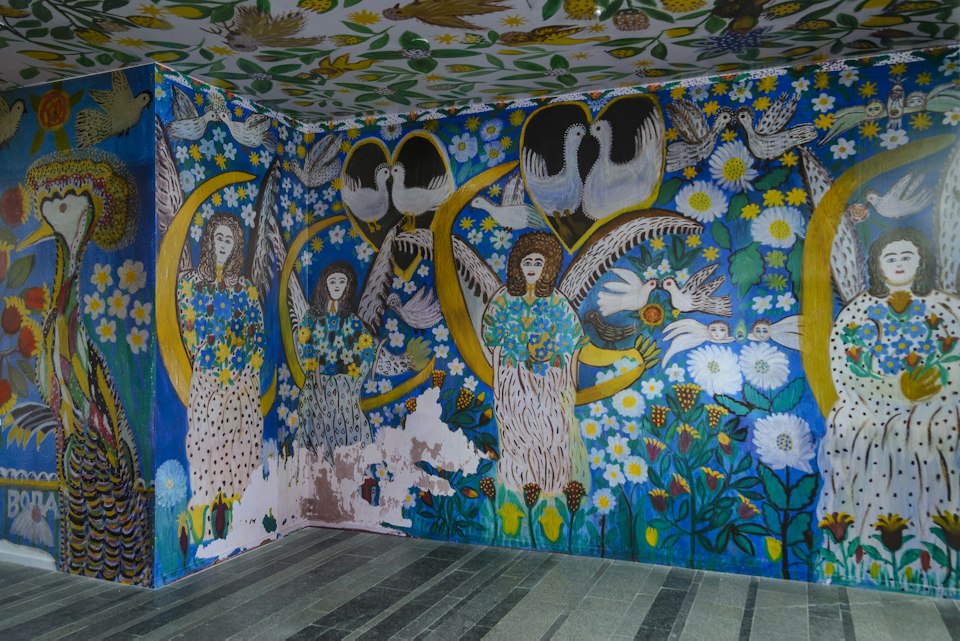
Фото: Максим Білоусов